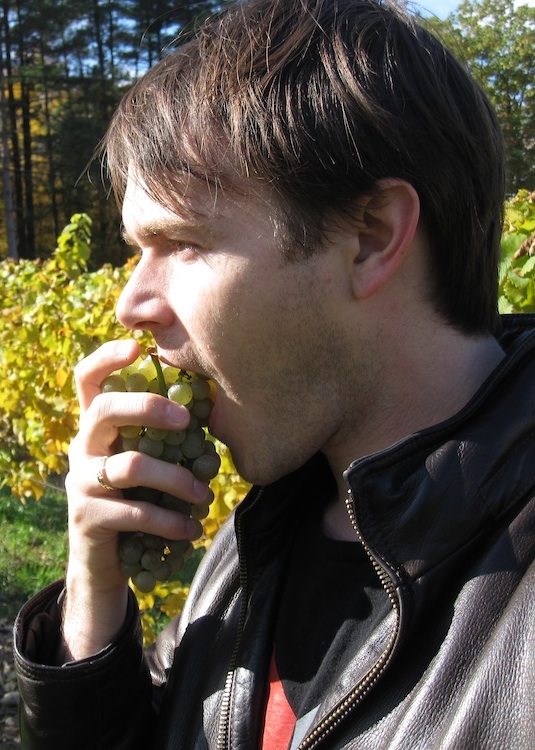
MORNING.LIGHT

The prior day saw nothing but frustration. My yeasts did not start. The morning after, I crawl from bed. I have few options if nothing changed. I can siphon the yeasts out and start with new ones. But that would risk oxidation. I could enjoy seven gallons of grape juice or just toss the lot. And then…

Patience (and a night of negligence) pays.

Next, stir and measure, twice daily.

Posted in OENOLOGICAL ODYSSEY, VIGNOLES VENTURING | Leave a comment

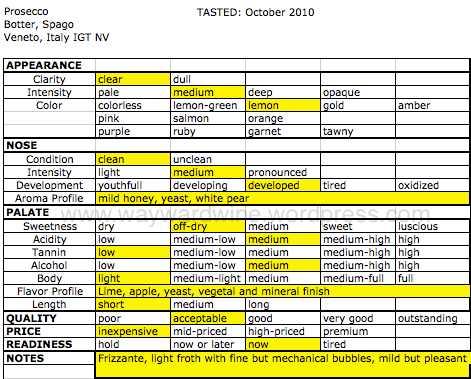
Prosecco, Botter Spago Veneto Italy IGT NV

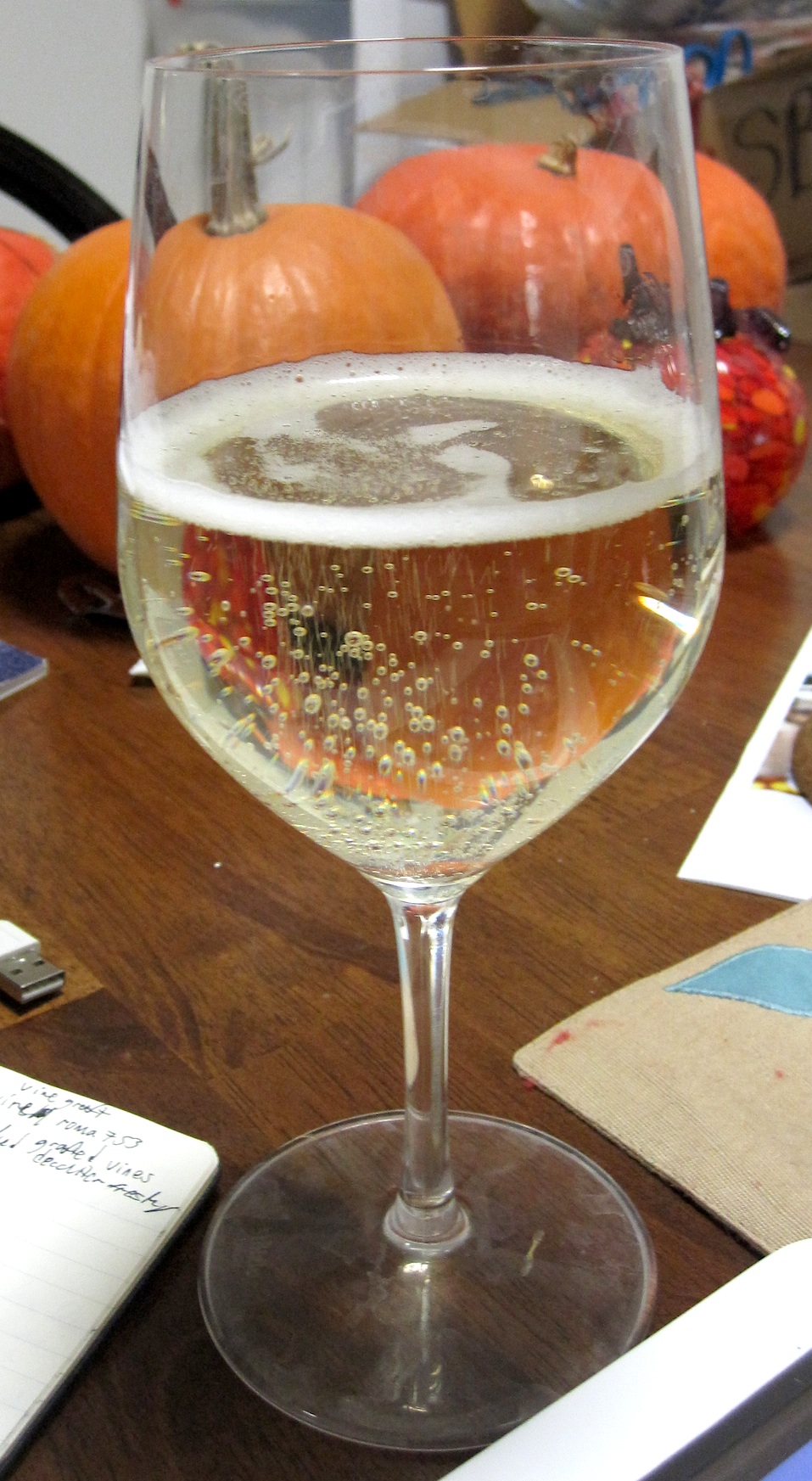
You will need a wine key for Botter’s prosecco (as the bound, regular cork indicates). Why? Because this is what the Italians call frizzante. It is not an Italian spumante, which is fully sparkling. This frizzante (lightly sparkling) gets its bubbles from a closed tank, secondary fermentation that integrates the CO2 before bottling, not in bottle as its French cousin, méthode champenoise (i.e. champagne method). This tank method is variously called the Metodo Italiano or the Charmat method. Italians practiced it long before Carlo Gancia adopted the Champagne method of secondary bottle fermentation in the 19th century. It is cheaper, with brief bubbles and delightfully simple.

The prosecco grape is now known as glera, thanks to Italian bureaucratic self-preservation. When Italy created a DOCG (guaranteed appellation designation) for the Veneto regions of Conegliano and Valdobbiadine, they did not want competing regions putting prosecco on their labels just because they had the right grape. So Italy renamed the grape glera in 2009.

Botter’s prosecco is not made entirely from glera (aka prosecco) but also has a bit of verduzzo. These grapes came from the hills surrounding the town of Treviso. Tank fermented for eight to ten days, filtered, and aged in bottle for two years before release.

It makes for a perfectly enjoyable but forgettable aperitif. I do not want a cheap prosecco to challenge my palate with complexity, intensity or length. This fits the bill.

Posted in Prosecco (Glera), Sparkling | 1 Comment

STUCK.START

Across the globe, laboratories are creating single-celled life from the air, tomatoes and your stomach in order to make biofuel, bread and even electricity.

Saccharomyces cerevisiae. Yeast. The amateur winemaker rejoices, bemoans, or ignores the plethora of strains at their disposal. Meanwhile, rich wineries can charge more after paying labs to culture yeasts for each wine. Others use one yeast for all their wines because, lazily, it works. Some do not even bother, letting wild yeasts on the grapes, equipment and personnel do the job.

Nevertheless, picking a yeast makes or breaks a wine. They are finicky. Each has a limited range of survival: shutting down when the temperature, alcohol or acidity get too high or low, or when food and oxygen run out. They do more than convert sugars into alcohol, they turn oxygen into CO2, convert acids from harsher to softer forms, and create flavor compounds that make wine taste anywhere from bananas to barnyards.

Bored with my easy results from using EC-1118 and Montrachet, I search out a yeast that will keep the lovely nose, not overdo the high fruits, hold the acid and stop fermenting sweetness when I tell it to, like a good dog.

I scour the internet. Cupid’s arrow flies fastest from a yeast formerly known as Epernay II. Now fancifully called Côtes des Blancs (much as my Ravat 51 lost its numeration), this yeast comes from Red Star labs.

Yeast. Not a condom.

Unlike many, this yeast actually came from a French grape cultivar. They claim it is “ideal for all high quality white wines with intense varietal expression such as Chardonnay, Sauvignon Blanc, Riesling, Gewurztraminer, Moscato” and, maybe vignoles. Promises like “optimum aromatic expression” of “very fine fruity aromas” sound nice. Who can argue with “low production of foam”? I hate foam (and this is not sherry). Or “very low volatile acidity and sulphur compound production with an adapted nitrogen contribution (balanced addition of organic and mineral nitrogen)”? Sounds yummy. So I try to wake my new yeasties:

What I really like about Côtes des Blancs is that it should be “very sensitive to sudden changes in fermentation temperature (cold shock)…used when winemakers intend to leave some residual sugar in a wine.” This means, I can stop fermenting and keep natural sweetness without playing the white zinfandel game of adding juice, or worse…sugar…at the end. All I have to do is drop my seven gallons below 50F. Somehow.

Hours pass but still, my yeasts sleep. I give in:

With lid capped, I return to the net to further investigate my yeasts.

Shock and horror!

I have an evil twin. Already by September, he had used the same grape, vintage, Finger Lakes local and even the same yeast. Worse, he’s funnier than me, has a beard and a more clever web address by far. Am I that predictable? Is wine inevitably that redundant and homogeneous? Probably. But no matter. I will overcompensate with greater media savvy and OCD levels of documentation…

Take that internet blogging man! Although having vanquished my online bearded foe, I still cannot sleep. My yeasts will not start. Sure his Côtes des Blancs took days to wake but my packet of flesh-toned powder is better.

Worn by this passive-aggressive battle of wits, I collapse. My dead yeasts are on their own until morning.

Posted in OENOLOGICAL ODYSSEY, VIGNOLES VENTURING | 4 Comments

NEW.RESIDENCE

Once paid for, I seatbelt my vignoles to the back seat of the Buick and set for home. It is a three hour drive from the Finger Lakes. The air gap beneath the lid creates a lot of sloshing, which is bad, because the juice will oxidize. I spray the inside with neutral gas Private Preserve, which blankets the wine when still, but oxygen still splashes about.

To suppress the sound show in the back seat, I stop by a few more wineries. Once tipsy enough, I drive home. Three hours of achingly careful driving pass by. No turn is slow enough, no road smooth enough, no braking gradual enough to stop each worrying splosh.

Finally home, I detach my clenched body from the car seat. It is late and cold, which are good things, because we live at a college. Suspecting students and Campus Safety are indoors. I heft the seven gallons across the parking lot, down the hall, up the elevator and into our room without incident. Once the grape must is re-gassed, I sleep.

Sticker themometer...not as accurate as I would like...

The morning sun finds me testing the juice. Did it spoil en route? The color remains a hazy gold. The nose is all pineapple, honey, golden delicious apple. I taste it. The palate is sweet, with medium acidity, low tannin, medium body and medium length. But spoiled? Not yet. I still taste the tropics of the nose with extra hits of caramel apple, cinnamon and a crisp finish.

How much alcohol am I getting myself into? Fall Bright measured their 2010 vignoles at 23.8 Brix (the degree of sugar mass in 100 grams of liquid). If the yeasts fermented to the end, I would have a dry wine pushing past 13% alcohol. That much heat would burn out any fruity freshness on the palate.

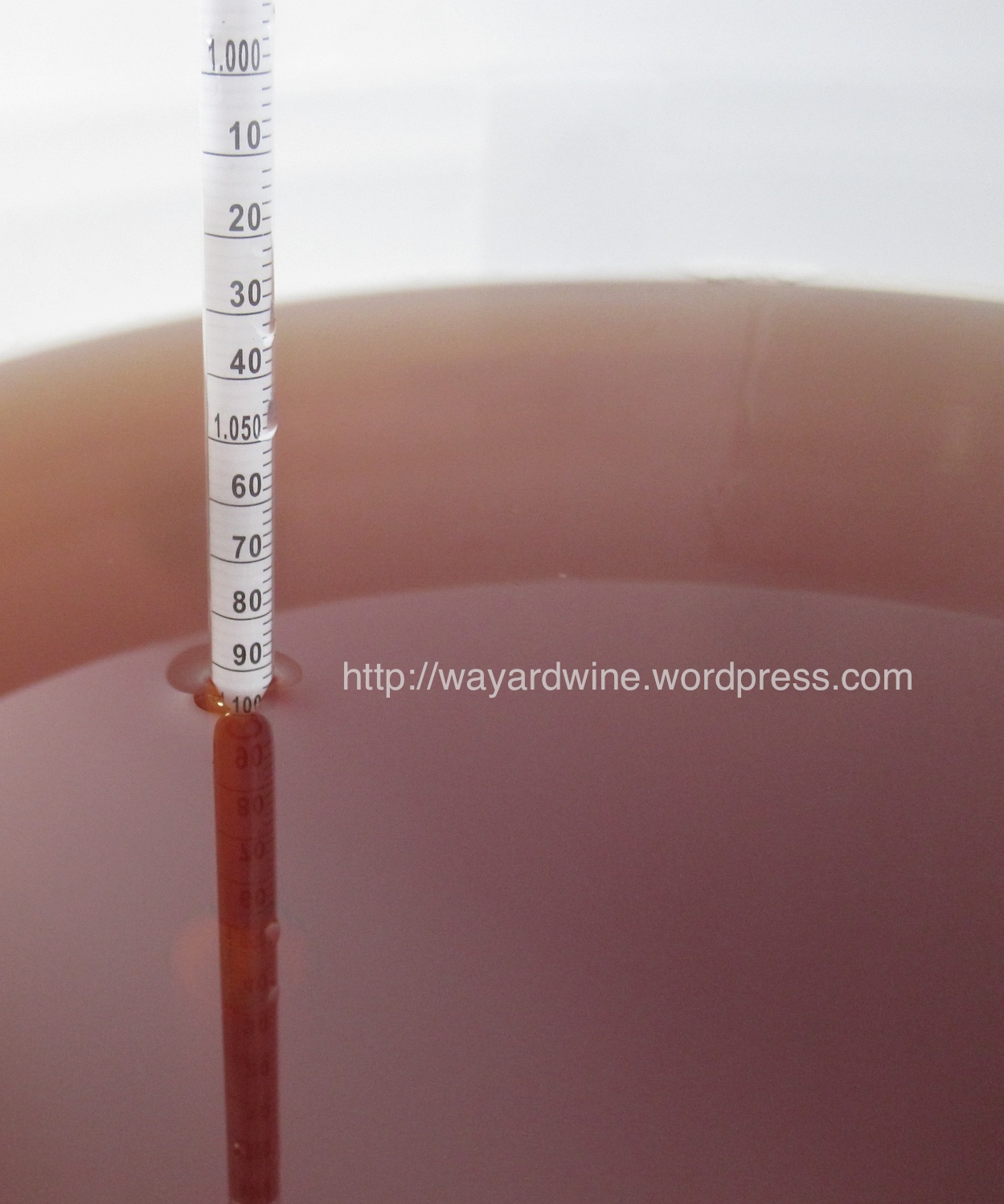
Gravity gets specific...roughly around 1.094 SG

First, I need to level the playing field. The temperature I am working at is around 64F, which will effect my readings. Additionally, my wine kit tools are cheap. But they are the only standard I have. So, I drop in glass plumb bob hydrometer and pray it is close Fall Bright’s.

The Specific Gravity of  sugars bobs near 1.094 SG, the Brix is 23.5, the Potential Alcohol, potentially at 12.5%. Not too shabby for 19th century technology.

Great. What about acidity?

Potentially alcoholic...depending upon desire.

With some German reisling, balancing high acids with just enough sweetness can create mouthwatering wines with honeyed notes that finish cleanly.

The few vignoles-based wines I have tried also benefited from a touch residual sugar. The grape’s acidity is generally high, making it ideal for late harvest and ice wines. My vignoles’ 3.15 pH and 0.922 titratable acidity reflect the medium acidity that I tasted. However, if fermented to dry, those acid levels would seem massively higher. So I need to stop fermentation or add sugar or juice in the end to keep the wine balanced.

Before all that, to avoid another oxidizing panic like my first wine, I dump an extra gallon into my tank. That way, with seven gallons, my glass carboy can spend the month settling through many a vigorous racking without worry of turning to vinegar.

Just in case racking wipes it all away.

Next step: fermentation…maybe.

Posted in VIGNOLES VENTURING | 1 Comment

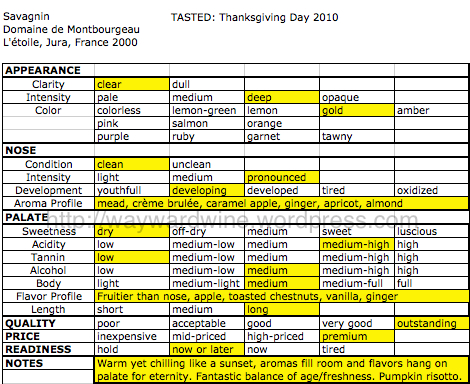
Savagnin: vin jaune, Domaine de Montbourgeau, L’étoile, Jura 2000

The grapes are harvested late in the season, by hand, quickly crushed and pneumatic pressed. Then the wine rests for six months, before being transferred into 230 liter, old barrels to ferment. It is taste-checked a few times annually for seven years.

This slowly oxidizes the wine beneath the yeast veil (voile), developing ethanal and ethanol, in addition to aroma compounds like sotolon. Only 62% of the wine remains after evaporating. It then goes strait from barrel to bottle  The bottles or clavelins are 62 centiliters (instead of the clichéd 75 centiliters) because they symbolize the gap in the barrel.

Decant and drink at around 55 to 60 degrees. Pair with Comté cheese, savory dishes, including braised ham with cream, chicken with mushrooms or pumpkin risotto.

Montbourgeau’s website

Posted in Savagnin, White | Leave a comment