Vancouver Visit 3: Pacific Culinary Institute and Cassini Cellars, Pinot Noir

Out of desperation, we reserved lunch for Half Off Wine Wednesday. Online research found, finally, that wines equaled BC winery prices (albeit still twice US retail). More importantly, the Pacific Culinary Institute sourced food locally. The food should meld well with wine from the same general vicinity.

Let’s try their wine first:

Cassini Cellars, Pinot noir, red Carpet, Okanagan Valley Osoyoos BC VqA 2013 14.2% 22$

image

Appearance: looks a clear, bright ruby that clears at the rim, leggy, but a worrying slight petilance pops about on the first pour.

Aromas: smell fairly strongly of vanilla, clove, plum, fig preserves…not like cold climate Pinot Noir. Slight ethanol and foxy musk creep in.

Palate: It feels dry with mild acidity (a slight prickly va slips in), tannins are tame if lame, alcohol shows the continental dessert hear of Okanagan at 14.2%, which makes for an oddly fullish Pinot.

Flavors: tend toward Merlot-like boldness with wild red cherry, clove, orange peel, slightly dull paper, white dry oak, and fox musk.

Cousins: Cassini’s Pinot is so surreal. It tastes neither California plump nor Burgundy lean: more like Merlot than my narrow grasp of Pinot. It is too hot, very pleasant, foxy, silky for the most part, if a bit edgy and suffering from VA. It’s good 3 of 5, and will work lunch.

Service was young, overeaching, and adorable. My wife’s crab cake created a meat mountain.

image

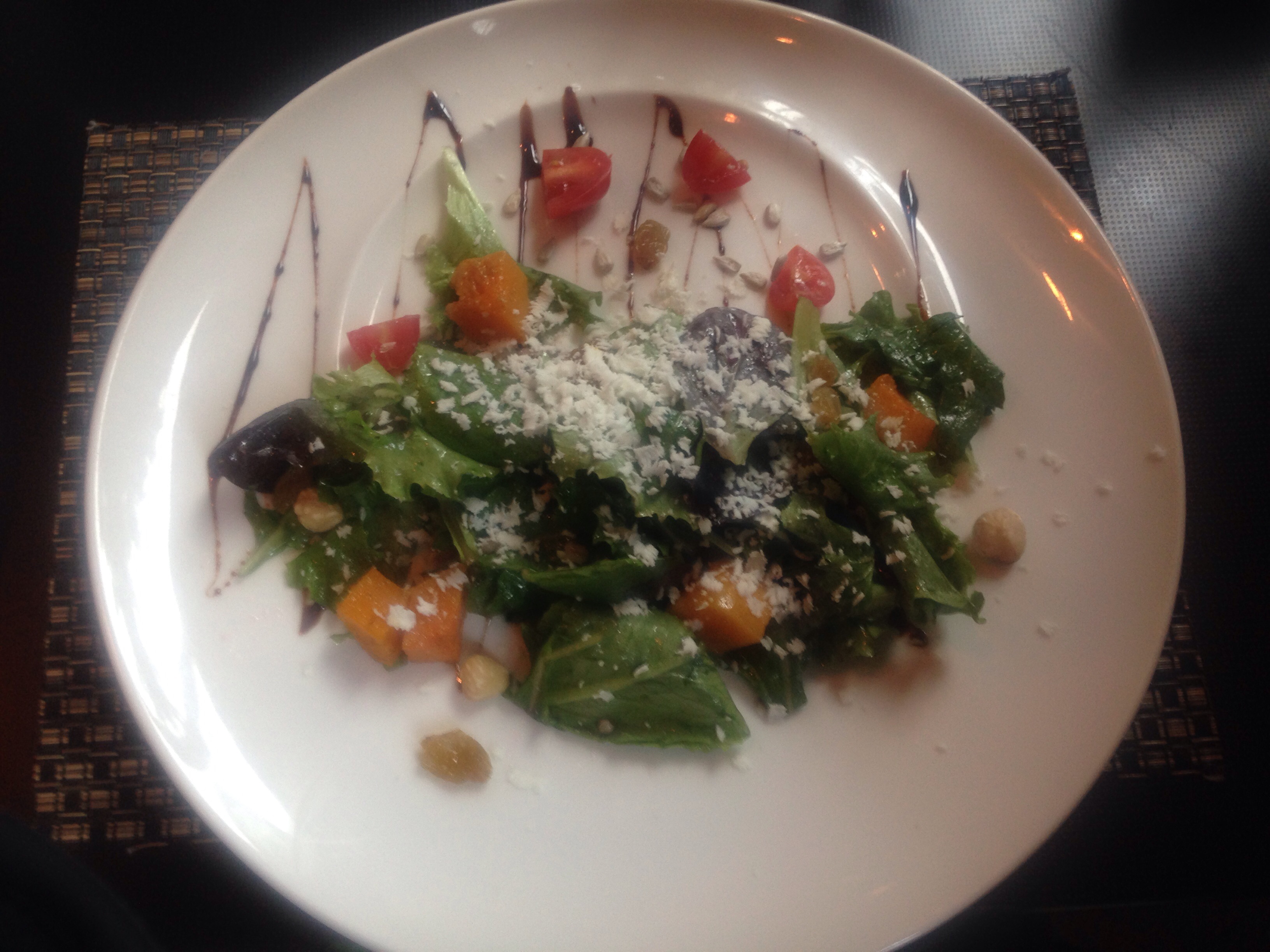
My greens and winter squash, flecked with gold raisins and chestnuts tied beautifully with a balsamic demiglaze that brought a soy-like brightness. The wine turned serious, drier, and cleansed our palates.
image

Entrées landed artfully presented (although forks were forthcoming). My wife’s seared venison sang well with Cassini’s Pinot: mild acid and tannin doing enough to clean it up, while fruit and the soft meat melded seamlessly, and the gaminess of both matched.

image

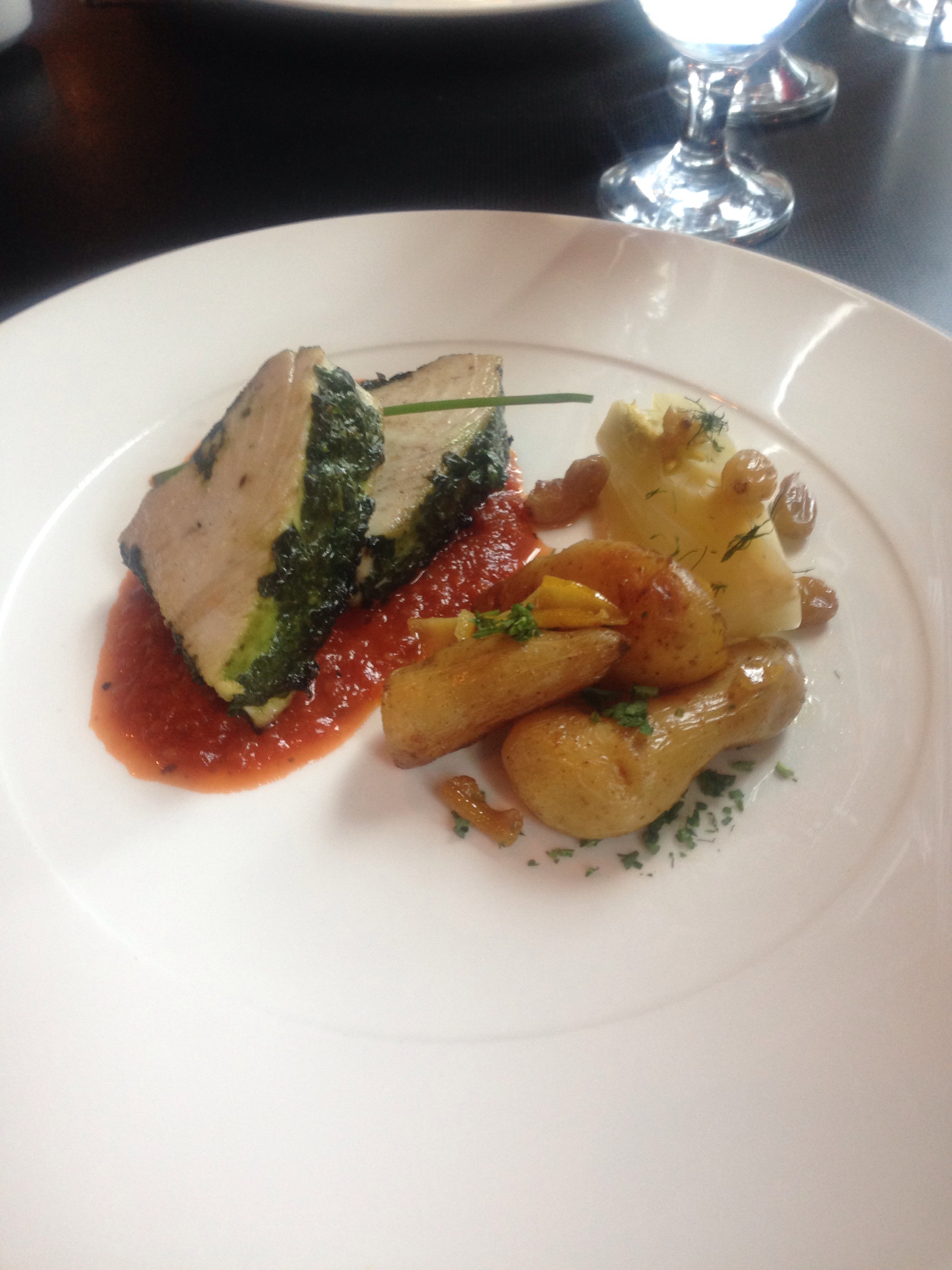
My seared, basil-lined, albacore tuna (although nearly sushi) played a salty, fleshy counterpoint to Cassini’s foxier flavors. If only a garlic red sauce didn’t overwhelm the fish.
image

Deserts glided in and were lovely, light, and well crafted.

image

All in all the Pacific Culinary Institute did a fine job. It was fantastic to meet aspiring students and try their wares. Cassini’s Pinot Noir was far from perfect. Yet it managed the meal decently, melding with various local favors with a thumping boldness. We would love to go back. Maybe Friday’s buffet has a spot.

 

Posted in Uncategorized | Tagged , , , , , , , | 4 Comments

Vancouver Visit 2: Blackwater

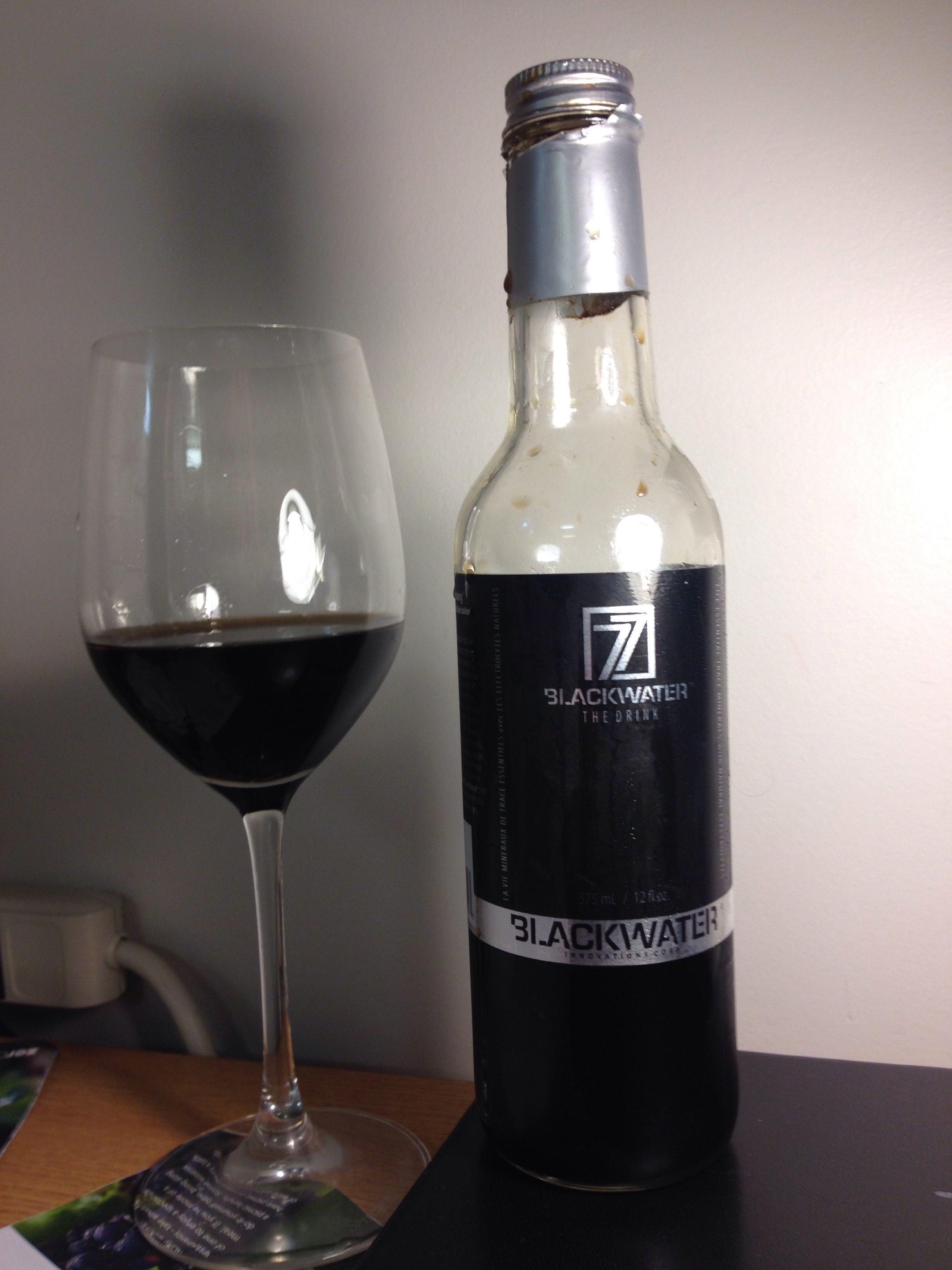
Waywardwine continues to explore drinks in Vancouver BC with Blackwater, which is exactly as it sounds: water that is black.

imageWell, if we’re honest, Blackwater looks brown, akin to Guinness. But I imagine Brownwater didn’t fly with marketing at Innovations Corp.

We found this fine bottle on sale for a buck at Urban Fair: the kind of grocery store with Mazaratis and Porsches parked outside. We had gone their tracing after rumors of $200 French bread shipped direct from France. No dice. But we found Blackwater (and Mailles’ exclusive Chablis, truffle mustard we found only in Dijon and Paris).

So, in our search to define the terroir that defines the definition of British Columbia’s drinks, what serves us better than dirty water? And not just any dirty water, but organic dirty water sourced from an 80 million year deposit in the Rockies.

Appearance: it looks like the inky brown, peat-infused depths of Lochness.

Aromas: smell faintly of potting clay, peat, and petrol

Palate: Dry, minimal acid, minimal fine grained texture, and a light body.

Flavors: taste of well, water. But when we strain really, really, really hard, mild flavors of iron, overused green tea leaf, and twigs emerge.

Conclusions: According to their back label, Blackwater contains “natural electrolytes, antioxidants, a +8pH and 77 plus life essential trace minerals”. So it’s a stylish health drink for posh restaurants that looks like bog water and tastes like mild minerals. The silver skyrise 1.1 million dollar condos of Vancouver should be in love! The drink clearly defines their aspirations. Even if it’s on major clearance at their boutique grocery store. Maybe Tokyo?

Posted in Uncategorized | 4 Comments

Vancouver Visit: Mt. Boucherie, Family Estate Winery, Ehrenfelser, Okanagan Valley BC VQA 2012 17.99 ca

Wayward Wine is presently on location in Vancouver, BC in Canada exploring its wines (EU Austerity Drinking Tour posts will resume shortly).

The challenge was adjusting to BC sticker shock. The province tightly controls pricing and taxes alcohol to the point of prohibition. Last night’s privately run liquor store charged twice for everything. $20 Cupcake? We walked out.

Would this trip turn into an AA meeting?

The next day, we explored the tidy BC-only wine store Swirl in overly hip Yaletown. Their selection handled major varietals and blends well, with a smattering of sparkling and desert wines. Prices breathed easier and not most labels did not have animals on them. Most wines came from Okangan Valley, western Canada’s wine heartland. We will hunt down wineries closer to home in the following days.

The proprietors were amiable and thankfully hands-off. We swallowed our pride and decided that the 20 dollar territory was safe for both quality and wallets.

My wife found a wine made of Ehrenfelser (my name being Aaron, it had a friendly ring).

Mr. Ehrenfelser was a grape crossing between Riesling and Silvaner in the relentless vine laboratories of 1920’s Germany under Dr. Heinrich Birk. Its ability to ripen before Riesling spelled a hit for cold climates. While the Germans have slowing given up on Ehrenfelser, Canada keeps plying it.

Today’s example comes from Mt. Boucherie, Family Estate Winery, in the Okanagan Valley BC VQA from 2012 and costs a mere 17.99 ca

/home/wpcom/public_html/wp-content/blogs.dir/5ba/17323677/files/2015/01/img_0085-0.jpg

Appearance: clear, bright, mediumminus lemon chifon color, lean legs.

Aromas: clean, medium intense yellow pear, orange blossom, lemon pith, grass, light acacia wood, granite minerality.

Palate: off dry sweetness disappears against medium plus acidity, that somehow feeds into a fat, medium plus body, with warm 13.3% alcohol, viscous texture, fat but mouthwatering

Flavors: quiet, soft, silky pale pear and simple syrup up front gears into a bright kiwi, lemon and fresh orange juice-squeezed sunshine, Granite dust.

Conclusions: plump, pleasant, borderline cloyingly fruity, yet just bright and tidied up enought thanks to oodles of acidity. Very good 4 of 5. Have with curried potatoes, or better yet, spicy fish tacos!

Posted in Uncategorized | Tagged , , , , , , | Leave a comment

Hunting for Mozart in Salzburg and Zweigelt Red Wine from Nittnaus, Burgenland, Austria

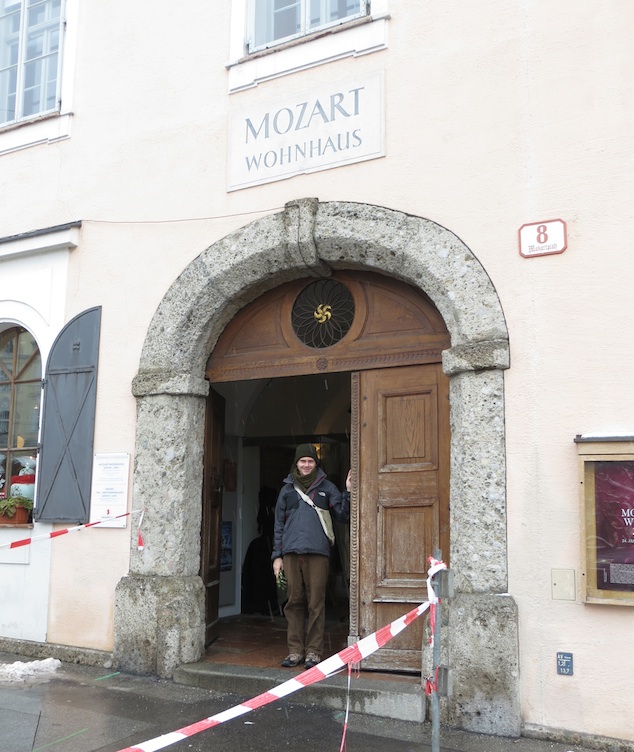
Our second day out in Salzburg includes a visit to Mozart’s Wohnhause, where he grew up.

Aaron Mozart WohnhausBut entry costs a fortune. Instead, we end up spending over an hour in the house’s research library enjoying a Mozart primer narrated by Kenneth Branagh for free.

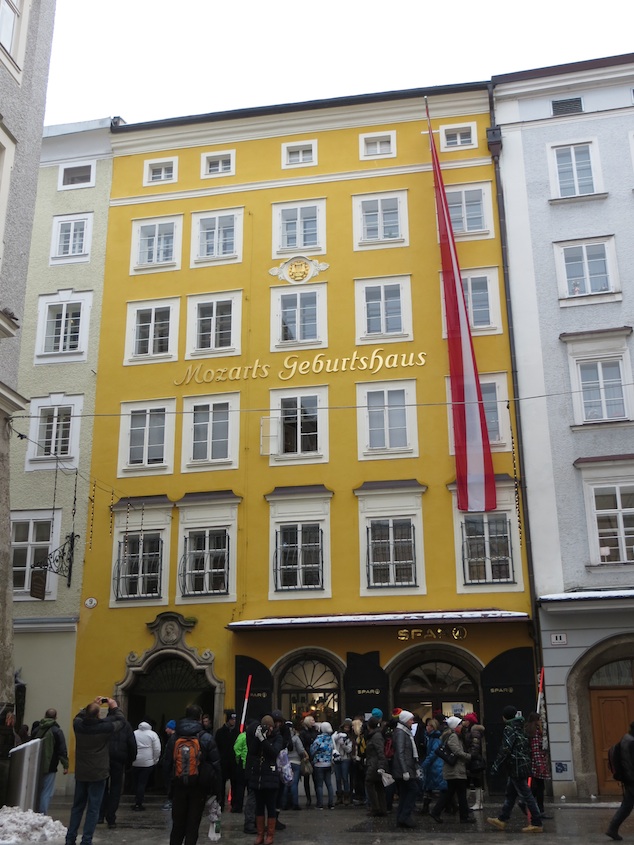
Swimming in Classical music and Mozart’s love-hate (really hate) relationship with Salzburg, we pop over to his birthplace:

Mozart GeburtshausThe line is massive and the fees additionally outrageous (for this trip). So we touch the shrine and wander out. We can’t find the writer of Silent Night (another trip). Christmas Markets fill us with a marizpan, chocolate, spice, and orange cookie and wood-worked bowls.

By chance we stumble into a grotto cave cut into a cliff near St Peter’s (founded in 803). And they have a stand serving gluhwein and hot orange punch!

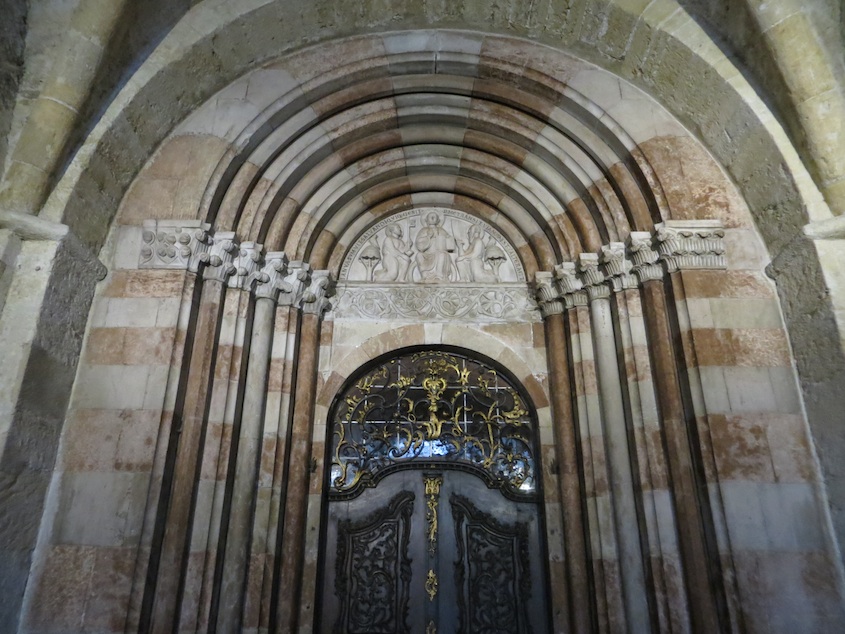
Grotto Salzburg CaveRe-warmed, we pass the world’s oldest continuous restaurant (also 803), and head to St Peters Abbey, possibly Germany’s oldest.  The Romanesque arch weighs heavy, flanked by walls built out of Roman grave stele.

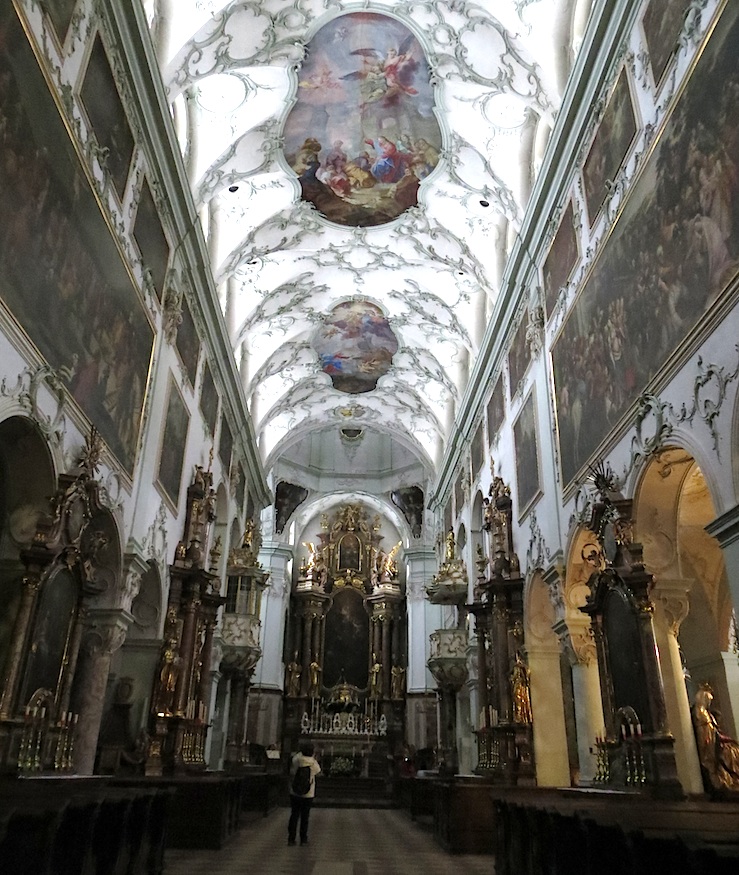
St Peters Salzburg Romanesque entryBut the interior opens up with Baroque modernity. Mozart’s Great Mass in C Minor premiered here with his wife singing soprano:

https://archive.org/embed/MozartGreatMassInCMinorKyrie&autoplay=1

St Peters InteriorThe space breathes with white light.  Paintings by various masters fill the walls and altars. Cutaways in the plaster reveal intricate Medieval arches painted with colorful scroll work.

Outside, fat flakes fall.

St Peters Abbey ExteriorWe chase them amidst thousand year old tombs.

Tracy Flakes SalzburgWe head home for wine awaits. Along the way we find an ancient 800 year old water mill, still grinding grain into fantastic, raisin-filled Christmas brioche.

Tracy Mill SalzburgBack at the hostel we cook potatoes and vegetables and open a bottle of Austrian red.

Nittnaus Zweigelt Exquisit Austria WineThis €6.44 bottle comes from Nittnaus in Burgenland (a large, eastern appellation).  Zweigelt is its glorious-sounding red grape: a 1922 crossing of St Laurent and Blaufrankish that now covers over 10,000 Austrian acres. We’ve tried Zweigelt in Canada and the Fingerlakes. How will Austria’s terroir play?

Nittnause Zweigelt, Exquisit, Qualitätswein, Trocken. Burgenland, Austria 2010.

Appearance: Although clear, this looks a strong, ruby purple.

Aromas: Tidy, young, and smelling moderately of tobacco, steak, black berry, cherry.

Palate: It’s called “Trocken” and, yes, it is dry, very.  Cold climate high acid, some chalky tannins, and some 13% alcohol, leads to a medium plus body.  Does this feel big because our palates have shifted to so many light wines?

Flavors: run the range from black pepper, to lime, to something vegetal, savory, almost like grilled meat.  But before we forget, a half of dark cherry and toasted oak reminds us this is wine. The length is only medium.

Conclusions: Nittnause’s Zweigelt is twangy, toasty, and a bit too wild. Its aspirational title “Exquisit” misses the mark, but it is interesting and at least good (3 of 5).

The wife finds cocoa powder and we wind down with hot happy mugs.

Posted in Uncategorized | Tagged , , , , , , | 6 Comments

Salzburg 2: Weingut Türk, Grüner Veltliner, Kremser Weinberge, Kremstal, Austria 2010

Snow flops on Salzburg rooftops, but we stay cosy inside our hostel and watch Julie Andrews declare these hills be alive.

Julie Andrews Sound of Music So while in Salzburg (see last post), we must try Austria’s native white grape: Grüner Veltliner.  A bit too literally translated as “Green Grape”, it makes for bright whites.  For an EU Austerity Drinking Tour friendly €6.50, we open Weingut Türk, Grüner Veltliner, Kremser Weinberge, from Kremstal in North East Austria from 2010.

Turk Gruner Veltliner Kremser AustriaWe ignore the stark label and open it.

Appearance: It looks a clear, pale, lemon green, with slight fizz.

Aromas: smell clean and still developing, with medium intense gunpowder and flint leading to lemon peel. That sulfur blows off after a bit, but the flinty wet stone mineral smell hangs on.

Palate: Dry, high-toned acids, medium 12% alcohol, leads to a lightish body, with a prickly texture.

Flavors: The notably intense flavors of lemon juice and flint mineral lead for a medium length. Turk is good (3 of 5), refreshing, loaded with cut. Goodbye enamel.

Tomorrow: Austrian Red??? Oh yes!

Posted in Uncategorized | Tagged , , , , , | Leave a comment