 Serendipity provides the lucky theme for this 13th Monthly Wine Writing Challenge. So, what role does fortuitous chance play in wine? Well, one theory thinks we can control nature’s chaos: biodynamics.
 Imagine organic wine-making on astrological steroids, based, weirdly, on lectures given by Austrian philosopher Rudolf Steiner in the 1920s. Biodynamics looks at a vineyard as a whole ecosystem tied to celestial phenomenon and proscribes rituals to better enhance sustainability and produce. Intriguing…
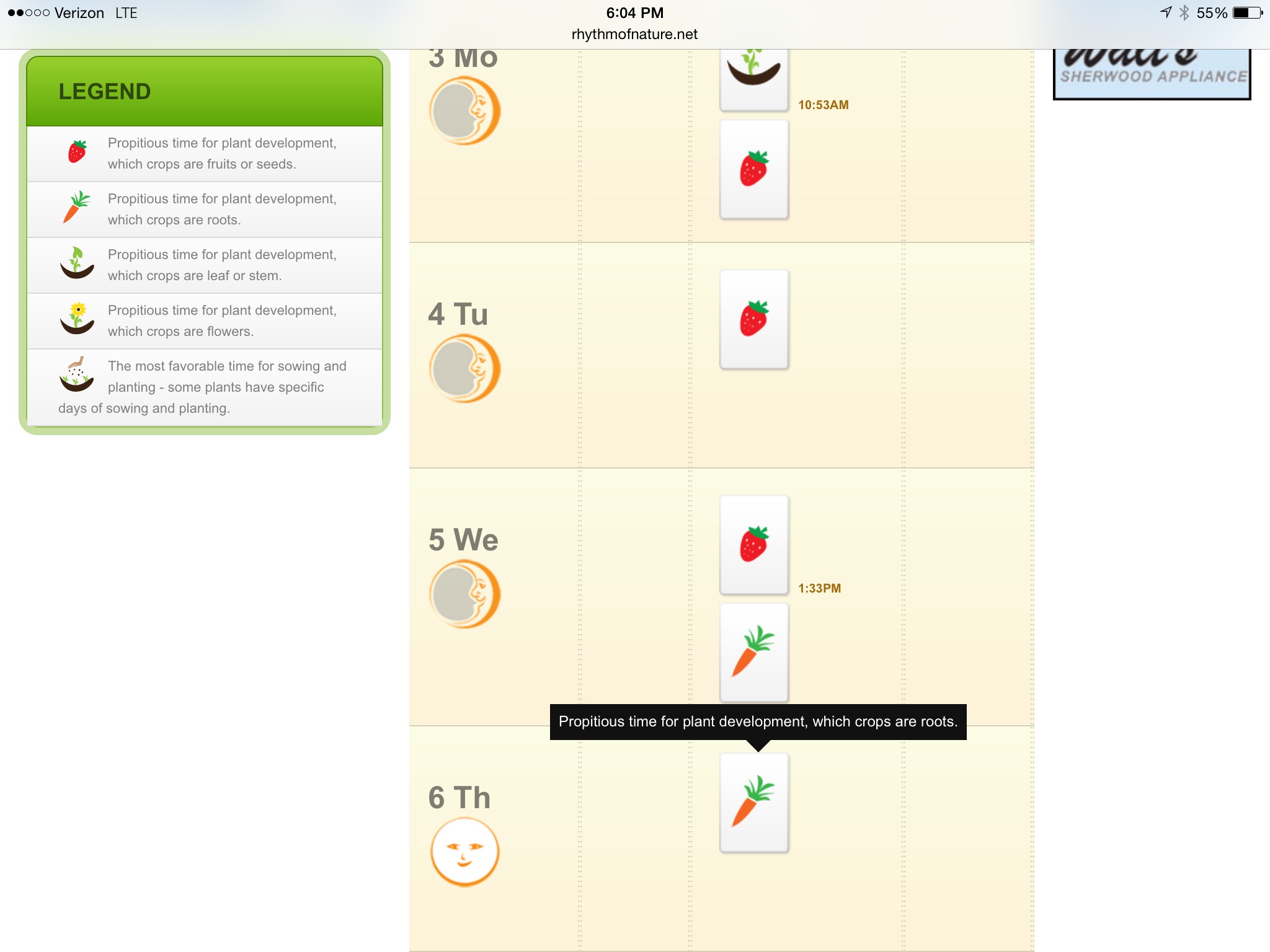
However, bio-ists also latch their lunar planting calendar to a wine tasting calender. In theory, wine lives, and moon phases effect it just like living plants. Now wine certainly evolves and changes chemically with time and oxygen exposure, but to consider it “living” is like believing in zombies: those grapes aren’t growing anytime soon.
But can this (pseudo) science really predict chance? If we can calculate and plan our pleasure: “today is a leaf day, I shall avoid wine for maximum delight!” does it rob us the joy of surprise? Can we control serendipity?
November 6th, Jean-Francois Bourdy came to town. His family had made wine traditionally, never planting new varieties, and converted to biodynamics a decade ago. With him came a tasting of 16 wines from Jura: France’s smallest, cold, continental region, sandwiched between Burgundy and Switzerland, and famed for long-aged wines.
 But November 6th was a Root Day and a full moon: a horrid day to drink: fruit and flower days are best.
 Would Bourdy’s wines taste like dirt or fruit? To avoid bias, I did not check the calendar beforehand. Let’s see if Biodynamics can predict serendipity.
THE TASTING:
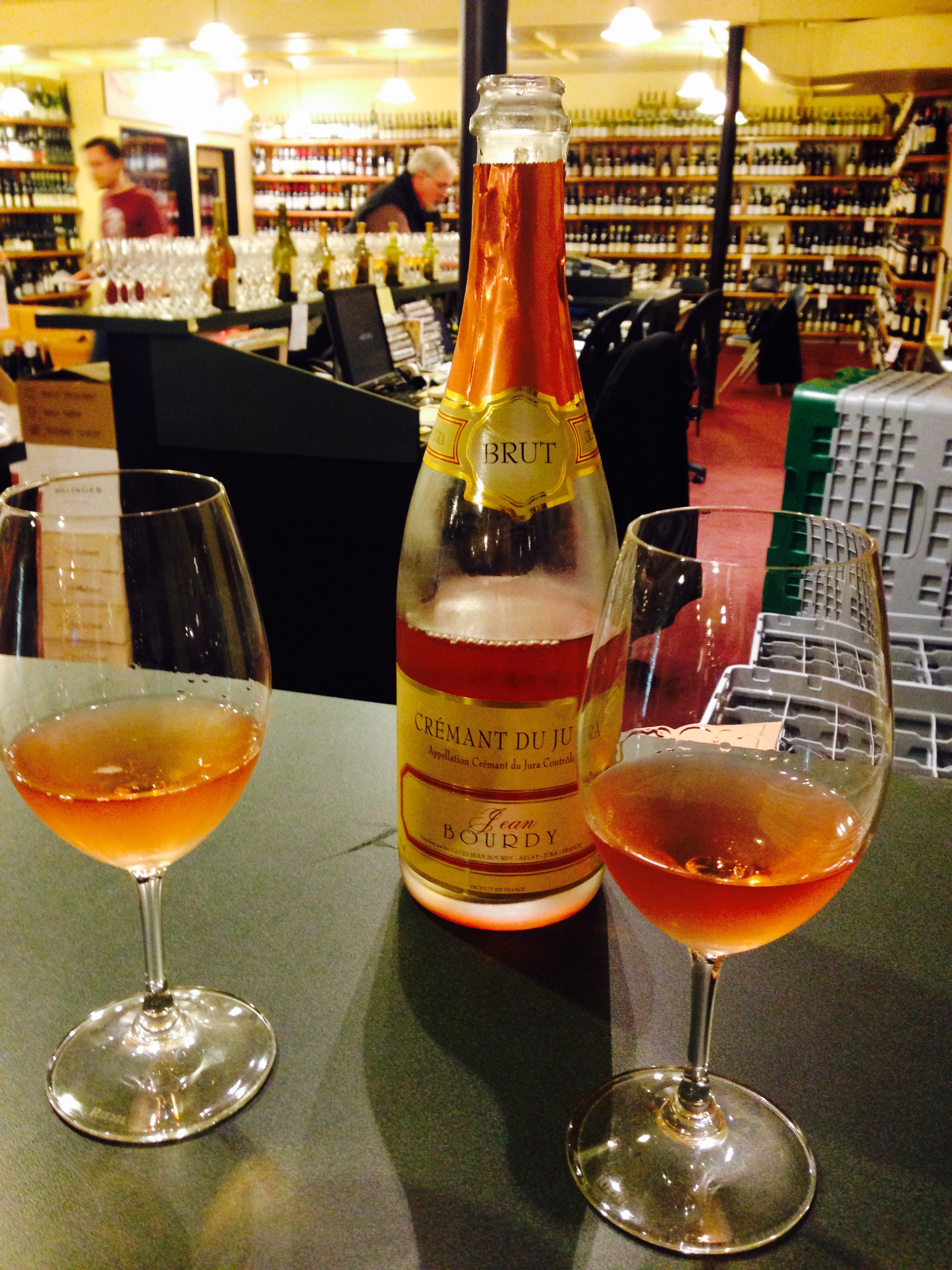
 We start with Jean Bourdy, Crémant du Jura, NV $23.99: 100% native Trousseau grapes fermented like Champagne. It looks like a gold-flecked, peach sunset. It smells and tastes of pear, croissant with vanilla icing, dried apricot, and lemon peel. Off dry, bright acid, and chalk dust lead to lightness and length. The fruits are there, but maybe today’s root-itude emphasizes more serious elements. Maybe their Crémant is just damn good (4 of 5).
We sit and Bourdy details Jura’s history.
 A flight of four reds appears: 2010, 1998, 1979, and 1967. The thin skinned, red grapes Poulsard, Trousseau, and Pinot Noir barely ripen in Jura: they look like rosé. So Bourdy co-ferments and ages them 4 years in neutral, teenage barrels to tame their acid.
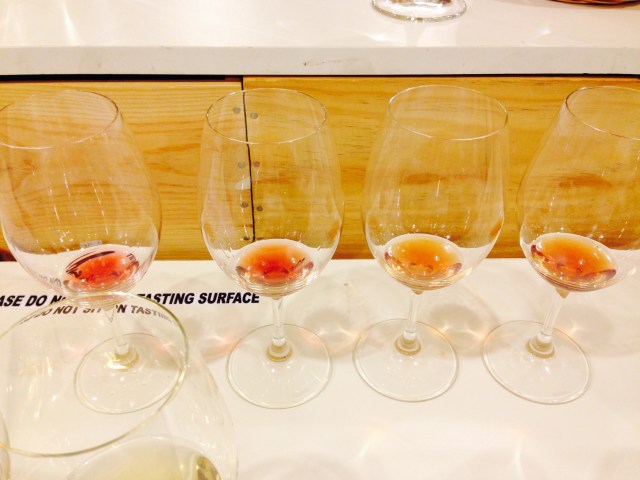 The 2010 (left) looks a bright ruby blue baby. Aromas smell ripely of Turkish delight, clove, earthy mineral, eucalypitis…but not fruit…hmmm… The palate seers with acidity and tannin, a lean body but silken texture. Flavors ring of hot iron, eucalyptus, aniseed, and orange peel. It is way too young, Bourdy says drink it in a few decades. But 2010 has great potential (4 fo 5). In retrospect, the lack of fruit might draw on this root day.
The 1998 glows a light garnet. Aniseed dominates, with maraschino cherry (fruit!) and vanilla. Again it’s dry, tart, tannic, but silky and more plump. Flavors taste far more open, long, and complex adding forest leaves, pumpkin pie crust, and salt. 1998 is very good (4 of 5). Fruit is second fiddle here, but present.
The 1979 looks a copper amber with ruby flecks. Aromas trumpet toffee, creme brulee, hot oil, orange marmalade, and clove. Same palate. Flavors add a lovely woody depth, saline, molé sauce, cinnamon clove. 1979 tastes outstanding (5 of 5) but is fading.
The 1967 shows a slight more ruby than 1979. Aromas seem quiet, but pruned apricot, brioche, figs, figs, figs, golden figs. ’67 is drier, grippier, and stonier than ’79, and tastes of hot coals (like ’79), gold fig, musk, and bacon (5 of 5). Surprisingly more fruit here.
Maybe blame the 4 years of barrel time. Maybe blame the cold climate. Maybe blame the soil. But fruit is my last thought. Tertiary characteristics are king. Could this root day be the culprit? Maybe Jura reds lack fruit. On to the whites:
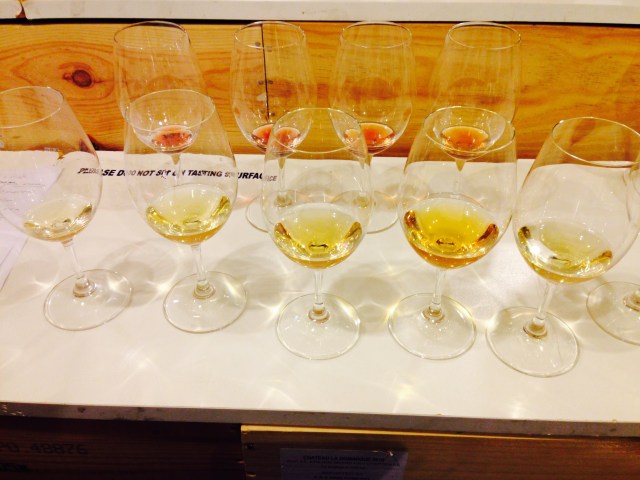 Bourdy’s 2009 Blanc comes from Chardonnay aged four years in oak. Intense aromas smell of cream cycle, verbena, and tart yogurt. Dry, high acids lead to a soft, silky, medium body. Flavors tend to graham cracker, clove, and a light white wood ash but the fruits hold. Rather good (3 of 5) and showing more fruit than expected.
The 1995, however, smells and tastes twangy, grassy, like margarita salt and white pepper. It feels nervous, lean, and linear. Acid dominates. Maybe the root day hurts this 1995. Maybe it just sucks (2 of 5).
The 1990 returns to form with powerful pear, golden apple, and salt. The body balances high acids creating a delicate, complex thing. The palate tastes spiced with cinnamon, creme brulee, and toasted baguette. Stellar (4 of 5).
1983 looks a bright, deep gold. Aromas glow with clove honey, white mushroom, and gold pear. Flavors remind of spiced, candied orange peel, gold pear, tending toward eucalyptus. It seems still taught, even jagged, but lengthy and very good (4 of 5).
So we find more fruit, ripe flavors, and pleasure with the Chardonnays. What happens with Jura’s native grape Savagnin?
Bourdy’s entry 2009 looks nearly effervescent light, lemon gold. Aromas pound with lemon, lime meringue, white pear. Acid-like lemon juice, no body, salt, some vanilla dust, florals and light honey. It is a nice youth (3 of 5).
I will post on Bourdy’s Vin Jaune, Château Chalon, and spirited Macvin and Galant next Thursday. These first “regular” reds and whites provide an adequate sample. Although a control and comparative tasting over other days would help.
Nevertheless, even on this root day, fruit presents itself and these wines delight. But I like them because they taste interesting not easy. With hindsight it seems that I picked up tertiary characteristics more often. Bourdy later explained that his “terroir” (minerality, earth, herb, and individuating characteristics) shines better on root days.
Granted these are serious French wines from a cold climate. They never see the ripeness and methods to emphasize their fruit. But did today’s root day really make a difference? Can I control my pleasure by avoiding root days? Do I prefer wine on root days? Is human subjectivity too fickle to find the same pleasure?
Is our life merely a cog in a mechanistic machine? Would charting out my drinking life ruin the adventure? Predestination made life hell for Calvinists and pilgrims (e.g. Salem witch trails).
One may not have their fruit or root day work out. But by splurging on a wine night I gained something: physical pleasure is fleeting. There is no fruit or root day for learning.





 Yet colonial America imported over a quarter of this island’s product. The Declaration of Independence was toasted with Madeira. Rainwater Madeira starts with grapes like Tinta Negra Mole grown on steep slopes, that then ferment, get fortified with spirit like Port, but then undergo a hot and long barrel aging called estufagem.










 WAYWARD WINE