Dinner Alone with Daltetto Bubbly and Pier Barbaresco #MWWC11

So, I’m alone.  My wife has her brewing club tonight.  Friends have probably made it home already.  But the month ends tomorrow.  I have to burn through my expense account.    Stuck downtown, I decide to indulge my loneliness with wine and dinner.

Now, we prefer to cook and drink at home.  Exploring the cutting edge of city cuisine costs a fortune.  But I give it a chance just this once.

Sweaty thermometers still read 93 F.  My palate begs for icy, dry bubbly. Wil suggests something off the list: Deltetto, Rosé Brut, Metodo Classico, Italy:
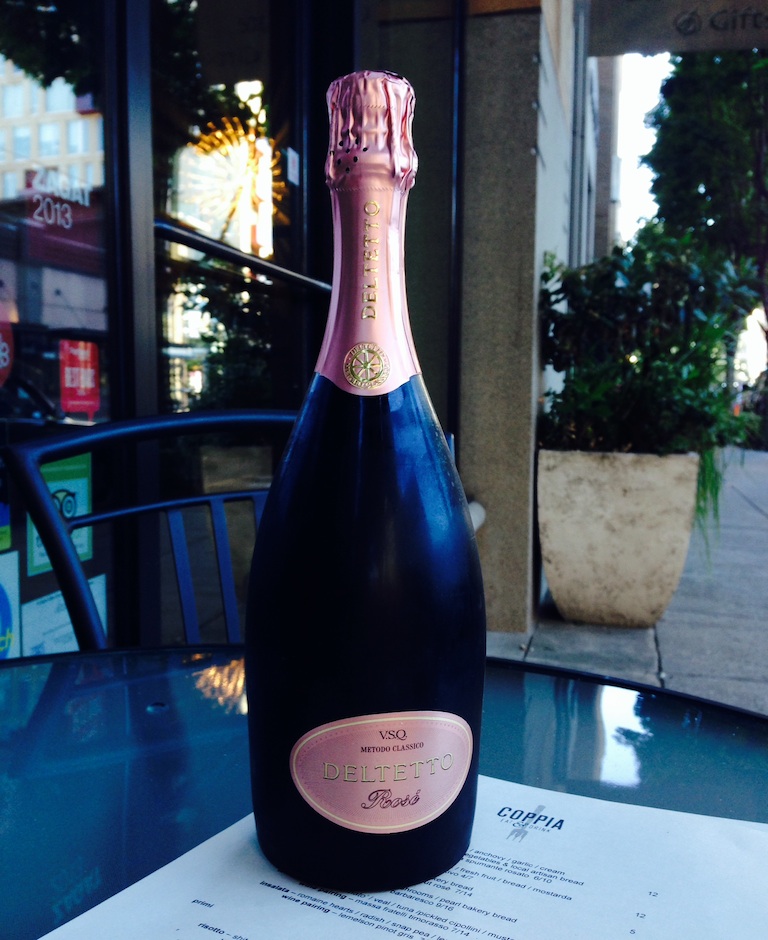
Deltetto Sparkling wineHalf Pinot Nero (Noir) and half Nebbiolo (!!!) one rarely thinks of bubbly (let alone 48 months of Champagne method bubbly) from the Piedmont: home to Barbaresco and Barolo.  Yet there it is, at the table, waiting to tell me all about itself.

Appearance: It looks gorgeous in an odd kind of way.  The core color is a medium coppery, blood orange that fades to a golden edge.

Aromas: Sprightly watermelon, twangy grapefruit, and pomegranate turn into vanilla, bread crust, and a slight funky barnyard.

Palate: 6 g/l render this dry, with taught acids, snapped further by a rush of edgy fizz, and even a bit of tannic click.  Luckily a medium body of fruit keeps it refreshing instead of austere.

Flavors: Like the nose, bright fruits play off slight dry bread and musk notes. The length is medium plus.

Deltetto is clearly very good (4 of 5), a delightful, early evening companion.  We exchange glances, secretly laughing at sweaty tourists, wandering lost in their ridiculous hiking outfits.
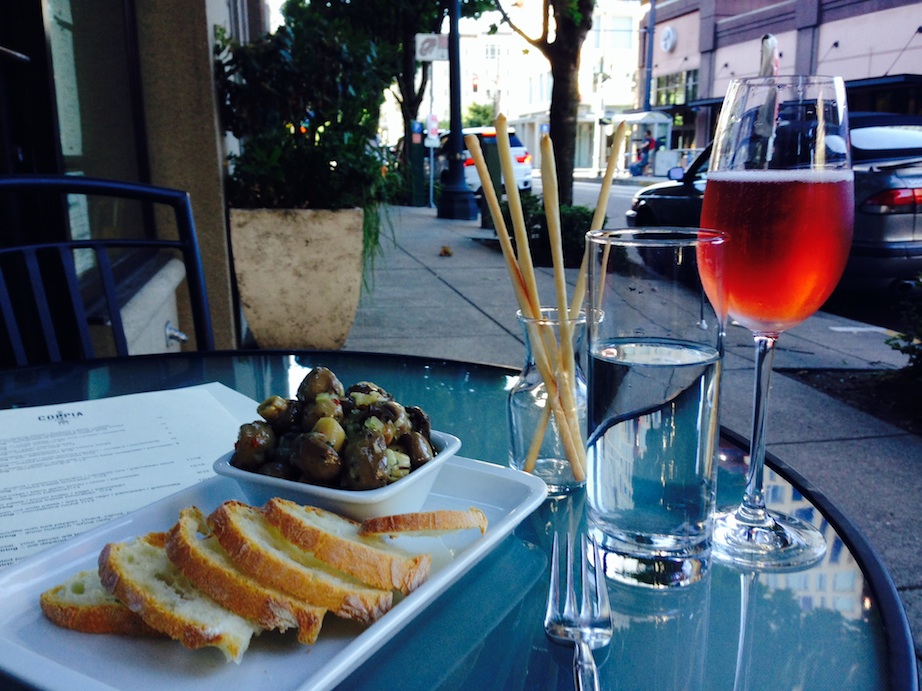
Deltetto Funghi 2It gets even better with homemade funghi.

But it’s high time I invite more serious guests: Barbaresco and pork.
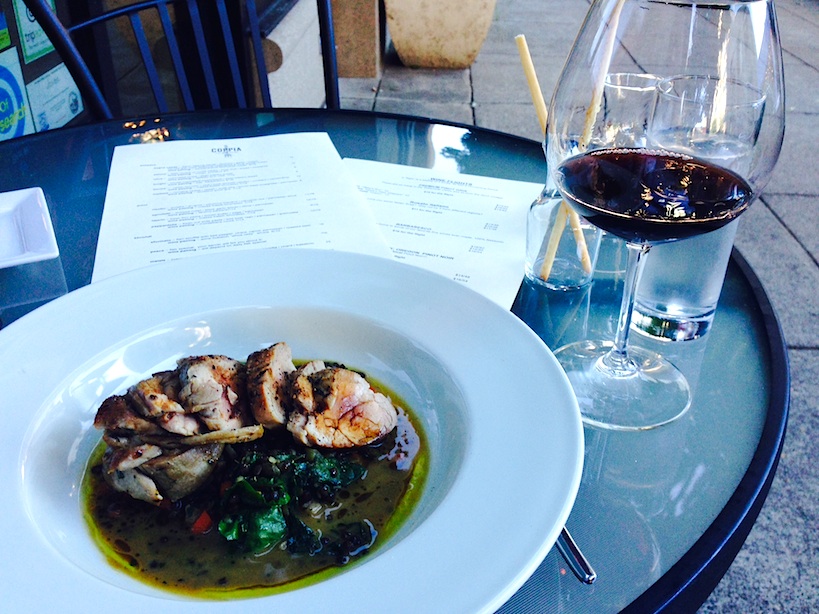
Coppia Pork DIsh 2Let’s cozy up to the wine before we get to know piggy.

Azienda Pier’s Nebbiolo comes from 2001’s harvest.  This Riserva already sounds more established and serious before it reaches the table.  I’m nervous I might embarrass myself.

Appearance: The clear but deep garnet core is framed by a light brick-colored edge.

Aromas: I stick my nose in.  The world closes.  Daltetto’s lively, vapid conversation evaporates.  Strolling couples disappear.  Their barking dogs go silent.  All that remains are pronounced proclamations of rhubarb, earth, white ash, dried rose petal, a superb pomegranate, and tobacco spice.

Palate: Time has moderated Pier’s structures beautifully. It is dry. Acids are high and bright. Tannins hungry for food. Alcohol notable.  Yet all these pieces strum along with grace and patience.

Flavors: The complex array of aromas carry into the palate.  However, Pier’s porcine partner truly enlivens our conversation. Its earthy beluga lentils pick up on the wine’s earthen, woody flavors.  The delicate sweetness of dark fruits draw on the balsamic glaze. The salt and sweet meat of the marinated pork salivates and dallies with the wine’s flavors of cherry fruit and fig preserves.

Pier’s 2001 Barbaresco is an outstanding (5 of 5) companion to this meal.  Like a young philosophy major it expounds on deep, albeit fashionable, questions about modern morality.  It is worldly but still young.  It simply won’t stop talking even after my glass empties.  A fine friend for a lonely evening.

But then my wife texts me back into reality.  Time to pay and go pick her up.

Thus concludes my (admittedly indirect) submission to the 11th Monthly Wine Writing Challenge #MWWC11  and it’s theme Friend.  Thanks for reading.

wine-stain1-3

http://thedrunkencyclist.com/2014/07/16/monthly-wine-writing-challenge-11-mwwc11/

Posted in Uncategorized | Tagged , , , , , , , , , , , , | 1 Comment

Thirsty Thursday: Château de Rochemorin, Pessac-Léognan, Bordeaux, France 2006

This Thirsty Thursday uncorks an accident.  I had ordered Château de Rochemorin’s 2006 Red full of excitement.  Famed André Lurton owns it.  Baron de Montesquieu -inspiration to America’s Constitution- lived and made wine here in Pessac-Léognan (a Graves sub-region that weaves into Bordeaux’s suburbs).

Pessac Leognan Bordeaux2006 was a challenging year for reds, leading to powerful, cellar-needy, tannic, austere wines.  The problem?  This 2006 is white.

Chateau De Rochemorin Blanc 2006Now some whites are age-worthy and become amazingly expansive in years, even decades on.  But is Rochemorin’s?  It is 100% Sauvignon Blanc: that acidity may preserve it.  Let’s see.

Appearance: It looks a clear, brilliant, medium intense golden color full of metallic shimmer (but all green is gone).

Aromas: Ebullient, warm aromas of shaved coconut, honey, pear, almond shavings, and pineapple dominate.  However, remnants of Sauvignon Blanc’s lemon peel and cut grass hang out.

Palate: It is dry. Once-bright acids have mellowed into a soft pillow of white pith, the body is medium, the texture now feels silken but still a touch prickly

Flavors: It still tastes immensely complex.  Mellow white pear and pineapple form the core, framed by an waves of nuts, anise, and salt, finishing with a whiff of reedy lemon grass cooked in coconut milk. A slow, fino sherry-like oxidation has turned this into something more akin to Vin Jaune: now spiced but still bright.

Conclusions: The sun is setting on Château de Rochemorin’s 2006 Pessac-Léognan blanc. It is still very, very good wine (4 of 5). Some French won’t touch a Bordeaux blanc until years out and I can see why.  Just be ready for something different.  And pair it with simply prepared salads, roast chicken with shaved almonds, artichokes, anything with a bit of butter will brighten this up.

Posted in Uncategorized | Tagged , , , , , , , | Leave a comment

Avignon (P1): Popes, Palaces, YMCAs, And Wine from Visan?

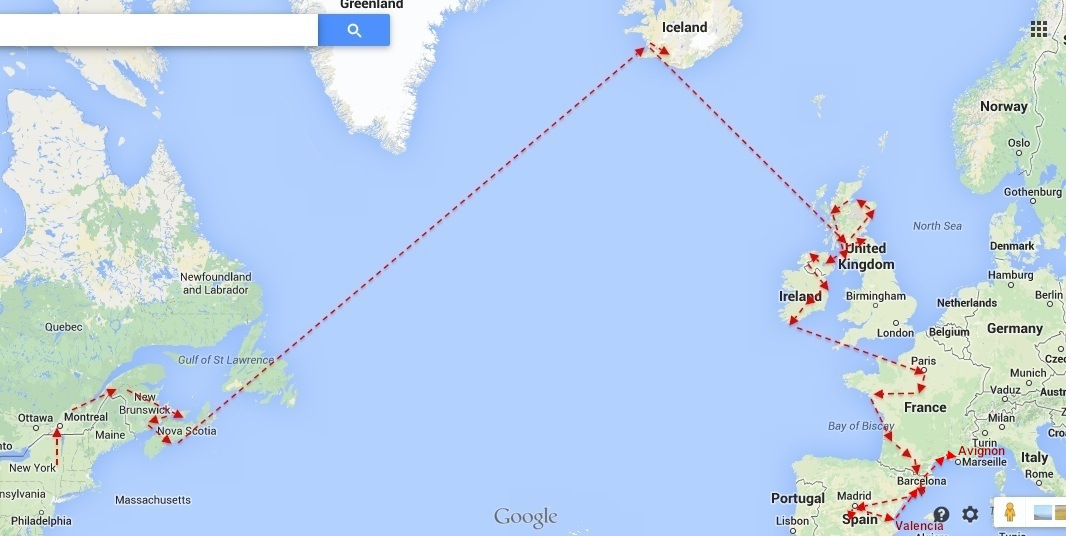
123 days into our EU Austerity Drinking Tour takes us to the heart (or at least funny hat) of the Rhône Valley: Avignon: home to Popes and Châteauneuf-du-Pape: arguably France’s biggest red wine.  We leave a very Roman Nîmes and a very horrible, horrible hotel (so horrid it was our last hotel for the next three months).

EU map New York to Avignon Day 123In Avignon, we get lost three times hunting for the bus. We give up, grab quiches, and hoof it with our luggage across town.  The YMCA awaits.  It looks empty. We expect little, check in, then discover this:

We audio tour the broken bridge with its own rock-hefting saint: Pont Saint-Bénezet:

Aaron Avignon BridgeThis triumphal papish gateway feeds us into the castle-walled, palace of the popes.

avignon palace of the popesGame of Thrones looks like a cheap video game.  We dig deeper through bare halls, finding massive stone bread ovens, underground gold hordes, and empty dining halls.  But the real gem that survived the French Revolution is the papal private chamber:

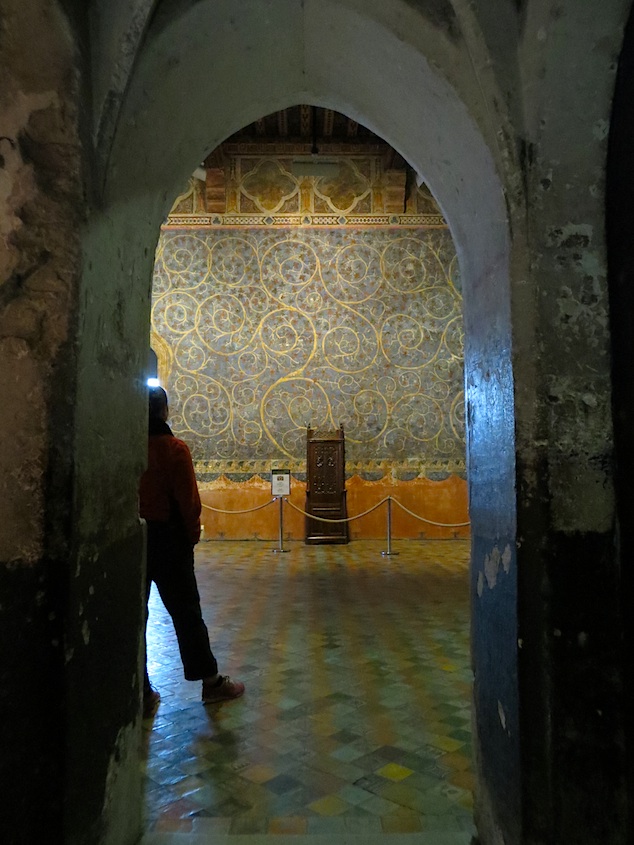
Avignon Papal Private ChamberFresco: an art forgotten since Roman antiquity struggled back into glorious, technicolor, medieval magnificence in the small rooms where Popes napped.  Stilted, Monte Python scenes of fishing and rabbit hunts survive.

After a few massive chapels we clamber to the turreted roof-top:

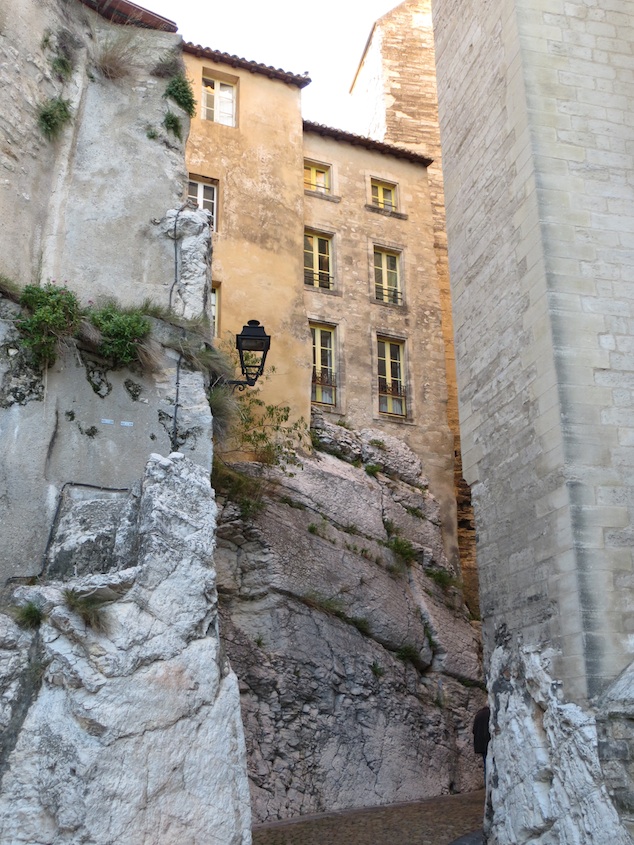
After, we discover the gift shop.  Thanks to museum subsidizing, regional wine prices are quite good, so we grab a bottle for the evening.   Back outside, Avignon becomes a perpetual, golden sunset. Ancient Alley AvignonWe weave along ancient alleys, hike to a park on a hill (with its own vineyard), and watch the sun finally dip into the distant Mediterranean.

Sunset AvignonBut what about that wine?

Back at the YMCA we open: Domaine la Florane, Terre Pourpre, Visan Côtes du Rhône Villages, France, 2009. €11.90

La Foraine Terre PoupreThis “Purple Earth” comes from a Rhône village AOC called Visan: an ancient enclave that Avignon’s Popes fought to control to get its wine not too far upriver.

Appearance:  A strong, deep ruby with a short shave of a clear rim, and extra thick legs.

Aromas: Young, medium aromas of black cherry, fig, violet, and custard (yes custard) don’t overpower.

Palate: A dry, moderately acidic, but notably tannic structure carries an average alcohol of 14% and a plump, medium plus body.

Flavors: Strong red and black cherry, fig, light cigar: all these finish with a lovely hazelnut that lasts quite a while.

Conclusions: Florane’s Terre Pourpre provides very balanced structural elements that allow loads of fruit to come forth. It is very good (4 of 5).  Not big enough for red meat roasts, but grilled chicken and medium cheeses are fine.   It’s definitely worth stepping up from a basic Côtes du Rhône to the Visan Village level.  I can see why Popes fought for the land.

Next Monday continues our visit to Avignon with, of course, a proper Chateauneuf-du-Pape.

Posted in Uncategorized | Tagged , , , , , , , | 3 Comments

Thirsty Thursday: Barbera, Mazzoni, Piemonte, Italy 2009

Summer has hit us. Red wine is the last thing I want to drink. Beer would fare better.  But something needs to drown out the AC on eco-mode.  This Thirsty Thursday turns to that old favorite: Barbera.

Italy’s third most-planted red grape, this prolific paragon of the Piedmontese people has filled many glasses, regions, and styles (including a scandal of added methanol or “coloring” nebbiolo with it).

Mazzoni is the pet project of the Franceschi (Tuscan vintners) and the Terlato (American importers) families. Neither comes from the Piedmonte, but they sourced grapes to their facility in Tuscany for today’s wine.  The vintage is 2009.

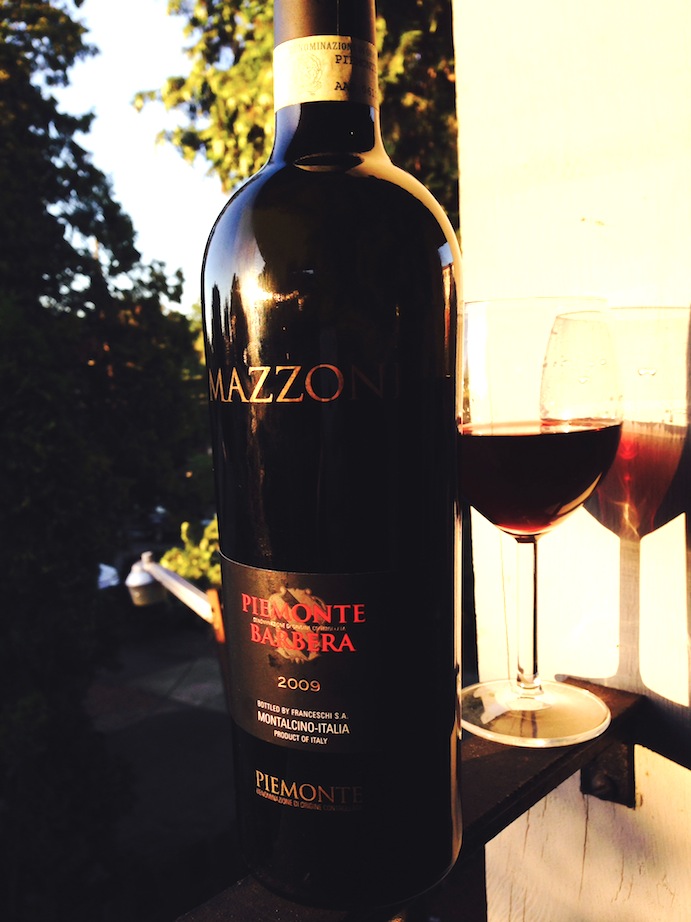
MazzoniBarbera2009Appearance: It looks clear, garnet-colored, but awfully dark and short-rimmed.

Aromas: Very pure, almost distilled, moderate aromas of candied black cherry -like Red Jolly Ranchers- blood orange, dried rose petals, and a bit of burnt campfire wood play about.

Palate: This feels dry but fruity.  Acids are bright: tightening the palate like a shiny wrench.  Tannins are mild.  Alcohol is mildly medium.  The body hovers below medium.  The texture is equally silken.

Flavors: Bouncy yet brooding flavors jostle between tart blood orange and raspberry to dried cherry and raisin (likely, multiple sites or passes).  Then a thin knife of hand-whittled, dry ceder wood slices the fruit.  The length unexpectedly lasts a medium plus length.

Conclusions: Mazzoni’s Barbera demands little.  It may be a bit confected and lack a rustic origin myth, but its completely quaffable alone, even in the heat of summer.  The lack of tannins and mouth-dripping acidity accomplish this.  If your eating tomato-based anything, mild cheeses, beet salad, or simply grilled chicken, pork, or Quorn (yes, I went there), it will work them.  Well done (3 of 5) and under $15.


Posted in Uncategorized | Tagged , , , , , , , | 2 Comments

Thirsty Thursday: Saké: Harushika Junmai Daiginjo, Nara, Japan

I know near to nothing about saké. I never review it. But secretly, this wine geek loves it. Every time I drink it, regardless of quality, it fascinates.

Saké is not beer, but it is brewed grains. Saké is not wine, but alcohols also average in the tweens. Truly, any comparisons fall apart. For saké is uniquely Japanese: like Kimonos, matcha green tea, or Godzilla…taking a tea (?) break between destroying cities:

Godzilla Sake breakAt sake’s core is rice, water, and a combo attack of mold and yeast. After different polishing levels have removed outer proteins, oils, and nasty congeners, the starchy core rests, then gets steeped, followed by a dual ferment with mold (Aspergillus oryzae) and yeast (wine’s old friend: Saccharomyces cerevisiae).  Things get increasingly complicated: fancy saké ferments cool, volume is expanded with staggered additions of water and rice, carbon filtering, multiple pasturizations, a rest, final watering down to 15%, and aging….and breath.

This Thirsty Thursday’s saké comes from the Nara Prefecture:

japan_travel_nara_lpJust South of Kyoto, Nara is home to famed Shinto and Buddhist temples, and adorable, adorable, (somewhat vagrant) deer:

Nara adorable deerAppropriately, today’s saké, Harushika, translates into Spring Deer (founded in 1884). This is its Daiginjo grade, the highest level, which means 50% of the grain has been polished away, leaving only the sexy, starchy core behind.

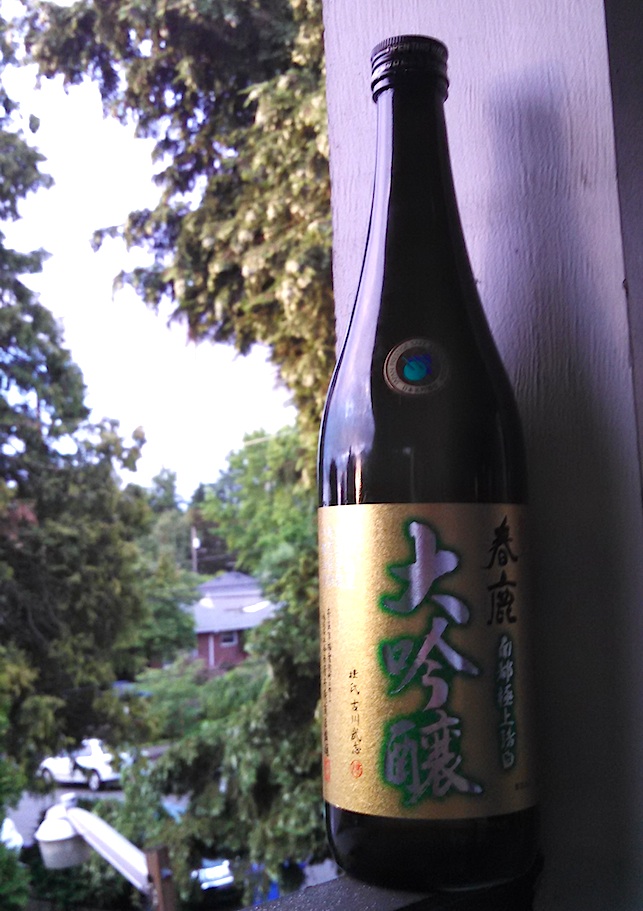
Sake Harushika Junmai Daiginjo Nara JapanAppearance: It looks glass-clear and colorless.

Aromas: Complexity is an overused word, but not here. Light honey, lychee, and melon aromas play off bold fennel, aniseed, and caramel.

Palate: Perfectly synced medium sweetness lines up with refreshing acidity, coupled with an intense, eye-widening, palate seeking, clean alcohol that fills and warms the palate. The body feels medium plus. The texture is creamy.

Flavors: all-encompassing lychee, white honey, marzipan, sweet rice, rose petals.  Insanely complex, long, yet not overpowering.

Conclusions: Indirectly, Harushika’s Daiginjo reminds me of a fantastic Hefeweizen or Gewurztraminer: equally refreshing as it is showy and demanding.  Its quality, in my uneducated opinion, is outstanding (5 of 5).  So is the price: starting at $55.  But perfection has no price.


Posted in Uncategorized | Tagged , , , , , , , , , , , , , | 5 Comments