AVERAGING.ASPIRATIONS.: EU Austerity Drinking Tour #12

Having dipped a toe in Scottish Whisky Ales, let’s familiarize ourselves with how the Scotts handle and then break the standards.

Let’s start with beer that makes water interesting: Lager.
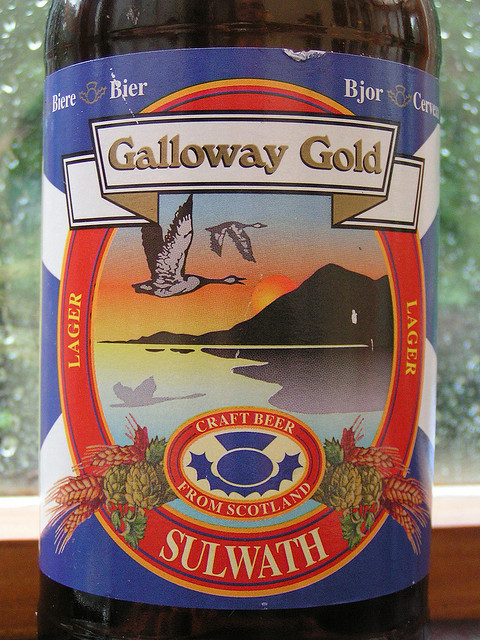
SulwathGalowayGold

Microsoft Paint never looked so…well…

This lager spawns from, hold your breath, “Scotland’s most southerly brewery”: Sulwath Brewery.  Maybe it rains less there?

Their “Galloway Gold” checks all the lager boxes: clear, medium minus intensity gold color, fine white lace.  But wait?  Sediment!  The nose is equally quiet, with a minor note of golden crisp apple.  Dry, med acidity, little bitterness, average alcohol at 5%, and its minimal body all play to type.

Yet, somehow the flavors compensate with medium plus intensity orange, clove, apple, chamomile, slight cardamom, and slight malt.  This is very fruity, flavorful, and fresh, thanks to whole hops and Scottish water.  A respectable good (3 out of 5), for a beer style with little place in my heart (unless there’s BBQ).

photo

He’s angry. His beer is, well…

In Stirling, beneath the shadow of Braveheart’s monument (see photo below), my wife and I briefly let loose our tourist-trash-tendencies.  We bought Traditional Scottish Ales’s William Wallace… beer.  Oxymorons couldn’t be prouder.

This tasting note is for scientific purposes only.  Think of it as a standard measure.  One must know the bad to define the good.

William Wallace’s looks were average red, even the thin froth on top was beige (the beer, not the historical figure).  Oddly, my nose picked up strong notes of peanut brittle and honey.  Most structural bits were medium except for an uptick of acidity.  Upon my trepidatious tongue peanut brittle again dominated, with honey, apple skin, and an average length finish.

Like Mel Gibson recently, “William Wallace” was odd, old, but hard to ignore.  Quality steps up to better than acceptable (3 of 5) but hardly mounts a bagpipe squealing, kilt flipping, blue-faced offensive on the Brits.

Braveheartbloddied

We shall never be peanut brittle flavored.

Enough normalcies.  Let’s try Crabbie’s Original Alcoholic Ginger Beer, originally from Edinburgh (now made in Glasgow).  This pup still sources ginger from the Far East to recreate a historic beer invented by Scottish Merchants running Britain’s India.

Crabbies

No, It won’t give you crabs.

Crabbie’s Ginger is a light amber with big bubbles.  Aromas smell of ginger, nettle, allspice, clove, and citrus.  Candied sugar checks tart medium plus acid, bitterness lies low, alcohol is a beery 4%, the body is mid weight, flavors include ginger, lemons, and limes.

Gods!  Where went summer when you need it?  Screw lemonade, Mike’s Hard junk, or otherwise.  This is ideal for frying on a beach.  They even make an orange one.  Perfectly good (3 of 5) and fun.  If only Scotland got more than a day of sun per year.

Now lets delve further back in time, to Heather Ale.

Photo1While hiking volcanic domes of Sky Island, wild grass blanketed wind swept rocks.  Amidst the green waves quietly glowed purples, pinks, whites, and blues (turns out purple isn’t a color).  Wee buds of heather laced the ground.  Curious, I picked a stem.  It smelled lightly floral, like mild chamomile with tinges of savory herb.  I ate it.  Bitterness ensued, but beneath that, light, honeysuckle honey.

In Alloa, Williams Bros Brewing Co got nostalgic and copied a 16th century Scots-Gaelic recipe.  To beer-familiar malted barley, they infused heather flowers (they call its liquid bree), and sweet gale (aka English Bog Myrtle, aka bayberry bush, aka shrub), and then fermented everything in a copper tun.  They called the result “Fraoch” (heather), and popped it into a bottle that belongs at a Medieval pleasure fair.
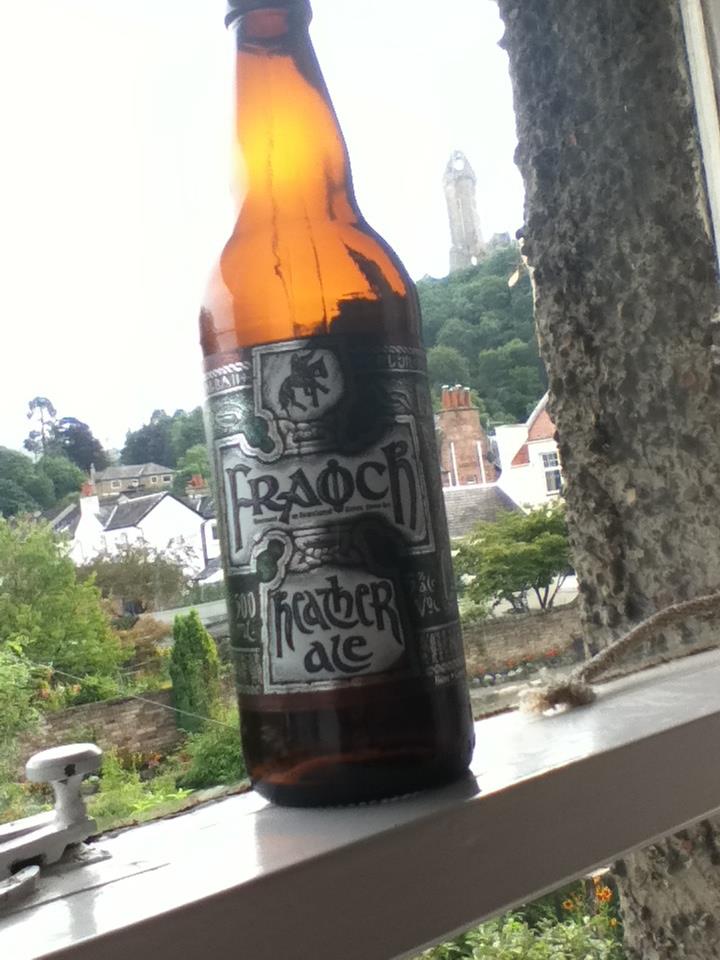
WilliamsFraoch

William Wallace Monument watches over this kin beer in our apartment in Stirling.

Inside, we find a clear, medium intensity amber color, with fine small steady bubbles and a one-centimeter cream-colored head.  The aromas have medium plus intensity scents of, well, heather, obvious malt, ketchup or tomato, and that other Scottish staple: peat (a smoky, wet clay-like scent).  The palate is dry, with medium plus acidity, medium minus bitterness, medium 5% alcohol, medium body.

It feels soft and floral up front, followed by slight prickly hit of dried herbs and light paper smoke on the finish, waking you back from the past.  Light caramel malt makes up the core, while heather florals carry throughout.  The length is medium plus.  The quality is very good (4 out of 5).
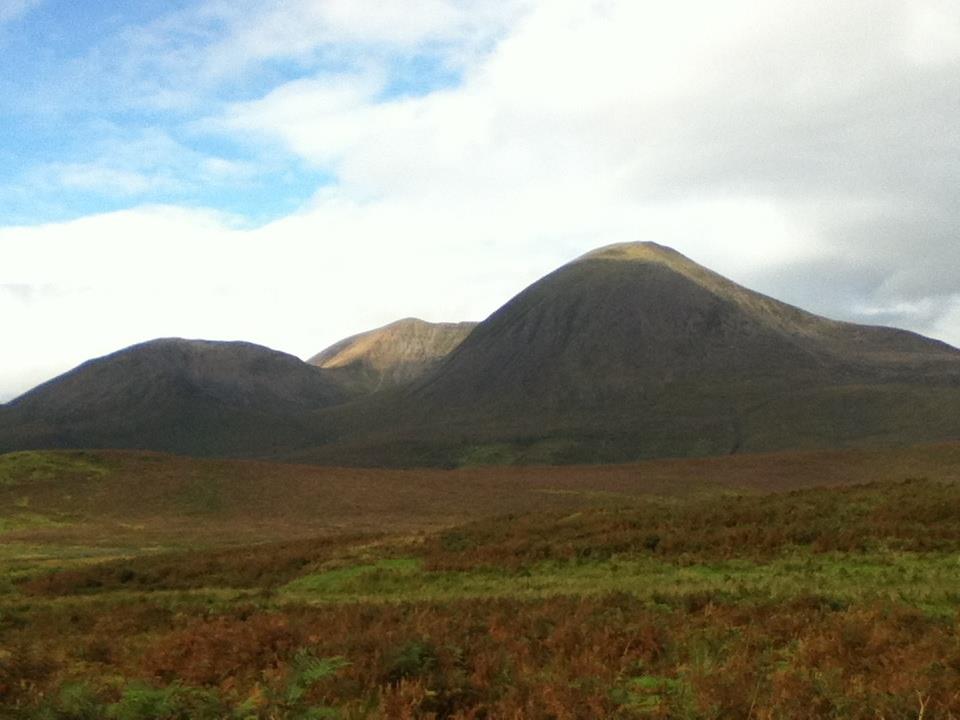
6706_233987023413564_1756570590_n

Our hike through Sky Island.

This beer keeps up a friendly, steady conversation.  No real focus.  Time disappears.  But you don’t really care.  Just drink this one.  Foodwise, mild stuff, salted nuts might work.

Avoid lager and labels with historic figures.  Do add Heather Ale and Ginger Beer to your must-try list along with last week’s Whisky Ales.  They bottle traditional Scottish signifiers, adding new types to beer’s desperately narrow ecosystem.  I’ve even found these at BevMo and other retailers throughout the United States.

Posted in Beer, Scotland, WINERIES WANDERED | Tagged , , , , , , , , , , , , , , , , , , , , , , , | Leave a comment

WHISKY.ALE.: EU Austerity Drinking Tour #11

Last week covered Loch Lomond Brewery (click here).  Their Whisky Ale showed how Scottish beer could break the hegemony of standard categories (IPAs, Lagers, Stouts), by tapping into something very Scottish: Whisky.

Since Whisky is born as beer, distilled a few times, and barrel aged; popping a new beer into used barrels is akin to wearing my dead dad’s suit: it’s a touch awkward, ridiculously retro, musty, yet, weirdly fashions me into something more mature.

Thirsty for more things whiskied, we hunted Scotland’s many beer-filled grocery stores.

If there weren't enough Ns in your life...

If there weren’t enough Ns in your life…

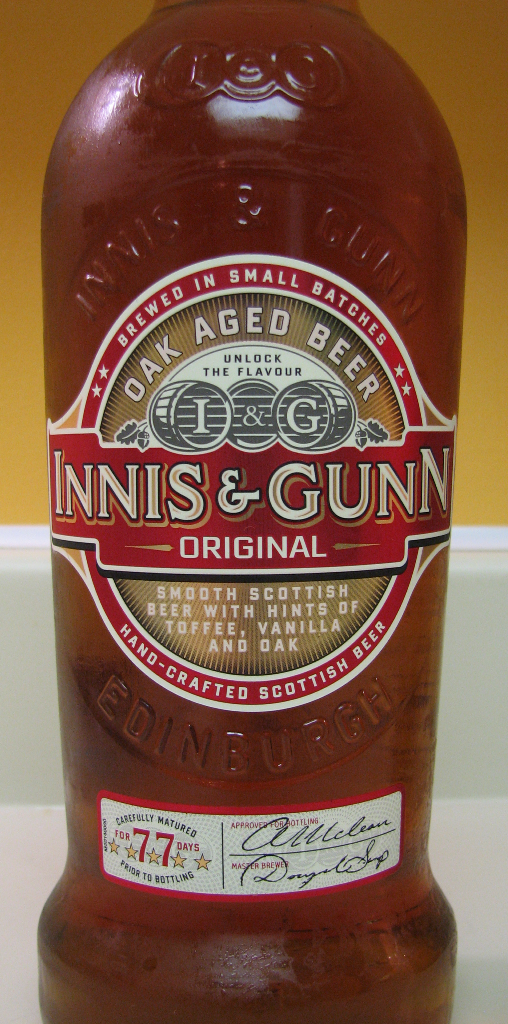
Innis and Gunn’s “Oak Aged Beer” comes from Edinburgh.  Its color was a mild amber, with average fizz, and no head.  Like Lomond’s, the aromas were bold, with notable toasted oak, probably American with that telltale coconut vanilla kick, as well as caramel and oranges.

There was no sugar but it seemed awfully fruity, with med acidity, little bitterness, a noticeable 6.6% alcohol, and an average body.  Flavors included soft caramel, oak, vanilla, banana cream pie, and hazelnut.  The texture felt creamy and pillowy.  The length was medium plus.

Innis and Gunn clearly made a good oaked beer (3 out of 5 points).  However, it seems a bit over-balanced, mellow, and indistinct.  Maybe too much oxidative-time in bland barrels sucked its life.  It reminded me of a decent friend: nice, but a bit too easy-going to be interesting.

That was a brewery, time for a distillery.  They might know how to make a beer with backbone.

Retail therapy.

Retail therapy.

From Stirling, throne of Robert the Bruce and battle-bridge of William Wallace, comes Tullibardine Distillery’s, 1488 Premium Whisky Beer.

As with Innis and Gunn, this was clear, medium intensity amber, with very small, steady fizz, and a centimeter thick white head.  Evaporating alcohol attacked the nose with pronounced intensity vanilla bean, American bourbon oak, hop orange florals, and licorice.

Alcohol went up to 7.7%, and with it, a full-ish body.  Fruity flavors glowed with candied oranges, raspberries, countered by darker esters of smoky peat, licorice, and wheat bread.  The length was fairly long.  The texture silky, fruity, and fat like cream.

Like Loch Lomond’s Whisky Ale, Tullibardine made a very good beer (4 out of 5 points).  However, in comparison, it was too technical and clean to woo or wow.  It couldn’t step past its beer-hood into something greater.  I prefer Loch Lomond’s bold drink.  But first loves always seem better in retrospect.

Hello lovely.

Hello lovely.

I hope Whisky Ale finds a niche in Scotland’s brew-ture (apologies).  It lets them trade on their traditions, giving barrels a third life after wine, sherry or bourbon.  Now they can become tables or flowerpots for the tasteless.  If only recycling could glamorize all my rubbish so well.  Instead, I get to buy $49 T-shirts made of water bottles?  *Sigh*

PlasticTShirt

Stop staring at me hippy!

Posted in Beer, Scotland, WINERIES WANDERED | Tagged , , , , , , , , , , , , , , , , , | 1 Comment

LOCH.LOMOND.BREWERY.: EU Austerity Drinking Tour #10

The train takes my wife and I from Glasgow to the bonnie, bonnie banks o’ Loch Lomond: yes, that lake from the only Scottish song Americans know.  And no, we never take the high road.

Kindly Tourist Office directions send us along the canal, which stretches like a green carpet into the cool grey lake.  Boats, ducks, and day-trippers float along it.  We reach the pedestrianized port bay.  The sun glints off market tents curving along the bank.

Hungry (but secretly thirsty) we first sample eclectic cheeses, shortbreads, and toffees.  We pretend to ignore the brewery tent.  Now fed, and clearly not alcoholics, clearly, we join a man walking up to try beer.

A former wrestler, made entirely of haggis and brew greets us.

28988_220583144753952_1510240200_n

Sample a beer or benchpress twenty stone? Choices…

11249_220583214753945_297327798_n

Hello!

Loch Lomond Brewery is a family affair.  Beefcake above runs the tastings, but we briefly saw Fiona McEachern, their Director and Brewster buzzing about.  She carries on a grand Scottish tradition, where women brewed the beer, while men cooked the food.  Edinburgh castle had a whole room about it.

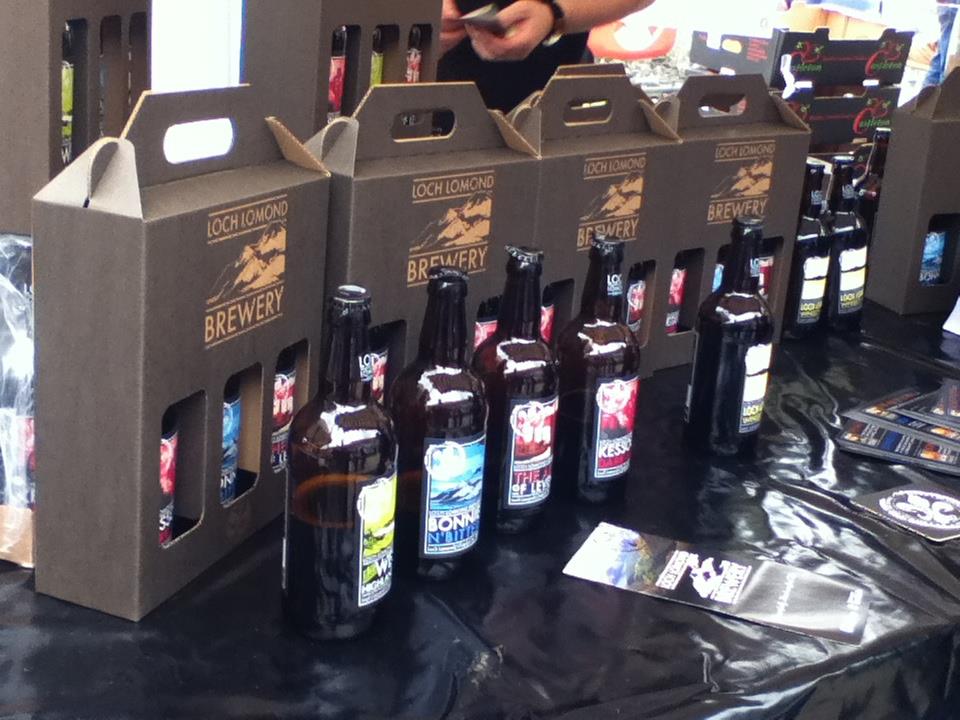
McEachern has ten barrels fermenting only 360 gallons a year.  She makes a respectable range with a Blond (lean, light, fruity), Bonnie n’ Bitter (bright, lively, hoppy florals, killer green grassy bitter streaked finish), Kessog Dark Ale (angling at Guinness but much bolder, richer, spicier).  But her last two stood out.20120821-003603.jpg

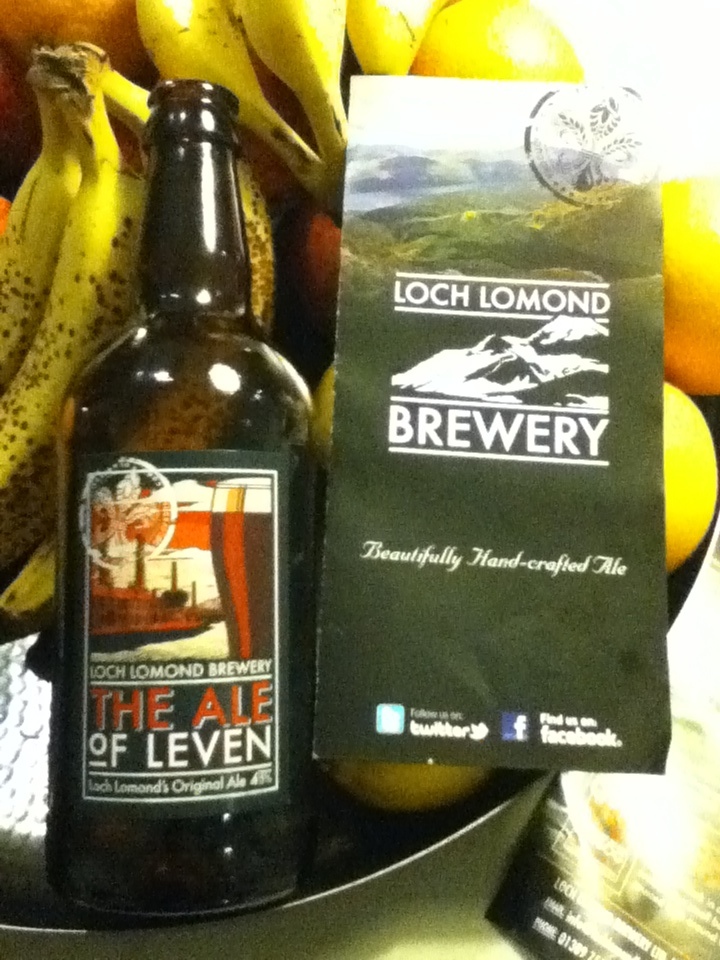
The first bought was Loch Lomond’s The Ale of Leven: a pun of the Vale of Leven, where she brews.  This beer is not as local as the label claims.  Malts and hops come from all over. But that is the wide world of beer.

Nonetheless, as with Whisky, water is Lomond’s claim to difference.  The Luss Hills feed the Glen Finlas, which feeds their beer.  The minerals, pH, and other bits in the water are supposedly enough to separate Lomond from the pack.

The Ale of Leven was a clear, amber color, with miniscule fizz, and no head.  Strong aromas of toffee, caramel apple, nutmeg, and slight soy sauce coddled me.  The palate had enough acid, alcohol, and extra bitterness and body to match the hardy foods of the north. All that was mellowed with a barge-load of malted softness.  Everything but the whole hops got the malt-treatment: from Marris Otter and Crystal malts, to the malted barley and malted wheat.

The resultant flavors were lovely.  Caramel apple, raspberries, vanilla and wheat led, while a quite bitter and refreshing finish tidied up all that silken, creamy, tastiness.  Luxury without the guilt.  This is very good.  Four out five, if you need a number.

Now for something a bit more Scottish:

Whisky Ale.

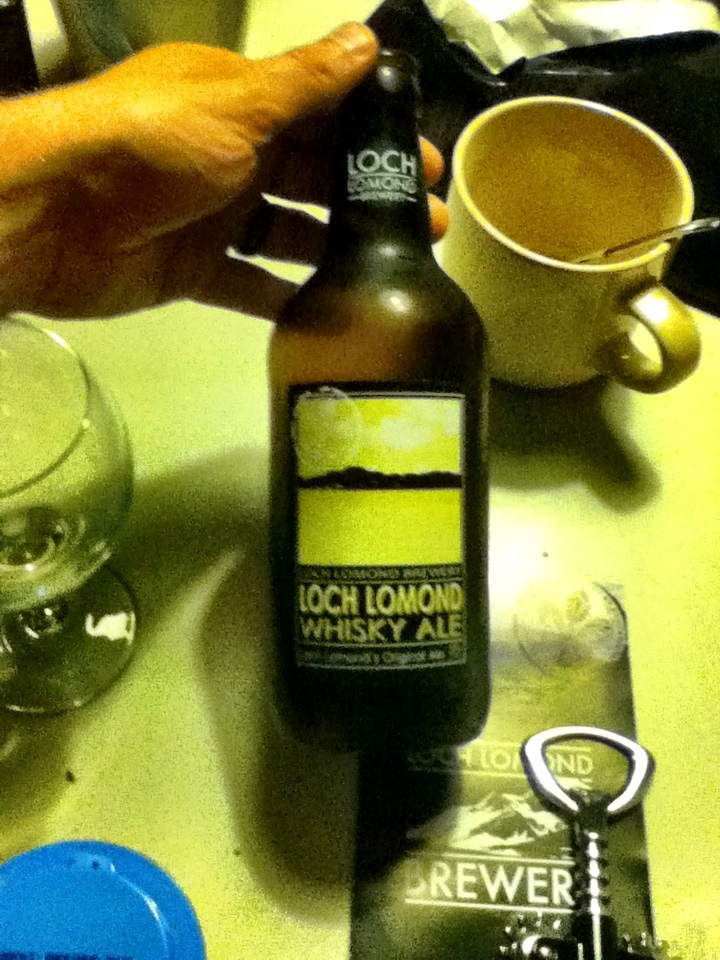
20120821-004027.jpgFiona McEachern makes a higher alcohol beer, then pops it in used Whisky barrels (which were once sherry or bourbon barrels in their own right).  By now the barrel is used and mild enough not to kill the beer.

The result?  Well, bottle 825 of 1320 had a clear but intense color reminiscent of oxidized iron, a super fine fizz, and minor head.  Aromas were of intense toasted coconut, molasses, toasted vanilla, and candied orange.  Acid was low.  Bitterness high.  Alcohol hitting high at 7.2% making the body bulkier.  The texture remained creamy and frothy.  Flavors of burnt toffee, tres leches and American coffee were ever-present and the long, long finish tasted of pure vanilla extract.  This is exceptionally good stuff.  Surprisingly balanced and silky.  Have as its own meal or with dessert, think chocolate, cookies.  Four or more out of five.

Drink Loch Lomond.  You will find the usual suspects.  They won’t disappoint expectations because they play to type.  However, McEachern’s Ale of Leven and Whisky Ale impress because both tried to be greater, both in their parts and their sum.  Welcome back to the Scottish Brewster!

After a beer-warmed walk on the forested bankside of Loch Lomond, sun still shinning it silver, we took the high road, I mean train, home.

Posted in Scotland, WINERIES WANDERED | Tagged , , , , , , , , , , , , , , , , | 10 Comments

Whisky Ale, Loch Lomond Brewery, Scotland

Clear med plus intensity brown copper oxidized iron, super fine fizz, minor head. Clean, med plus intensity toasted coconut, molasses, toasted vanilla, candied orange. Dry, med minus acidity, med plus tannin, 7.2% alc, med plus body, creamy med plus froth, med plus intensity burnt toffee, tres leches, American coffee, vanilla extract finish. Long. Very very good. Surprisingly balanced, silky, have with dessert, think chocolate, cookies. Bottle 825 of 1320

For full post click: LOCH.LOMOND.BREWERY

Posted in Beer, EMPTIED BOTTLES, Uncategorized | Leave a comment

The Ale of Leven, Loch Lomond Brewery, Scotland

Clear med intense amber, fine small fizz no head. Clean med plus toffee, caramel apple, nutmeg slight soy sauce. Dry med acid med plus bitter med alc 4.5 med body med plus intense malt malt malt caramel apple raspberries wheat and vanilla rye bread quite bitter finish silken creamy lovely med plus finish. very good. 4 out of 5.

For full post click: LOCH.LOMOND.BREWERY20120821-003603.jpg


Posted in Beer, EMPTIED BOTTLES | Tagged , , , , , , , | Leave a comment