BREWDOG IN EDINBURGH: Beer Review: Alice Porter; Dogma; Libertine Black Ale: EU Austerity Drinking Tour #17

Last week we tried Brewdog Brewery’s lighter, bottled beers.  They ranked well but did not lead to their self-proclaimed beer-volution.  Time to get serious.  This week, we tackle BrewDog’s bar in Edinburgh.

EdinburghCastleEntrance

It’s seen better times.

To start the day, my wife and I toured Edinburgh Castle.  The views from its turrets gleamed.  The city folded out in a mix of modern and old.  Its industrial past and grime woven with green-scaping and Thai restaurants.  But Edinburgh Castle echoed a shadow of itself: tired, over-restored, and filled with modern buildings.

EdiburghCastle

Cannon view of Edinburgh train station and port beyond.

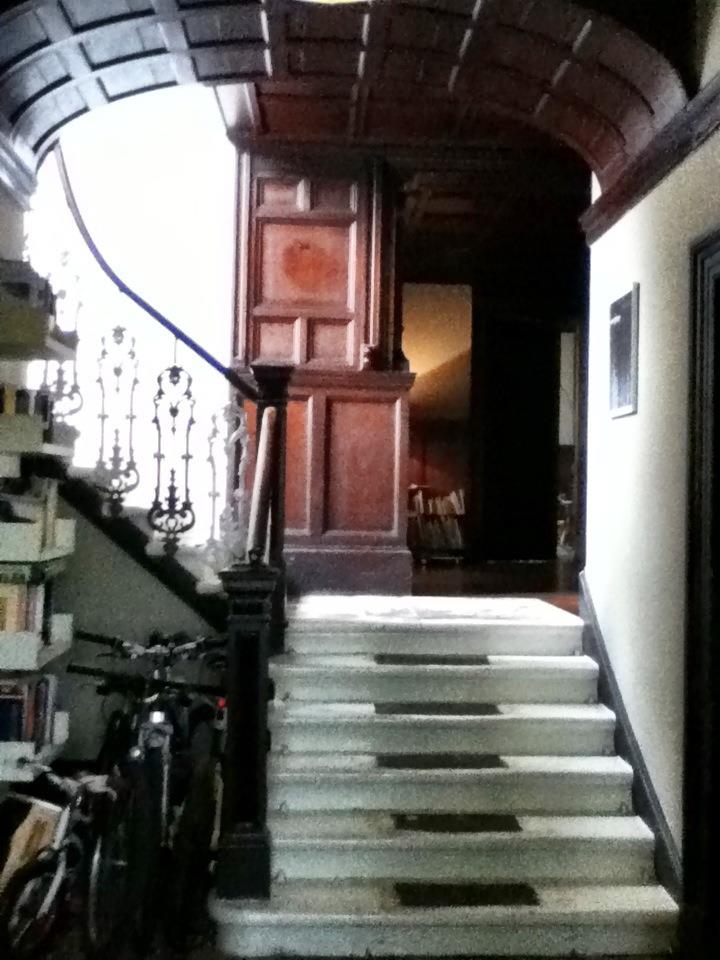
Wandering back to our home-stay, we stumbled upon Brew Dog’s Brewery’s bar.  It hid below Edinburgh Castle in a cement and steel alley.  The small bar door opened to a narrow, windowed hall.

Inside felt like Edinburgh: part modern and stainless, but cosy with couches, wood tables, and a bar made of high school gym floor boards.  Parched, we ordered from the chalkboard of ridiculous, I mean, rebelliously titled beers.

599406_233988563413410_941481763_n

Lunch.

First pint: BrewDog’s “Alice Porter”:

It looked like a black stallion with invisibly microscopic fizz and a lace-thin, cream-colored head.  Aromas rose with medium plus intensity, smelling of creme brûlée (they add vanilla), perky cedar or pine, and salty soy.

The palate was dry, sparked by extra acidity, medium tannin, medium alcohol 6.2% and a medium plus body.  The texture felt rich and frothy, like a bushy beard.  Vibrant flavors would smack the unaware with fresh raspberry, caramel filled chocolate, toasted coffee, and soy on the finish.  The length was medium plus.  All told, Alice Porter was very good beer (4 of 5).

Next, BrewDog’s banned beer “Dogma”.

The Portman Group -beer’s head mistress- took BrewDog to court for eight months.  Their issue: Brewdog’s beer titles breached conduct.  Punk IPA, Hop Rocker, Rip Ride sounded too aggressive.  But BrewDog won and then brewed this beer.  They originally called it “Speedball”, to “give them something worth banning us for”.  Portman Group banned it.  Then BrewDog re-branded it “Dogma”.

The Dogma is dark brown with small, slow fizz, and a fine, thin beige lace.  The aromas lack intensity but resemble burnt toast, burnt toffee, caramel, and raisins.  The palate is dry but wonderfully fruity, with little acidity, little tannin, and 7% alcohol making for a beefy body.

Flavors are rich with caramel apple, heather, sticky honey, peaches, and raisin bread.  Very complex thanks to adding honey and heather.  Medium plus length.  Dogma teeters on the edge of outstanding quality (5 of 5).  It may reverberate too much alcohol on the finish.  It may seem too heavy, creamy, and rich.  Where’s the nose?  Speedball this is not.  But nothing detracts from this pure pleasure.

Next, BrewDog’s: “Libertine Black Ale”:
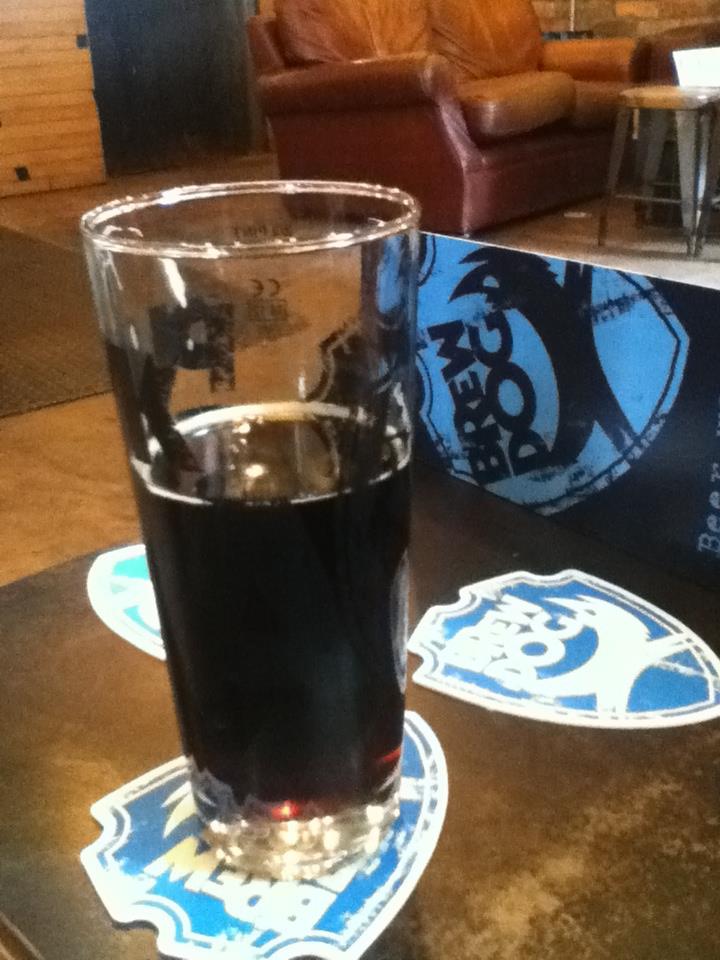
BrewDogEdinburgh

Black and beautiful.

This was dark IPA, with a red core and a thin, cream-colored head.  Aromas of charred wood and bitter black chocolate were far more intense here.

The Libertine Black Ale felt far less fruity.  The acidity was up but average.  Bitterness was greater.  The alcohol ain’t for wimps at a hefty 7%.  This was big beer with medium plus body.  Flavors again didn’t leave room to think, with medium plus intensity congeners of black chocolate, cocoa nibs, beach wood fire, hint of warm caramel in back.  Medium plus length.  Very good (4 of 5).  Lovely char.

Starving and dizzy from the intense flavors (and alcohol), we meandered into The Piemaker: a small café devoted to reviving the Cornish Pasty (pronounced “paahstee”).
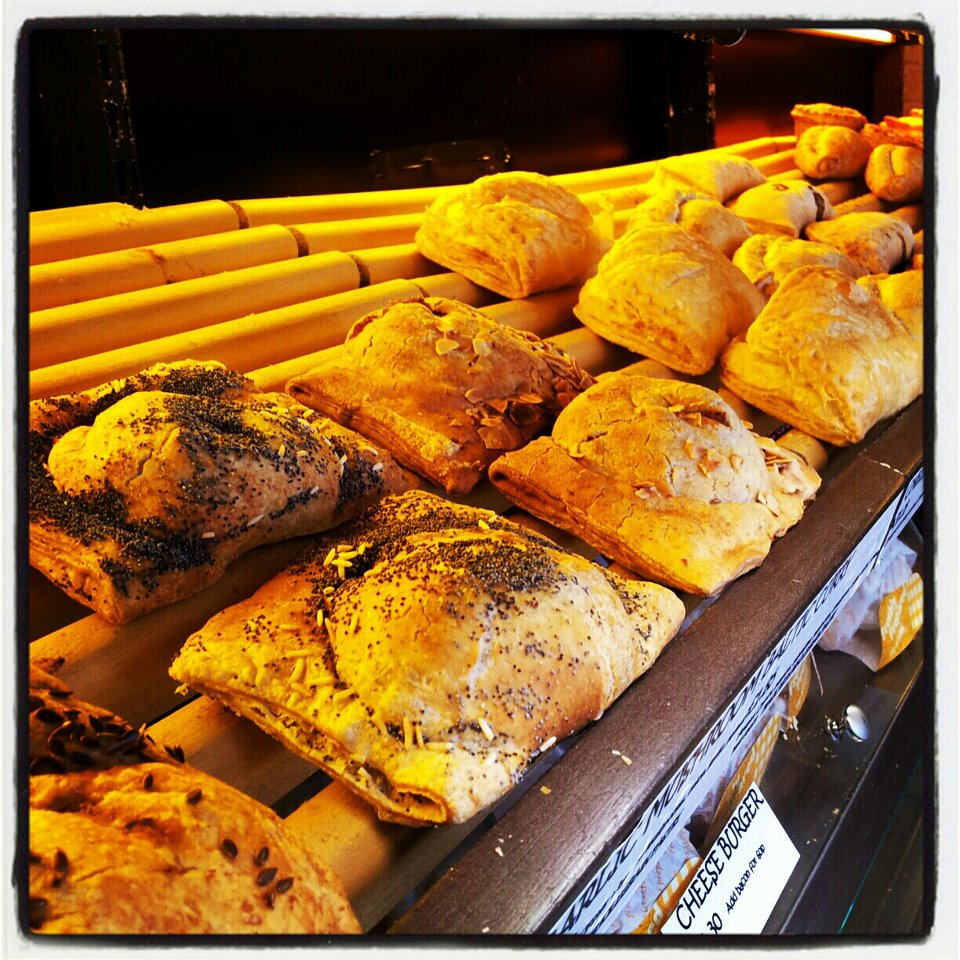
PiemakerPies

Be still my heart, no really, it will stop.

Full of glee and curried veg wrapped in pastry dough, we ambled in and out of the endless thrift/charity shops full of crap, grab four packaged tomatoes and pasta at Tesco, and crawled back into our closet-sized bedroom at our home stay.
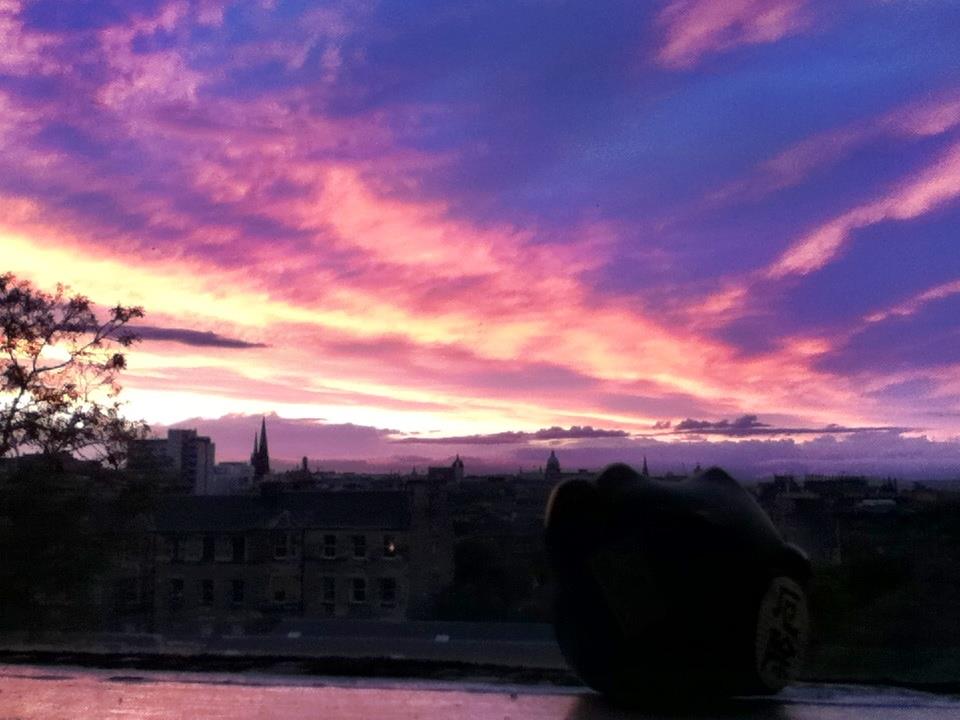
541168_233988613413405_1368725270_n

Thank you Edinburgh.

Check in next week when we return to the BrewDog for a special International Competition tasting.

In the meantime, subscribe, follow me on #twitter @waywardwine and like me on facebook at https://www.facebook.com/wayward.wine

Posted in Beer, EMPTIED BOTTLES, Scotland, WINERIES WANDERED | Tagged , , , , , , , , , , , , , , , , | 3 Comments

BREWDOG BOTTLES REVIEW: 77 Lager; Trashy Blond; 5 A.M. Saint; Punk IPA: EU Austerity Drinking Tour #16

It all began with a dead squirrel.

In 2010, I stumbled onto a BBC article.  It highlighted controversy spinning around 55% alcohol, £500 beers from BrewDog brewery.  They called them “The End of History”: a squirrel pelt sheathed each bottle with its tea cosy-like carcase.

_48446989_brewdog_end_of_history_464

Think of it as recycling.

They represented BrewDog’s latest stab at making the world’s most alcoholic beer.  I had to try one.  Sadly, they sold out immediately, never to come to the US.

Fast forward to 2012.  Before I left for Scotland (and this seven month Euro tour), Oz Clark and James May’s “Drink to Britain” BBC program re-sparked my interest in Scotland’s largest independent brewer.

BrewDogJamesOz

BrewDog’s boys bookend James and Oz park drink.

Now in Scotland, I ease our way in with some basic bottles.  Our visits to BrewDog’s bars will come next week.  At first, we float through Edinburgh’s grocery stores.

BrewDogShelfBottles

If Green Day liked rainbows.

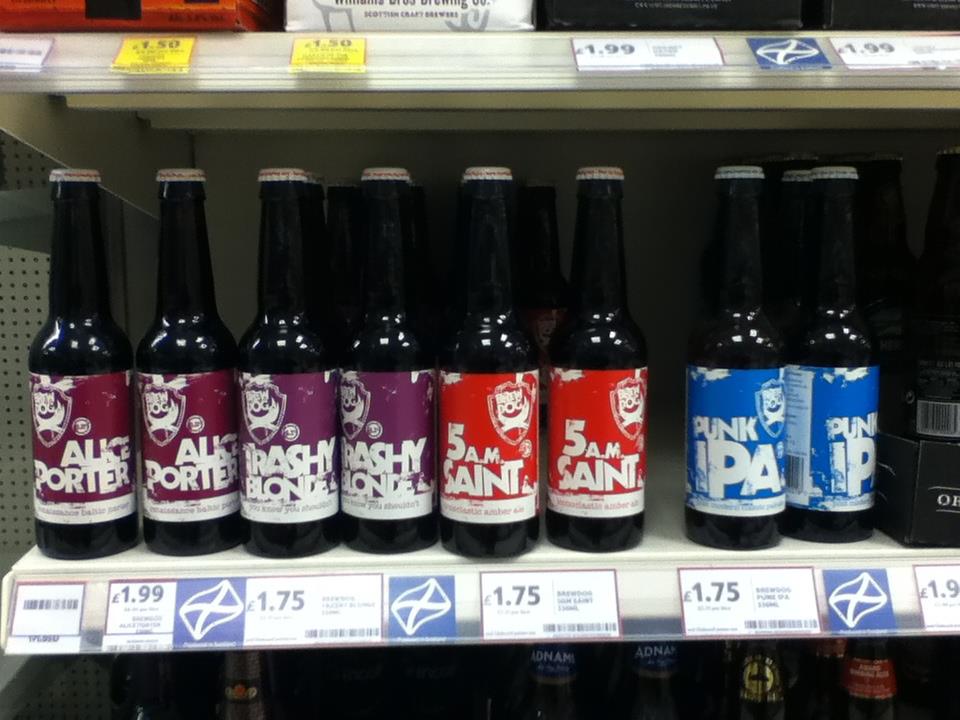
BrewDog’s entry-level bottles brightly line Scotland’s beer aisles.  Soon, their empties will brightly line our window sill.

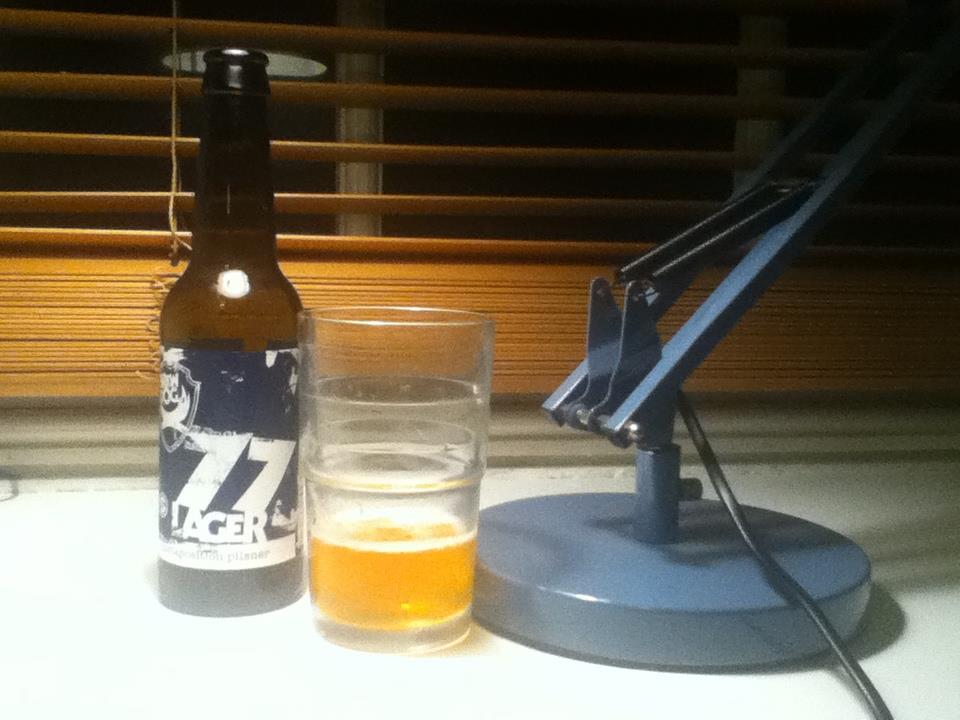
First up, BrewDog’s 77 Lager.

BrewDog77Lager

NOT Budweiser.

Poured, this has far more orange color than most lager.  It smells pleasant, if quiet, with fresh strawberries, lemongrass, and rye.  It is refreshingly tart with a flick of bitterness, average 4.7% alcohol, and some body.  Flavors include apricot-filled puff pastry and some kinda weird, complicated, honey wheat bread.  Length is medium.  The quality seems good (3/5).  It might confuse most Lager drinkers as being fruitier and richer than they’re ready for.  Nice but not moving.

Their Trashy Blond almost lives up to its moniker: easy and airy but hardly trashy enough. Similar to the 77 Lager.  Moving on…

BrewDog’s 5 A.M. Saint Iconoclastic Amber Ale

BrewDog5amSaintBottle

Beer for breakfast.

You’ll find a moderate amount of coppery, amber color.  Aromas offer medium intense caramel and red apple.  Acid ticks up to medium plus, while medium tannins and 5% alcohol add up to a medium body.  Mild wheat, raisin bread, cinnamon, steel, and a lightly smoked honey finish make this tasty.  Some length.

5 A.M. Saint is good (3 of 5), but a bit average for BrewDog (which is a compliment).  There’s some spice and complexity, but acidity outpaces both.  Imagine Newcastle but actually fresh, with a life, and less doughy malt extract.

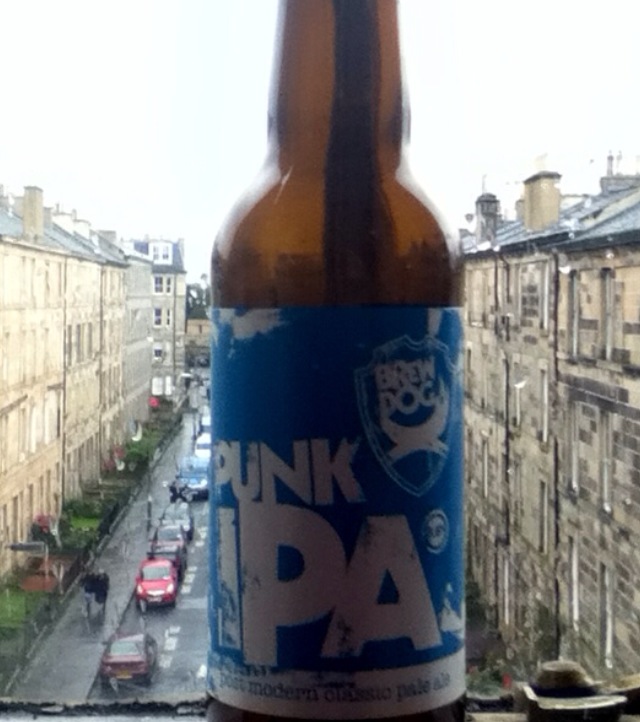
Lastly, BrewDog’s Punk IPA (batch 246):

BrewDogPunkIPA

Bottle over Edinburgh.

Sunny gold amber fills my borrowed glass.  Very fine fizz streaks the sides at medium speed, thin white lace stretches across the top.  Hops give this nose more intense notes of lemon meringue pie, stargazer lilies, and honey.  Coy.  The structural bits add up to an unexpectedly soft mouth-feel.  5.6% alcohol fills a medium body.

Flavors stay easy with clove, bright fresh lemon tart, peach, rye bread, and a sliver of onion.  The finish lasts longer than average.  Punk IPA is very good (4 of 5), but far too pretty to be punk.

Don’t expect a revolution from any brewery’s entry-level beers.  I expected shock and awe, but BrewDog knows better.  You can’t ween a baby from milk onto Port in a night.  We Budweiser-bingeing plebs need training wheels before we can drink a squirrel-wrapped bottle with 55% alcohol.  Expect greater things from BrewDog in next Monday’s post and in the following weeks.

brewdog_end_of_history

Top hats and ties make anything tasteful.

You can find BrewDog stateside at BevMo and others.

Also subscribe, follow me on #twitter @waywardwine and like me on facebook at https://www.facebook.com/wayward.wine
Posted in Beer, Scotland, WINERIES WANDERED | Tagged , , , , , , , , , , , , , , , , , , , , | 3 Comments

PUTTING THE THE IN THE MACALLAN 10 YEAR: EU Austerity Drinking Tour #15

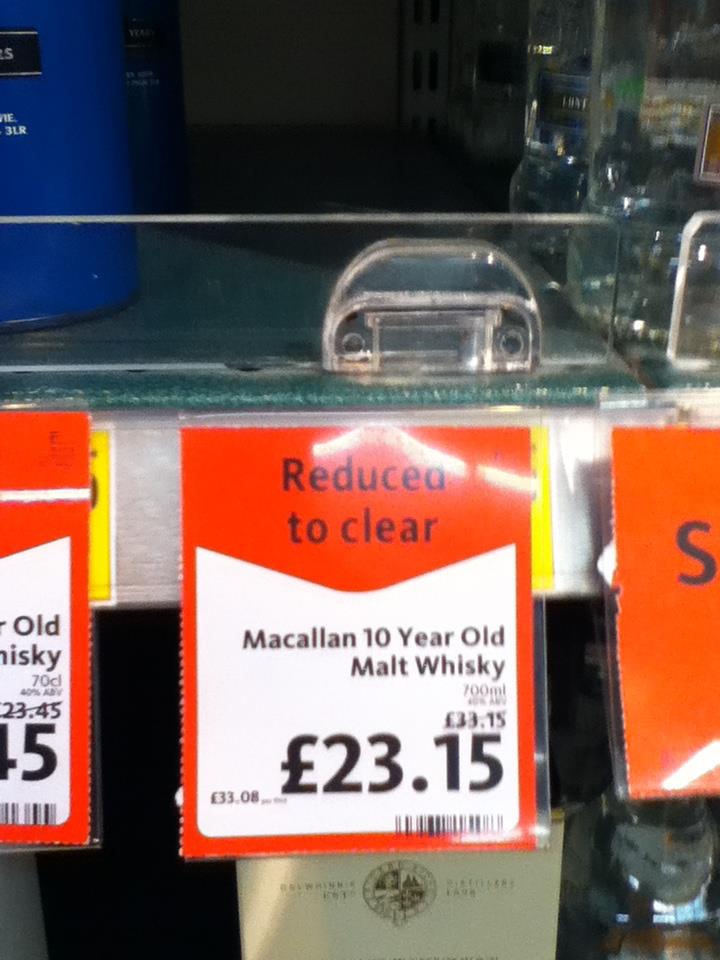
Weeks into our Scotland travels, we needed a break from Scottish beer.  As with Aberlour’s 10 Year Whisky (reviewed earlier), a grocery sale inspired us to buy the last bottle of The Macallan, 10 Year Old, Single Malt Whisky.

MacallanSale

The last of the The Macallan.

Why Single Malt?  Because a Single Malt comes from one distillery, with its own unique water, tanks, barrels, and methods (although no longer its own malting, oddly).  Cheaper “blended” whiskies, like the (in)Famous Grouse, are just that: cheaper, because they bottle liquid blended from many distilleries with neutral grain spirit.  Some rise above the sum of their parts.  Most blends feed mixologists to dress up with syrups, ice, bacon, Coke, whatever.

Wine biased me.  It taught me to respect single producers.  To taste for what differentiates each malt-er or producer, because, otherwise, I learn nothing.  If I only drank what I knew I liked, I would have never imbibed anything in the first place.  Whisky would have never happened.  And that would be very, very sad.  But today, bravery rewarded us.

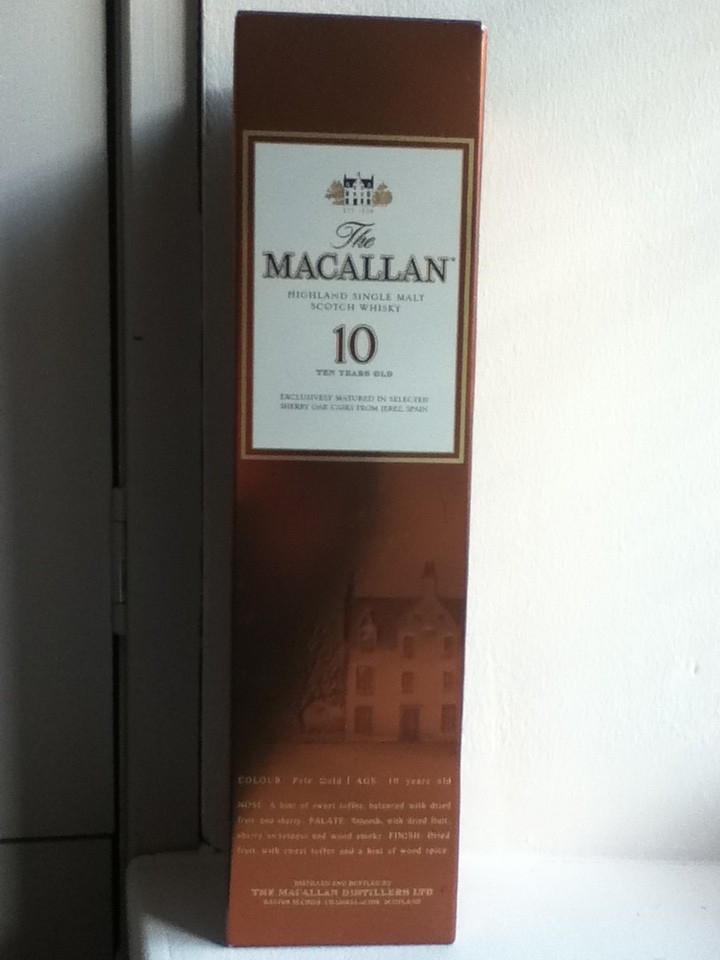
MacallanFrontBox

Monolith of deliciousness.

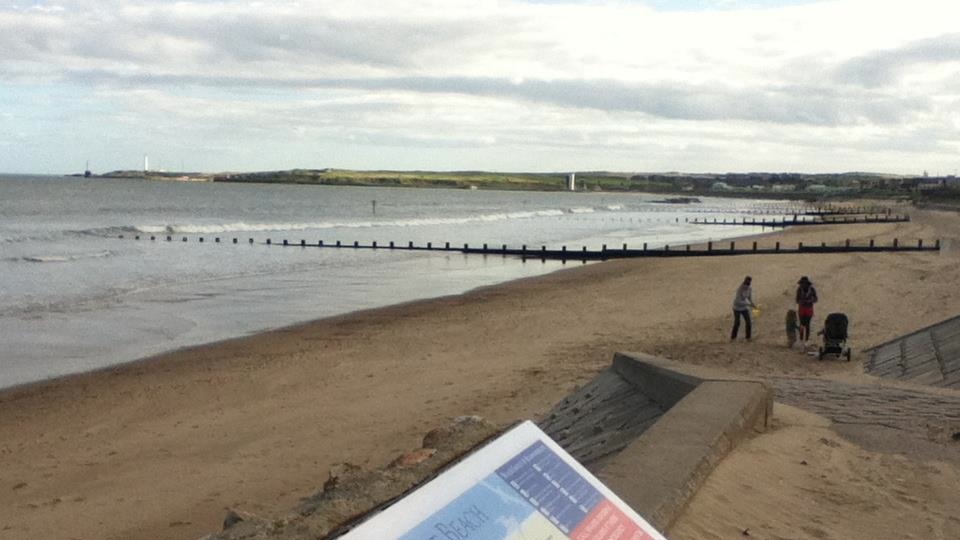
We first cracked the Macallan 10 in Aberdeen.  Although Scotland’s Silver City looked gray and granite, it flanked history with modernity, heart-clogging pastries, a free apartment (thanks Glaswegian hosts!), and even a beach.

AberdeenBEACH

Aberdeen beach was once a chilly Scottish resort.

Warm context for a first impression.

The Macallan showed a clear, bright, gold amber color that stretched right to the liquid’s edge of the tilted glass, tracing wide legs on the return.

It smelled faulty at first.  Musty wood beams in an attic.  Gross!  But then I realized that smell was intentional.  It became oddly alluring and nostalgic.  Like finding grandpa’s prized cigar box.  Then aromas of roasted vanilla, heather, and fruity red pear filled out its frames.

Moderate tannins created a texture of smooth, sanded wood without polish.  Alcohol was thinned to the industry’s standard, easy, 40%.  Bold flavors of honey, cooked oranges and apricots led, followed by toasty, amontillado sherry oak spice, and again that craggy, musty, but lovable flavor of old wood or fall leaves.  Length was medium plus.

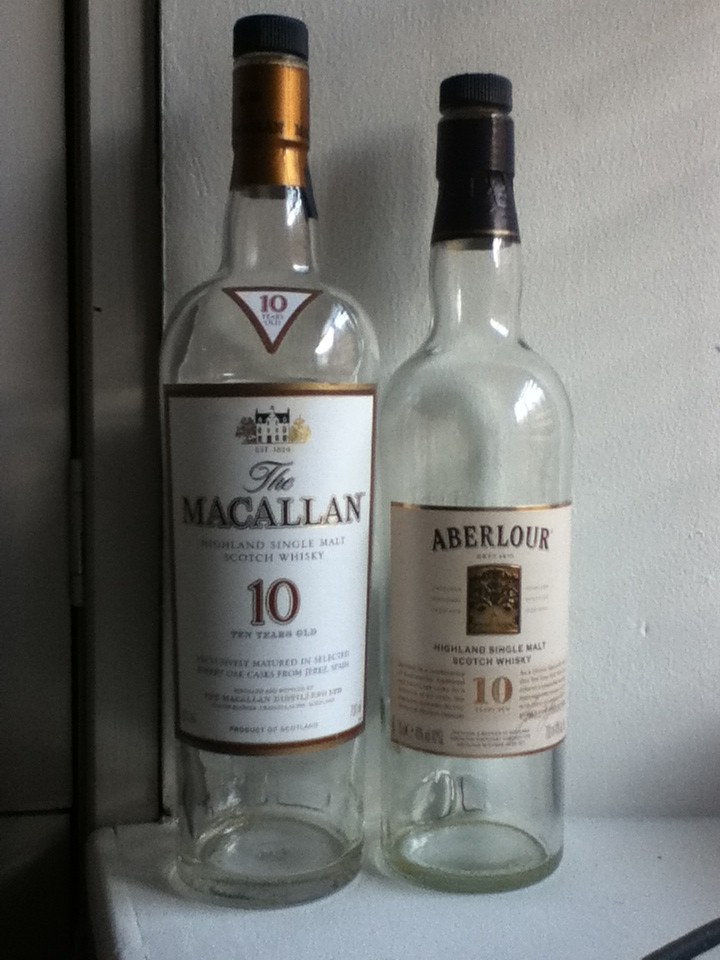
I’m a Whisky novice but the quality seemed very good (4 of 5).  Macallan’s 10 attacked with more flavor intensity, character, and brooding mustiness than Aberlour’s milder 10.   Yet they shared the same price, same decade of barrel aging, same Single Malt designation, and same Highland grain origins.

AberlourBACKclear

What a cute couple!

Twins couldn’t be more different.  This is why Single Malts matter.  Blending would blur their boundaries.  Revelation: we’re not done yet.

Unlike wine, Whisky’s high alcohol preserves it (and slows sipping).  Second and third chances do happen.

MeAncientTomb

Well, now I’m cursed.

Days later we train-tripped to Loch Ness.  We had toured independently for weeks.  Now we happily, passively, let the booked bus tour guide us.  After an excited visit to an ancient tomb, monster museum, and Urqhuit Castle, a ferry landed, saving us from the building cold and rain.

We boarded the boat first and snagged a cosy bench (thank you, paying extra).  Once the rain lessened, we headed up-deck.

LochNessUrqhardtCastle

Now…where’s the Whisky?

I noticed pale yellow pinot grigio and Perroni filling plastic cups.  Yuck.  So we pulled out our glasses and our half-finished bottle of The Macallan.  It immediately burned off the chill.

We then entered the Caledonian Canal locks, which moaned open and close.  The air smelt honeyed and floral, working into the glass, emphasizing a new oak char and smokey spice.  But neither the Whisky nor I had changed, the context had.

On the train, a pack lunch of vegetarian haggis (yes), tatties, and, less traditionally, carrots recharged us, while The Macallan mastered the black pepper and spices well.

But then desert brought epiphany.

MacallanTRAIN

Yes this is legal.

Discount pear tarts from Morrisons, wholly bland alone, were raised by the Whisky.  Now its fruitiness poured forth, all tropical and silky.  The sugar of the tart quelled any bitter hit or heat.

For kicks, we tried Thorton’s Summer Collection of Chocolates.  Their lemon tart drew out the Whisky’s citric side.  The strawberry mellowed it but tasted chalky and awful.  The orange chocolate rendered the Whisky into an orange marmalade.  What a brilliant mimic this Whisky played.

However, it became clear that the day and doings changed our impressions.  To judge any drink objectively required rigor.  You have to consider the context you have it in.

The world’s most famous Scot knows this.

skyfall-465

Waiting for his cut.

Skyfall claimed The Macallan was James Bond’s favorite drink.  Producers even auctioned a signed bottle of ’62 to solidify the myth.  However,  Talisker, Suntory, even Jack Daniel’s saw Bond’s favor in other films.  While, Flemming wrote him as a Bourbon man.

Things change.  As do Bonds.  As do drinks.

Your mission, if you choose to accept it: if you hate a drink, give it a second chance.

Odds are I learned to love The Macallan because I was vacationing in Scotland, got it on discount, knew (a) Bond favored it, never had to drive, tippled it on Loch Ness, as well as a train.

I forgave, even forgot its mustiness.  But really, I learned how mutable I was.

The Macallan 10 has character, complexity, and food flexibility that makes it a value entry Single Malt.  Drink it, pair it, play with it.

The name is Macallan, The Macallan.

Also subscribe, follow me on #twitter @waywardwine and like me on facebook at https://www.facebook.com/wayward.wine
Posted in EMPTIED BOTTLES, Scotland, Whisk(e)y, WINERIES WANDERED | Tagged , , , , , , , , , , , , , , , , , , , , , , , , , | 6 Comments

MURKY.WATERS.: EU Austerity Drinking Tour #14

I’ve sold out.  Follow me on twitter for updates and little nothings: @waywardwine

Last week we left Glasgow to work our way north.  Now for a few darker things: e.g. Porter, Stout, and Loch Ness.

The Scots share a love for the black stuff with the Celts across the isle.  Stores are packed with dark beer.  Maybe they drink darker to spite the brown-aled and IPA-hopped English.  Maybe haggis, black pudding, and colder winters demand darker brew.  Maybe the dark depths of Loch Ness inspire them.  Maybe Stout is trendy.

LochNess

Peat-rich soil blackens Loch Ness waters like Guinness.

Riding on the roasted coattails of Irish stout, Blackhaven Brewery makes “Black Scottish Stout” in Dunbar, East Lothian,

It looked black but was filtered clear.  The head was white.  The aromas flexed medium plus intensity burnt coffee, malt, caramel, and a salt dash.  Acid hid.  Bitterness bit.  Alcohol was a mild 4.2.  Body weighed heavily.  Medium plus flavors tasted of toasted, swirly rye bread, bark, black chocolate, and oily French roast coffee.  Very good (4 of 5), especially for $2.25.  Most Textbook.MostTextbookNext bubbly black was Glencoe’s Wild Oat Stout from Stirling.

The head was light brown.  Medium plus intensity nose of dark chocolate, French press coffee, hay.  The structure was typical as were flavors of dark drip coffee, salt, roasted cocoa nibs, and toasted malt bread.  These flavors were hardly overt, but lighter, toasty yet balanced by vanilla creaminess and froth.  The length lasted longer than most.  One could drink this stout often and easily without getting board or overwhelmed.  Check.  Very good (4 of 5 pointalisms).  Most Enjoyable.MostEnjoyableFrom farther north than our trip could bear comes The Orkney Brewery’s Dark Island Ale.  The isolated, wind-swept Orkney Islands give it home.

Everything looked stout-ish.  But then the nose stepped sideways: still clean, but with soy sauce, charcoal, vanilla, and chocolate.  All aspects were amped-up to medium plus intensity, including the acidity, tannins, body, and especially the flavors, which kicked up coal, peat, chocolate, earthy manure from start to finish, and salt (probably thanks to wild yeast).  Soft, dark, and fascinating with medium plus length.  Characterful and surreal.  Very good (4 of 5).  Most Unique.MostUniqueWorried, I opened Williams Bros Brewing Co.’s “Midnight Sun: Rich, Dark & Spicy Porter”.  Subtle these Scots from Alloa.

Visually perfect (clear, med plus black brown, short clear rim, small, beige lace).  The glass smelled of honeyed caramel coffee, strawberry, and charred wood.  All structural bits from acid to body sung loud but here harmonized with each other, much like the Orkney.

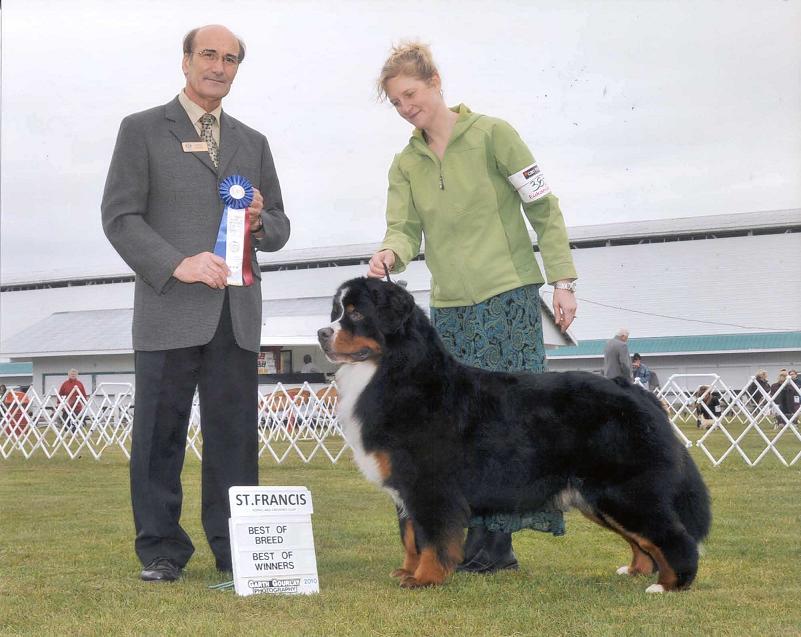
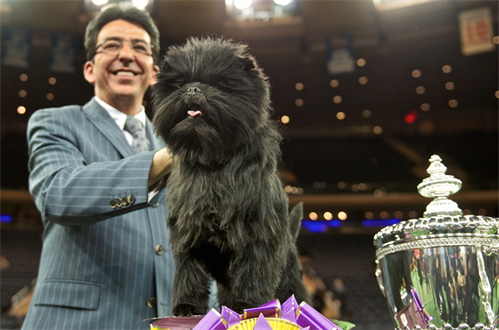
The flavors matched strength for strength with light caramel laced on top of rich French roast press coffee, ginger spice (which Williams added), and a touch of flint.  Flavors persisted for minutes.  The quality stands at very good (4 of 5).  Very even, rich, frothy, well balanced, roasty, toasty yet creamy and soft.  Best In Show.BestInShowPups aside.  This all bothers me.  Certain beers seem best because they slide closer to type. Brewers designed them that way.  They wanted to make a pie, so they picked an apple pie recipe, bought the right ingredients, and followed the recipe.  It tastes right, even good, not because it is good, but because we had already tasted a few apple pies.  We recognize it.

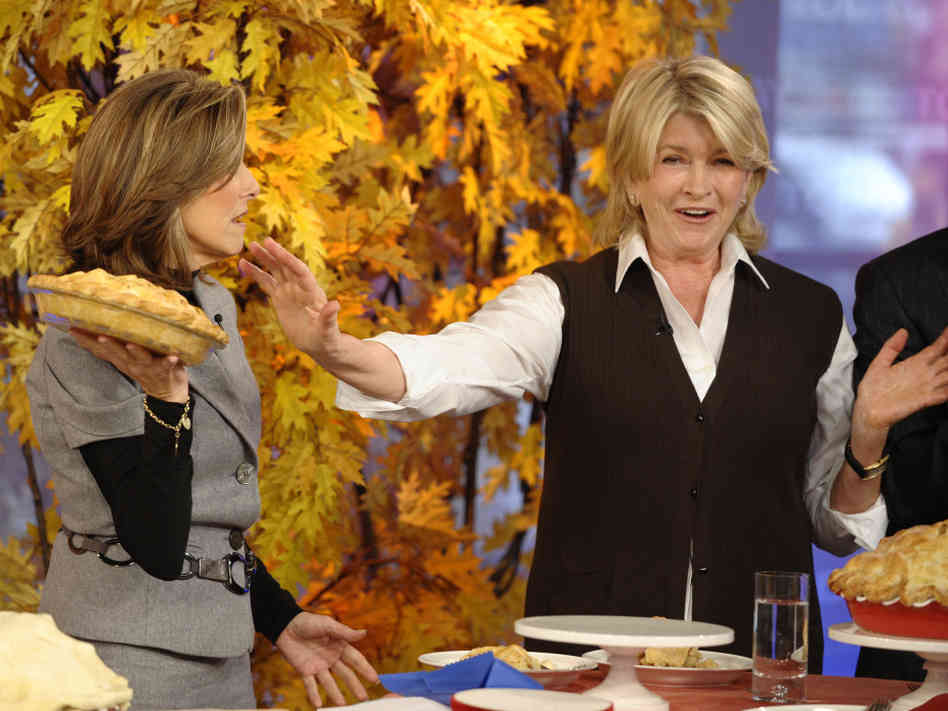
MarthaStewartApplePie

It’s as American as Martha Stewart getting hit by an apple pie.

We find happiness in familiarity.  We define good via what we know.  Thus, microbreweries copy the major types to purchase our preconceptions.  We then buy what we recognize, and worse, identify with, because it’s reliable, even empowering.

I once considered myself a Stout Man.  I dressed myself in Stout’s manly, brooding trappings.  Drinking it made me a serious beer drinker.  Meanwhile, beer makers avoided creativity because I was paying them to follow the recipe.

Luckily, I drink most beer styles now and love most of them.  But if I truly respected difference for difference’s sake, Orkney’s mongrel of an earthy, manure-tasting Dark Island Ale would have won out.  Familiarity, it seems, breeds itself.

However, one must keep pushing their palate or get caged by their past.
Scotland can make fabulous Stouts, but so can anyone.  Williams Bros’ Stout represents a clean, near perfect expression of the ideal: Guinness on steroids.  However, the ones that are unique will broaden your book of types.  Be brave and tread toward new horizons, or you’ll eat the same apple pie forever.

Posted in Scotland, WINERIES WANDERED | Tagged , , , , , , , , , , , , , , , , , , , , , , , , , , | Leave a comment

WEST.WARD.: EU Austerity Drinking Tour #13

After a week in Glasgow, we were ready to move on.  Our last day there, we stumbled upon West Brewery.  It sat at the far end of Glasgow Green: a river park, smelling of Victorian imperialism and the caramelized malt of a nearby distillery.

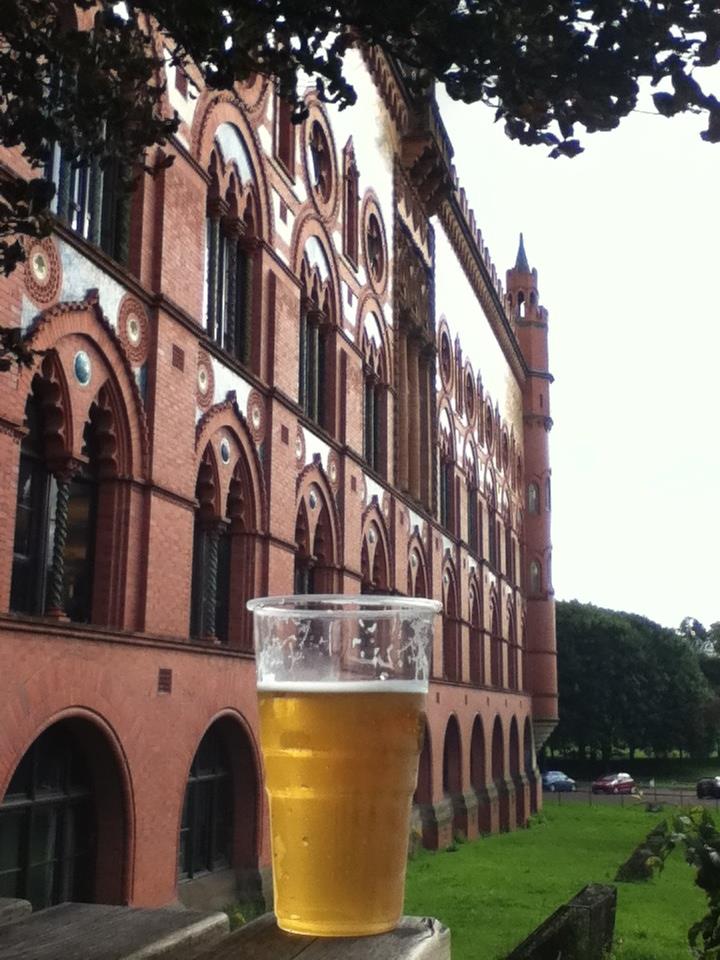
West Brewery hugged a side of Templeton Carpet Factory, itself, an orientalist carpet of brick and tile from the 19th century.  A rare sun blared the building into a riot of red, green, yellow.

Our water bottle was empty.  Our feet hurt.  A liquid lunch called us inside.  Aspirational brewing had tidied up the factory’s cavern of beams and steel.

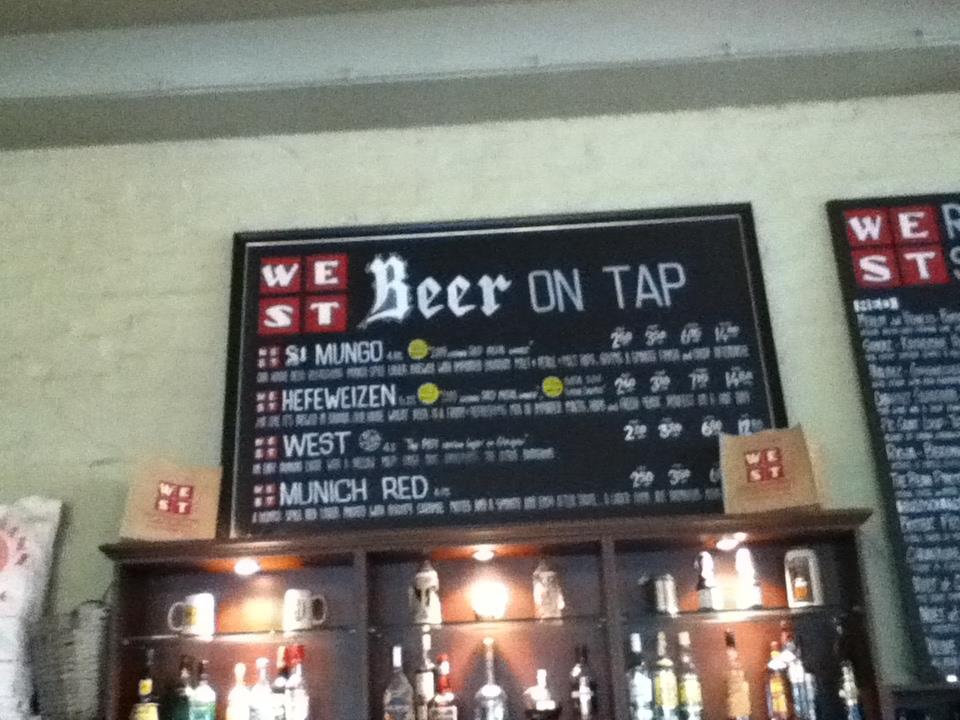
StMungoWestBreweryBORD

Some of those don’t sound wholly Scottish.

The germanic-sounding Hefeweizen and Munich Red didn’t sound very Scottish so we considered the other two. We hovered around the stainless bar, ordered, and returned to the sun.

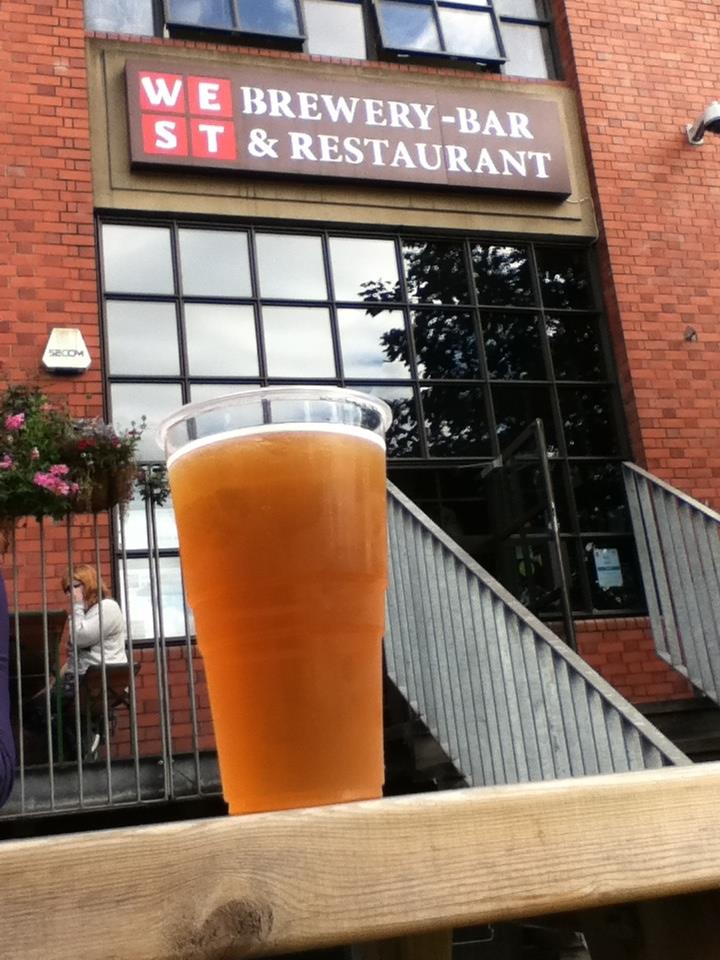
West brewery’s eponymous beer, “West”, is your everyday ale.  Clear and golden, with a pencil-wide white head, and big, rapid bubbles.  Its aromas couldn’t compete with the distillery’s, but honey, lemon, and coriander persisted.

Bright and tart, with little bitterness, alcohol, or body: West’s West offered notes of lively lemon zest, coriander, licorice or taro, and a floral honey.  Although the flavor duration was medium, I judged this beer as very good (4 of 5).

WestBreweryLighter

Factories don’t look this good any more.

This was a happy beer, made by happy people, in a happy corner of Glasgow: a city mired by years of industrial decay, shipping collapse, and some crime.

Next, West’s Saint Mungo, named for the town’s patron saint and brewer.

WestBreweryBarMungoThe color tended toward highland cow, with smaller, slower fizz, and a lighter white lacing.  Aromas of warm honey and wheat bread said good morning.  Acid, tannin, and alcohol all stood in place, with extra body and flavors of honey drizzled wheat bread, and a dollop of toffee and cream.  Bread crust flavors lingered for a medium plus, lightly bitter finish.  Very good (4 out of 5).  Think of fuzzy, kindly, yet hardy highland cattle.

HighlandCattle

City parks and estates in Scotland just happen to breed highland moo moos.

Maybe I was biased.  The Glaswegian family that hosted us promised us a free stay in Aberdeen.  Old ladies helped us on buses.  Mackintosh’s arts and craft was everywhere.  Damp Iceland had lowered our standards.  We had a massive room to ourselves.

GlasgowHome

Entry to our first pad in Glasgow.

West Brewery’s sun slathered deck didn’t hurt either.  Yes, they may be the UK’s first brewery to follow the Reinheitsgebot: German Purity Law for beer.  But to copy German beer styles out of deference, or worse, for sales via public recognition, is like me speaking Mandarin when ordering at Panda Express.  Neither is needed.  Although, one must start somewhere.

West’s beers are quite good.  Their location is brilliant.  I hope they can evolve from such a pure start.

Posted in Scotland, WINERIES WANDERED | Tagged , , , , , , , , , , , , , , , , , , , , | 2 Comments