After our successful trip to GlenDronach Distillery, my wife and I decided to squeeze in another Whisky visit.
This time, we won’t overload the day with castles, bakeries, and a far-flung distillery. No. Today we go to an urban distillery. No extra buses. No panicked runs to the last tour. Just a leisurely guide and a drink or two.
Stone balls not to scale.
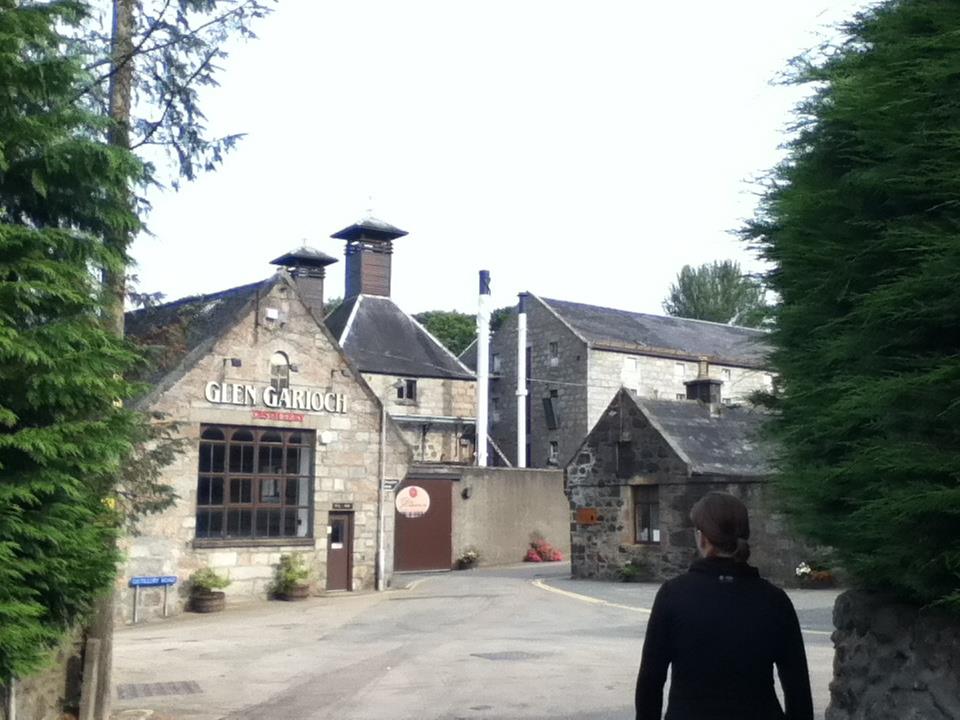
We bus from Aberdeen to Old Meldrum. Pictish stone balls and ancient carvings once brought it fame. The town, perched on a ridge, is cute but dead. Weekday mornings do that. But we have come for Whisky. Soon, we find Distillery Road. No confusion here. Then, a mile on, we sight Glen Garoich’s towers.
So close!
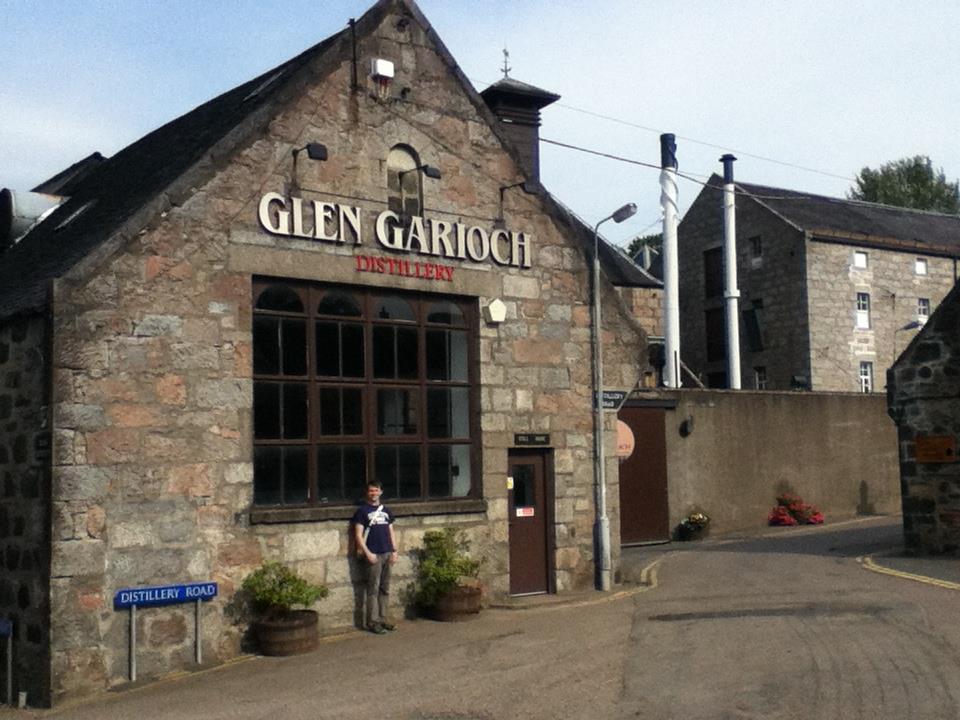
Glen Garioch, (pronounced “glen geery”, I know, welcome to Scotland) is one of the Scot’s last surviving 18th century distilleries: it began in 1797, predating Napoleon’s rise. Crazy old. Tours happen every day but Sunday. And they cost a mere six pounds. Perfect.
That took no work at all.
We enter the suspiciously quiet courtyard. A wolf pack of three, German, bro-tastic tourists appear with their van on the other side. The gate looks shut. I check the offices and ask the security guard. He shrugs. Tours only happen on Saturdays, regardless of the website’s claims.
Our German visitors swear and grunt their way back into the van. Yet the site intrigues us. So we wander.
We look through the web-clattered windows. One reveals the two century old kiln for roasting and heating the malting floor.
Ghost of a kiln for malting.
Dingy labor romantics aside, Glen Garioch turned to gas in 1982. It also gave up malting, sourcing neighborly grain, and bottling, like nearly all distilleries. Suntory, of Japanese Whisky advert fame, has owned it ever since.
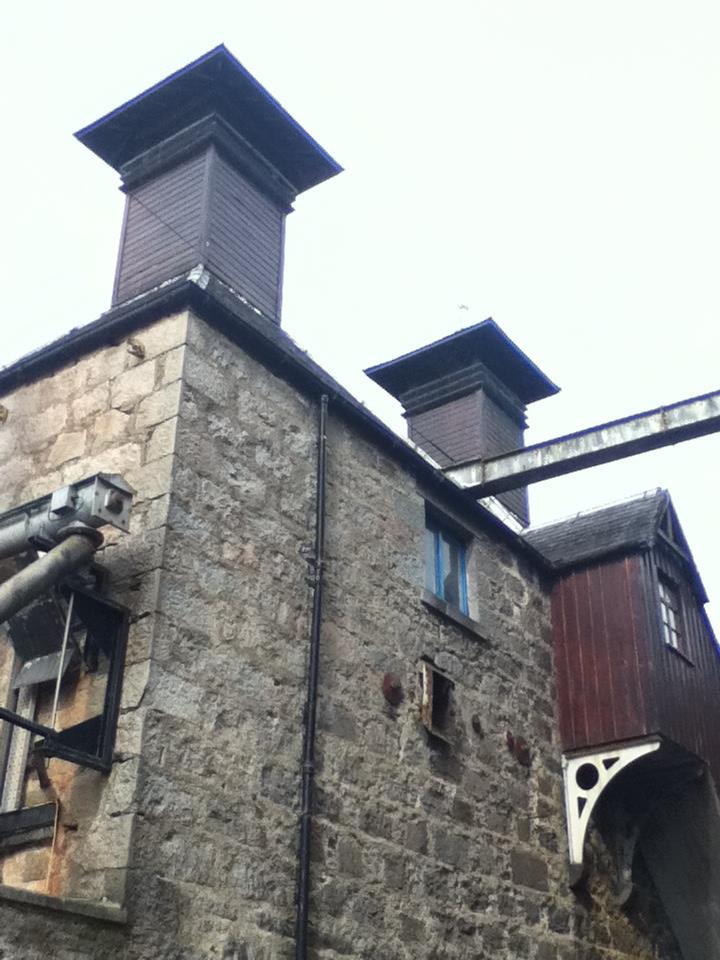
Sure the product has changed. At least the distillery keeps running. Pipes and chutes pop from old stone walls, connecting buildings like silver veins. The towers no longer breath brimstone but still reach skyward.
Just for show?
Further down we spy the grand stills:
Tidy.
Everything sits silent. Do distilleries only run when tourists visit? Probably. We walk down the delivery alley. Used barley hangs in a steel bin, ready to live on as feed. The barrel barns run for blocks, coated with black tar created by drunken microorganisms. Inside we notice more American Bourbon barrels than Sherry.
Looming.
Another window reveals Glen Garioch’s slim cases, stacked like wooden zoot suits.
Style.
Looking around, we shed our regret. We realize that another distillery tour would have shown much of what GlenDronach did last week.
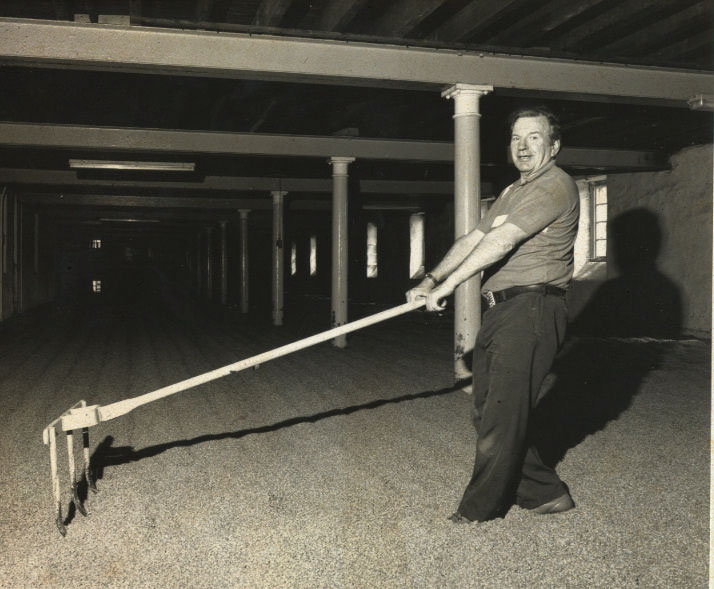
Modernity has stripped Single Malts of what made them unique. Those first human touches: shoveling coal or peat, turning sprouting barely, malting, feeding, grinding, have all been mechanized and outsourced. Even the waste-powered greenhouse closed in 1993. I can’t blame them. Hard labor was meant for wretches in Dickens’ novels and our grandparents. Who could take pride in a job well done? Right? Having this big computer is better. Right?
Bachelor’s Degree required.
The term Single Malt, Scotch’s claim to fame, is a nostalgic oximoron. Most malting happens off-site, in massive factories, from homogonized barley sources (even French barley). All that distilleries do indoors is ferment, distill, and age (bottling? packaging? Nope). That way they can hire more tour guides. Maybe terming it “Single Distillery” instead of Single Malt might be more apt.
Standing within Glen Garioch still charms us. Its buildings echo a hard-earned past. The scale feels smaller, human. Much uniqueness has evaporated. Much remains.
Although consolidated, at least this urban industry lives on.
Check back this Friday for a new post covering our brisk departure of Scotland.
This Memorial Day: we enjoy getting burned by Americans but make up for it with Whisky and wildlife. Enjoy:
My wife and I had traveled Southern and Eastern Scotland for weeks. By now, our trip hummed on a tight daily budget. We avoided bus tours, hotels, or car rentals. Public transport, home-stays, and hostels kept costs down. Ireland loomed on our horizon. But we had not visited a distillery.
I chose GlenDronach Distillery. It sounded typical. Like most single malt distilleries, it had seen a few owners and mothballed hiatuses since 1826. The internet liked their tour, which cost a mere 5 pounds. As an added bonus, we could visit another castle (joy) and Dean’s Shortbread Factory in nearby Huntly.
Our trip so far. Thank you Scot-rail.
More than anything, public transport could find it, sort of. Unlike most smaller distilleries, which had hid from regulators in the middle of nowhere (really for barley, water, and cheap land), GlenDronach didn’t need a car rental. Probably.
THE TRIP TO HUNTLY
Our morning train swoops past fields of blue barrel pyramids. Chivas Brothers owns these monuments of its Whisky empire.
Mighty mountains of Chivas.
Meanwhile, abandoned distilleries slide past like forlorn pagodas: the fate of most independents.
For sale.
We walk to town from Huntley station. We cross an adorable stream over an adorable bridge. Chickens cluck below. We cut to town center, past empty shops. The small village square echoes with markets past, sleeping this early morning. As do the buses and tourist office. We resign ourselves to catching the last distillery tour that afternoon.
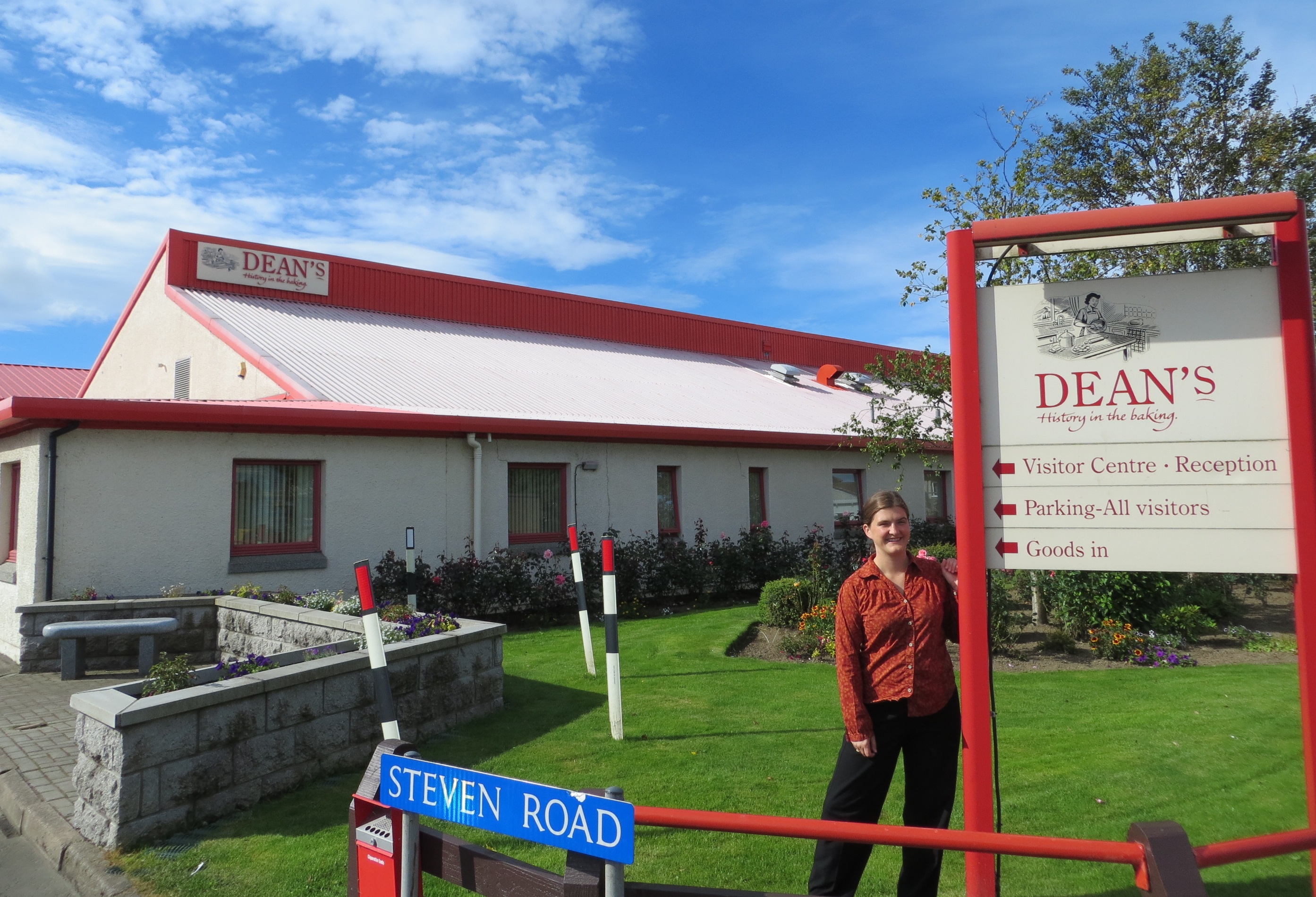
Then our nostrils pick the scent of baking. We hook left and follow the buttered air to Dean’s Shortbread Factory.
Home.
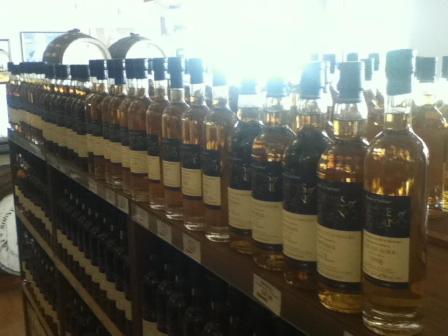
After gorging on shortbread samples of various shapes and buying bags of seconds, we walk back to town. The Duncan Taylor Scotch Whisky shop, which bottles and casks their own, distracts us for a few brilliant moments.
Just a few of Duncan’s own.
Lucky for us, their teen employees are too hungover to help. So we back tracks to Huntley Castle on town’s opposite side. A deftly carved fireplace, gaping ruins, and privacy lead to a tower-top lunch of cheddar and arugula sandwiches under a rare sun.
Huntley is super proud of their carved bits.
For the third time we haul feet to Huntly’s city center. Uniformed students loiter about. Our public bus awaits. Whisky cometh.
GLENDRONACH DISTILLERY
The bus rattles north along the A97. It passes hills painted green with fields and lazy sheep. Uncertainty mounts. I check my watch trying to stop it ticking.
We step off on the opposite side of Forgue village. No distillery. Just empty pasture.
My mental google map walks us past the clutch of ten homes, hill church, and straight up another hill. The token sidewalk disappears around a bend. We walk single-file through grass. Cars and trucks blow past, while sheep stare at us.
After half an hour, we sight the distillery, nestled amongst trees at the end of valley. The last tour starts in fifteen minutes. We panic and sprint.
Finally!
Halfway, a black van chugs past us. Tourists. We wave at it. Nothing. We keep running. Pouring sweat I find GlenDronach’s driveway, but then lose my wife. Screw it. I check us in. She arrives, mad and dripping.
The Californians from the black van ask us, “Was that you running?”. “*pant*pant* Yes!”, “We should’a picked you up. Well, we can drop you off after the tour”. “*huff*huff* Please! Cheers!”.
Coal tower for show.
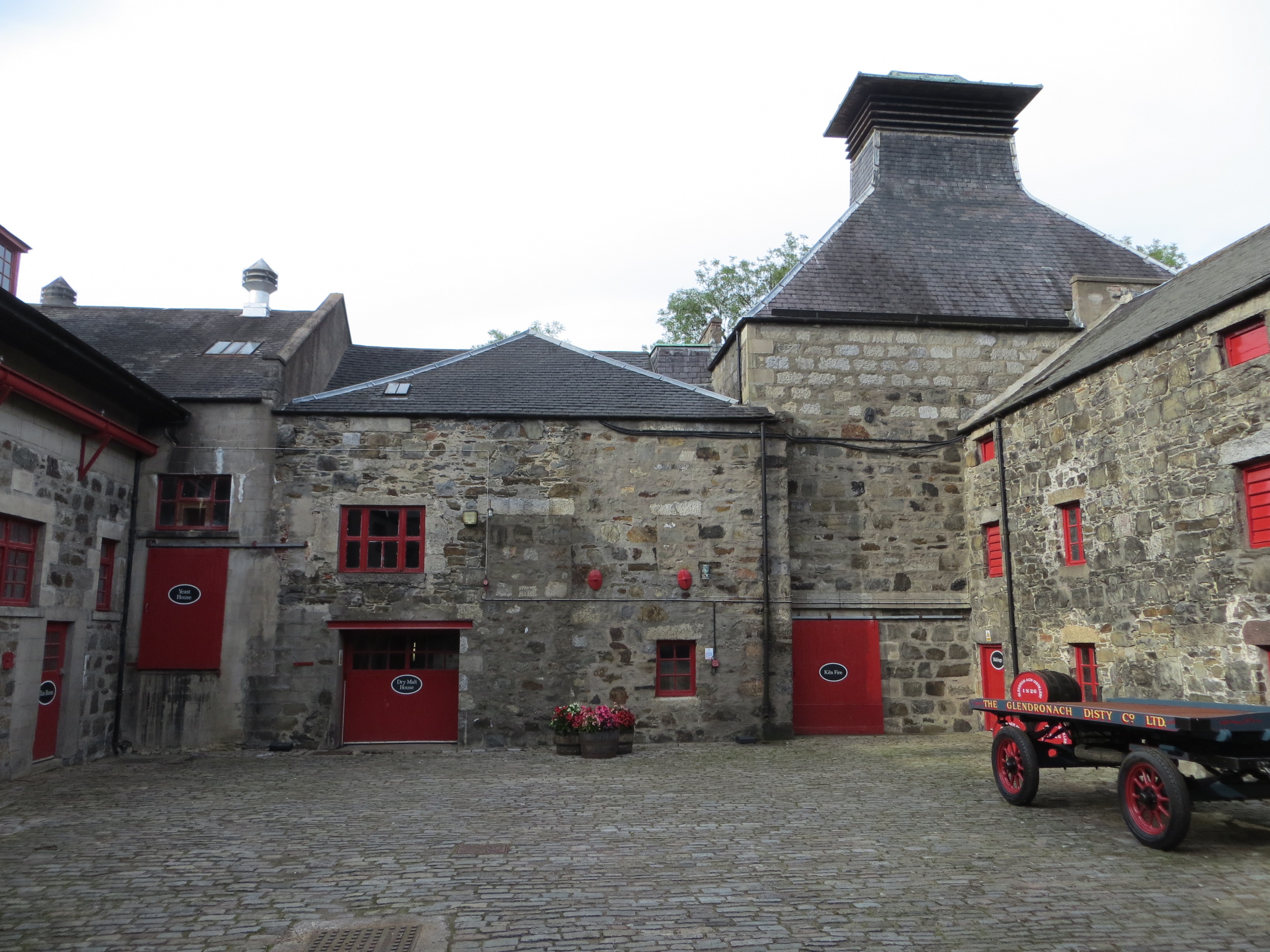
This core represents GlenDronach Distillery’s ghost. The coal furnace below the tower no longer dries barley. The malting-floor hangs empty. Here men with shovels churned warm, wet, sprouting grain into magic, fermentable sugar until 1996.
Lonely cart.
Modernity, efficiency, and demand have rendered these spaces into memorials. Why malt on site from local growers, when some “pneumatic plant” can malt and dry batches five times larger? Our guide claims it makes no difference with the final product. Doubtful. It ensures batch to batch consistency across all distilleries supplied. Site-specific variations in harvest, weather, temperature, labor, even bacteria have vanished.
We consumers asked for this. We wanted reliability. If a bottle tasted horrible, even different, we switched brands. Most distilleries followed in the 1940s.
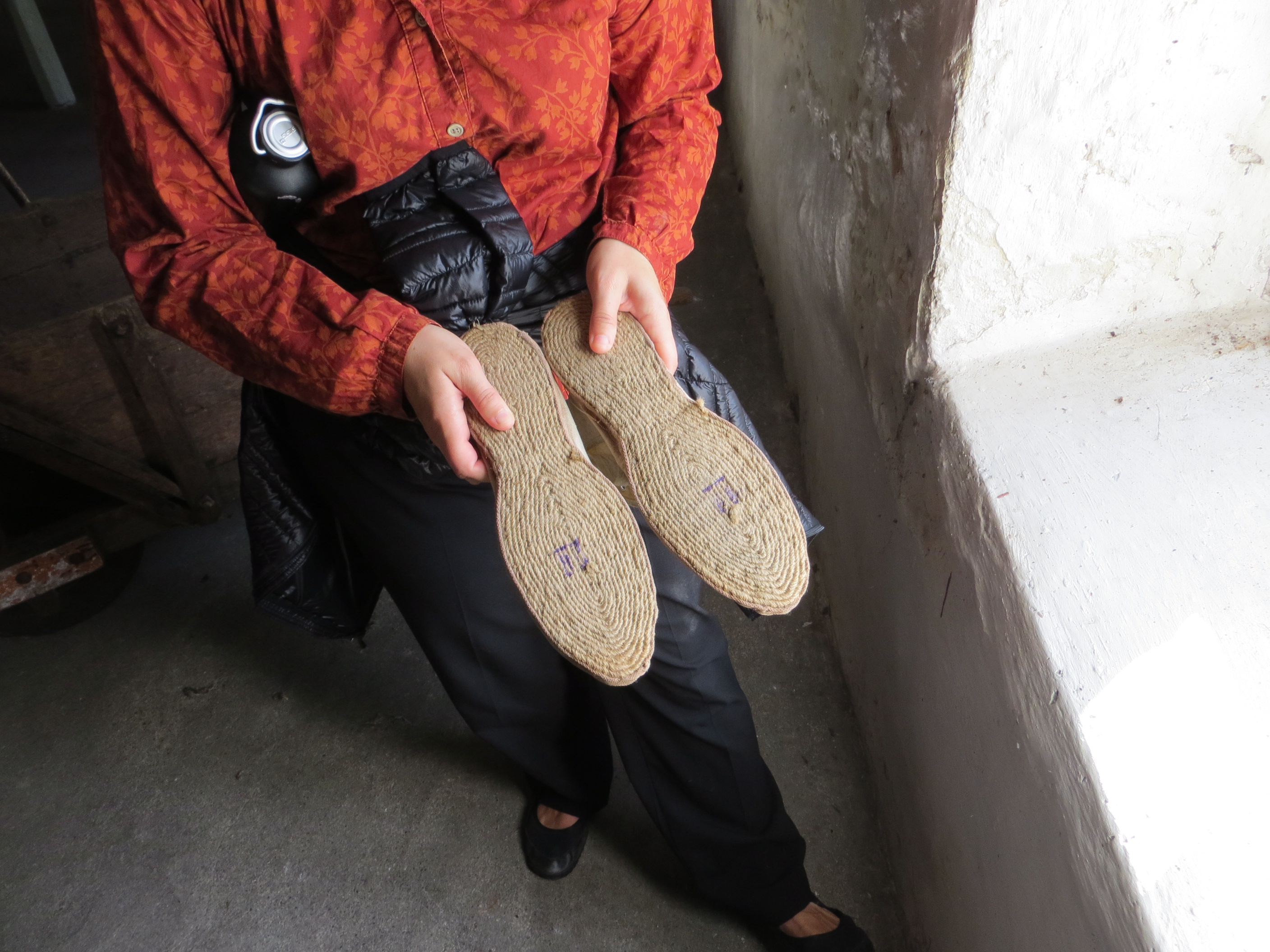
Malting room rope shoes.
So gone are the first phases that may have added terrior (sense of place). Fine. What next?
We cross the court to the retro-fitted hall. Before entering, our guide requests I turn off my camera. A grist mill fills every inch of the entry room. This square golum of steel has crushed grain for a century with no sign of stopping.
We avoid getting eaten. Immediately baked bread and apple pie swarm our nostrils: fermentation is underway upstairs. We walk past the gleaming copper mash tuns (where grain starch and warm water become sugar).
We enter a hall flanked by standing barrels big enough to hold SUVs: washbacks, where fermentation happens. Their round mouths reach waste high but run a story beneath us. I blush upon hearing that the pine comes from Oregon. Home seems a bit closer. Our guide lifts one heavy lid. Hot apple cider aromas and CO2 suck out our oxygen. The yeast are at peak, gurgling a thick beige blanket. Dizzying.
This beer will transfer, like our tour, to the still house. We enter the gallery of copper stills: gleaming orange elephants that smell skyward. Inside their bellies, heat separates alcohol from the beer.
Until 2002, GlenDronach ran one of the last coal-fired stills in Scotland. But coal’s direct heat created uneven hotspots, which created a richer, toffeed Whisky. Steam now ensures indirect and consistent heat and product. But I suppose we can’t cling to every tradition.
Nostalgic niggles aside, GlenDronach does a damned good job. Our guide weathered my questions. The Native ownership under BenRiach Distillery has returned sherry barrels. Water stills comes from the Dronach burn on site. No coloring. No cold filtering.
THE TASTING
Sharing in other’s late life crises.
Back to the visitor’s center. Our guide centers us on the tasting table. She arms us with wine tasting glasses and an eye dropper of local water; no ice, coke, or tumblers. Smart lass.
12 Year Old “Original” 43%
The color is medium intense amber gold. The aromas mimic baked pear, shaved ginger, a shaving of sherry oak, hazelnut, sweet vanilla, Turkish delight, and oil. Assertive and complex but without aggression.
The palate shows medium richness, low tannin, and silky texture. Flavors match the aromas with ripe fruits, spices, raisin, slight oak smoke and sherry sweetness. Medium length dusty finish. Very good (4 of 5). Other Highland or Speyside Whiskies, like Aberlour or The Macallan‘s 10 year olds, rank a step below Glendronach’s 12 in terms of complexity, fruit intensity, and richness.
Only sherry casks equal deliciousness.
15 Year Old “Revival” 46%
The color looks darker and deeper: medium amber copper. Aromas increase in concentration, sliding to caramel, malt, orange, hint of citrus, and ethanol, and away from the pear fruit of the 12 but still predominately fruity.
The palate reveals less sweetness but more density, chalky tannins, and body. Like walking into an oak grove in the heat of summer: this provides shade but you can smell and feel the heat. Fruits of orange and citrus still dominate but smoke and oak balance. Everything is thrown into greater contrast, like switching from Renoir to Van Gogh. The length is medium plus. The quality is probably outstanding (5 of 5). There is just more here. It is intense, chewy, but not overwhelming.
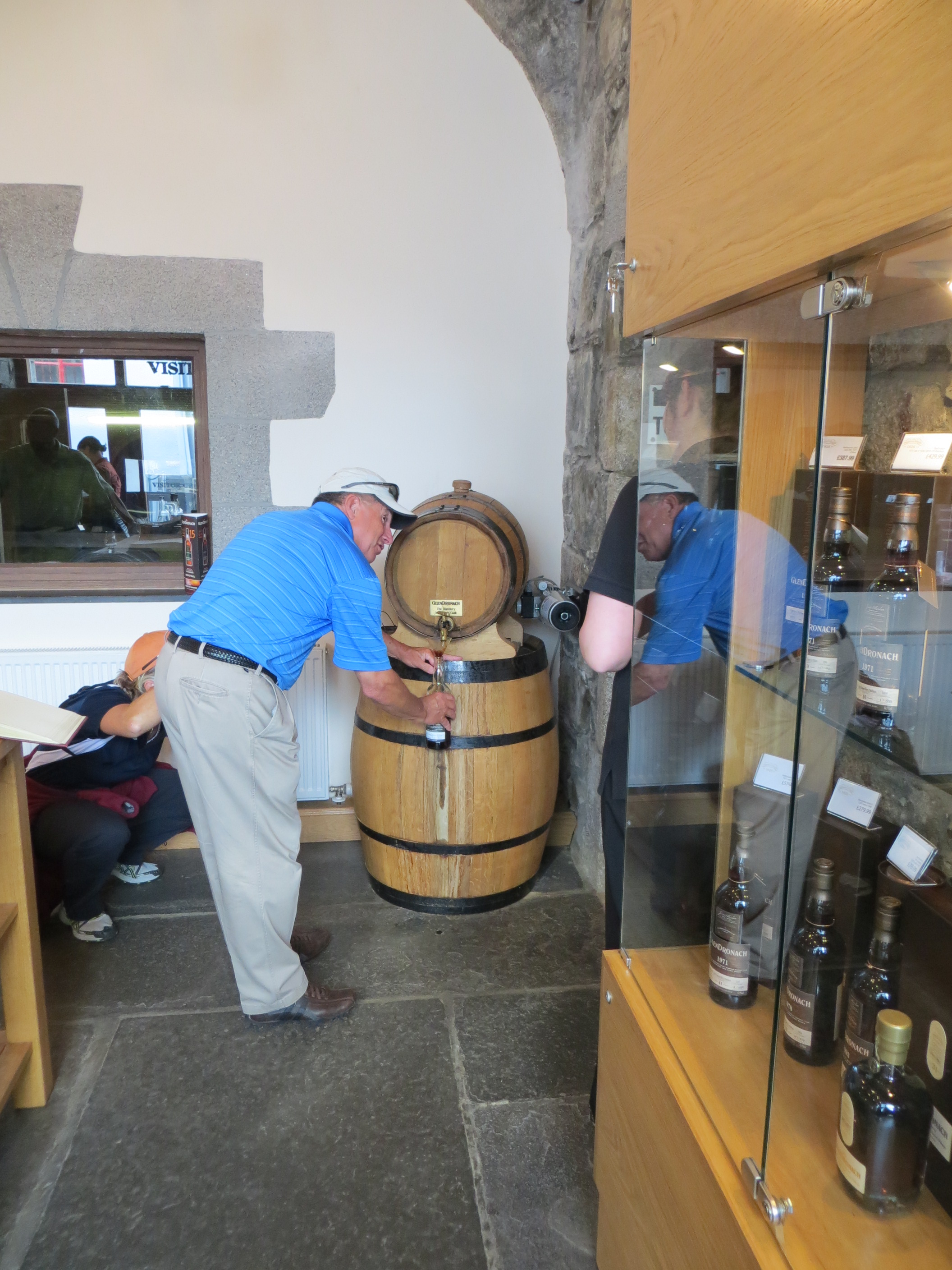
Our guide then elbows our Californian company into trying (i.e. paying for) the Distillery Manager’s Cask (1993, cask #1616). This distillery exclusive was left at cask alcoholic strength, 60-ish %, so no watering down. I ask to sniff it as our host poured it from the silly bronze-tapped barrel.
Paying extra to work more.
Good gods! Toffee, caramel, oil, rose, rubber, and oak all collide in my nose. I would have loved to taste it. But the moment felt marketed for the middle-aged in a tour van.
The Californians buy, fill, and sign (oddly) their own bottle of the Manager’s cask.
Meanwhile, my wife and I bench ourselves outside. We gleefully tuck into our reserve of Dean’s Shortbread. The channeled Dronach river gurgles past our right shoulders. Employees begin to drift home. In front, a mass of glass and brick hides its silent copper stills.
Magic happens.
Also in view sits the black van. Soon the Californians with their prize tumble back into it. Their offer to drive us back evaporated with that last dram.
But it is for the best. We are not on their cosy, chauffeured, trip: where point A to point B matters more than the journey. We are travelers. We figure out a whole day of touring for a quarter of their cost. Yes, we nearly miss our tour. But we meet real people. We nearly get run over. But we shop at their shops and farmer’s markets. We get lost all the time. But we find what really matters.
We climb back to that snaking, hilly road. I see a hand-scrawled sign pointing to an ancient monument up someone’s drive. The sun still shines. Our bus has a few more hours. So we go.
We never find the monument. But we do find this:
We hike back through Forgue. The sheep gawk again at us.
Back at the busstop, a man in TESCO grocery store jumpers signals us over. We chat about the economy, about where he works. Then our tin can bus takes us and him back to Huntly, back to our train, and back to Aberdeen. Tour vans be damned.
Last week’s review found favor with BrewDog’s wine-like 11.1% alcohol Imperial Red Wheat ale. It’s time to triple it.
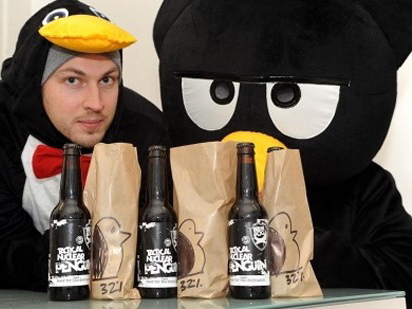
BrewDog’s Tactical Nuclear Penguin should do the trick.
Born from the flames of competition, Brewdog and German brewer Schorschbräu vied to make the world’s most alcoholic beer. In 2009 the Scots won at 32% alcohol. And they only made 108 bottles.
The boy(s) behind the beer…literally.
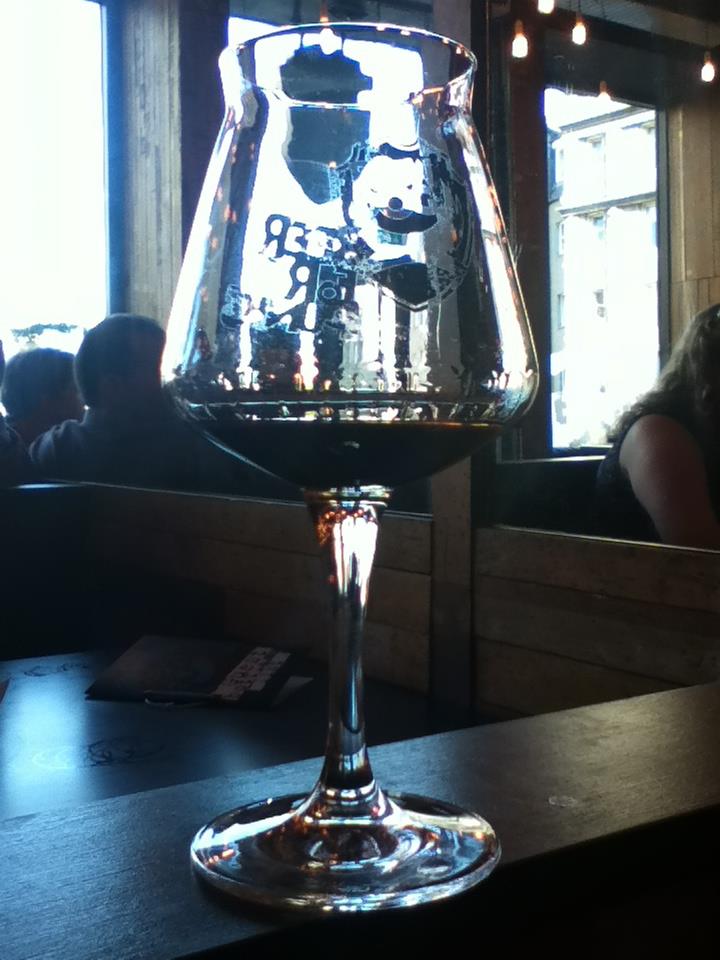
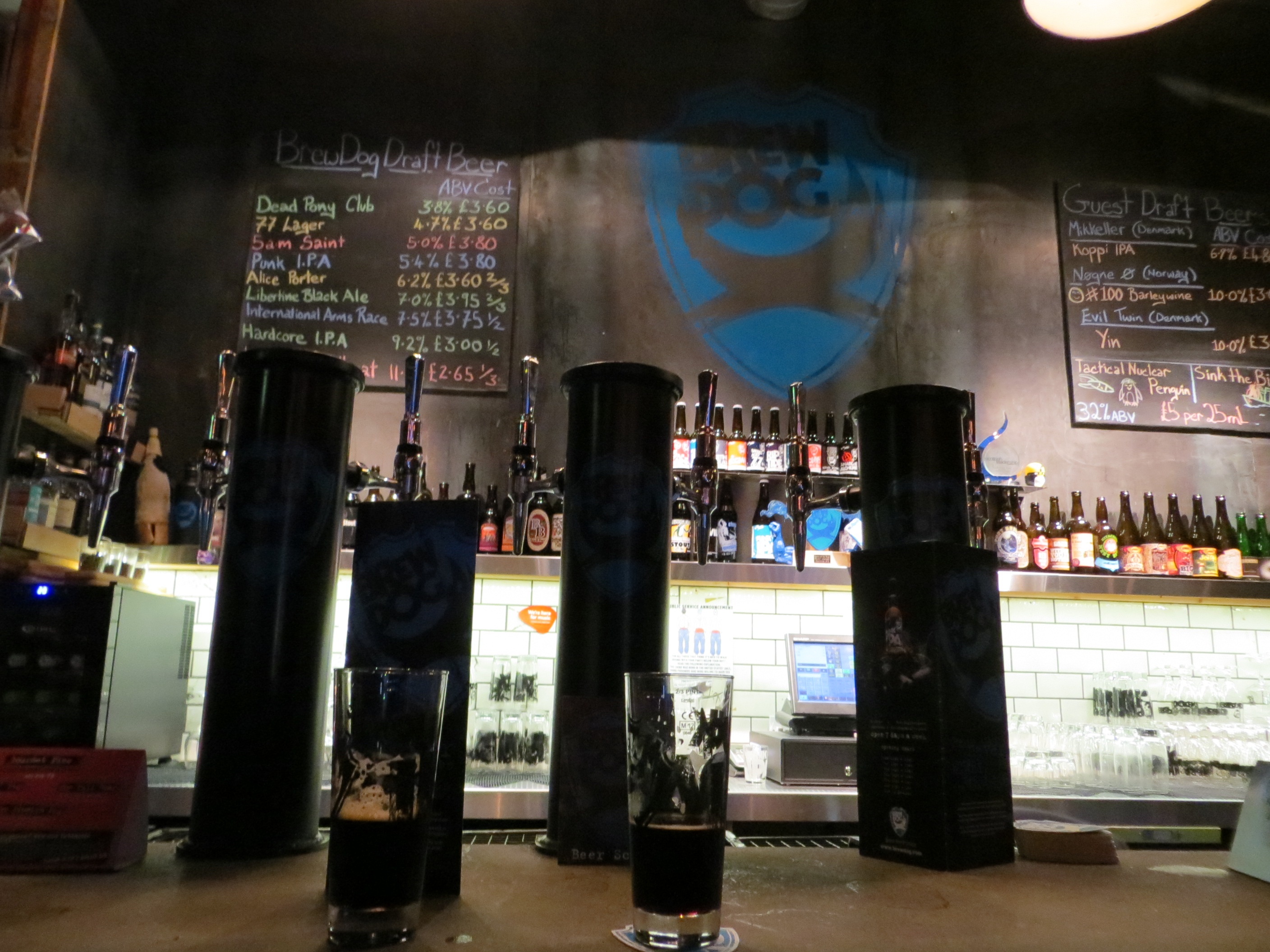
At their flagship Aberdeen bar, I hand my credit card to a tattooed lass, ignore the price, and walk back with my fancy glass.
Now. How the hell to describe it…
No Penguins were harmed in the making of this beer.
Well it looks clear but extremely dark amber brown, with beefy thick legs, and no fizz. Aromas smother the room with burnt rubber, treacle (molasses), and flambeed Christmas pudding. Santa’s sleigh in a explosive, five car pileup probably smells like this.
I close my eyes and sip. I can’t find any sugar or acidity yet. Toasty tannins assert their mouth-drying edges. The alcohol then strips any surviving saliva with embers burning. The body feels sumo-wrestler fat.
I sit back and try to remember any flavors. Nope. I brace and taste again. Pronounced caramel shows up front. There is sugar here. The center tastes of cherry pie with a burnt crust. Alongside the pie are hints of sherry cask vanilla and wood. The endless finish carries me off with black bitter chocolate. Hot cherry and caramel syrup poured on throughout smooths out the edgy, bitter flavors.
The quality must be outstanding. There is simply too much intensity, complexity, and length to deny its quality. My advice: sip this like Whisky or it will own you (and your wallet).
But is Tactical Nuclear Penguin beer?
The hardiest yeast strains can only ferment up to 28%. BrewDog holds that record with “Ghost Deer” (discontinued). But to push beer beyond that, one has to remove water, thus raising leftover alcohol in relation to the shrinking liquid volume. Still with me? Now how?
Heating to capture the alcohol as steam (distilling) turns beer into a spirit, like Whisky. No dice.
However, freezing it and removing the frozen water presents a loophole. The higher alcohol/lower water solution stays liquid, whereas the lower alcohol/higher water solution freezes and gets cut. Incrementally, one can keep cutting ice water and concentrate the beer. At least in the eyes of German beer purity law (Reinheitsgebot), freeze-concentrated beer is beer (aka icebock).
Such freeze-fractioning, to date, has maxed out at 57.7%. Schorschbräu took a year to beat BrewDog’s 55% squirrel-festooned The End of History. But these beers get bought out before they’re sold. At least I got to see a bottle.
Roadkill never looked so tempting.
Tactical Nuclear Penguin represents Genesis for this alcoholic cold war between Germany and Scotland. It strains the definition of beer-hood. I was lucky to try it.
Would you try it? Have you? Is this just a game for beer geeks and notoriety? Or is there a point?
Interview with Schorschbräu on their icebock. Click here.
After weeks of Scottish beer and Whisky, I wanted wine. I wanted its complexity, richness, and…er, alcohol. Brewdog’s first bar in Aberdeen provided the alternative.
Home sweet home.
Each day’s castle/distillery/museum visit had wiped us. We needed beer stimulation.
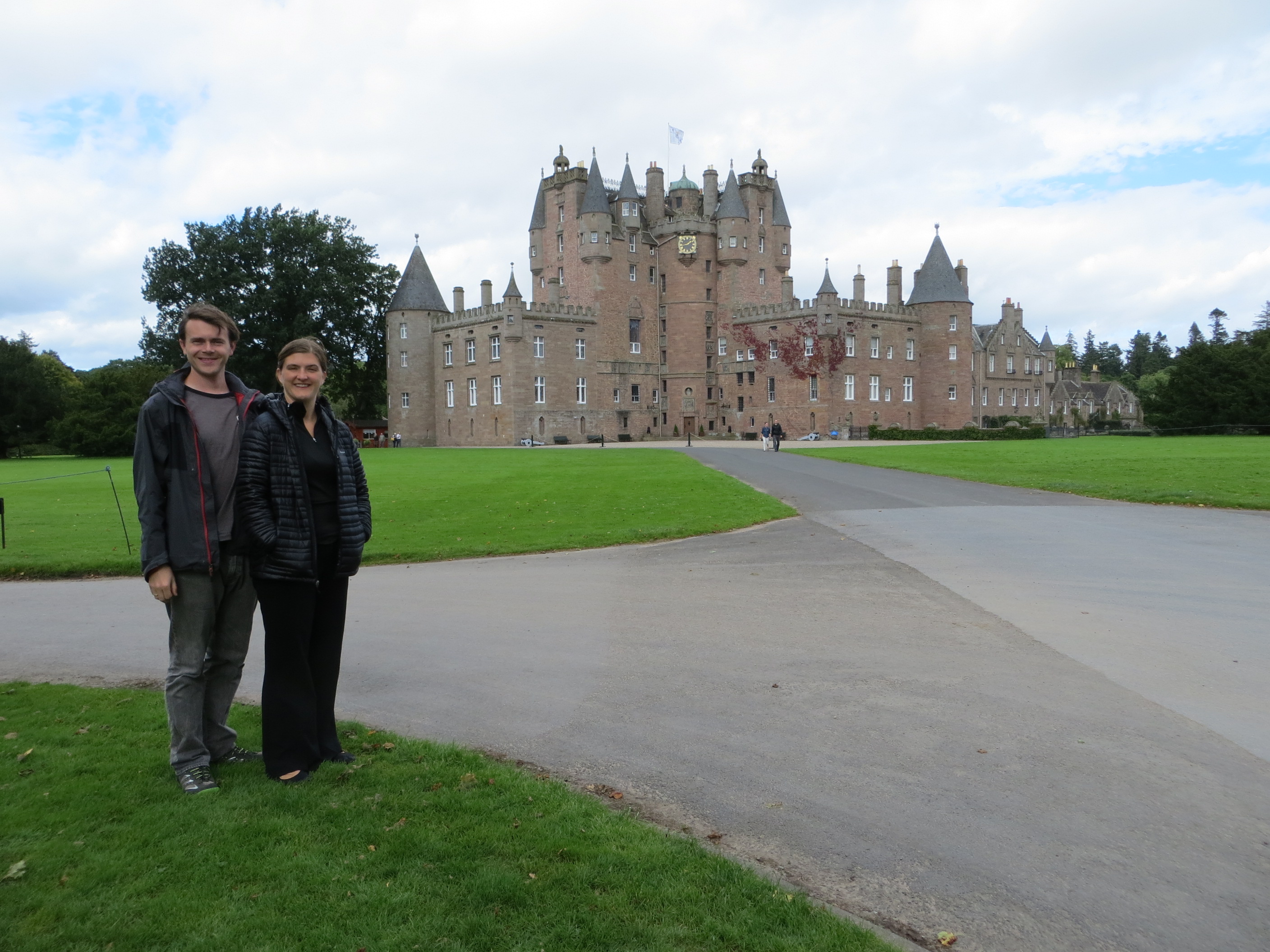
Glamis Castle: royalty escape in the Highlands.
So every evening we visited BrewDog’s Aberdeen bar. The brewery’s bottles, Edinburgh bar, and Non-IBU IPAs, although borderline great, had not sufficed. We needed to try their best, most extreme beers.
Once in the high-ceiling bar, I ignore their ridiculous titles. I hone in on alcohol. 11.1% sounds like a very wine-ish start. So, “Imperial Red Wheat” it is:
Gorgeous!
APPEARANCE
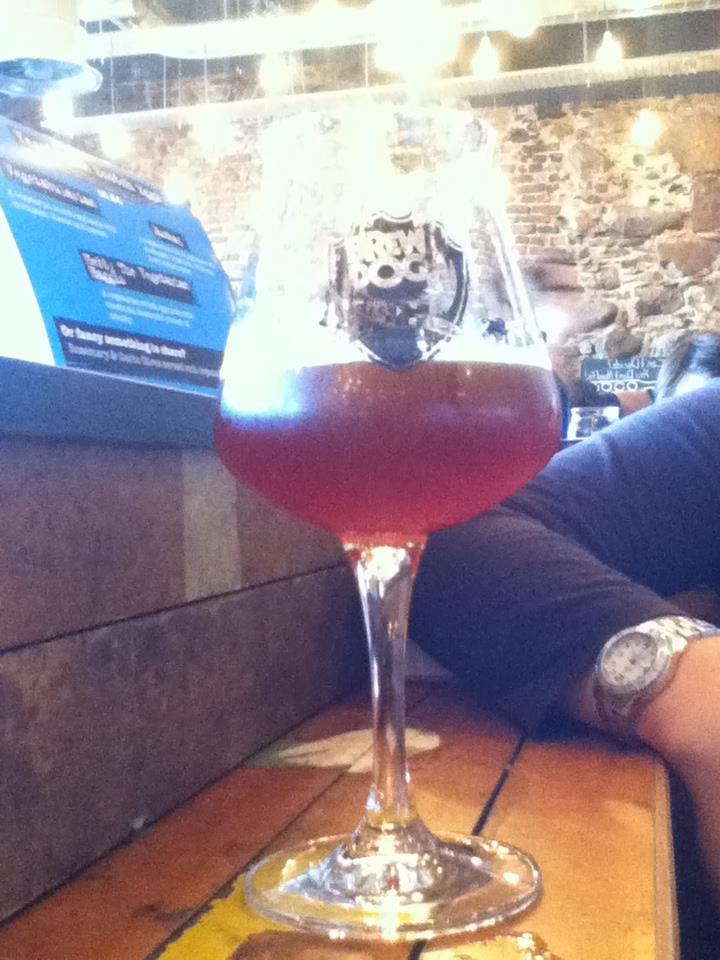
For more money than I’d like to admit, three ounces of hazy, red amber beer fill my appropriately pretentious glass. Its fine white rim of fizz sticks around.
AROMAS
Its bouquet exhales heavy hops, fruity grapefruit, rosewater, honey, golden wheat, and warm caramel.
PALATE
It feels dry, with extra acidity and average tannin. The 11.1% alcohol is ever-present and provides a viscous, ethanol-sweet, full body.
Intense honey glaze and wheat bread start the flavor pace. Candied citrus and sweet ethanol carry the baton. Slightly bitter, dried hay cross the finish.
QUALITY
To a wine-geek, the quality is very good (4 out of 5). Why? Imperial Red Wheat is complex, rich, and very fruity. Wine-like in not only alcohol but its flavors. But its burnt-out finish bars it from perfection.
Bar of joy.
Looking around, this Aberdeen bar buzzes with youth. Tourist couples pop in for a brief pint. But it is local packs, half female, who swarm the wood-panel tables. The crowd is clearly college: diverse, well-heeled, over-educated. Green Day, Nirvana, The Kinks, or Led Zeppelin flavor the air with energy and angst. However, natives with wrinkles and thinning hair also hit the bar. The bar also carries craft brewers the world over. Its rebellious pride warms my heart.
Good start. Probably my most wine-esque beer to date. But next week will blow your mind.
We returned to Edinburgh’s BrewDog bar to taste something new: unhopped IPA.
A few weeks ago we tried a bottle of BrewDog’s Punk IPA. It tasted too pretty to be punk. But its aromatics and herbaceous bitterness, like all IPAs, came from hops: leafy green flowers cut from vines and steeped before, during, or after fermentation (originally, to kill bacteria with acid).
Hopping has become fetish for craft brewers. Like contestants from Rupaul’s Drag Race: ever-increasing hops have painted beers in pine foundation, wigged them in grapefruit, and dressed them in cut grass. It has become a bit ridiculous.
“Shantay, you stay.”
Tasting competitions and beer dorks have driven double, triple, quadruple, and dry, or wet hoppings from a million vine strains. But since Cascade hops have become the gold standard, all IPAs taste the same. Too much of good thing became too much of a good thing.
This war of attrition finally led to a cold war standoff:…or dog off.
Promotional material.
Flying Dog of Colorado and BrewDog of Aberdeen agreed to each brew Zero IBU (international bitterness units) IPAs. Both sides had to use mint, bay leaves, rosemary, juniper berries, and elderflower. Which beer mimicked hops best, but without hops, won.
Feeling patriotic, I try America first: Flying Dog’s NON IBU IPA.
Flying Dog’s hazy drink.
To start off, it looks hazy, like V8 with orange juice. Dinky fizz scrolls up the glass and the head quickly falls flat. Haziness and no head do not make it faulty. It just looks rushed and unfiltered for no reason.
Aromas are appropriately IPA-loud but surprisingly fruity, with red grapefruit, strawberry margarita, menthol, wine, and a bit of wild yeast funk (brettanomyces).
The palate seems dry-ish (hmmm), with high acidity (ok), medium plus bitterness (better), 7.5% alcohol (yes), and medium plus body (of course). Flavors taste intensely of grapefruit (good), clove (good-er), some beer-like malt (ok), but mainly citrus fruit (ding).
Flavors hold out for a quite long finish. Flying Dog’ Non IBU IPA is a good quality beer and very fruity (3 out of 5). But as an IPA, it lacks the florals or green, grassy edge. The tannin is spot on, but the acidity is whipping. The haziness is distracting.
Now for BrewDog of Scotland’s unhopped imposter:
BrewDog’s ZERO IBU IPA is on your right.
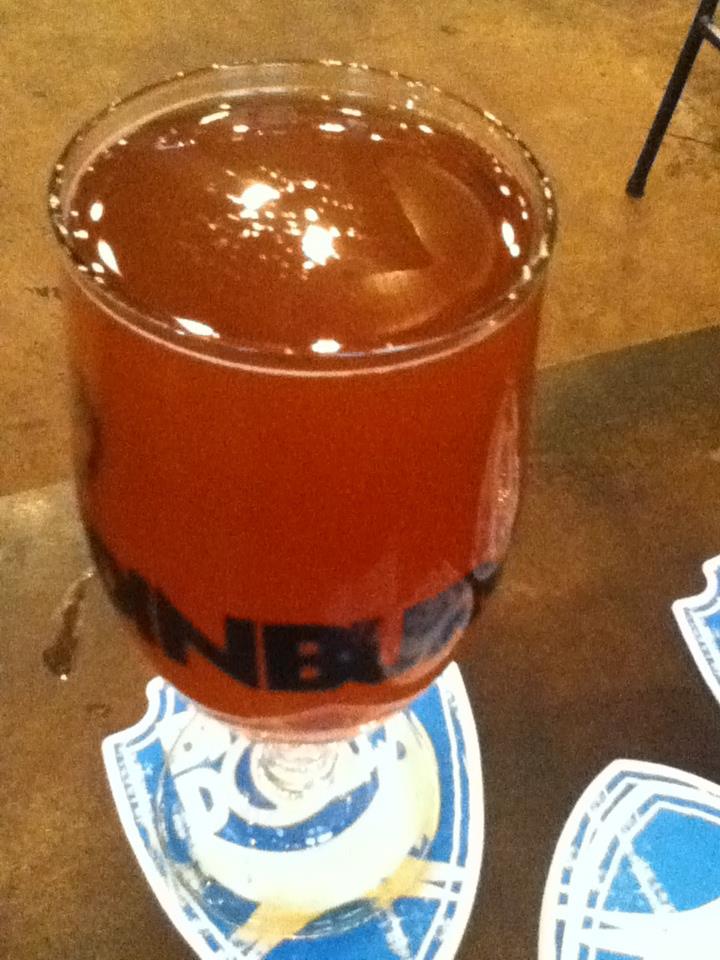
It looks clear and true, with medium plus intense amber copper color and a white fizz rim.
It smells cleaner, with aptly intense flecks of black pepper, allspice, cedar, pine, and sage.
The palate tastes dry as a tree, with average acidity, extra bitterness, similar 7.5% alcohol, and a slightly fuller body.
Yet it tastes less pronounced, with average intensity flavors of menthol cigarets, Ricola cough drops, and very dark berry fruits. BrewDog is much darker, with a richer froth. The length lasts equally long as Flying Dog. This is very good beer (4 out of 5) but odd. It pulls off IPA’s looks, tannin, and pine and spice flavors, but lacks intensity and that tell-tale grassy and floral quality.
How could these beers taste so differently? They both want to be IPAs. So I scan my brain over all the IPAs I’ve drunk.
It hits me. Both brewers, it turns out, unconsciously modeled their beers after two different styles of IPA. There is no universal IPA (just as Plato’s ideal forms is b.s. philosophy) but many manifestations.
The US typically brews fruitier, sweeter IPAs thanks to our Cascade hops (and other strains), and less steeping time. Meanwhile, UK IPAs tend to taste more like pine trees thanks to hardier varieties and longer extraction. Both styles also serve the different demands of their nation’s food and drink trends. So neither dogs’ fake IPA is wrong.
We ask the bar who won.
Flying Dog won three of five taste-offs throughout Scotland. Sorry BrewDog, nationalism is blind, or at least won over by fruity, friendlier beer.
To test BrewDog’s source material, we try their real, Hardcore IPA.
From left to right: Flying Dog and BrewDog’s fake IPAs, with BrewDog’s Hardcore IPA on the right.
It flays these sheep in faux-hopped clothing.
The color matches BrewDog’s Zero IBU with medium plus amber copper but more thin white lace. Clearly this set their standard for their unhopped IPA and not their lighter, golden Punk IPA.
Aromas are unabashedly pronounced with pine-driven hops, chamomile, bay leaf, herb, and malt toffee.
The palate tastes dry, with medium plus acidity, tannin, and a high 9.2% alcohol adding to a full body.
Flavors of herbs, lavender, bay leaf, toffee, and smoked meat come off very pronounced.
Hardcore lives up to its name, with mouth-lashing hops and extremely long length. By now, my wearied senses tell me it feels brittle and bitter yet frothy and creamy. BrewDog’s maximalist approach somehow balances itself into a harmony of intensities. Like a rapid fire D beat drumming, thrashing hair, and metal. Somewhere between Black Flag and Black Sabbath. The quality ranks at outstanding (5 of 5).
Yes, Hardcore wears the hopped-up lipstick like so many IPAs before it. Yet it manages to balance them with dark malt. I may have a mouthful of pine needles, but richness and cream get me through.