Thanks for voting for Wayward Wine on localwineevents.com . We are now 99th place and have created 1,000 votes. Huzzah! If you haven’t voted, then you haven’t really lived have you? So click herehttp://www.localwineevents.com/resources/blogs/view/1709
Last week we took a Whisky baby step with the approachable and interesting Oban 14 Year Single Malt (read here). Today, dive deep into the depths of what once defined Whisky for all of Scotland, peat:
No, not that Pete, peat:
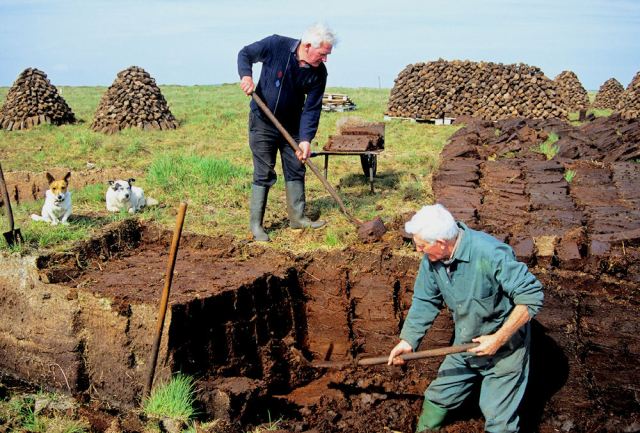
Yes, peat is special dirt. Basically boggy swamp plants died, partly disintegrated, but void of oxygen and high in acid made for a burnable fuel brick…after at least 1,000 years. In addition to warming homes in a treeless Scotland, most distillers used barley malted by the heat and smoke of peat to make alcohol.
Thus, peat flavored most Scotch for much of the 18th and 19th century. It smelled and tasted of smoke, medicine, herbs, and burnt turf. Cleaner, efficient gas technology replaced peat on the mainland. Yet, the island of Islay, by choice, isolation, or necessity, stuck with peat.
If you like wine. If you believe in terroir. If you support local traditions. Be patient and learn to fall in love with peaty Whisky from Islay.
A coworker gifted me a bottle to honor the birth of our newborn, Alexandria. He blew $200 on a 750ml of Bruichladdich Distillery’s Octomore 6.1: the cutting edge of peated Whisky. Grain comes from one barley farm. They experimented and concentrated 167 parts per million of peat: a record.
After a month of a thousand diapers, I think I have earned it (or need it).
Its appearance looks brilliant and clear with glistening straw yellow core and golden highlights.
It singes nose hairs on its way to smelling of smoldering kindling, burnt mint, dried orange peel, strawberry sauce, grilled pineapple, and dried coconut.
The palate feels like chewing on dry tree bark while drinking viscous molasses. It is weighty, smooth, yet undeniably edgy and heady towards its finale. The alcoholic heat (57% abv) swells the head, burning a trail through your sinuousness straight to places above your ears and eyebrows.
Sip it, hold it, and flavors taste surprisingly fruity with strawberry vanilla cream, pineapple juice, and bourbon coconut, but breath in and out and grey smoke, black pepper, scorched earth, and burning cedar swirl it all away.
Make sure this is the last thing you drink. There is no going back for your palate. It attacks you with horrific intensity at first. Imagine eating a burning match. But keep sipping it. Each sip cracks open an ancient, velum book page. You take time, read it, and then ready for the next. With patience, it flows smoother and subtler, until the last drop feels silken, quiet, honeyed and endless.
You may loathe peated Whisky. Like everything from coffee to blue cheese, it is a taste one must learn to acquire. Even if you hate Bruichladdich’s Octomore, objectively it is of outstanding quality (5 of 5), because it unequivocally knows and presents its place.
But let the experts explain it:
For a more lighthearted tour of Bruichladdich, here is James May and Oz Clark visiting it:
This is your last chance to vote for Wayward Wine’s “Her #Winestory Welcome Alexandria”: the amazing, breathtaking tale of the birth of our first daughter and the Champagne that flowed.
The deadline is Monday. So click the link now and make your voice heard:
Why fight the cold outside? Let us acclimate to the season with a left field, Winter white. We head south, to a country synonymous with big reds and steak: Argentina. Yes, Argentina, a country that has sold its soul to Malbec. Let us pick the exact opposite of Malbec, the coolest climate grape common to cold, wet, Germany: Riesling.
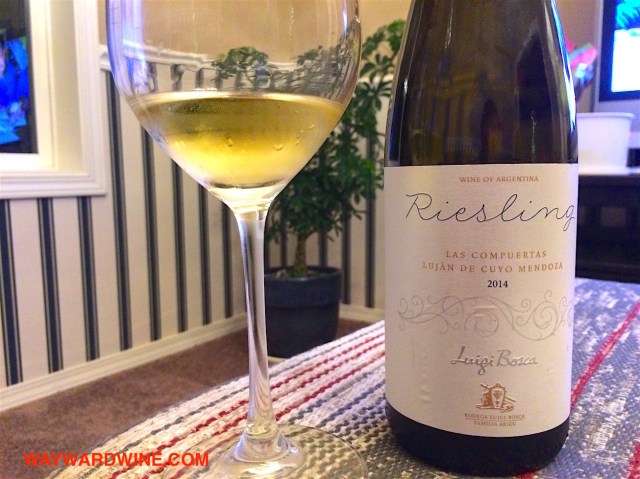
Luigi Bosca is Argentina’s oldest family-run winery. The Arizus grow gorgeous, biodynamic Malbec, Merlot, and Cabernet grapes. Thank their region, Lujan de Cuyo, which abuts the Andes at 3,500 feet above sea level, creating Mendoza’s coldest microclimates.
Their reds show restrained oak, foody acidity, moderated tannins, and controlled alcohols. Can they pull off Riesling? The Arizus make about 6,000 bottles of Riesling annually. They come from a vineyard of 60 year old vines called Las Compuertas on sandy loam soil.
The APPEARANCE looks a clear, pale straw color, with thin waxy legs…good start. Medium, filigreed AROMAS smell of orange blossom, petrol, fresh sage, cut greens, lime juice, and underripe apricot. The PALATE feels snappy, dry, medium in acidity, but with a plump, full, body. FLAVORS pound and pack a fresh lime, sage, dried orange rind, spinach. The finish is long stoney, with hard rock salt akin to margarita salt.
Luigi Bosca’s 2014 Riesling is dry, rich, green-glowing, food-ready stuff. Some herbed chicken or hard cheese would be happy with it. It hardly tastes of Germany. But it should not. It tastes of Argentina. The hot, sunny days give it rip-roaring intensity but the cold nights keep it at 13% abv, with enough acid lift, citric, and saline tautness. It is very good (4 of 5). However, do drink it now. It has another five years ahead of it, but all that packed intensity will fade into vegetal leanness and wax.
Welcome winter in your warm home with a warm climate white. Luigi Bosca’s 2014 Riesling is solid stuff.



 If you like wine. If you believe in terroir. If you support local traditions. Be patient and learn to fall in love with peaty Whisky from Islay.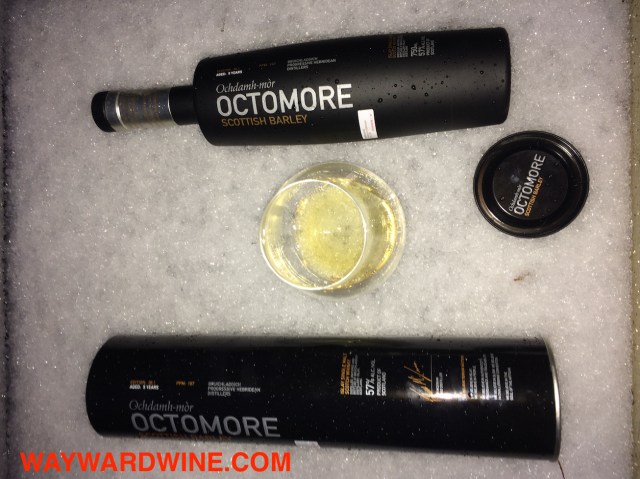




 WAYWARD WINE