Black Stallion Winery Napa Valley

(Apologies for yesterday’s accidental post…ghost in the machine).

Our Napa Valley tour keeps rolling. Our morning snuck around Pine Ridge (read here). Our mid-day got blasted by Lewis Cellars’ monster wines (read here). By now, our palates feel numb. Our teeth look black. But ever the professional, high-functioning alcoholics, we head South on the Silverado Trail to Black Stallion.

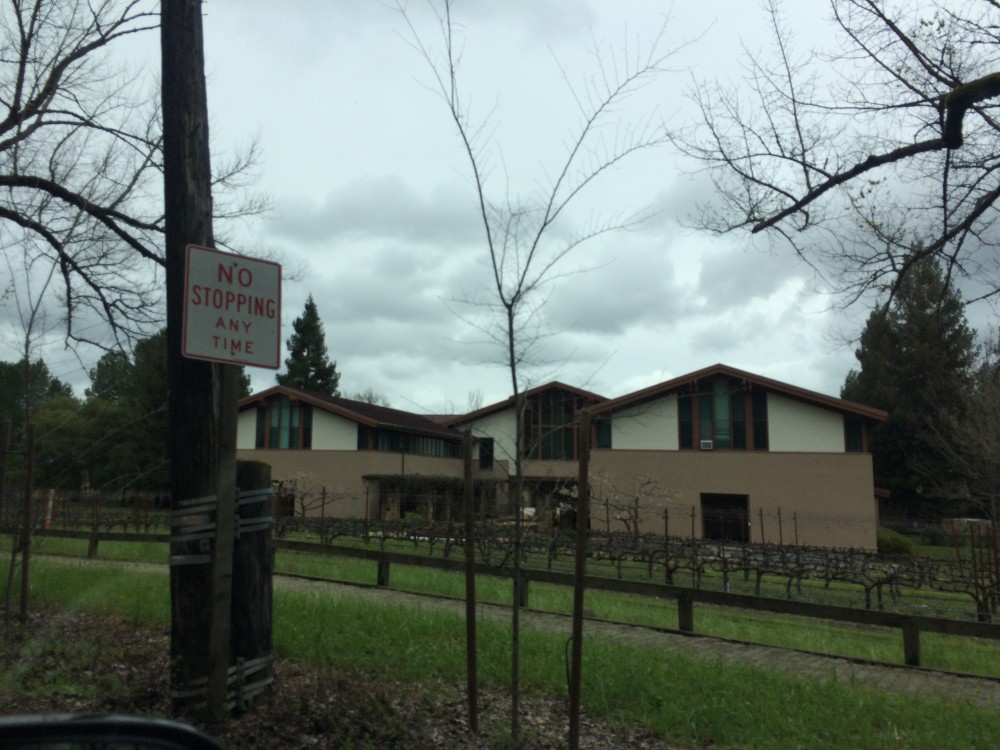
Past the big metal horse, the winery campus feels vast, dry-scaped with olives and citrus, and recalls a mission. Here 32 acres served as Silverado Horseman’s Center until 2007, when it became a winery.

The high hall holds a wooden wrap-around tasting bar. You could almost get away wearing spurs in here. But the lounge chairs expect more. The long table frowns at your t-shirt and jeans:
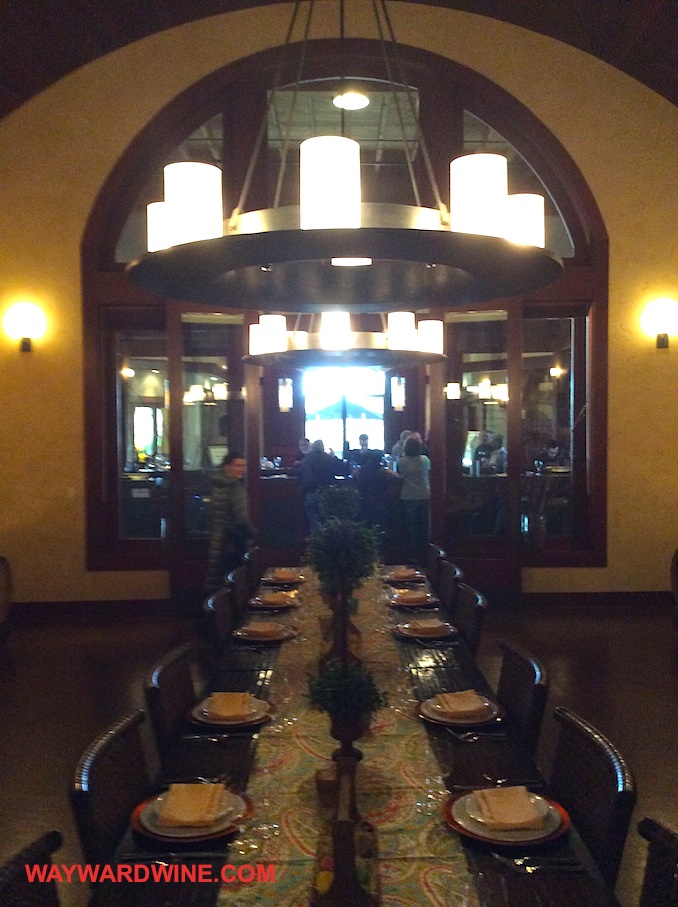
Dining at Black StallionThose windows open to the vast barrel room:

Black Stallion BarrelsYour grocery store probably shelves their Napa Valley Cabernet or Chardonnay for $25 and $17 respectively.  Your steak house likely carries these as well. These white labels represent good values that let us 99% enjoy Napa Valley (especially after an eye-watering $150 for Lewis’ reserve Cab).

Yet at the winery, Ralf discourage us from them.  We “must” try the winery-only, black-ish label wines. He shows us three pages of price-grouped wines. We foolishly decide to take his challenge and try all 20 wines…variety

The tasting room aims to lock visitors into their wine-club.  Thus, you get a repeating supply of wines that make you seem/feel special at your dinner soirees. But is such commitment and exclusivity worth it? Let’s see:

Another winery, another winery-only rosé:

2014 Estate Syrah Rosé $26 (Club $20.80) Cranberry color and flavor, tart red grapefruit, soft, plump, almost dry enough, good (3 of 5).

2014 Sauvignon Blanc $26: looks a clear, light, bright gold. It is simple, off dry, citric, lemon, with a bothersome light note of almond and popped popcorn. Safe (3 of 5). At least a break from Napa Cab.

2014 Pinot Gris….meh (2 of 5).

2014 Viognier, from young vines in Stagecoach Vineyard on Atlas Peak, $35 ($28). Vibrantly citric, yet viscous, white pear, slight aniseed, and 25% oak vanilla veneer. BS’s Viognier is appreciably brighter than Freemark’s. Very good (4 of 5), but anything is after so many cabs.

2013 Chardonnay, Los Carneros (well…13% Coombsville) $35 ($28). A clear, mild gold. Medium plus aromas and flavors include gingerbread, orange blossom, passion fruit, buttercream (oak), and aniseed. It feels soft, plush, but very medium and a bit limp. Good (3 of 5).

2013’s Syrah ($40) shows black cherry skin, strawberry, chocolate molé sauce, and a touch of brett-like dark turkey meat. It is dry, with medium acid, tannin, and alcohol if it feels bit lean. It is good (3 of 5).

2012’s Merlot ($40) looks a clear but dense ruby. It smells massive, plump plum prune, cherry liquor, but iron ore dust, and serious. Dry, medium acid, medium minus tannin, medium alcohol, slightly hot and edgy but smooth. Flavors turn to light French coffee, sandy quartz, cinnamon. 2012’s Napa Merlot is complex and very good (4 of 5).

2013’s Rockpile Zinfandel ($45) is jammy, syrupy blueberry and cranberry, with soft caramel sauce…fine (3 of 5).

2013 Zin from Howell Mountain ($45) is all black pepper, black cherry skin, with dry, medium plus toast woody tannins and black ash. It intense, complex, but balanced enough to be very good (4 of 5).

2013 Zin from Sonoma 800 fasl in Monte Rosso Vineyard ($45) is dusty, earthy, with notes of forest floor, blackberry jam, cocoa powder, pencil shavings. It feels big, dry, but too hot. Still very good (4 of 5) but only if you are in the mood to drink a fireplace.

My mouth feels ragged like old runner’s shoes.  We hang on the bar a bit harder than an hour ago. Tourists pile up and start to stress the staff.  But this is a marathon. We turn to blends named after Alexander the Great’s trustiest, long-suffering steed:

Bucephalus

Around $200 this is one pricey horse. So I muster whatever focus I have left.

2010 Bucephalus ($200) (81% Cab, 15% Merlot 3% Syrah). Medium plus ruby core and aging garnet rim. Pronounced aromas dried leaves and oolong tea show its age and seriousness, but still with maple syrup and black cherry jam. It feels dry, and very medium: medium acidity, tannin, and body.  Age has mellowed 2010 into a plush, fine linen texture.  Flavors add a medium plus finish of cardamon or orange peel. Drink this mellow somewhat fading fling now. Very good (4 of 5).

2011 Bucephalus ($175) comes off tidy with similar blackberry but more spice: nutmeg, cinnamon, and tired aniseed.  The palate is dusty, tannic, lean, acrid, mineral, dry yet fairly smooth. It needs food to calm it. Drink now and for five years. Very good (4 of 5).

2012 Bucephalus ($150) It looks a clear ruby purple. Medium plus aromas match flavors that are all fruit: cassis, black cherry, and blackberry jam. It is dry, with medium acids and tannins, the high alcohol and full fleshy body. 2012 is very good (4 of 5) but it needs 5 to 10 years.

Black Stallion’s Bucephalus range has quality, complexity, and intensity but not enough ageability or production cost to merit collector’s item pricing around $175.  The cart seems to be a bit before the horse here: they make it rare and raise the price $25 with each passing year regardless of vintage variation or quality.  Do not get me wrong, they will not disappoint the buyer.  Just do not treat them like that 89 Margaux in your cellar. Drink them sooner than later.

RECAP: In summation, do visit Black Stallion but plan to spend the day there. Book a tour and try each of their flights with a lunch break.  The prices on most of their wines compete well.  There is something for every body here (even if that range blurs their focus a bit).  Do not visit them after two prior wineries.

Posted in Uncategorized | Tagged , , , , , , , , , | 4 Comments

Tasting at Lewis Cellars Winery Napa Valley

We leave the vast caves and hobbit-infested knolls of Pine Ridge (read here). Already late and marginally sober we bolt south.  Stags Leap AVA flattens into the vine-plain of Oak Knoll.  We blast past the winery, turn around and pull up a long drive to the innocuous, tall, grey, free standing building with a big L on it: Lewis Cellars.

Inside, white wash and windows feel like a Southern tea room.  We sit with two other couples on a long table.

Lewis owns no vineyards.  They started sourcing grapes in ’89 as Oakville Ranch Winery.  A car crash in 1991 ended Randy Lewis’ 23 year Formula 1 and 3 career.  So he turned to completely to wine. Being Napa, it did not hurt being rich. Today they make 6,000 cases, 1/3rd of which are Chardonnay…

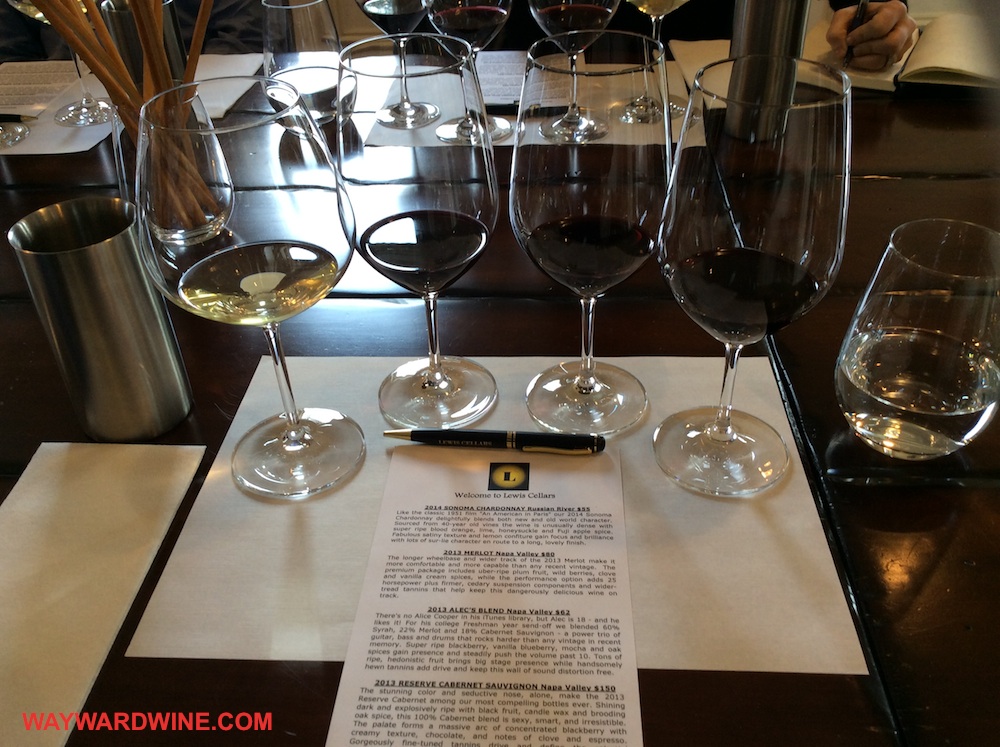
Lewis Cellars Tasting2014 Sonoma Chardonnay Russian River $55

We start a hop, skip, and a jump over in Sonoma with Lewis’ Russian River Chardonnay. Since ’94 Lewis has contracted Dutton Ranch vineyard’s fruit. Wild yeast ferment it, 100% mlf lathes it with butter, a year in 70% French oak toasts it.

APPEARANCE: It looks a lightly hazy (unfiltered) lemon gold. AROMAS:  Think of buttercream, lemon, puff pastry, and pineapple aromas and flavors.  BODY: Extra acidity saves it from feeling too big, viscous or flabby…although it ain’t light.  The finish is long but hot, alcoholic, like warm pineapple syrup. Very good (4 of 5).

For comparison, 2014 Reserve Chardonnay sees 80% new French oak barrels. APPEARANCE: It looks hazy but bright lemon in color. AROMAS: This is an oak love fest, with loaded creme brulee aromas and flavors.  Luckily, the fruit is more pear, citrus, verbenna kinda akin to a lemon curd pie. BODY: Also, the body feels lighter, leaner (although still medium). If you adore oak and ripeness this is very good (4 of 5), if overkill.

2014 Merlot Napa Valley $80 125 cases

APPEARANCE: nearly edgeless intense ruby. AROMAS: very exuberant yet heavy black fruits, clove, cinnamon, cedar and leaf. PALATE: feels dry, warm, very big, with drying woody tannins. FLAVORS: match intensity with woody and toasty coffee, black fig fruit leather. CONCLUSIONS: Big, hot, oaky, yet fruity yet easy: this is Merlot with attitude (4 of 5).

2013 Alec’s Blend Napa Valley $62

Lewis’ 18 year old grandson gets a 60% Syrah 22% Merlot 18% Cabernet blend that is all Napa.  APPEARANCE: purple ink straight to rim and up its legs. AROMAS: chocolate syrup, red cherry syrup, violets, lavender, raisins… yup. PALATE: low acids, medium tannins, and high alcohol make for a flat but fat affair. FLAVORS: tastes a bit more real with rich, ripe red cherry, pepper, blackberry, leather, and a light tobacco toast. CONCLUSIONS: nonetheless, Alec’s Blend is too big, hot, and soft to have much more of a purpose than Port.  It is hedonistic, complex, but only good (3 of 5).

2013 Reserve Cabernet Sauvignon Napa Valley $150

Ok. Impress us. To make an 100% cab work, six sites in Calistoga (North Napa) and a day-long decant bring us to this: APPEARANCE: black, ruby ink without a rim. AROMAS: ooze with port-like intense black cherry extract, hot coals, dried vanilla, and hot chocolate syrup. PALATE: flat acids, full fat tannins, hot alcohols, make for a full plump body finishing with a papery texture. FLAVORS: work you body and soul with port-like, staining, blackberry extract, black cherry cola, chocolate cake. CONCLUSIONS: hyper, massive, staining, tannic, brutal, foodless and fantastic (5 of 5). Lewis’ Reserve Cabernet lives alone.  No pairing can match it.  It will peak in 2020 and who knows after that.

Lewis Cellars can make some of the most concentrated reds in Napa. Nothing will stain your teeth nor leave such a lasting impression.  Their house style, for better or worse, is clear as a big iron bell ringing throughout the valley.  Maybe, this is what Napa should be given climactic warming.  Maybe, this is what Napa used to be with the passing of Parker-driven, monster wine culture. Needless to say, they are not for everyone.  Our formal, white linen tasting seemed a red herring to such bombastic wines.

How do you create such concentration? Pack your winery with wall to wall barrels and tanks:

Lewis literally makes all their wine in this space.

Check back Monday as our Napa tour continues!

Posted in Uncategorized | Tagged , , , , , , , , , , , , | 3 Comments

Visit to Pine Ridge Vineyards in Napa Valley

We start another day of our Napa Valley tour at Pine Ridge Vineyards. Somewhat new to Napa’s scene, in 1978 Gary Andrus founded Pine Ridge in Stags Leap AVA. His goal: to recreate Bordeaux.

As you might notice, Stags Leap is a mini valley within Napa Valley. Pine Ridge’s 47 acres of terraced vineyards catch the Eastern sunrise but cool quickly as the sun rolls West. They also own/use around 200 acres throughout Napa Valley.

They also have a demo vineyard with various grapes and trellising forms.

Pine Ridge Test Vineyard

Chris (our tall guide) starts with Pine Ridge’s near-ubiquitous white: 2014’s Chenin Blanc + Viognier: plump melon, yet more citric than I remember (with only 7 grams of residual sugar per litre). For $10-15ish, and as a break from Napa Cab-land, I still find it very good (4 of 5).

Their 2014 Encantado Rosé mimics Bordeaux pinks with cabernet and merlot. It is off-dry but tighter, with strawberry pith, and a slightly more serious character than Chenin Viognier. At $24 and only sold from the winery, this rosé fills a niche (for sweaty guests and staff) but you could find better for less, still good tho (3 of 5).

Next, Chris pits a Chardonnay-off.  Both 2014s. From those hobbit hills: their own Le Petit Clos Stags’ Leap Chardonnay -vs- Dijon Clones Carneros Chardonnay

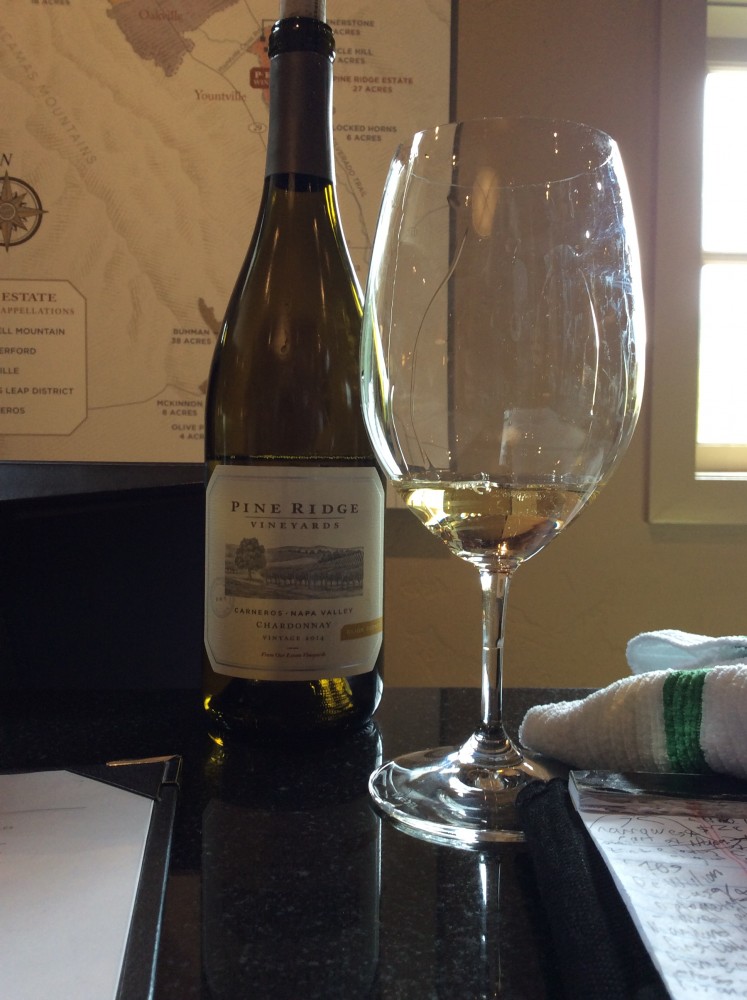
Pine Ridge Dijon Clones Chardonnay CarnerosDijon Clones Carneros looks a bright lemon with gold glitter. Aromas smell pronounced of guava, kiwi, shaved lemon peel, and almond. It is dry, with medium lemony acid, extra alcohol (14.7), and a medium body. But aromas dominate other concerns.

Meanwhile, Le Petit Clos comes from the hill above us:

That “unfortunately” is because Cabernet will soon replace Chardonnay in Le Petite Clos vineyard.  Regardless, 2014 also shows a pronounced but nuttier nose of marzipan, vanilla, white melon. The palate seems similar enough, again with an oomph of alcohol, but this feels more mellow, viscous, less precise than Dijon Clones. Fresh low toasted oak (50% new French) and nuts lead to lemon pith, vanilla, light musk, and minerality.

Pine Ridge Le Petit Clos Chardonnay Stags Leap NapaLe Petit Clos is more complex, rich, lengthy, and wooded than the Dijon Clones.  Cooler climate Carneros also gives Dijon Clones a sharper acidic edge, that I personally prefer. At $38 Dijon Clones is very good (4 of 5), but you can pay $75 for winery exclusivity and rarity with Le Petit Clos, which is also very good (4 of 5).

We head into the winery:

These tanks all tie to an app on the winemaker’s iPhone. With a text Michael Beaulac can tweak temperatures or start a pump-over. Just past the stainless cathedral are the caves:

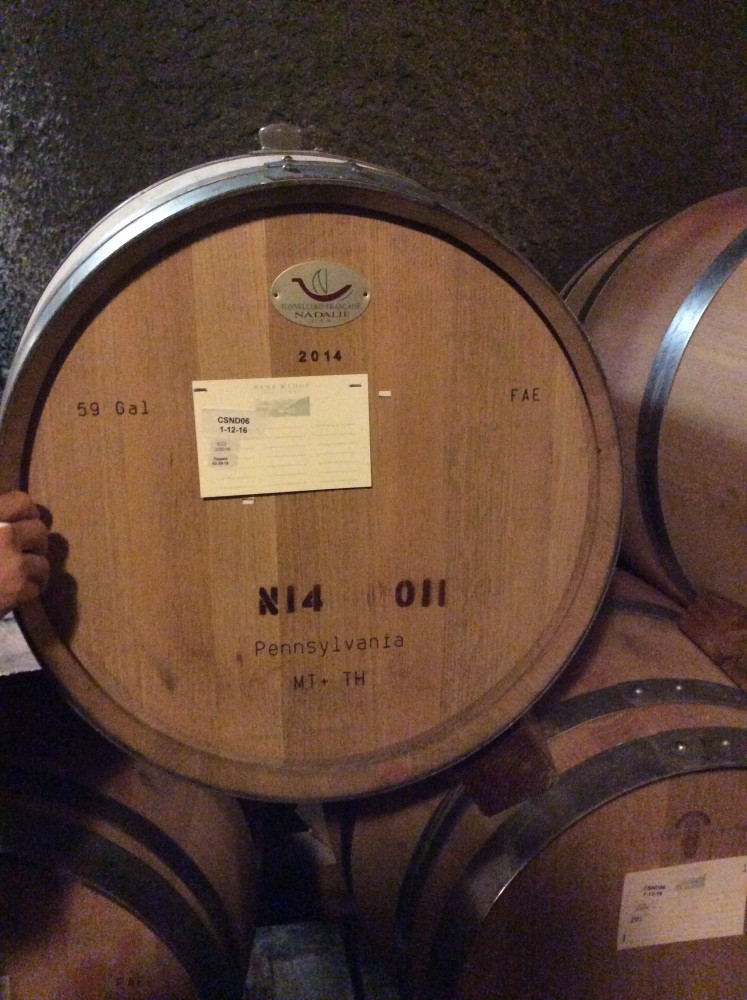
Pine Ridge Barrel CaveAs with Beringer (read here), Chris samples us on a barrel of 2014 Cabernet Sauvignon. It looks a dark purple.  Acid, tannin, and body all feel medium, balanced, but portioned.  18 months in oak have lent dominant cedar, tobacco aromas backed by bright but deep, black fruit, cassis, orange peel, light clove, vanilla and ending dusty wood.  40% of the final wine’s oak influence will come from new Pennsylvania staves.

Pennsylvania Oak Wine Barrel Pine RidgeA cost shaving and interesting choice, when Napa lives and dies by French barrels. But don’t think Pine Ridge cuts corners.  They have a two mile long pump hose.  Our walk through the Bat Cave also finds a high tech racking machine.

Pine Ridge Racking MachineThis pump sucks barrel juice off of its dead yeasts and skins into that tank, and then back into fresh barrels, all under the gentle, anaerobic environment of Nitrogen.  Science means your Cabs look clear, feel smooth, and taste fresh.

At the tunnel’s heart we find the posh dining cave.

Pine Ridge Bat CaveIt looks exactly like their Oregon Archery Summit cave, except in Napa you get glass by Dale Chihuly:

Dale Chihuly Pine RidgeThirsty again, we taste 2012’s Napa Valley Petite Verdot (mostly from here in Stags Leap). The color looks a rich ruby with a short clear rim. Aromas of blackberry skin and jam, blueberry, baking spices, cardamon are clear and clean. The palate feels tannic and big. Flavors turn from bright orange peel to blackberry juice, vanilla dust. 2012’s Petite Verdot is approachable but has years ahead of it. Very good (4 of 5). We buy one for variety’s sake.

Chris then pits 2013 versus 2012 Oakville Cabernet against each other.

’13 looks deep and purple, is dustier than ’12, slightly gamey with a notable tinge of Brett, flinty, toasty tobacco, black berried cocoa powdered with great acidity, great tannins, and great body.

’12 looks lighter, ruby-tinged, with bright, up front redder fruits like raspberry, red apple, and plum, candied orange, mint, and fringes of vanilla, blue cheese, and caramel sauce. Tannins feel softer, acidity a wedge higher.

Nonetheless, 2012 and 2013 Oakville Cabernets are like teenage twins: similar yet now different enough when side by side. ’13 is too young but has a fab tinge of wildness about it that could mature into something quite interesting. ’12 is showing most of its cards, but could roll with them for another decade.  Both are outstanding (5 of 5) and $85.

We return to this hobbit-dwelling land, tree-lined 47 acre estate with Pine Ridge’s Stags Leap Vineyard Cabernet Sauvignon 2012.

Pine Ridge Napa Cabernet Oakville

The core looks a clear but deeeep ruby, with brick-colored fringe, and sticky legs. Medium plus aromas of tobacco (18 months 60% new French oak), lavender, mint fold into black and blue berries. Acids feel mild, but intense tannins and alcohol (14.7 abv), make for an ash dusted, warm, textured drink. Strangely, one could drink this now (with a steak or serious mushroom risotto to handle the tannins) but in five years it will be ideal. It costs $125 and is outstanding cab (5 of 5).

Starved and teeth-stained, Chris grabs us boxed lunches and we quietly munch away, watching a cat sun itself in the courtyard.

Pine Ridge does what Napa does well: make clean, premium Chardonnay and Cabernet that demand high scores.  Most wines show a bit less body, more finesse and delicate touch than say Beringer or others.  Their 47 acre amphitheater of vines charm us.  The wines from it are stellar.  However, offerings from throughout the valley and beyond, although quite good, muddle the house image (we also tried their Washington Cab).  This is more a philosophical complaint about wineries creating “brand extensions” to please more people with a growing array of options.
Quibbles aside, Pine Ridge is a lovely spot.

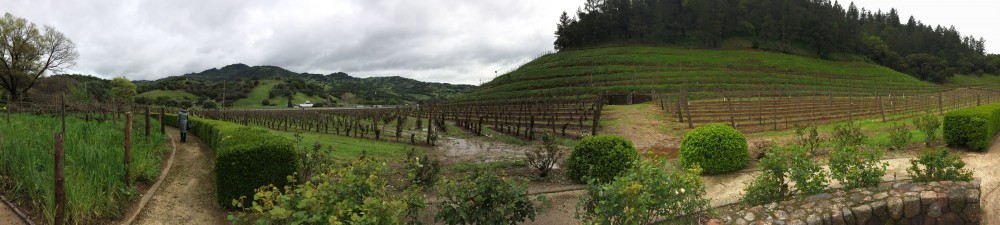
Pine Ridge panorama


Posted in Uncategorized | Tagged , , , , , , , | 6 Comments

St Clement Vineyards Napa Valley

Charmed but challenged by Beringer (read here), we roll up the 29 to St. Clement Winery. Another lovely Victorian home awaits us at the top of a terraced vineyard.

St Clement WineryFar from San Francisco, North, at the narrowest, windiest (and today, wettest) gap in Napa Valley, Fritz Rosenbaum built his home in 1878.

Fritz gilded the Gilded Age, thanks to fancy mirrors and stained glass sold to San Fran (as well as the Beringers…$6,000 of their $28,000 was Fritz’s stained glass). This was in the bathroom:

imageAfter many owners, Dr William Casey got all origin myth obsessed, named it after his/Baltimore’s/America’s first Catholic’s patron Saint: Clement, and then built a proper stone winery out back.

Today, Beringer owns them, which means Treasury (Penfolds) owns them, which means I sell them.  But the wines I/they distribute have white labels and sit sadly in a basket. We will taste their winery ownlies (this “winery only” club only thing is quite the trend in Napa). Matt Johnson is their winemaker.

The space looks cleaned up Victorian, light and clean.  My wife smells honey or wax in the room from somewhere in the past.

We start with red before white (how Burgundian!).

2010 Steinhauer Ranch Cabernet Sauvignon

from 1,800 feet above sea level on Howell Mountain. Its clear ruby core leads to heavy aromas and flavors of bright, tart blackberry, orange peel, finished by flint, ash, and forest floor. It is outstanding today (5 of 5), partly thanks to 6 years since harvest. $95

2012 Star Vineyard, Cabernet Sauvignon, Rutherford

We bomb down to Rutherford Valley floor with Star Vineyard’s 2012 Cabernet. Aromas ache of fruity pomegranate syrup, blackberry, and violet candy core, framed by heavy charred tobacco and graphite. The palate feels dry, with intense but finely powdered tannins, mild acid. Flavors plump up ripe red cherry fruit lingering with pencil graphite minerality. Bright, lifting, viscous, yet tight, green, jaunty, mineral and dark…too young but very good (4 of 5). $90

2013 Oroppas, Cabernet Sauvignon, Napa Valley

Now for Clement’s house cab.  Valley and mountain fruit make up 2013’s Oroppas. 96% of it is Cabernet. This young thing looks purple and inky. Aromas smell of strawberry jam, fruit rollup, mint, but toast, a slice of vanilla, anise, and subtle cedar match the fruit. The palate feels dry but supple, luxurious, viscous yet just shy of flabby. Drink it now.  It is very good, approachable, numb, too easy to last (4 of 5). $60.00

2012 Oroppas Reserve, Cabernet Sauvignon, Napa Valley

If Clement’s house seemed like light squeeze, their 2012 Reserve has all the right stuff. 50% comes from Rutherford’s flan, 50% from Armstrong ranch high on Mount Veeder, followed by 6 to 8 more months in barrel. Oroppas Rsv powers out of the glass like port with hot cranberry sauce, pomegranate syrup, blueberries, honey, florals, hints of light smoke and fresh tobacco. Everything is medium plus, making for a jumpy, structured, ageable red. It is outstanding (5 of 5), will reward five years of patience, and $95.

Enough Cab.

2012 Red Blend St. Clement’s Ark and Dove

Malbec (yes) and Petite Verdot (yes-er) from Mt Veeder’s (yes-est) Parris Vineyard 2,000 fasl. In a world of drought, mountains matter. Elevation keep grapes cool. If ink had a flavor….Ark and Dove is plummy, fleshy, purple, dry, with medium acidity, and a medium plus tannic, iron structure. Plums and pomegranate. Grilled hatch peppers. Charred oak. We buy it because it is odd, needs a decade, and is very good (4 of 5).   $60

Cool. Whites anyone?

2014 Chardonnay, Abbot’s Vineyard, Carneros

From right off cold, wet San Pablo bay comes Chardonnay. Passion fruit, blanched almonds, citrus, toast, ash, and mineral define it. The body feels lush and plush, yet cut by citric, early-picked fruit. Very good (4 of 5) but our palates begin to waver. $31

2014 Sauvignon Blanc, Bale Lane

Verbena, more passion and guava fruit, pear lemon juice, lemongrass, and a slight sulfuric ash make for a mouthwatering, medium bodied, saline, yet tropical white. It is very Napa, no where near NZ or Sancerre, but very good (4 of 5) $27.

So St. Clement’s winemaker Matt Johnson makes very good wine. They chase scores with huge Cabernet like everyone here. Also, they try to grab club member money by offering ever-narrowing, single vineyard wines. Each red needs years still. The whites are good but afterthoughts. Tasting them here is like trying to predict when we will live on Mars. Hints of awesomeness run throughout, but it is too soon.

Posted in Uncategorized | Tagged , , , , , | 2 Comments

Beringer Napa Valley Winery Visit

After Freemark Abbey (here) and Raymond Vineyard (here) yesterday, our 8th wedding anniversary Napa Valley trip heads to iconic Beringer Vineyards.

We shoot up the 29, rain phasing in and out, twiggy vineyards in various stages of pruning, grassy greeness everywhere:

But then, this jumps out at us:

This is Napa. Showing off is survival out here. But hey! A founding winery like Beringer, rich with history and popularity with its white zinfandel need not drop to such levels….

Beringer PrioritiesMaybe the endless quality tiers, grocery store profundity, and white zinfandel decline have dented Beringer’s reputation? Regardless, we have come to give them a fair shake.

We start at their fabulous Victorian Estate.

The Rhine House cost Freddy B a cool $28,000 to build. The cool thing is, it is not a museum. We can walk right in. On the left, tea rooms with original tiled fireplaces, dark woodwork, and stained glass provide a gift shop. On the right, a dining parlor has become a tasting room.

But first our tour.

We meet in another tasting room/gift shop.  All signs and displays up front push their “serious” wines and wine club.  Then I spot the white zin relegated to a sad display corner off of the tasting bar and behind a wall.

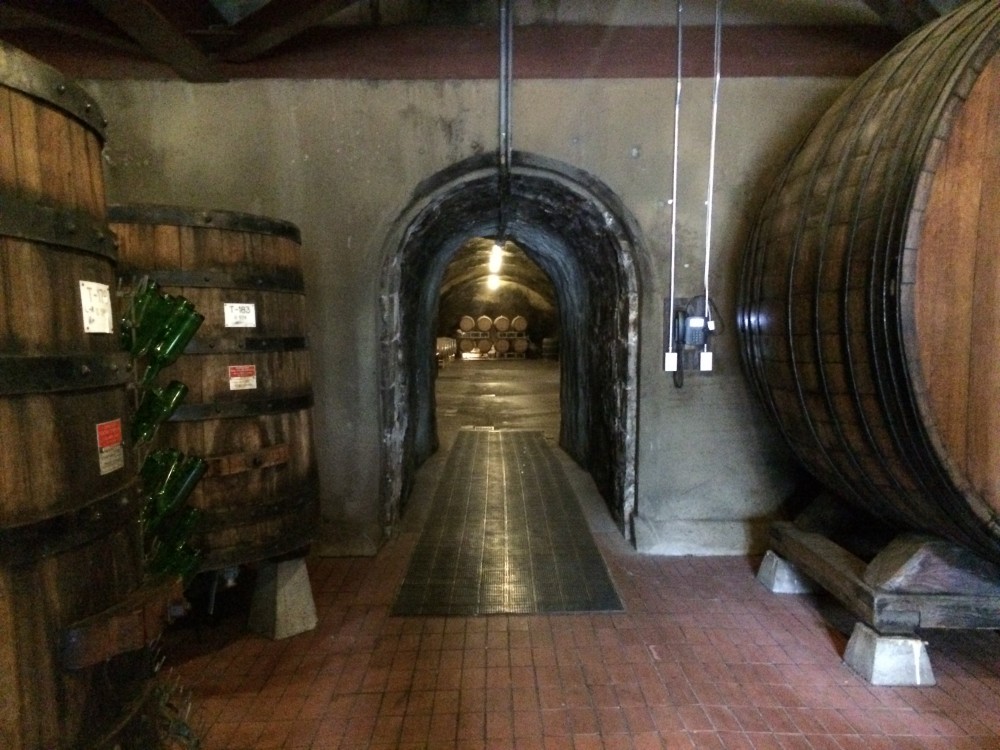
Outside, after checking out decorative vines flaunting downy budbreak, we enter the original 1876 winery: all stone and simple arches like a Romanesque wall.  Inside, we find a winery like any in Europe dating back to the 1400s.

The Beringers came from Germany, having made beer, and with them brought Riesling and fortified wine to a market of gold prospecting cowboys and new money. Long before air-conditioning, they cut into the volcanic cliff to cellar their wines.

imageRain drips and collects into drains. Empty barrels decorate the walls. Winemaker portraits on digital frames line a tunnel.  Sure, this is for tourists. The modern winery churns bottles out across the street. But the shadow, the legacy of these moldy walls still hangs over Beringer.

img_1251We “barrel taste” a 2014 Knights Valley Cabernet (an AVA in Sonoma, but whatever).

imageThis deep purple youngin is already quite approachable. Dark aromas of beet juice, blackberry jam, dried spearmint, anise and tobacco all bounce about the tweaky acidity, chunky cocoa tannin, higher alcohol and body. Flavors taste more serious with dusty, blackberry fruit leather, hot coals, tobacco leaf (good, 3 of 5).

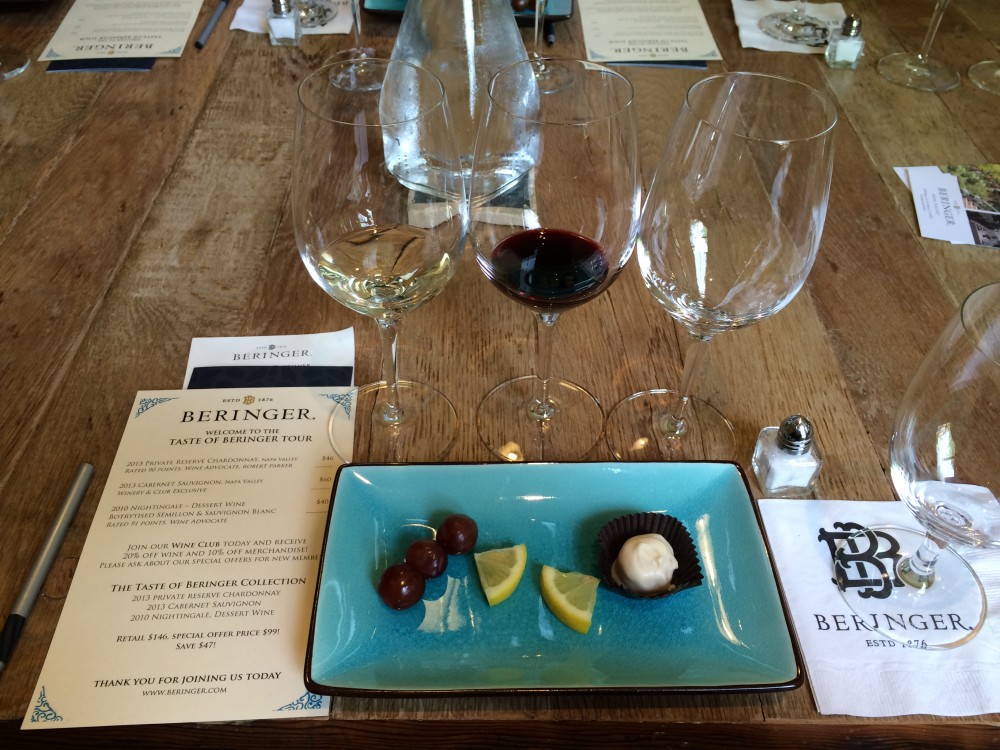
But our pairing tasting awaits. We sit in a bright white room, preset with wines and pairings.

Beringer Taste TourWe cover the basics of how salt, sour, and sweet modify one’s contextualized perception of wine. But our guide seems a bit on auto-pilot. Even though the couple from Kentucky may be wine-novices, they know cooking, pairing, and vintage variation.

Beringer PairingThe 2013 Private Reserve, Napa, Chardonnay sees 100% French oak fermentation and 100% mlf and somehow, oddly, manages to taste and smell of lemon pith beyond the classic cream, almond, and honey. Acidification? It feels fat, plump, rip, but acid from nowhere slices it. It is good (3 of 5), actually really well balanced, but seems unnatural. $46

The 2013 Napa Cabernet “club exclusive” of 500 cases and $60 looks a dark ruby inky with chucking huge aromas of black cherry liquor, raspberry jam, toast and caramel. It is rich, dusty, and tannic like licking corduroy. It is very good (4 of 5) and improves with salt, sucks with lemon, tastes meh with the grape, and horrific with the bonbon.

2010’s Nightingale $40 dessert wine of botrytised Sémillon and Sauvignon Blanc is sweet, plump candied orange peal, caramel, honey and citrus. Beringer isolated the botrytis mold. Today, the pick grapes, place them on mats, spray them with botrytis and water to allow the mold to desiccate the grapes into sugary, Sauternes-esque, desert. But without Sauternes’ miserable weather, Nightingale tastes sweet but flat (3 of 5).

Our guide mentions their wine club ($1 per bottle???), special pricing, et cetera, but we all know we can’t buy anything today.

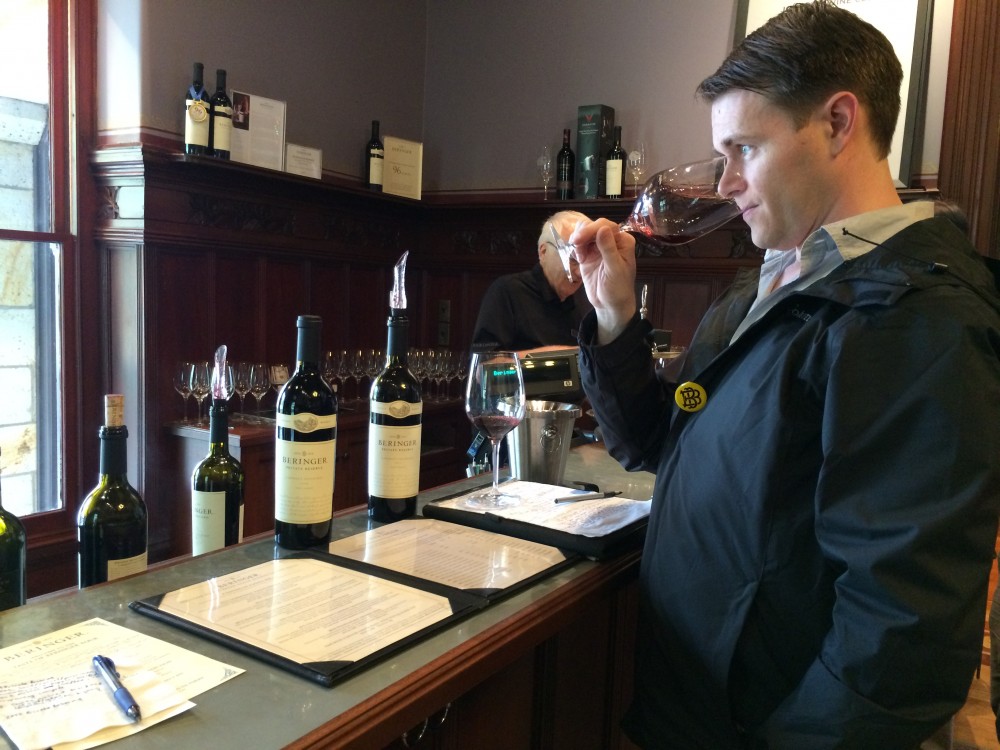
Done, wife and I scoot back to the tasting bar.

Aaron Beringer Reserve Tasting2013’s Luminous white again tastes of lemon pith, high acid, some body, oak, even light tobacco and salt (3 of 5).

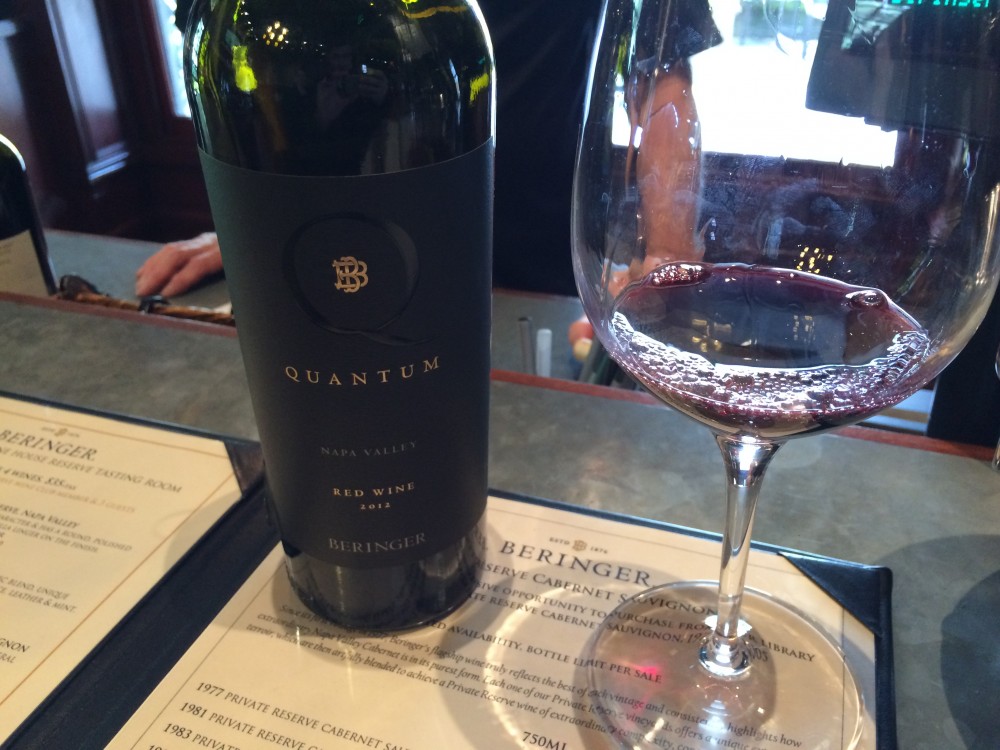
Beringer 2012 Quantum Napa Valley2012 Quantum (which means small btw) Red blend of impressiveness looks rich ruby, smells of pure blueberry syrup, light toast, caramel, and blue cheese. It feels dry, dusty, but fleshy enough with brighter flavors of orange peal, green bell pepper and that blue fruit. Very good (4 of 5).

Time to get serious. 2012 Marston Vineyard, Cabernet, in Spring Mountain AVA has a bright beautiful ruby color, dry, soft, plush tannins medium body and sneaky warm alcohol. Aromas and flavors play a fun, meaty venison-like brett, dough, vanilla, and salted medium plus finish. Very good (4 of 5) and probably the most interesting of the bunch.

Next 2009 vs 2012 Private Reserve.

Beringer Private Reserve 2012 2009 Napa Valley2009’s Private Reserve Cab shows its age with garnet framing a still deep ruby core. Heady aromas of mulled wine, clove, nutmeg, cinnamon and cracked bell pepper dominate, after swirling, ripe plum jam, black tea, and graphite. 2009 is all nose. Its Palate falls apart, with a particulate, mealy texture and flavors of red apple skin, cedar, and fruit leather.  Very good nonetheless (4 of 5), but please drink it now.

2012’s Private Reserve Cabernet…the “96pt Cab” Parker loved. Well, it looks a dense ruby. At first smells of salt, clay, wood, then swirled, smells of equal parts fruit and oak: fresh raspberry sauce, light tobacco and roasted coffee, with a light orange peel. It is dry, acids moderate, tannins strong yet soft and balancing, warm, and medium plus bodied. Flavors tend dryer and darker, blackberry fruit leather, toasted oak et cetera. 2012’s PR Cab is outstanding (5 of 5), made to be approachable now, but young and in need of five years.

stain glassedCan Beringer break their white zin curse? Not yet. Our server shrugs sadly when mentioning it. Chasing crazy scores from Parker and building a wine club seem to be their route out of infamy. But I doubt it will change public perception yet. Offering crazy discounts also devalues the product.  Amazing as the Reserve wines are, they are risk averse. There is too much similarity in labeling and the safe, approachable wine style to get the world to pay more for their higher tiers.

The visit is amazing. The Rhine House charming.  But we leave facing the beige winery where the wine Beringer actually makes their wine.

Beringer Actual Winery


Posted in Uncategorized | Tagged , , , , , | 1 Comment