NILLUS.

Only a few options lay before me. Wait another night and risk spoilage. Add more yeast. Add sulfur to prevent spoilage. Siphon out the old yeasts, filter out the oxyclean, add new yeasts and hope. Or dump everything.

My spouse glared at my lack of trust. Patience had payed off last time. So I will give the yeasts another night. Like Selene, I will keep visiting my over-restful Endymions. But instead of an eternal beauty-preserving sleep, I shall demand Zeus wake the lazy bastards. The oxyclean residue may merely consist of those “safe” minerals post-cleaning. The discoloration may be superficial. Wake up!

Posted in BLUEBERRY BOUND: CRAFTING MY SECOND WINE (AUGUST 2010) | Tagged | 1 Comment

RUSHING.REVENGE

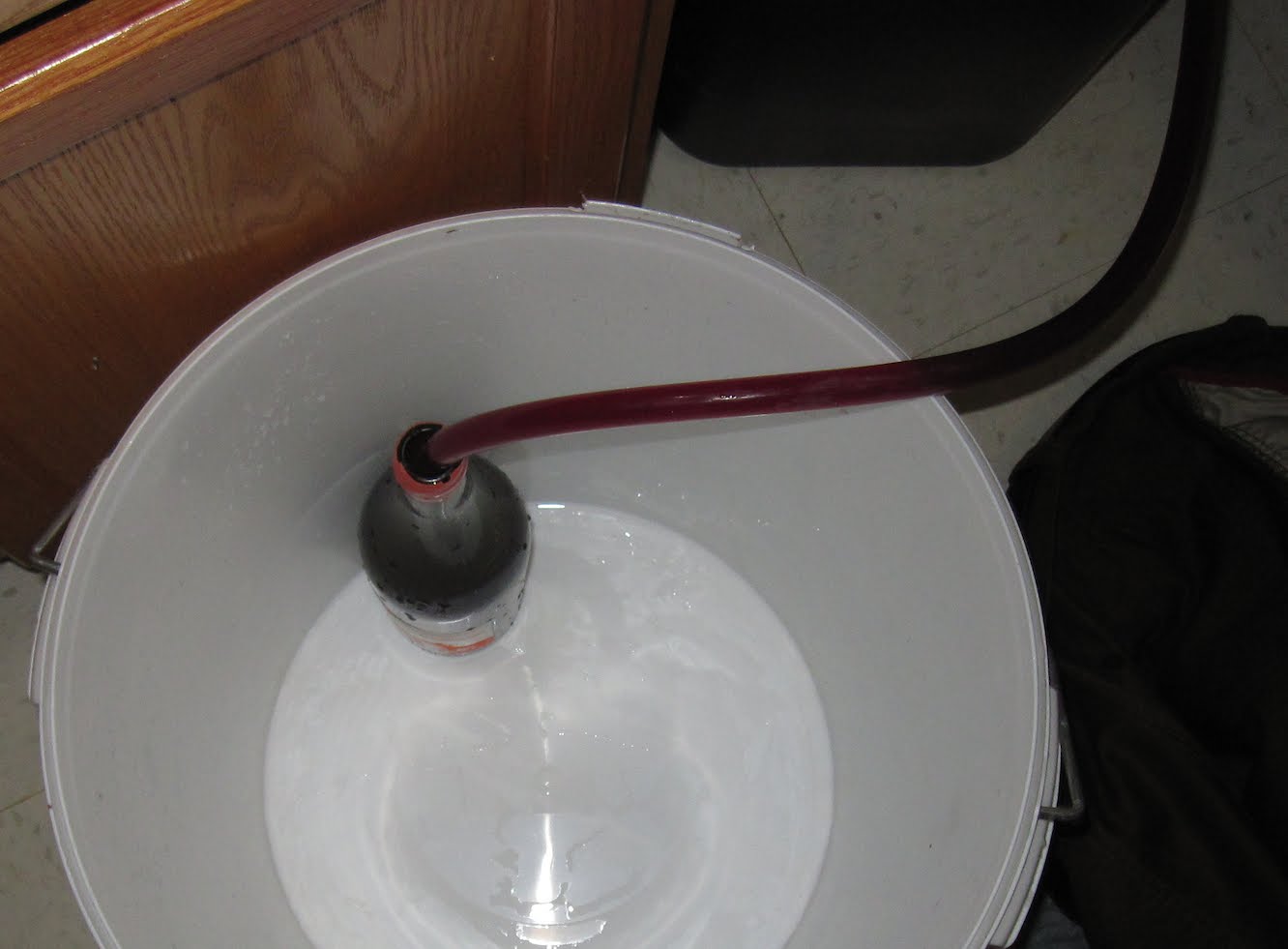
Our old apartment returns to wine friendly temperatures (middle seventies Fahrenheit). So I pack the kids into the back seat, and we carefully crawl over speed bumps home. I only yell at them once for splashing each other. Once they reclaim their place as living room decoration, we seem ready for fermentation. I quickly clean the equipment. However, the must is only a few inches deep, while the hydrometer is 10 inches long: too long to check the specific gravity (relative density, brix) of the sugar to liquid.

I rack some must into a sterile wine bottle that will fit the hydrometer.
The specific gravity sits at 1.030 brix. This means that the potential alcohol will end up at around measly 4% of volume. You might recall my Barbarescowelches started at 1.080 brix giving it almost 11% potential alcohol by volume. Blueberries have only 65% of the sugars that grapes contain. So I cheat. Not interested in blueberry beer, I stir in some dissolved organic cane sugar (maybe a cup, or two or three). If smart, I would recheck the specific gravity to determine the potential alcohol. But I am far too impatient to waste time being smart. It is time to ferment.

Internet wisdom claims Montrachet yeast from Red Star is the weapon of choice. Developed by UC Davis in 1963, yeast strain 522 can turn sugar into alcohol until it reaches 13% or dips outside of 59 to 86 degrees Fahrenheit. It can even survive small amounts of sulfur dioxide (in case I get cleaning crazy). Other strains of yeast are tougher, but my fruit is not concentrated enough in flavor or body to cover up more than 13% alcohol on the palate. Balance is the goal. Well, at least drink-ability would be nice. So, as before, I add my single-celled militia of millions to a cup of warm water and wait. Nothing. One hour then two pass by. I get angry and dump the yeast into the must, cap it, air lock it and go to bed.

With morning light I check the tank. Eerie silence. No gurgling air lock like last time. I crack the lid. Nothing.

Maybe it is too cold. The yeast packet may be a dud. Maybe it was the change in location. What if red is the new black? Maybe blueberries lack the sugar or nutrients to restart yeast.

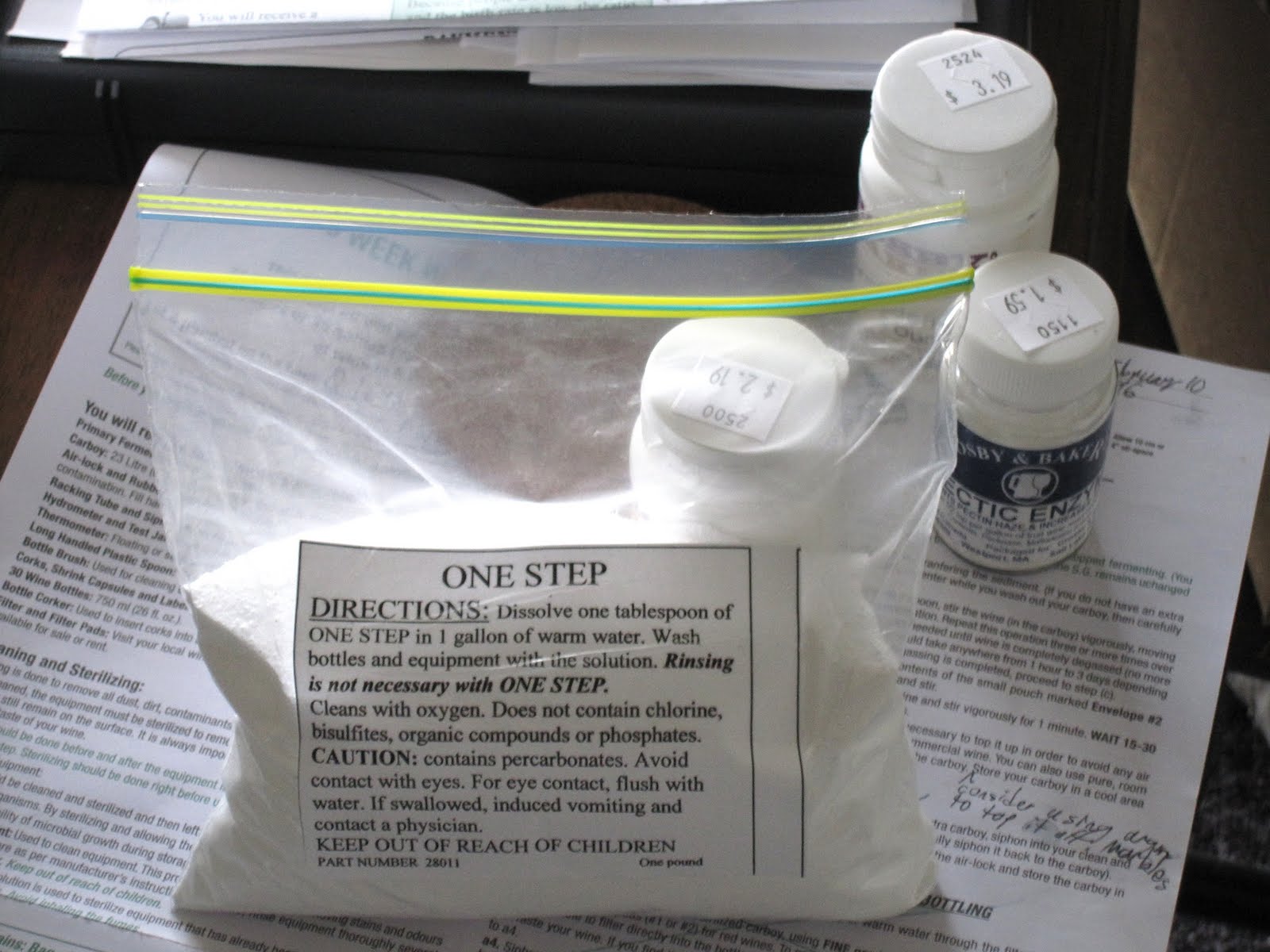
I look for life. A white film runs to a blue patch on the otherwise burgundy juice and skin bag. Not good. In my mad dash to clean and re-rack, I did not rinse out the “rinsing is not necessary with one step” oxyclean. The yeasts may never wake up. Billy Mays’s revenge is at hand.

Posted in BLUEBERRY BOUND: CRAFTING MY SECOND WINE (AUGUST 2010) | Tagged , , , , , , , , , , , | 2 Comments

PROMETHEAN.DEFEAT

The old apartment climbs in heat, dangerously higher than the fruit could handle. Another day and work-worn, I go to our borrowed and air-conditioned abode. There, even a few defrosted blueberries have started fuzzing white with mold. Still hopeful for the batch, I toss the kin of Verminus out.
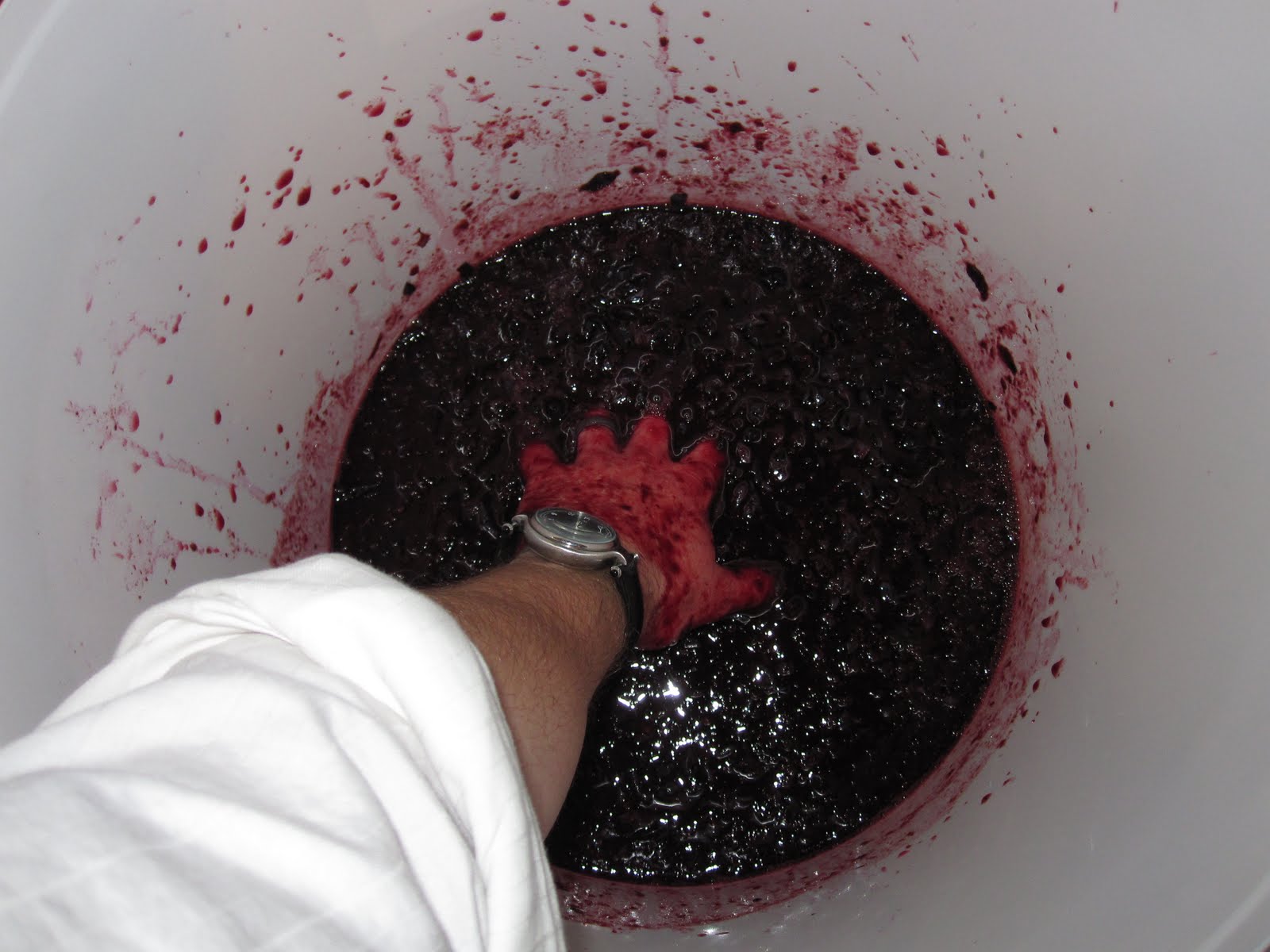
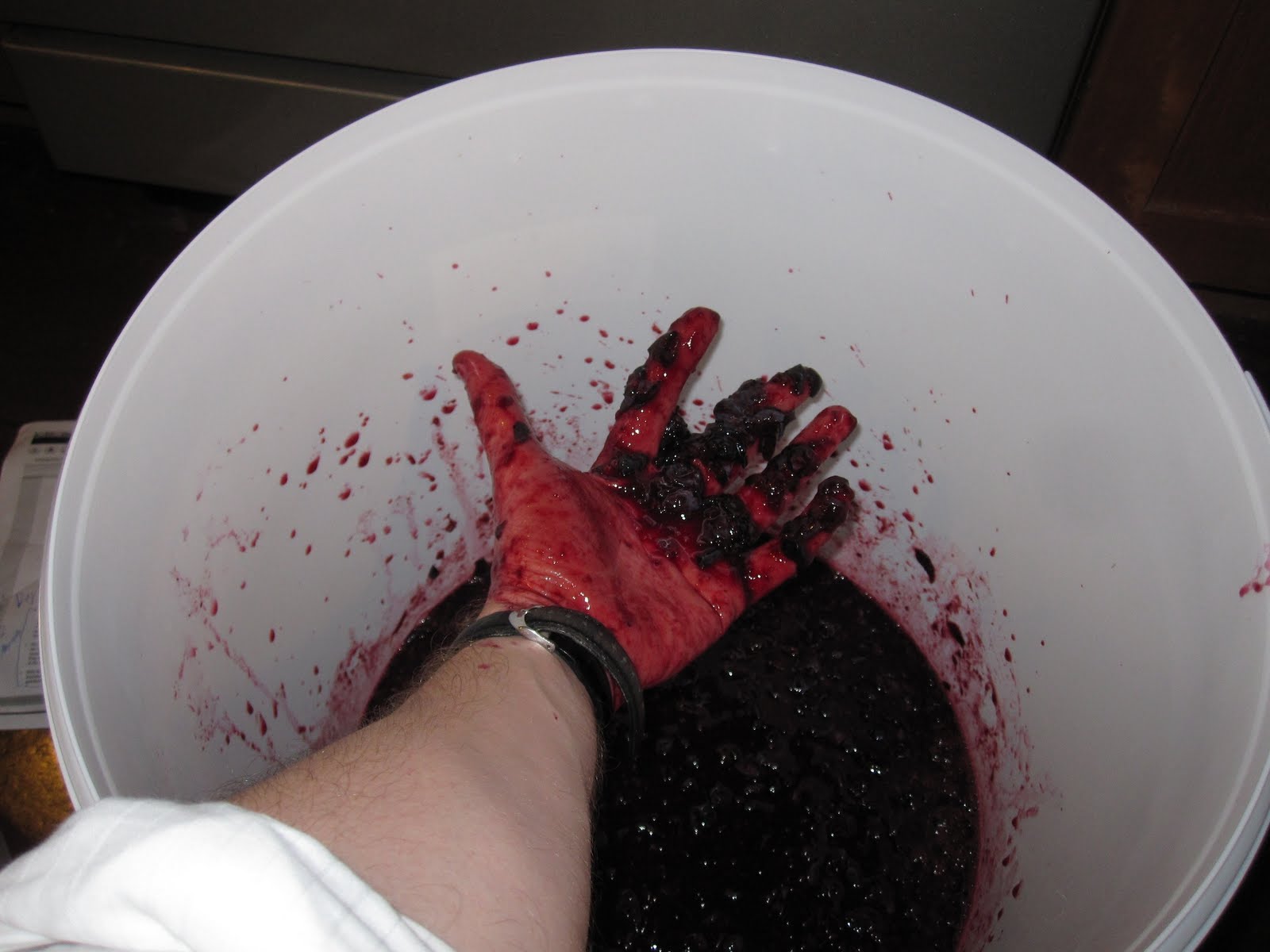
Hands purified (and not trusting my feet), I start the crush. Gravity has already broken a few berries. I could pour boiling water to start extraction, but that would water down the final result. I want a rich dry wine and adding water means adding sugar to keep the potential alcohol high (for each gram of sugar, I will get half a gram of alcohol). If I went down that path too soon, everything would taste like cane sugar not blueberries.Now any reasonable/rich winemaker would have a machine crusher/destemmer do all the work for them. Even body weight on feet or ancient plank presses would be more efficient than this. But how would I be sure that every berry met its fate? Hand crushing. I get more juice with natural sugars and flavors closer to the source. Yet after an hour of smashing, I’m spent. This really, really sucks.However, succumbing to the sweet siren call of using a potato masher would draw this ship to rocky ruin. Seeds contain nasty, astringent green-tasting tannins. Only flesh (or expensive tech) can break fruit without breaking seeds. So I press on…

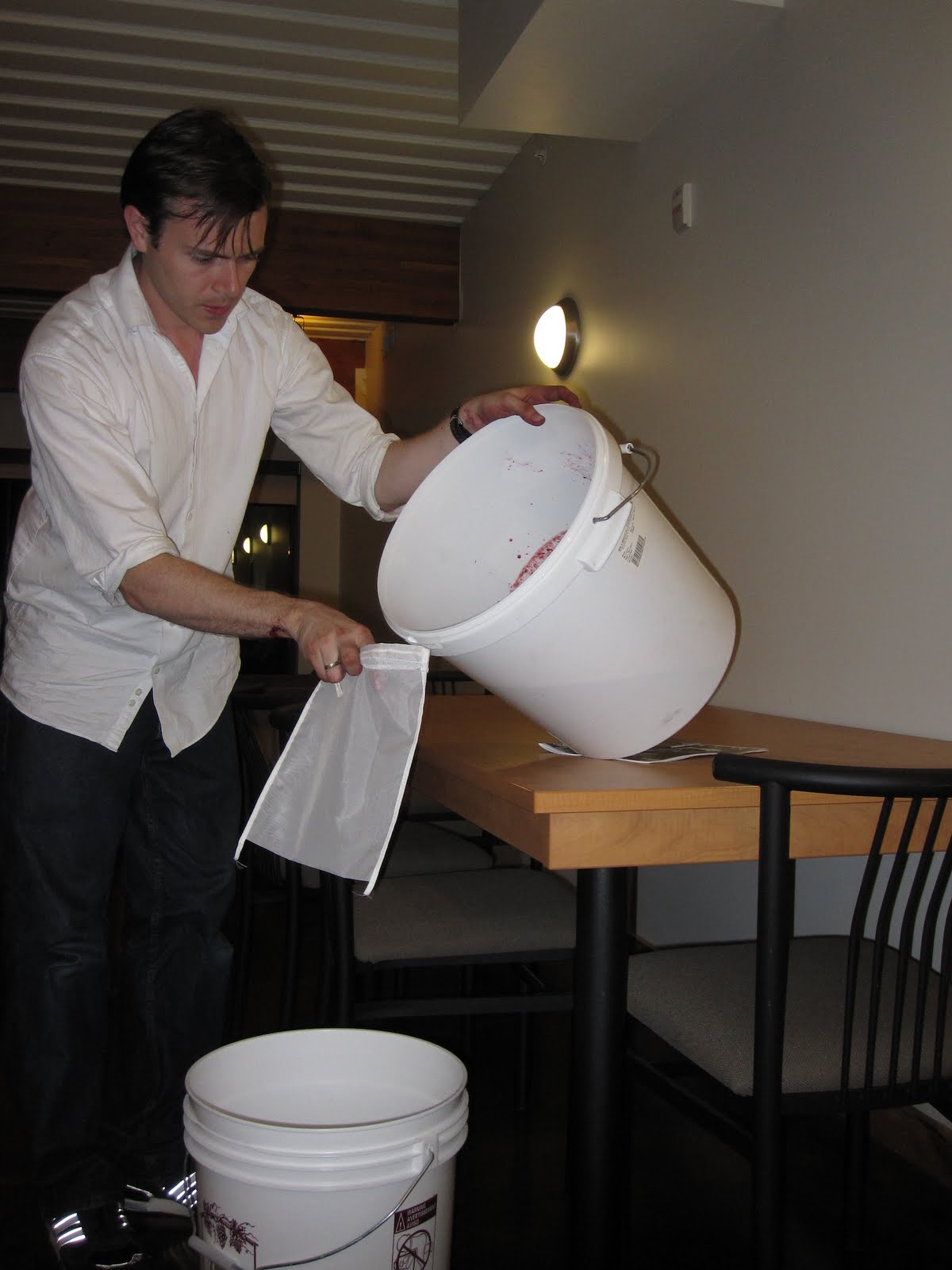
Finally unbound from my mast, I need to separate juice from skins. Easy! I take my siphoning tube and pump. And pump. And…damnit! Nothing. The end is jammed. Plan B: Filter press them apart. Trying not stain the new (borrowed) apartment red, I slow pour into a filter bag. Once full, I squeeze the bag, dump the dry skins back in the crush bucket and pour it back into the bag.I keep at it for an hour but like a Promethean liver, juice keeps emerging with each cycle. The bag then breaks. But I string it up and kept going. This pressing process should get me 15-30% more juice than otherwise.Black fingered and exhausted by one in the morning, I quit. Almost ten pounds of blueberries had given me only three fourths of a gallon of juice and a hideous purple blob. Fermentation, racking and aging would evaporate the juice even further. Once the angles had taken their share, only a few bottles would remain.
Whatever. I re-bag the blob to ferment later with the juice. A CO2 blend is sprayed to protect the juice and then covered. Worry-worn, I wander back to my superheated apartment. The next day should see air-conditioning -and thus my wine to be- return home.

Posted in BLUEBERRY BOUND: CRAFTING MY SECOND WINE (AUGUST 2010) | Tagged , , , , , , , , , , , | Leave a comment

PHEONIX.DEFROSTING

Days of distraction divide me from my blueberry defrosting.
Wine equipment languishes like a cross-dressed Achilles, forced into hiding by his mother. Wigged in lint, powdered in dust, for too long it endures aimless domesticity. Thus, as a feigned Odysseus, I shall trick my comrade-in-drag back into virile action. This persuasive purge shall come, however, not by hidden arms but by fresh air.
Instead of sterilizing with sodium sulfate as before, which led to spousal itching, sneezing and complaining, I try oxygen. “One Step” claims to clean and sanitize with oxygen (O2), a chemical that deceased Billy Mayses and winemakers (in the electrified gas form of ozone O3) have latched onto. Simply put, sodium precarbonates (salts) mix with water, release oxygen and sanitize by morphing into hydrogen peroxide that kills microbes. Only earth friendly, fluffy minerals remain. “Rinsing is not necessary with one step”. What could possibly go wrong?
Fearing Billy Mays hauntings, beards and other oxyclean-related taints, I rinse my wares, let dry and go to the freezer.
My sanitized hands dump the chilly blocks of blueberries into the crush tank. With thaw the skins should break and slowly let slip their liquor. But a cloud hangs about the horizon.
The apartment will be superheated to test for winter. In August. Too rapid a defrost could trigger a microbial outbreak of epic proportions. Thus, I pack my troops into chariot and storm a much nicer apartment.


Posted in BLUEBERRY BOUND: CRAFTING MY SECOND WINE (AUGUST 2010) | Tagged , , , , , , , , , , | Leave a comment

BLUISH.BARTERING

Five months after bottling my Barbarescanadianwelches “wine”, the itch has returned. Against all odds, the remaining 20 bottles have avoided ruin, re-fermentation, or apartment explosion. They even taste a bit better with the bottle shock faded. Yet, with poor acidity and minimal tannin structure, I doubt their futures.

Therefore, this Aeneas must leave Dido and the lap of wine-kit-complacency. Destiny calls. Inching towards real wine, I set sail in hope of picking, crushing and fermenting my own. However, grapes still cling green to the vine with the harvest months away.

In my impatience, I aim to fool Bacchus.
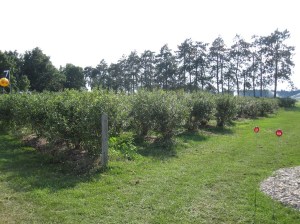
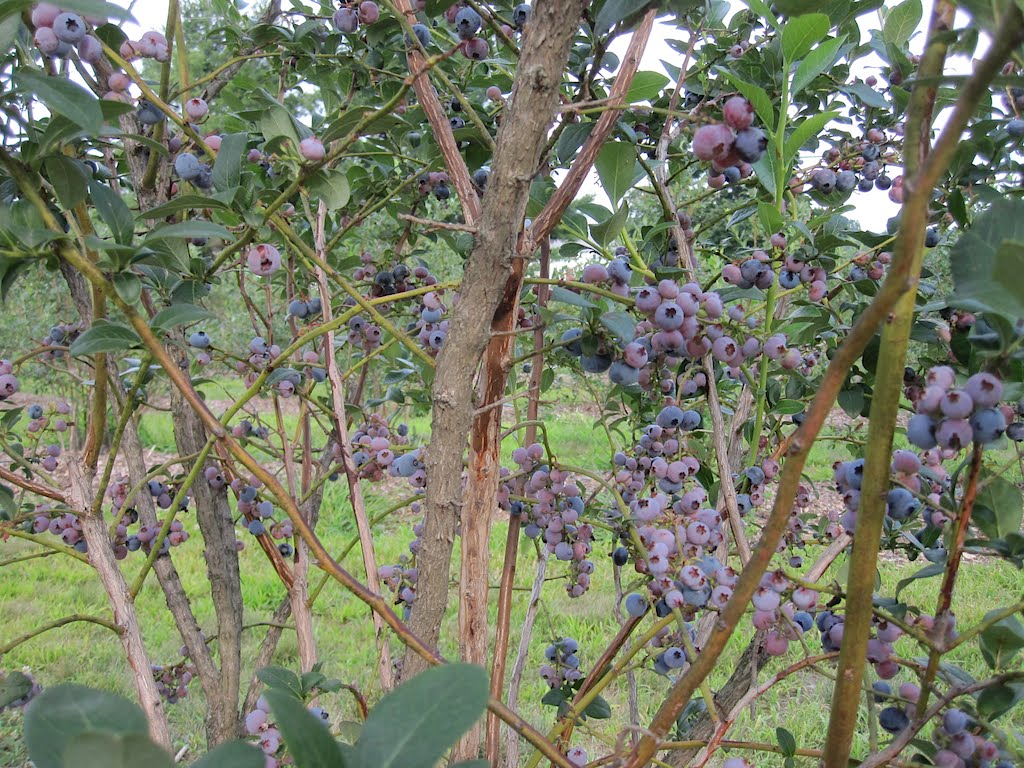
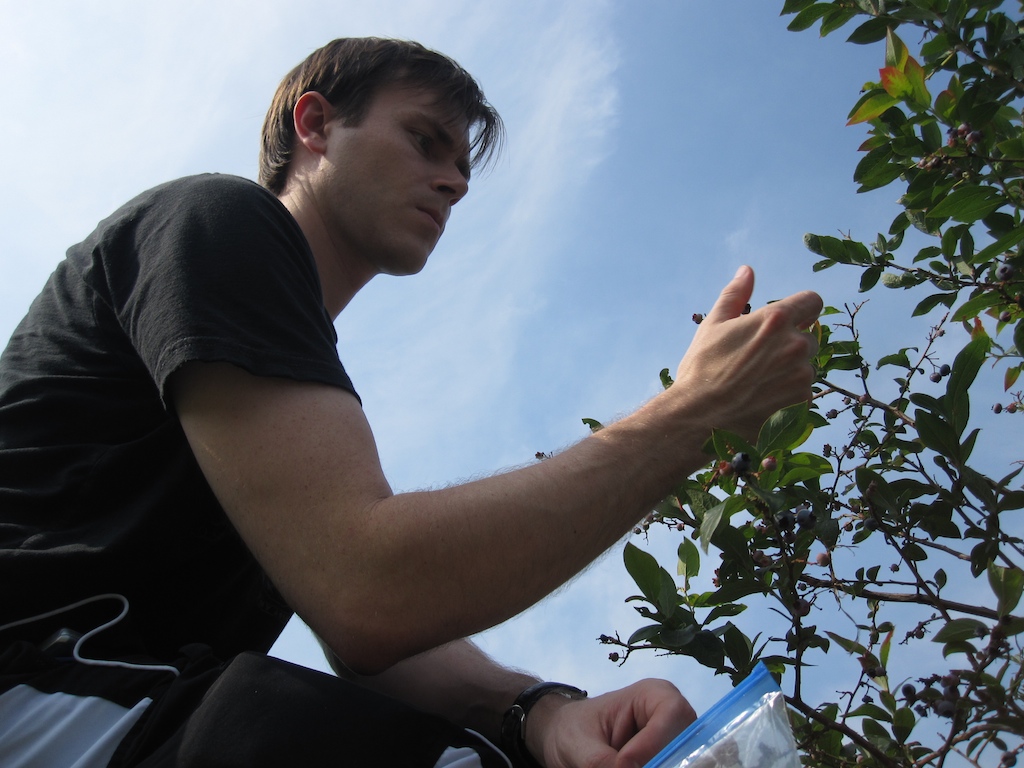
The blueberry, poor tough cousin to the grape, ripens with the arrival of August beneath the northeastern sun. This false berry rarely makes wine of merit. It bears the baggage of sweet confections and jams. Yet rich, dry red wine can be made from it. Thus, under spousal assistance (persistence), we go picking berries at Hand Mellon farm.My first day out, I ate more than I picked, got lost, came home happy and blue-fingered but disappointed by my lack of focus. Grape growers will plant different varietals and even various strains of the same grape in order to find the best match for their vineyard’s growing conditions (climate, weather, soil and slope). Hand Mellon is no different.

They grow four kinds of blueberry: Chandler, Blue Crop, Spartan, Nelson. I could just ferment my first haul en mass. But that would tell me nothing about what each type could provide. Sure, I could doctor the mix by adding acidity or sugar later, but each manipulation would walk my drink further and further from its source, tasting more of my process and assumptions of how things should taste than of the fruit.

Luckily, while I wallowed in worry, my spouse went picking again. She returned with bags separating each type. For the sake of science, I analyzed each:
Chandler:
Medium, high pulp, small seed, black skin. Slightly sweet, low acidity, light bodied, tasty, fine.
Blue Crop:
Small, little pulp, small seed, red blue skin. Sweet, high acidity, medium bodied, high skin, cherry.
Spartan:
Large, high pulp, low seed, firm red purple skin. Medium sweet, medium acidity, medium bodied, very aromatic, typical blueberry and tangy green notes.
Nelson:
Large, high pulp, medium seed, black blue skin. Very sweet, low acidity, medium body, firm skin, mellow blueberry plum notes.
I needed bulk, so Spartans offered the best choice. However, blueberries have 45% (9.96g/100g) less sugars (half fructose, glucose and trace sucrose) than grapes have (15.48g/100g). Thus adding some Chandler and Nelson might fill that gap, while adding complexity to the batch.

With weather cleared, I returned to pick properly.
I worked fast, cutting ahead of kids, their parents and dogs from getting the better fruit. The season was on the wane by now.
At the counter, my haul included 4.5 lbs of Spartans, 2.5lbs of Chandlers, 1.25lbs of Blue Crop and 1lb of Nelsons. Nearly ten pounds seemed like a enough.
To avoid a massive, fuzzy, white outbreak of mold I washed my acquisitions. Freezing them was the internet’s best advice for extraction, as the cold would break down cell walls.

Posted in BLUEBERRY BOUND: CRAFTING MY SECOND WINE (AUGUST 2010) | Tagged , , , , , , , , , , , , , , , , | 1 Comment