VIGNOLES.VENTURE

Fall flies fast.

While I was coaxing kit juice and blueberries into pseudo-wines, 2010 saw a decent growing season in New York. The state generally has a cold, miserable climate. We grow unknown grapes tough enough to ripen under a distant sun (including household names like baco noir, chambourcin, colobel, vincent, aurore, catawba, concord, vidal blanc, muscat ottenel and niagara). Only regions with deep water heat sinks, such as the Finger Lakes, Great Lakes, Long Island‘s Atlantic or valleys, like the Hudson, can protect grapes from frost, freeze and rot long enough to ripen into profit.

WATER+WARMTH=WINE

This year was different. Unlike the rain and cold of 2009, April set record highs. May’s warmth pushed the freeze warnings aside. Budding and flowering followed weeks earlier than usual. By June all vines were in bloom. A warm and sunny summer ripened fruit consistently. The vintage was twenty days ahead of average, according to the NYSAG Experiment Station. Many growers started harvest as early as August and were wrapping up in October.

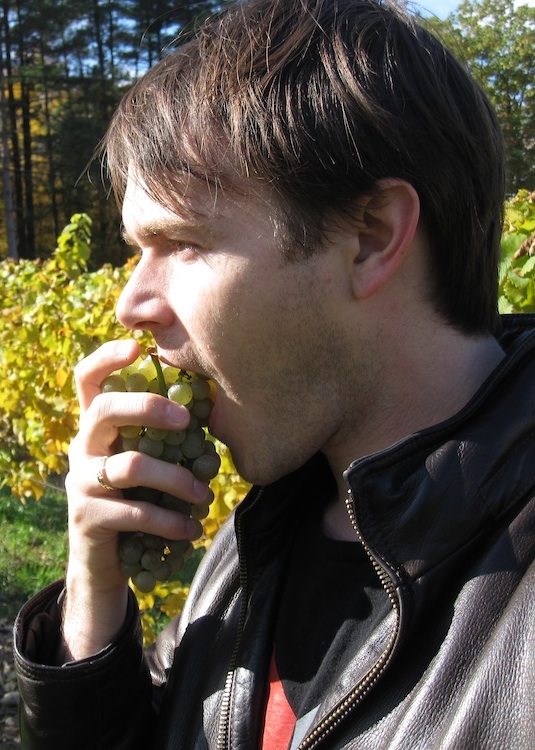
Knowing nothing, I go with the first grower I find online. Fall Bright’s lack of internet savvy seems promising. I want a farmer not a web designer. Tom and Marcy Mitchell opened to supply amateurs with grapes in 1978 planting more hybrids in 1982 . Such generation X vines could mean more concentrated fruit with terrior expression (from years of pruning, deep roots and Nirvana albums). These things could make for an easier fermentation and a more complex wine than my Canadian juice kit or blueberry near-disaster.

Fall Bright’s updates encouraged me. By August third, deer and birds were eating the grapes. On a more technical level, grape verasion (color change) and vine lignification (hardening) had already begun. Drought even flirted with their vines, leading Tom to cut the competitive weeds. By September 18th some varietals were already coming in and selling out within days.  I had to pick out grapes and fast.

Now, New York can turn more marketable grapes like riesling, cabernet franc, chardonnay, gewürztraminer and pinot noir into brilliant wines. But in honor of the state’s more experimental side (and not at all because Fall Bright was sold out of riesling and gewürztraminer), I chose vignoles grapes. Fall Bright even claims vignoles is “one of our favorites, clean, big full bodied. Its Pinot Noir parentage comes through.” Sounds good…

But first, a bit more background…

Posted in VIGNOLES VENTURING | 8 Comments

BLUEBERRY.BOUND

A week ago I added Sparkolloid Powder to my blueberry wine must. This blend of crab-friendly clay and polysaccharides sunk the floating yeasts and blueberry bits by positively charging them. Now three inches of detritus and less than a gallon of clear blueberry goodness remain.
Time to rack the good from the ugly. The somewhat drinkable from the undrinkable…and purple…
Not bad. But another racking is on order.
The temperature breaks record this week. Granted it was only 95F, but in the North East that matters. Wine with loitering yeasts could restart fermentation or simply spoil.

The vast universe of tank air-space also worries me. Every day I spray Private Preserve to protect the wine from oxidizing. But I have no clue how long that blanket of inert gasses will hold.

Impatient, I set up to bottle.

Last time, I filled twenty six bottles. Six months on, I still have twenty. It is not every day you want to guzzle pink colored, banana-strawberry flavored welches with alcohol.

This time I scrounge about for half bottles. A gallon will fill ten 375ml bottles. Hopefully, I can also get rid of some wine as gifts. I mean, gift away my hand-harvested blueberry gold to a deserving few.

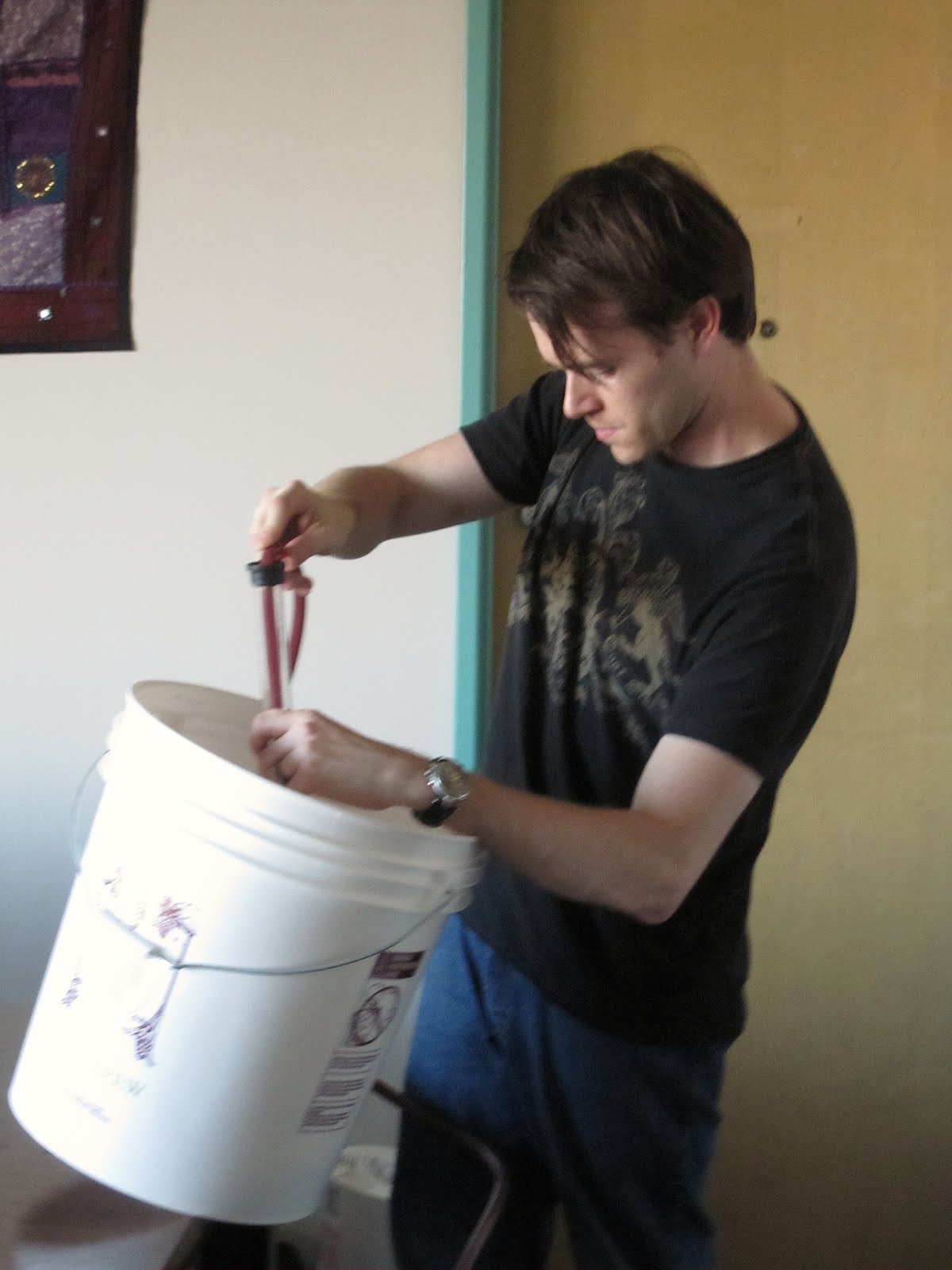
Once everything is sterile (including myself), I try racking the wine into bottles alone. I fail. So, I grab my spouse from dinner preparation.I will pump. She will take on the tube’s end, which, annoyingly, will not fill unless pressed at the right angle, under pressure, into the bottle. The siphon trigger cannot work unless against a flat surface, and most bottle punts (bottoms) curve.

So, with wife hating me, we begin.

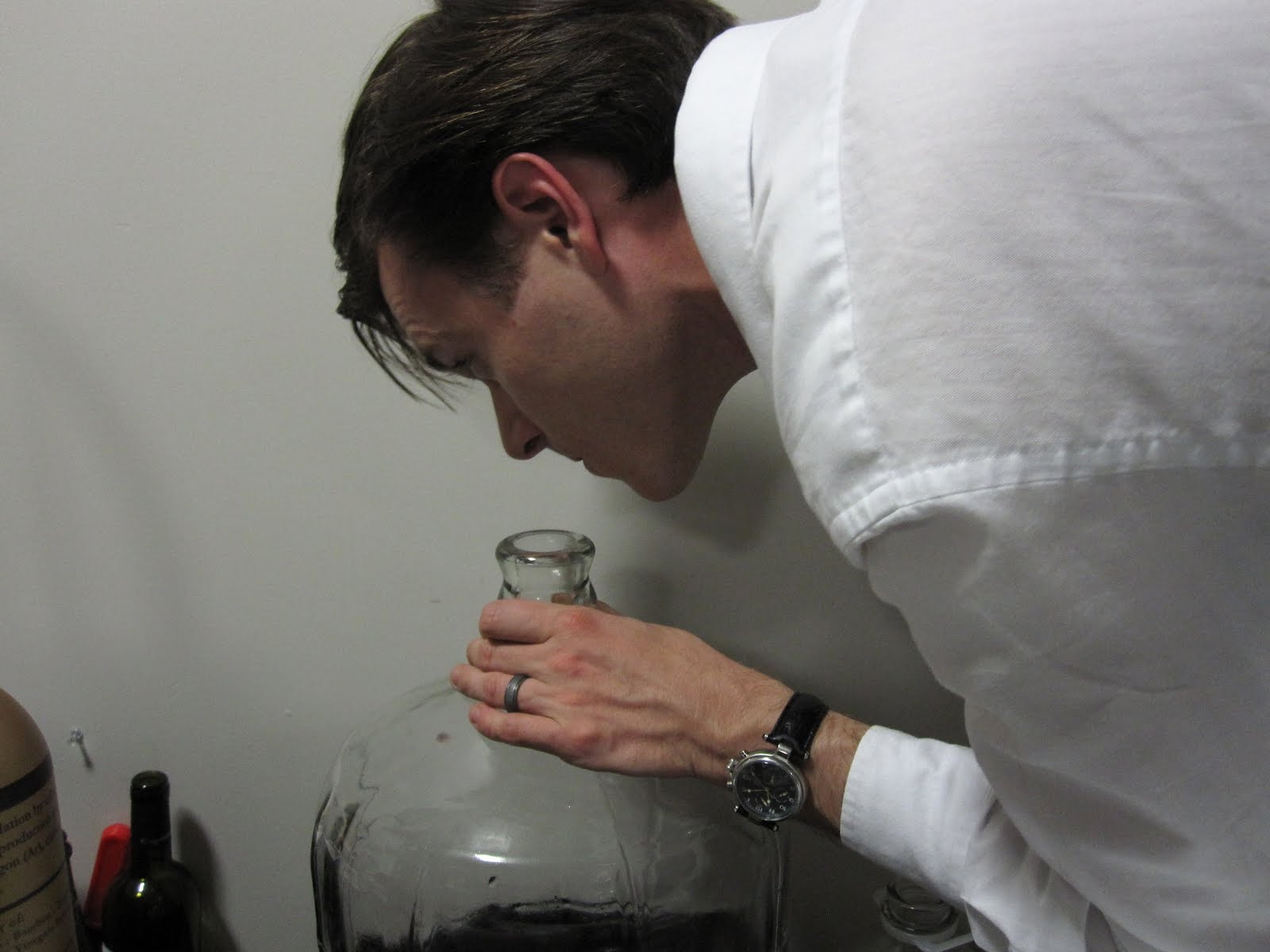
The must remains hazy. This is annoying. I should have racked again. Maybe filtered. Most Americans view hazy wine as faulty. No one really wants to decant and let the sediment settle for a half hour or more. Conditioned by fast food, year-round strawberries, and driving to our mail box, we want immediate satisfaction. Allowing a wine to rest postpones enjoyment, unbearably for some.But I have to stay true to the fruit. In bottle, a bit of lees (skins) will continue to contribute to the evolution of the wine’s character. Filtering would remove that.

With three regular bottles (750ml) and three splits (375ml) brimming with blueberry, we taste what wine is left.The color is of mild intensity, ruby with a slight haziness. The nose has light intensity of tart cherry, apple, clay and some sulfur. On the palate it is dry, with medium to high acidity, light tannin, light body, short length. Flavors of green and red apple (malic acid), wild strawberry, kiwi and a touch of sulfur slide by the palate in one note.

Decent and drinkable. I should have extracted more color and flavor by not bagging the skins and instead punching them down during fermentation. More time on the lees after fermentation would have also added more complexity. I also should have avoided the temptation to chaptalize (adding sugar to up the alcohol). Stupid internet advice.

Most fruit wines lack acidity and have little shelf life. Thus the blueberry acidity will help the wine age. The hint of sulfur lingers from using too many campden tablets for so little must. My frantic fear of spoilage will help preserve the wine in the long run.

It seems odd that my wine does not taste like blueberries. However, most wines do not taste like grapes. They taste of the process: the added acidities, oak, yeast strains, microxygenation machines, and chemical tweaking. I realize that blueberry “flavored” wines and beers that I have had use blueberry concentrates, distillates, or worse, chemical blends like ethyl safranate, butyl-2-butenoate, and ethyl-3-hydroxybutyrate. Yum!

Regardless, my bottles need corks. Time to give them one last inert gas spray and cork them.

With the bottles corked, I rest them sideways to ensure the corks get properly moist. Otherwise, air could get in or wine could leak.

A week later I cap the bottles with remaining foils from my kit. No nibbling mice or bunnies will eat my corks…this time. Some sediment survived the racking, but we could all use a little more patience. Decanting or just pouring slowly would suffice.In the end, going from fruit to ferment to fining to finishing was plain scary. So much more could go wrong compared to kit wine. This was not a sterilized bag-o-juice, chemically balanced to perfection and paired with packets for each step.

With more involvement and knowledge about your source materials, the harder it becomes. Picking the berries by hand forced me to worry about every detail. I had to choose between different berries, yeast strains, cleansers and fining agents. I took it personally when fermentation would not start. I rinsed equipment religiously, until the rotten-egg reek of sulfur went away. I sulked around the house for days concerned about adding sugar, water or acids. Every choice seemed wrong.

Yet every thing worked out.


F88EBFE1-040B-6081-D700-B6AE64739AB3
1.03.01
Posted in BLUEBERRY BOUND: CRAFTING MY SECOND WINE (AUGUST 2010) | Tagged , , , , , , , , , , , , , , , , | 1 Comment

CRUSTACEOUS.KINDNESS

A day after cheating the fates and re-fermenting with sugar, I rack the must back into the first fermentation tank. After a sound sleep, I wake to check the Specific Gravity.

Like my morning paper, another day of reading a near 1.000 SG leaves few surprises. With no CO2 bubbling about, I rack the must back into the glass carboy to kick out loitering bubbles.

After a day of “real” work, I come home and look for CO2 bubbles and off smells.
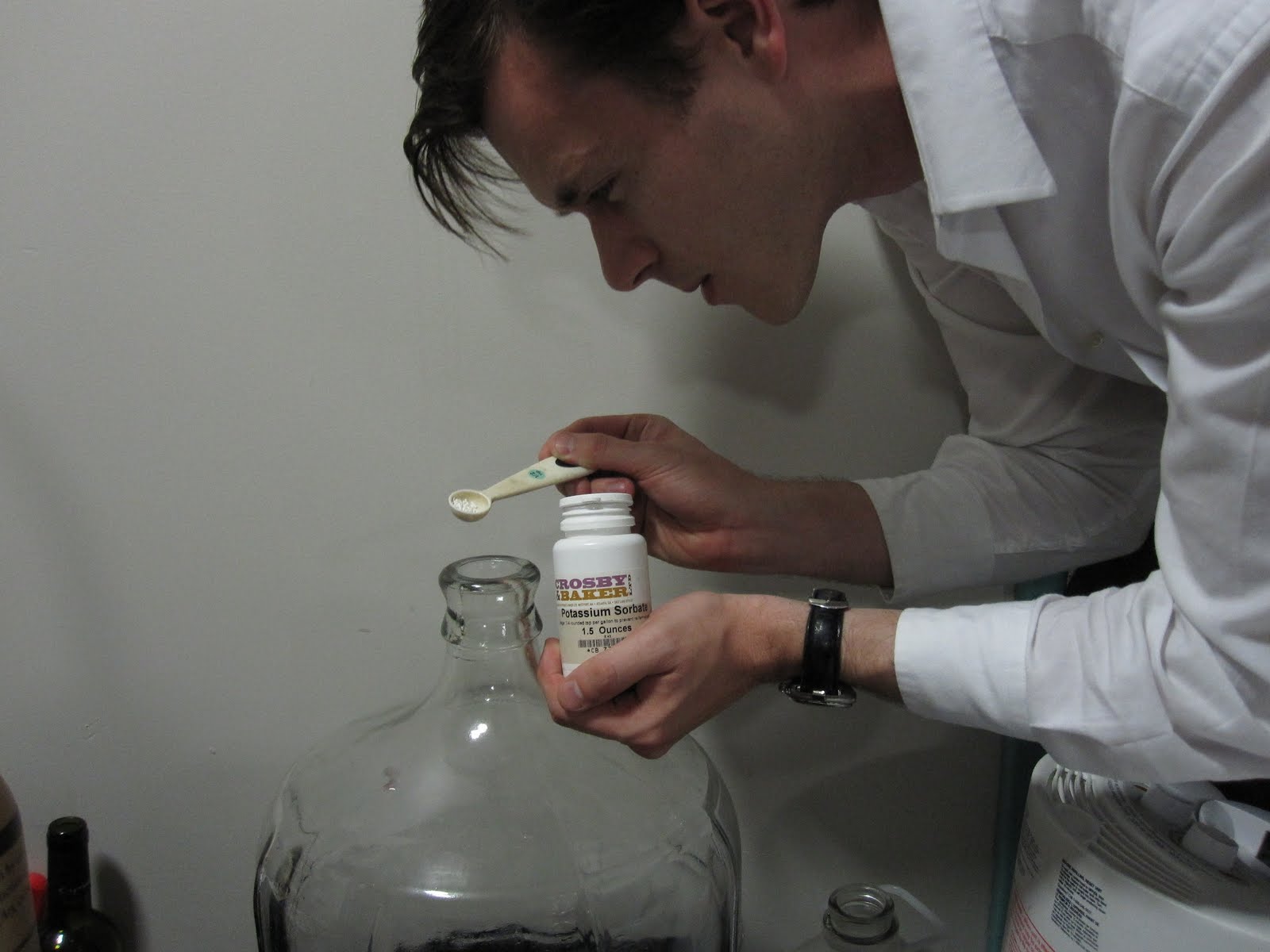
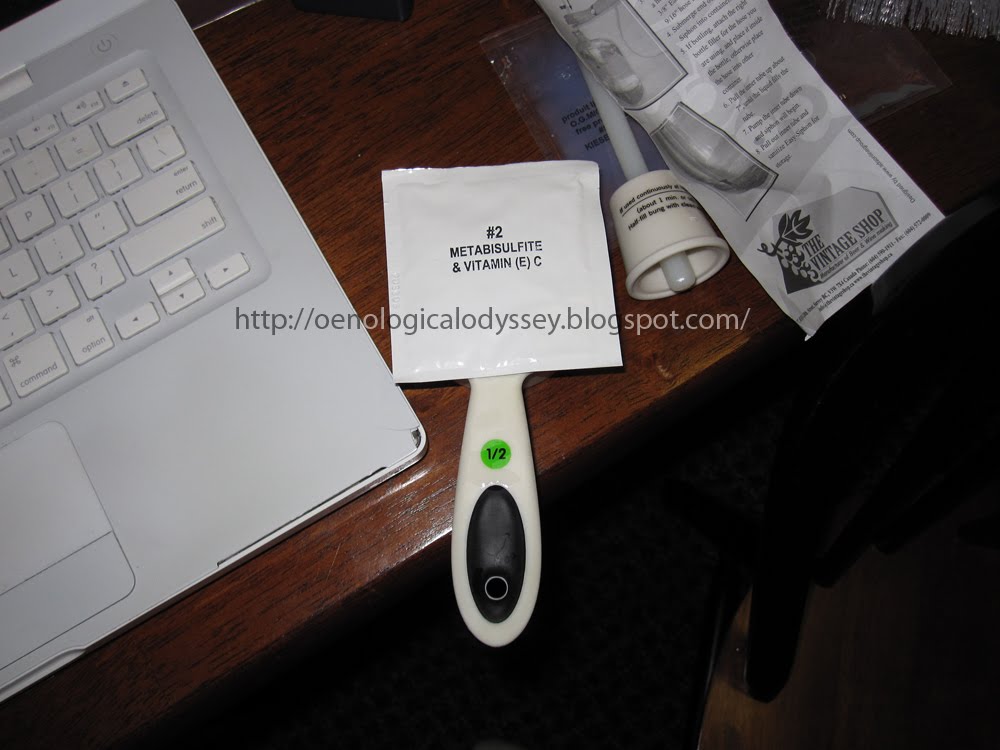
The next step requires stabilizing the must. The yeasts need to stay dead, or I will have another riot of Pompeii-amphitheatric proportions. So I turn to chemical warfare.Last time, I blindly used a packet of metabisulfite & Vitamin (E) C, which stabilized the Barbarescocanadianwelches. I think. This time, my arms included potassium sorbate and a sulphite (in the handy form of a Campden Potassium Metabisulphite tablet). Combining the sorbate and the sulphite will create sorbic acid. Like the love child of Juno and Jupiter, my Mars-like acid will halt any further yeast orgies.With yeasts vanquished, their CO2 no longer blankets and protects the must from oxidizing. I would like to avoid blueberry vinegar. Instead of panicking like last time (over topping off the must with “real” wine, or worse, water), I turn again to my trusty Private Preserve can-o-neutral gasses.
After an over-thorough spray, I cap the airlock and wait for tomorrow’s fun.
A new rise of Sol’s chariot sees me ready to clear the must. Proteins and yeast cells still float about in a haze of negative energy. Kieselsol and Chitosan led the charge last time, positively zapping the yeasts, which, in turn, bound into heavy lees and sank. Great. Regrettably, Chitosan comes from crustacean shells, while Kieselsol is liquid silicon dioxide. Why kill crabs and, um, silicons, when more crab-friendly alternatives exist?
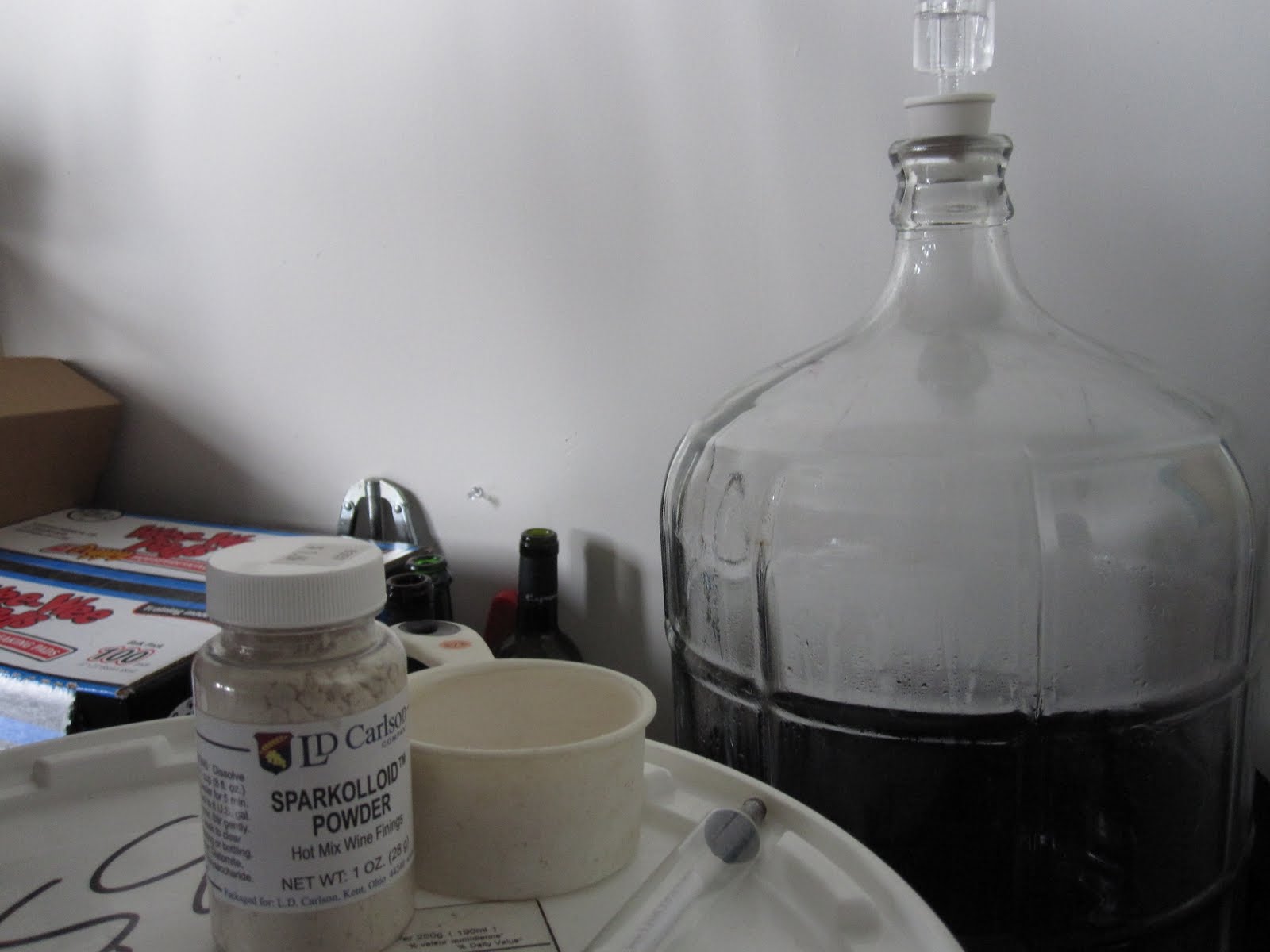
Thus, I choose Sparkolloid Powder. Sparkolloid mixes polysaccharides (from fungi or seaweed) with diatomaceous earth (hard shell algae fossils). Without offending any central nervous systems, I boil water and add the powder.

This whole fining process would not be necessary with more time and wine. But with too much airspace, hot summer days and my impatience, I needed to speed it up. So I stir in the Sparkolloid, re-spray the must, airlock it and wait.

A week will reveal whether any of this worked.

Posted in BLUEBERRY BOUND: CRAFTING MY SECOND WINE (AUGUST 2010) | Tagged , , , , , , , , , , , , | Leave a comment

REROLLED.BOIL

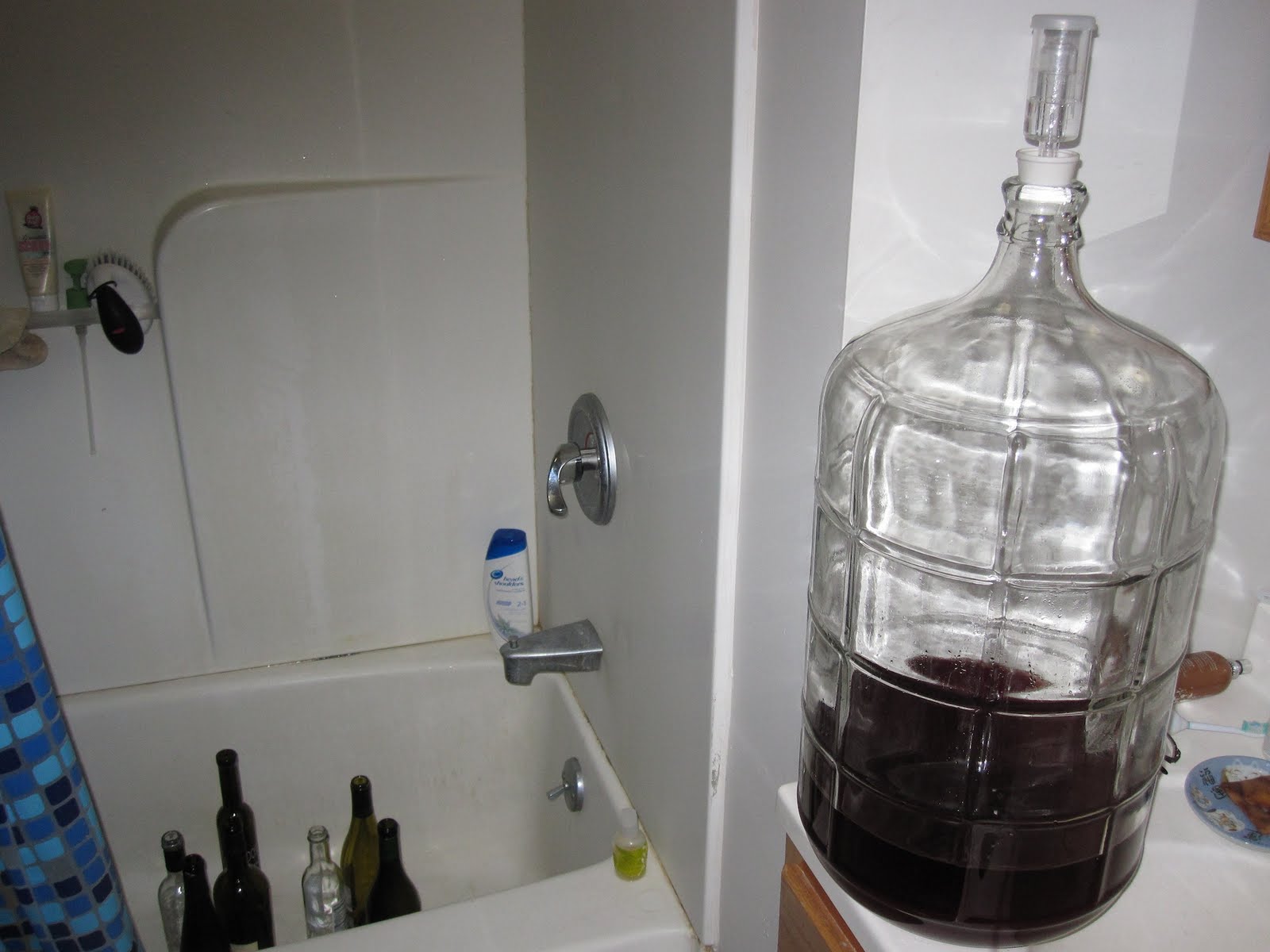
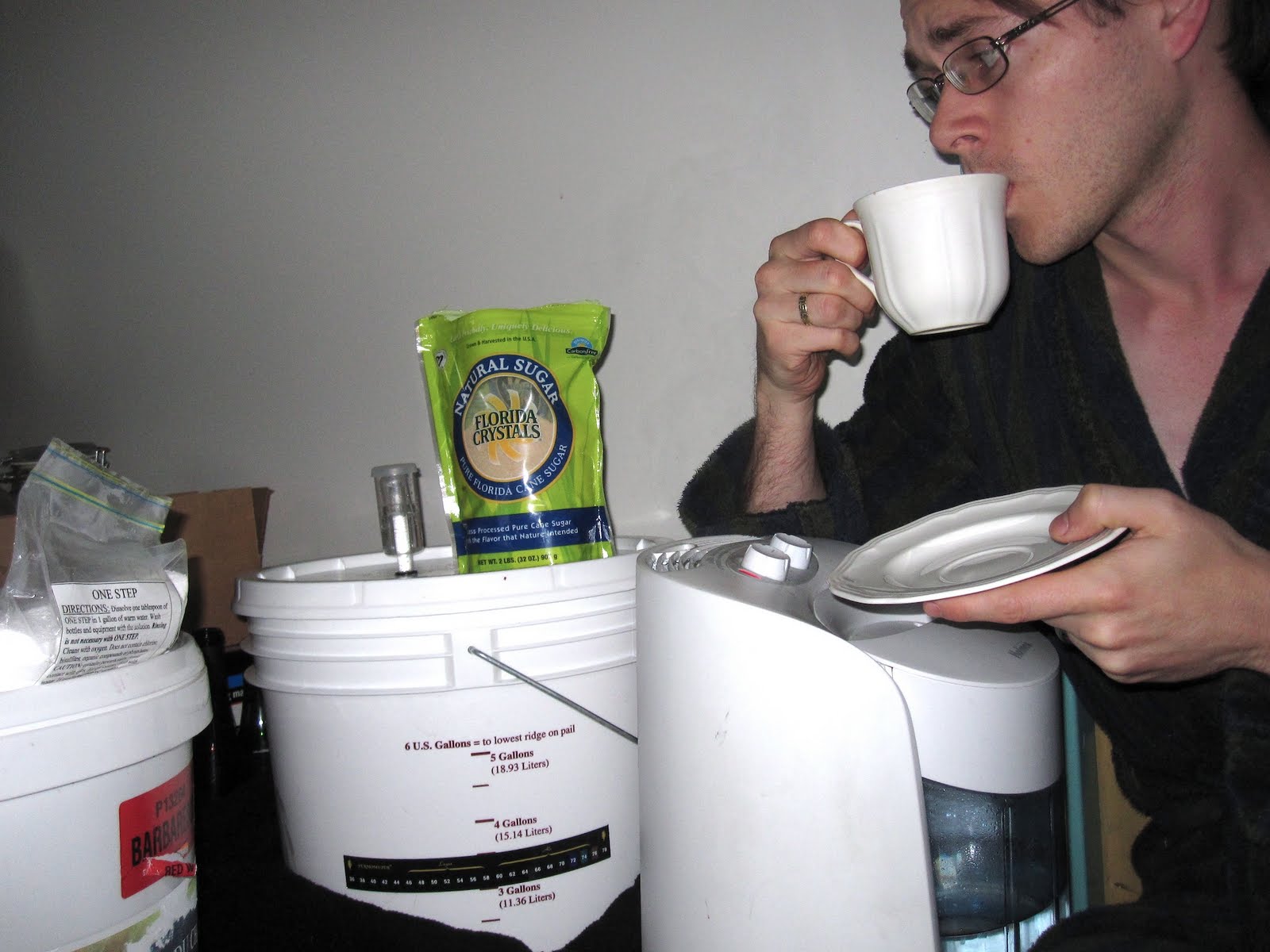
Daybreak and I find fermentation following forward. With nighttime temperatures under fifty (in August?), the humidifier has kept the tank a happy seventy two. However, I need to ensure the yeasts ferment completely.
Once the bubbling (and my coffee) are finished, I sample the must.

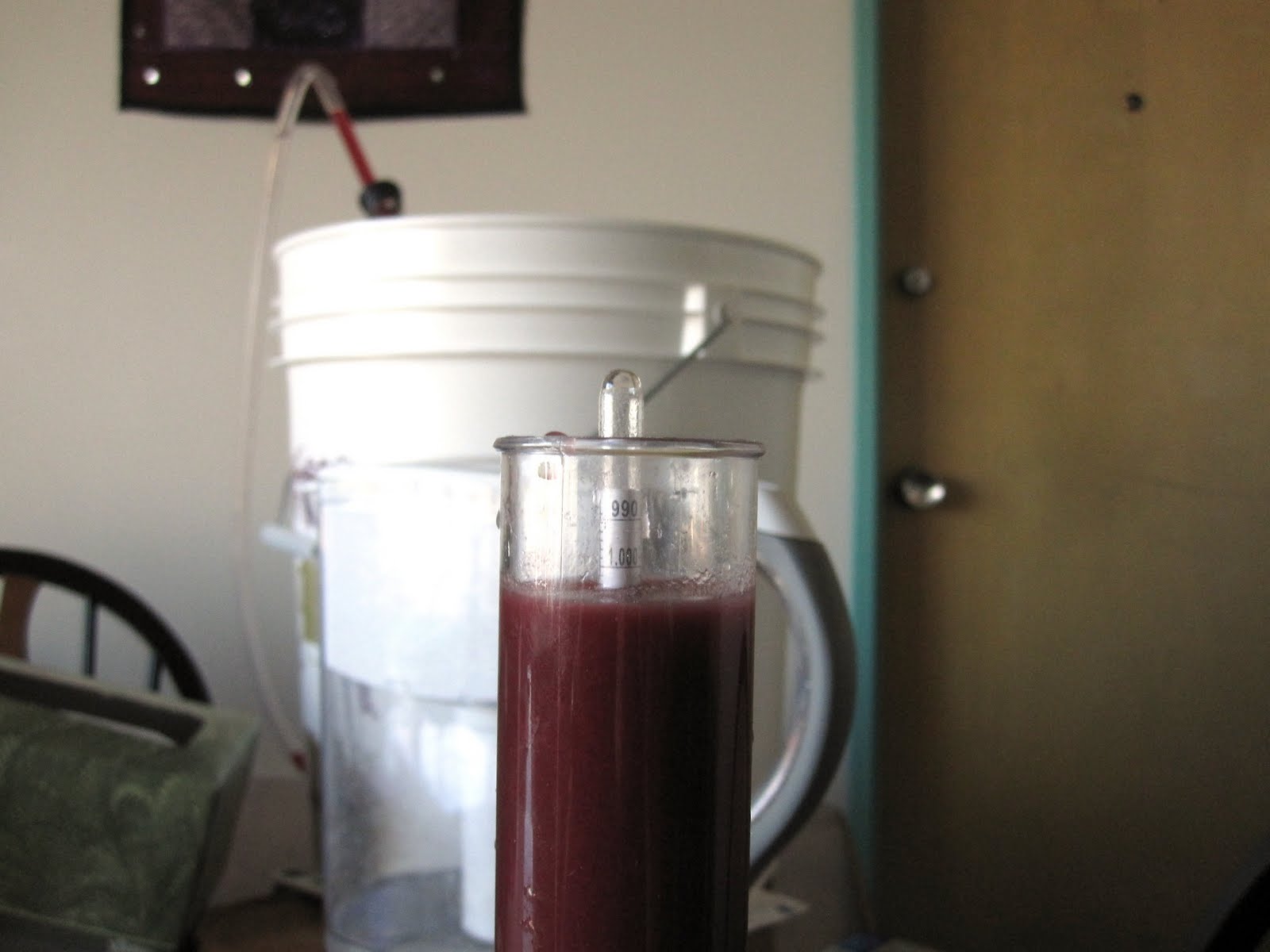
Thus far, the yeasts have neared the same specific gravity as water: 1.000. But to finish the job, they need oxygen and redistribution throughout the must. No air or nutrients means dead yeasts. Also the bubbling CO2 they produce will not go away without degassing the must. So I re-sterilize the secondary carboy, let dry and then siphon.
Even thinking about the bag of skins turns my stomach. Any extraction that could have happened via fermentation is probably over. Also, the carboy’s neck is two inches in diameter. The bag is six. So I trash the skins. 

Along the way, we taste the must. Surprisingly, it is not poison. It seems almost palatable even fruity, and the sweetness is nearly gone. One niggle though: it is thin. The body and tannin are there enough, but the alcohol is lacking. Without a chemist lab I cannot check the proof. But it tastes under 10% of alcohol by volume.
Time to cheat.

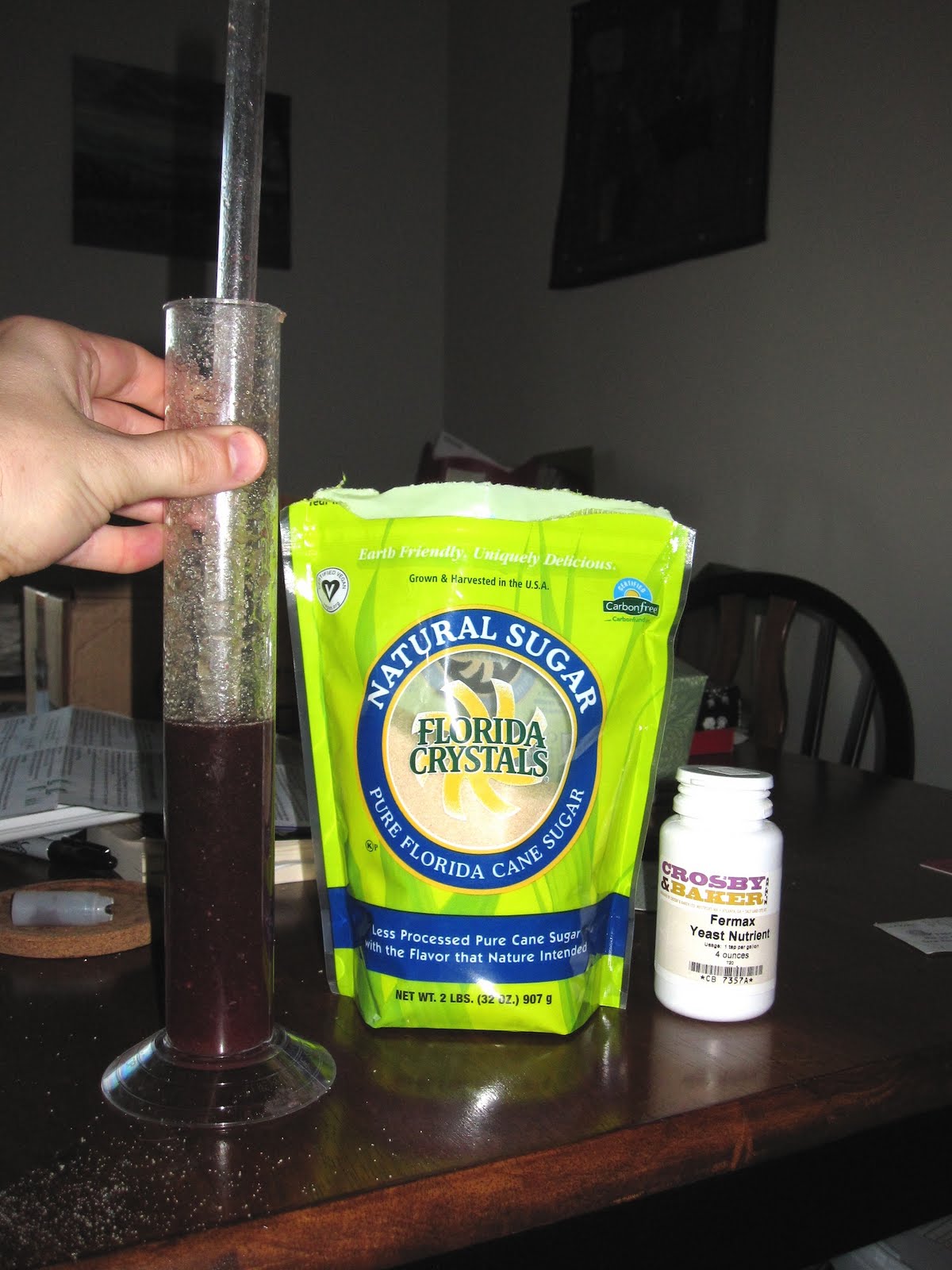
What went into the morning coffee gets dissolved into a test tube with some must and nutrient. Hopefully, the yeasts are still kicking around. Rebooting fermentation with cane sugar will give me more alcohol than before. Where it takes the flavor is unknown.
The next day finds resurrected yeasts churning away at the sugar. If any bacteria join in, we are done for. Yet everything smells clean enough.
Only time will tell.


Posted in BLUEBERRY BOUND: CRAFTING MY SECOND WINE (AUGUST 2010) | Tagged , , , , , , , , , , , , , , | 2 Comments

SEVEN.SLEEPERS

Seven in the morning. I stumble out of bed. Tubs and tubes litter the living room and dining table. I glance at the airlock. No popping or gurgling. No heady scents of bread and fruit. Dead yeasts have sat at the bottom of a fermenter caked in oxyclean for two days.

I pop the lid, hesitant to see what bacterial outbreak has occurred. Yet, behold!

Life! HA! HA! Take that trying to do something! Something did it all on its own! 

A worry persists however. Not starting the yeasts immediately allows other bacteria to join in. They can add off flavors. I have no idea what nasties might be breeding in there. To avoid wasting time with a bad batch, I will taste the must later.

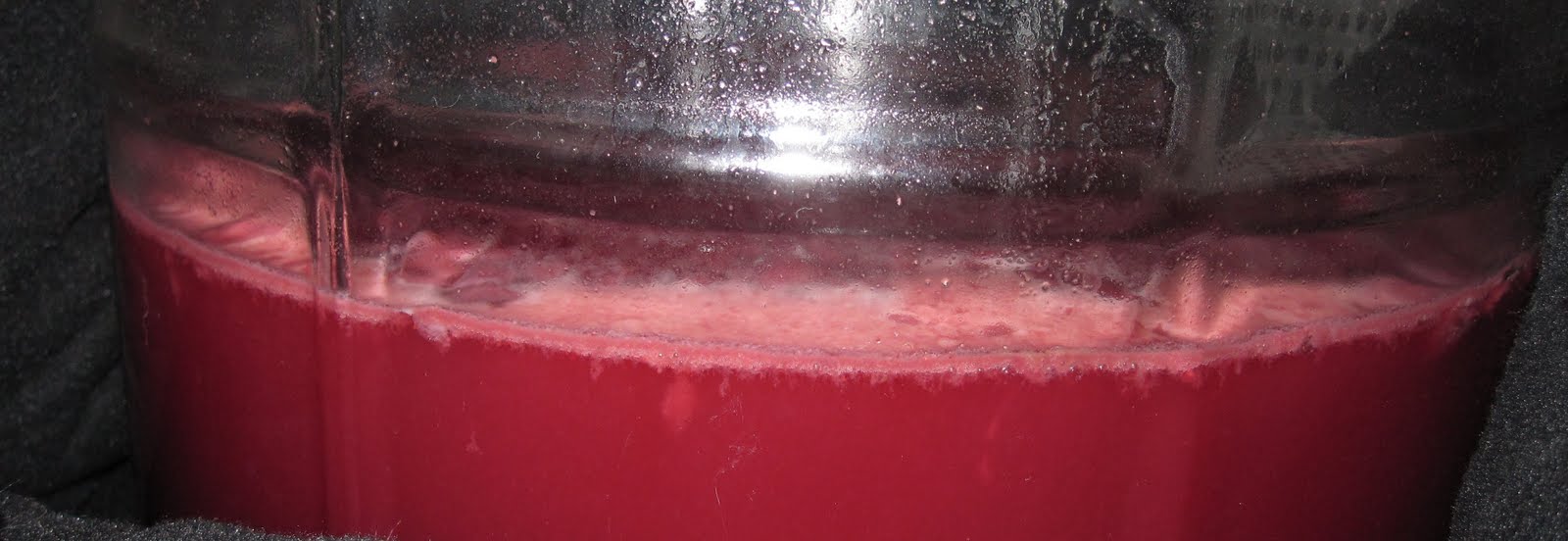
For now, let the yeast cells work their slightly gross-looking magic. In addition to making alcohol out of sugar, the yeasts draw out color, tannins and further flavors from the skins. Although it looks like a liver-after-auspices, I leave in the sack of skins. This leaches out more, well, blueberryness.

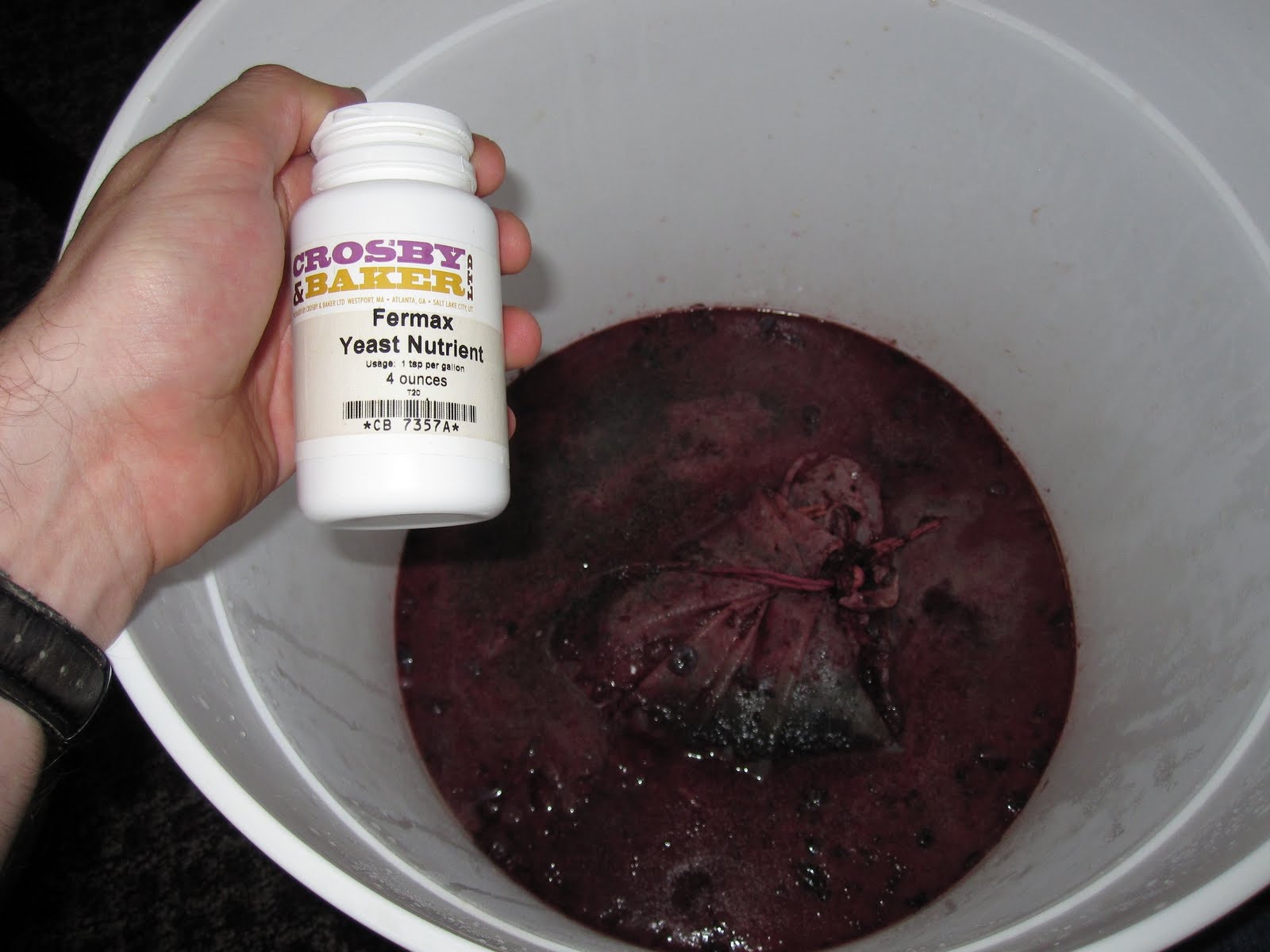
To encourage my late-bloomers, I hop over to my local zymurgist (of course I have one). Back home, my yeast fine dine on Fermax Yeast Nutrient. Although grapes and blueberries have similar nutrients, I doubt my recent oxyclean debacle has left much food for the yeast feast.
Unlike Trimalcio’s never-ending dinner, my yeasts eat quickly. Not enough distracting entertainments, orgies or sugars probably. I stir the must to re-oxygenate them. Without oxygen, yeasts will go to sleep.

More curious than brave, I taste the must. It is surprisingly fine. The yeasts and nutrient are there, but blueberry notes dominate. The body is medium, tannins low, acidity medium, CO2 fizz persists and sweetness still hangs around.
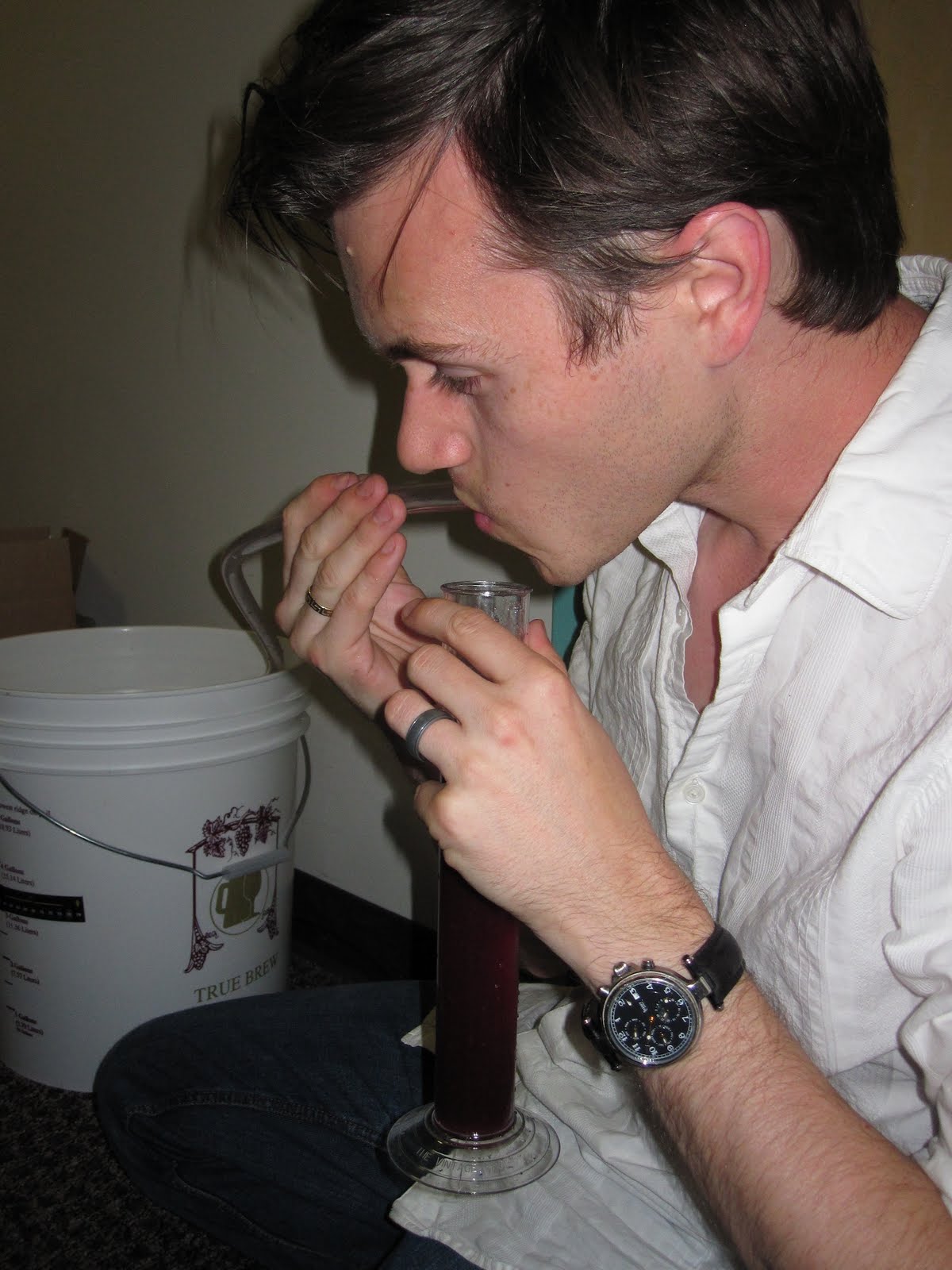
So I check the hydrometer in the (far more science-tastic than a wine bottle) test tube. We have crept to 1.020 S.G. Once it gets to 1.000 the yeasts will starve and sink to their grave.I check the forcast. A cold front is moving in for the night. This worries me. If the temperature drops near 59 degrees Fahrenheit, the yeast will slow down or die.

We have no thermostat with central heating. So I treat my patient with a humidifier and blanket.Welcome back yeasties!


Posted in BLUEBERRY BOUND: CRAFTING MY SECOND WINE (AUGUST 2010) | Tagged , , , , , , , , , , | Leave a comment