Vancouver Visit to Stanley Park, Liberty Distillery, Fish and Chips, BC Liquor Store

Wayward Wine continues to search for drinks-related fun in “No Fun City”: Vancouver, BC. Where better to go than downtown’s Signature BC Liquor Store?
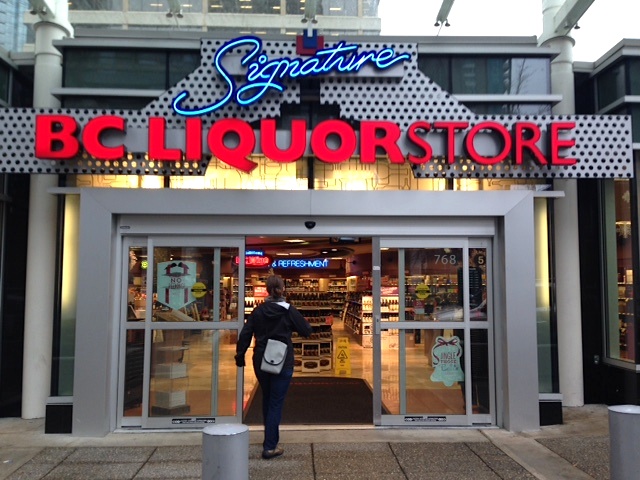
BC Liquor Store EntranceMy wife heads to beer, while I find the BC Wine section. My goal is something more local than Okanagan, which is a five hour drive too far.

BC Liquor Store BC WineBut even in this urban chic city center, the state-run store only offers the same old Okanagan brands (Wayne Gretzky wine…sigh). Prices all tend to the teens and above. Anything cheaper and “local” is Australian but bottled in BC (yes, they have a section for it).  Thanks to brutal taxes, shelf price is twice what is stateside.  There may be reason that people line up with empties and buy bulk wine pre-made from private home brew shops:
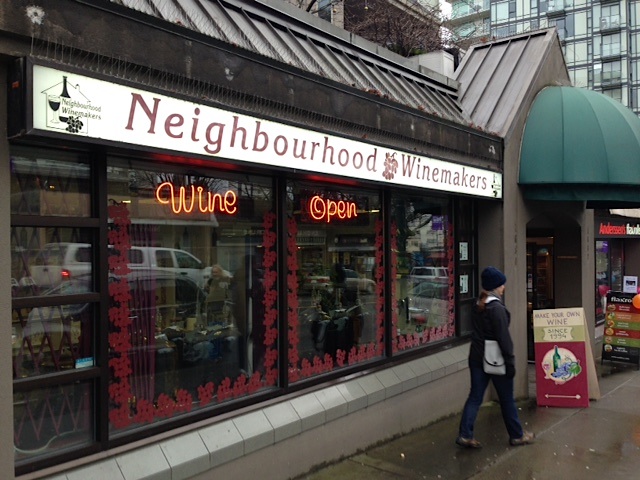
Urban Winemaking VancouverThwarted, we walk to Stanley Park: the largest urban green space…in the world (1,001 acres to be exact). Today, we walk the perimeter of this peninsula. Along it, we taste various evergreen needles, because we learned First Peoples ate or boiled them to prevent scurvy, and for health. For us, we assume the bubblegum-tasting resin of cedar gives us a better sense of BC terrior…probably (although it does taste unique here, don’t get me into pine).

A path cuts in to Beaver Pond.
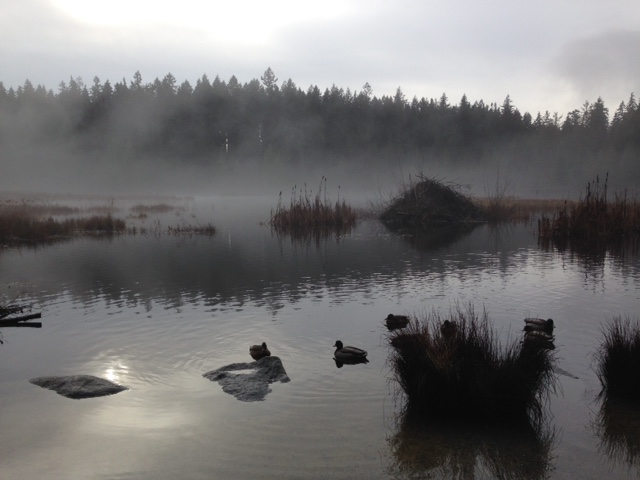
Stanley Park Beaver PondNo beaver sightings, but back on the many mile perimeter we glimpse waterfoul feasting:

In a while, a massive tanker ship cruises by at full tilt, disturbing the wildlife:

Stanley Park Shipping BoatA few hours of gorgeous open sea later, we head back to magic Granville Island. With the sun already setting, we stop by Go Fish: a blue shack that sources fish right off the docks.  We order the Salmon Fish and Chips…and literally melt with it.
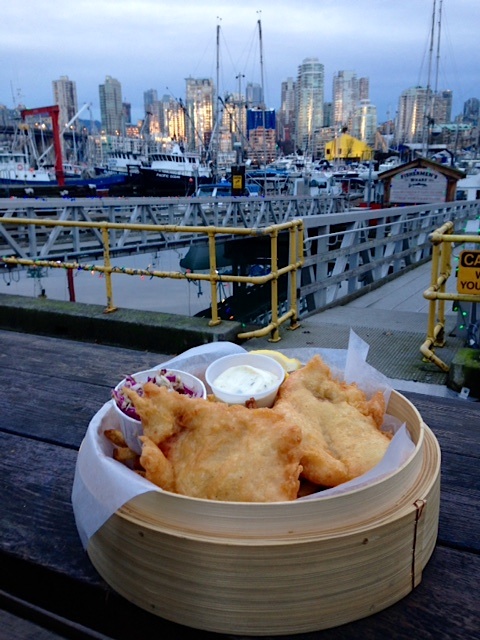
Fish And Chips VancouverYes, Vancouver is a brutally modern, urban city of steel, glass, CEOs, and heroin addicts. But the fish is fantastic.

Full of fry, we pop over Liberty Distillery.

Granville Distillery interiorThe distiller munches vegan leftovers from Tupperware while making checks on his coppery, steam punk, masterpiece.  We settle at a bench, exhausted, and watch him watch his system work.

Liberty only opened in 2013, after four years of construction and government haggling. A few years ago, Vancouver had no distilleries and no happy hours.

The space is tall, open but wood touches like the 19th century wood columned and mirrored bar render it cosy and retro.  Another foreign bartender (this time from Ireland) slings us samples:
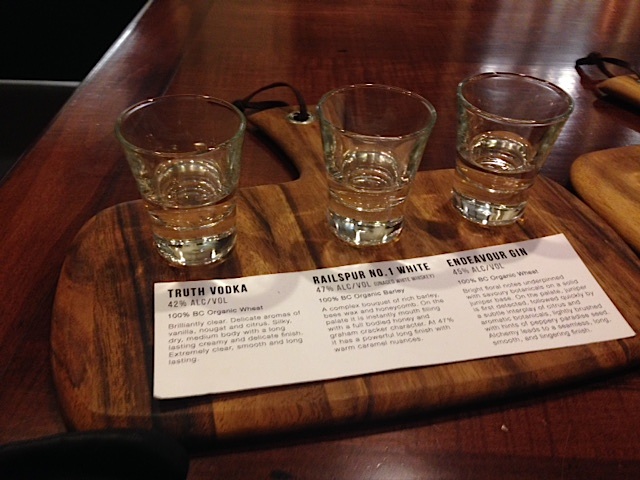
Granville Island Shots OneAll of Liberty’s grain comes from organic British Columbia growers. Their wheat-based Truth vodka is all cream, fullsome, honeyed melon, while complex, saline, and lengthy enough to merit sipping: very good (4 of 5).

Their Railspur No. 1 White is basically an organic barley whiskey sans oak. It smells and tastes like a clean ale, with honey and graham cracker flavors, richness, but a grainy astringency and heat that will love barrel time (3 of 5).

Endeavor Gin, from organic wheat, tastes classically to type: juniper forest, lime peal, cardamon, but a notable notch of black pepper and body make for a fine, showy, homage (4 of 5).

Granville Island Shots OneBefore we get to their other Gin, worthy mention must be made of Liberty’s sweet, delightful, Railspur No 2 White Wildflower Honey (since their whiskey awaits 2016 in barrels, honey tempers its aggression). Their Endeavour Old Tom (same gin but French oaked) is interesting, but edgy, too harsh, young, yet complex (3 of 5).

Granville Distillery shotsNow, Liberty’s Endeavour Gin Origins infuses 25 botanicals native to BC in their single copper pot still.

A deceptively mild nose soon draws out Stanley Park.  Green cypress, angry pine, wood, and brine fight with milder forces of wild berry, apricot leather, vanilla, and dried rose petal. It feels cold, glacial and steely blue. Hardly too hot, Origins feels silky and plump.  Flavors taste filigreed in their fine complexity and outstanding length. Liberty’s Endeavour Gin Origins is outstanding (5 of 5), if for the sole fact it is entirely of BC, and today, after our walk and days of adjusting our palates, we get it…so much so we buy one.

We find a local (but cheap) Tonic and close the night with G and Ts back at the YWCA:

Granville Isand Distillery G and T


Posted in Uncategorized | Tagged , , , , , , , , , , , , , | 2 Comments

Fort Wine Co Fruit Wine, Leləm’ Cafe, and Fort Langley: Vancouver BC

Wayward Wine leaves the steely, urban clutches of Vancouver for a trip east along the Fraser River to Fort Langley and Fort Wine Co. After a drenched drive through faded countryside, we arrive in the adorable town of Fort Langley.

Then we accidentally drive through it and onto a First Peoples’ reservation. The road turns to gravel and we turn back.

After coffee and smoked salmon (when in Rome), we head to the Fort: home of the Hudson Bay Company’s western operations.

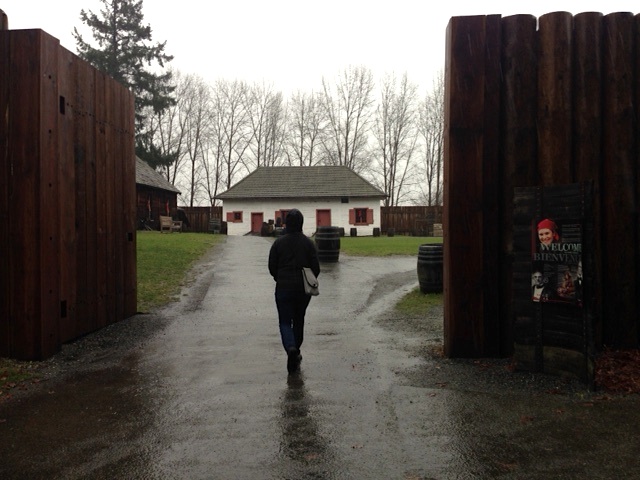
fort Langley Entrance TracyWe feel alone but find a family and guide in the Cooperage.  Here, logs got shaved into curved planks that steam formed and bound into barrels. We try a hand at it:

Tracy Fort Langley Wood workCurly peels spiral off the plank.  But instead of wine, these barrels brought endless tons of salted salmon, oddly, to…Hawaii (19th century Spam?) and beaver pelts to a top hat hungry England.

Our cooper then transforms into a blacksmith and hammers us a coathook. We learn that he came from Quebec, became a barman in Vancouver: famed “no fun city” (because happy hours were illegal, bars closed at midnight, and alcohol cost double), then he worked as a forest guide, park guide and finally full time fort guide.

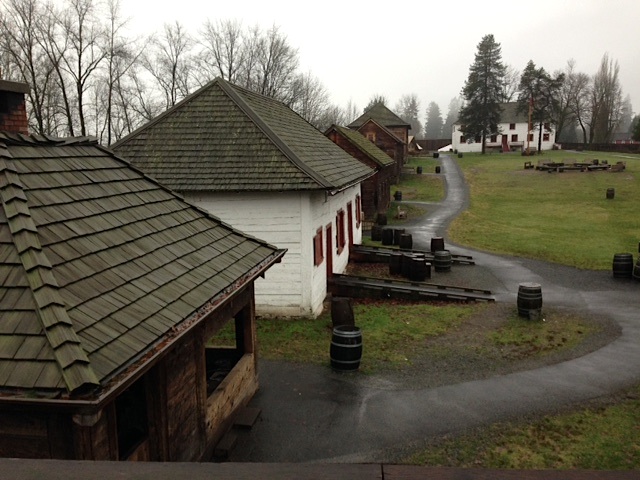
Fort Langley Above(The only original building is the nearest white one).

When British Columbia lost, well, the Columbia River to America, the Hudson Bay Company shifted to Fort Langley.  Our earlier visits to Fort Vancouver in Washington made sense of this outpost (and that BC’s Vancouver is also called Vancouver).

After a few more hours of history, artifact handling, and a lame 90’s promo video, our stomachs lead us back to town.

Leləm’ Arts and Cultural Cafe fills us with the most fantastic buffalo reuben and bison sandwiches imaginable.  This modern, wood-beamed and glass café sits on the boardwalk. A tribal daughter of the Fort’s interpretative basket-weaver owns it and features native arts and fusion foods.

Next we leave for Fort Wine Co.  After a decent, wet drive through flat even wetter farms, we find a tidy, new building faced like a western trade depot.  Thankfully someone waits, bored, to taste us.

Wade Bauck, tugboat captain and cranberry farmer started making fruit wine in 2001.  Today, young Toby Bowman runs wine-making, sourcing fruit from local farmers as well as their bog. He floats between texting, clock-checking, to answering our questions, while our guide stays involved as possible.

We start with their cranberry wines.

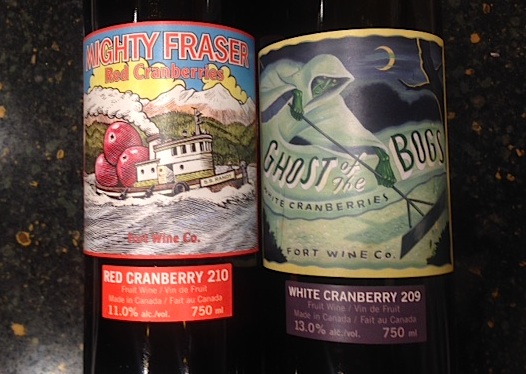
Fort Wine Co Cranberry WinesGhost of the Bogs comes from Fort’s own pre-verizon, white skinned cranberries. It looks pale lemon, feels dry, mouthwatering, and lean, and smells and tastes of pith, citrus, and white melon. It’s basically a fudge, since BC requires wineries to produce a certain amount. Yet it works surprisingly well (4 of 5) like a tart Chenin Blanc from the Loire.

Fort’s Mighty Fraser’s Red Cranberry 2010 looks a clear, light ruby, with a sliver of sweetness that tames oodles of acid, some body, and aromas and flavors of, well, cranberry. But nothing like that sauce at Thanksgiving. No, this is zippy, fruity, and a touch saline and quite good (4 of 5).

Valley Girl Blueberry wine is fine, sweeter, perfumed, bulbous, and a touch too tannic but tastes of blueberries and its oak: fine (3 of 5).

Their strawberry wines look and taste a bit oxidized, seedy, and too sweet: like decent fruity sherry (2 of 5), but I don’t think that’s their goal.

The range of fortified desert “Saucy” Cranberry, “Finger Fruit” Raspberry, “Sweet Nothings” Blueberry etc. are very sweet, warm, and cloying. Their acidity saves them, but faults creep beneath their sugar and upper teens alcohol (2 of 5).  The oak aged “Ilse Queen” Blackberry tastes passably like port (3 of 5).  A mostly sweet-toothed consumer base clearly loves these.

Regardless of some misfires, Fort Wine Co. makes the best, dry, berry-based wine we have had in a while (and that includes Maine, Rhode Island, New York, Quebec, Washington, and Oregon). Heck, they’re even vintage.  Maybe thanks is due to Christine Leroux, who consults them (a DNO at Bordeaux U., time in Australia, at J. Lohr, Inniskillin, St-Hubertus, and teaching in the Okanagan doesn’t hurt). Their pricing from $12 to $20 also works. Either way, well done.

Posted in Uncategorized | Tagged , , , , , , , , , | 2 Comments

Vancouver 5: Lulu Island Winery, New China, and the Gulf of Georgia Cannery

Wayward Wine continues its search for local wine in British Columbia.

So we drive South of Vancouver to Richmond.  Rain pours outside.  What better way to start a wet day than inside a Cannery museum?

Gulf of Georgia Cannery ExteriorIt turns out old canneries have no insulation. Even with double jackets, we shiver our way along salmon choppers, cleaners, conveyors, to canners, cookers, and shippers.  I still have nightmares involving hosing down the fish gutting and cutting (and questionably called) “Iron Chink”

Butchering Machine Gulf Of Georgia Cannery01DUrk…fish guts aside, the Cannery was a busy place that employed thousands. Today, Canada has consolidated the many canneries into two: rendering this port town into a seaside tourist stop.

Tracy Cannery InteriorBut freezing in here, we feel a touch of the monotony, borderline poverty, suffering, sexism, racism that women, children, Chinese, and Japanese faced.

But oh how the times have changed.

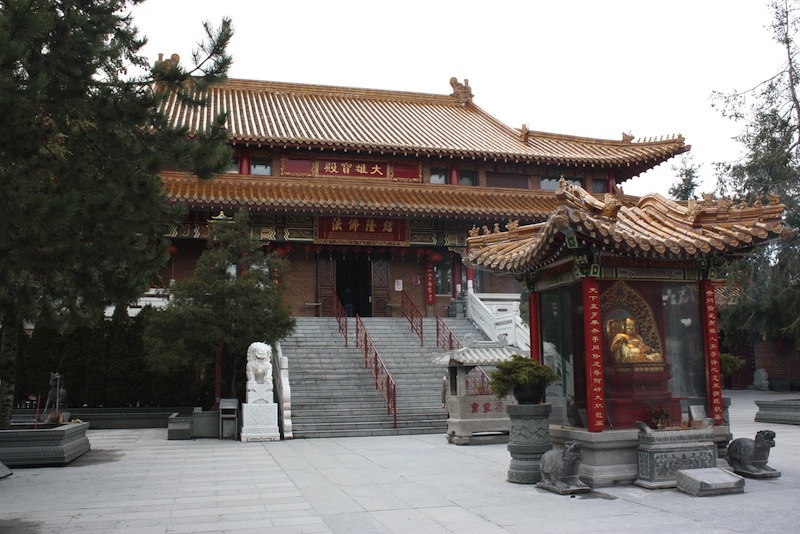
Richmond is now 50% Chinese: some go back 150 years, others come fresh from China. A drive out of the port town makes this material. Grandiose, walled, Buddhist monasteries span for blocks between empty fields.  Their gold roofs glow in the grey rain.

Richmond Buddhist Monastery t Then massive, rushed, many-roomed homes sprout from the flooded flat land.  These house the extended families of the newly rich.

Finally Lulu Island Winery looms on the horizon.  We park in a massive lot next to, oh yes, real vines!

Inside, we pass a veiled tasting room. It looks like a cartoon of Western elitism, with mismatched chandelier, piano, and wood-paneled walls with words like “CABERNET”, “WINE”, “ICE WINE” strangely reminding you where you are.

Lulu Winery Piano Tasting RoomBut no one is there.  We head to the two bottle-filled halls, where a few employees bob about.  Team China jumpsuits and posters from the 2010 Winter Olympics fill corners.

Lulu Winery InteriorJanuary is clearly off-season.  So our guide kindly tastes us through Lulu’s whole list.

The grapes come from the warmer, five-hour-away Okanagan Valley to be processed here (a trend here in freezing Fraser Valley).  It turns out that those vines videotaped outside grow a green, musky Muscat, that they blend with Okanagan Chardonnay (meh…2 of 5).

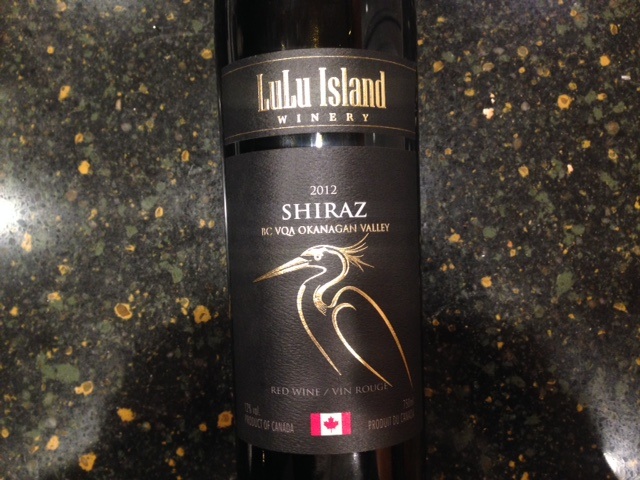
Most wines have been opened too long. But through tiredness, we can tell they are decently made. The 2012 Pinot Gris is citric, pearlike, and fine (3 of 5). The Shiraz shows richness and varietal-correct black pepper, cherry, and cedar spice (3 of 5).

Lulu Island Winery Shiraz 2012 Okanagan Valley CanadaThe 2011 Cabernet and Merlot taste identical and dull (2 of 5). But the Meritage is grippy, intensely oaked, and impressively solid (4 of 5).

But we came to taste local. Lulu’s Fraser Valley Blueberry wine fills glasses with purple ink, bright yet earthy perfume, and a moderately sweet, yet textured, tannic, wine (4 of 5).

Lulu Island Blueberry Fruit Wine 2012 Fraser Valley CanadaThe 2006 Passion Fruit tastes too old (2 of 5).  Meanwhile, 2010’s Riesling/Chardonnay Icewine fits type with luxurious sweetness lined by enough acid (4 of 5). The rare 2011 Viognier Icewine smells of sunny orchards, with ample viscosity, weight, and sweetness that ends a bit too cloying (3 of 5). I wish 2011’s Cabernet Franc/Merlot Icewine wasn’t so oxidized (1 of 5).

Our tall Canadian guide maintains well-trained confidence and flattery.  He drops a dash of Chinese and French to impress.  But nervous honesty cracks beneath his polish. He seems trapped here, to add local Caucasian flair for tourists.

We learn that winemaker John Chang immigrated here in 1995, made wine with his wife, and in time built this 7 million dollar facility.  It exists to serve huge buses of Chinese visitors. When head home, they can get free shipping from Lulu’s warehouses in Shanghai and Taiwan.  Or they buy land for second homes in Canada.

Lulu Island Winery is brilliant. It bridges the Pacific gap, capitalizing on China’s growing wine audience with a safe, clean, familiar winery, made and run by Chinese with just enough Western wine-related exoticism.

Things change.  The French felt similar insecurity when American millionaires started buying up Bordeaux, or making Californian “Hardy Burgundy” in the last century.   Italian wine villas, like Mondavi’s, dot Napa with seeming normalcy now.

As long as Lulu continues to refine their production (and pour fresher samples), the world benefits by drinking better wine.  Just imagine what a Chinese Gulf of Georgia Cannery fish cutter from 1895 would think of all of this.


Posted in Uncategorized | Tagged , , , , , , , , , , , , | 1 Comment

Vancouver 4: Sake Rice, Mushroom, and Molsen Beer Risotto

So that rice, Canada’s only Saké rice, that we bought from Artisan SakeMaker of Osake (see last post: here) on Granville Island…how does it cook?s

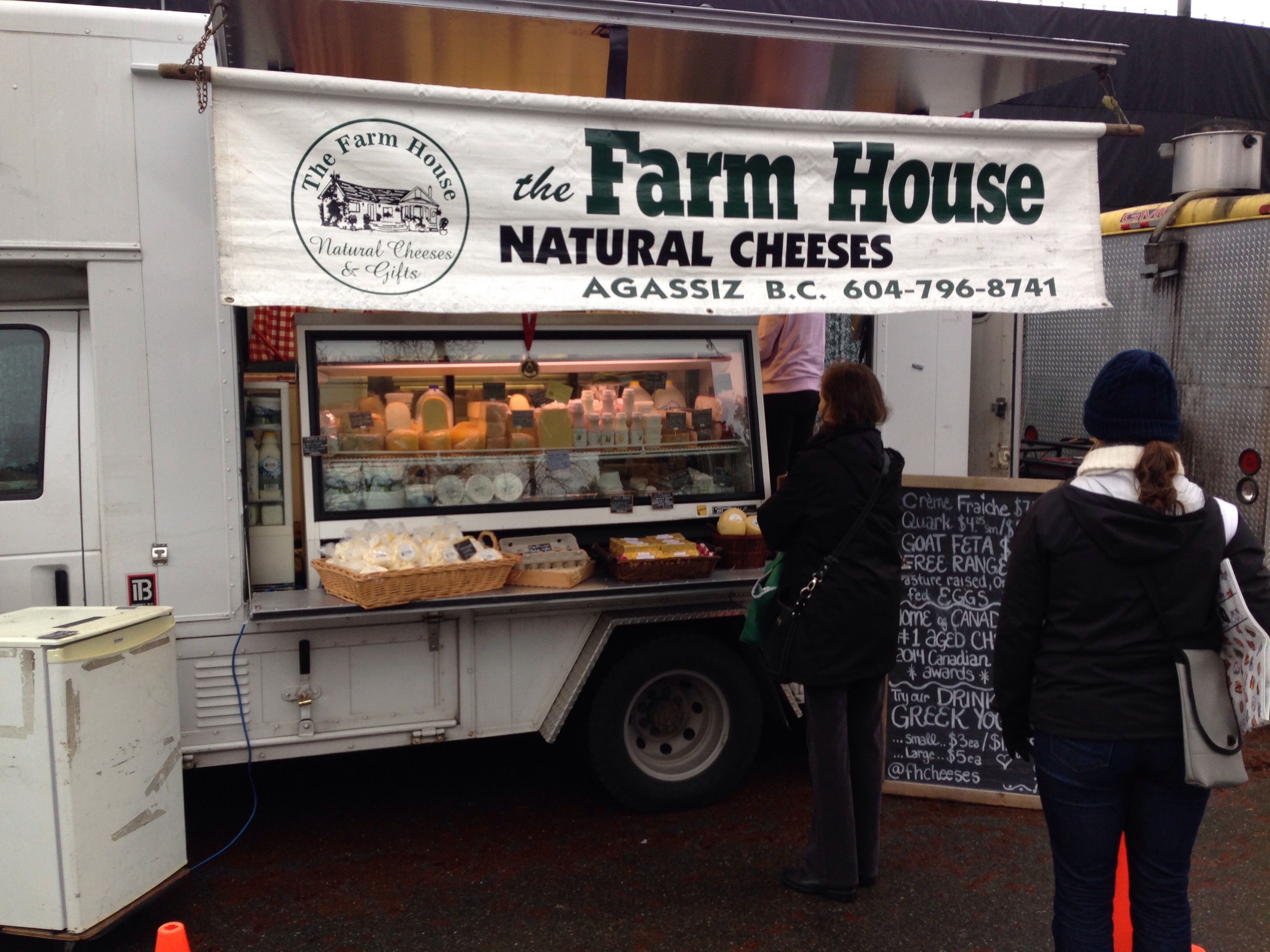
Since our palates have adapted to British Columbia over ten days, we decide to hold firm to the Province’s terroir. We grab a six pack of fresh, Vancouver-brewed, Molsen Lager. We visit the off-season’s only farmer’s market: Winter Market next to Queen Elizabeth Park.  We grab baby shitake mushrooms from a local grower. And then, get in the ever-expanding line for the Farm House Natural Cheese:

The farm House Cheese Cart BC Vancouver

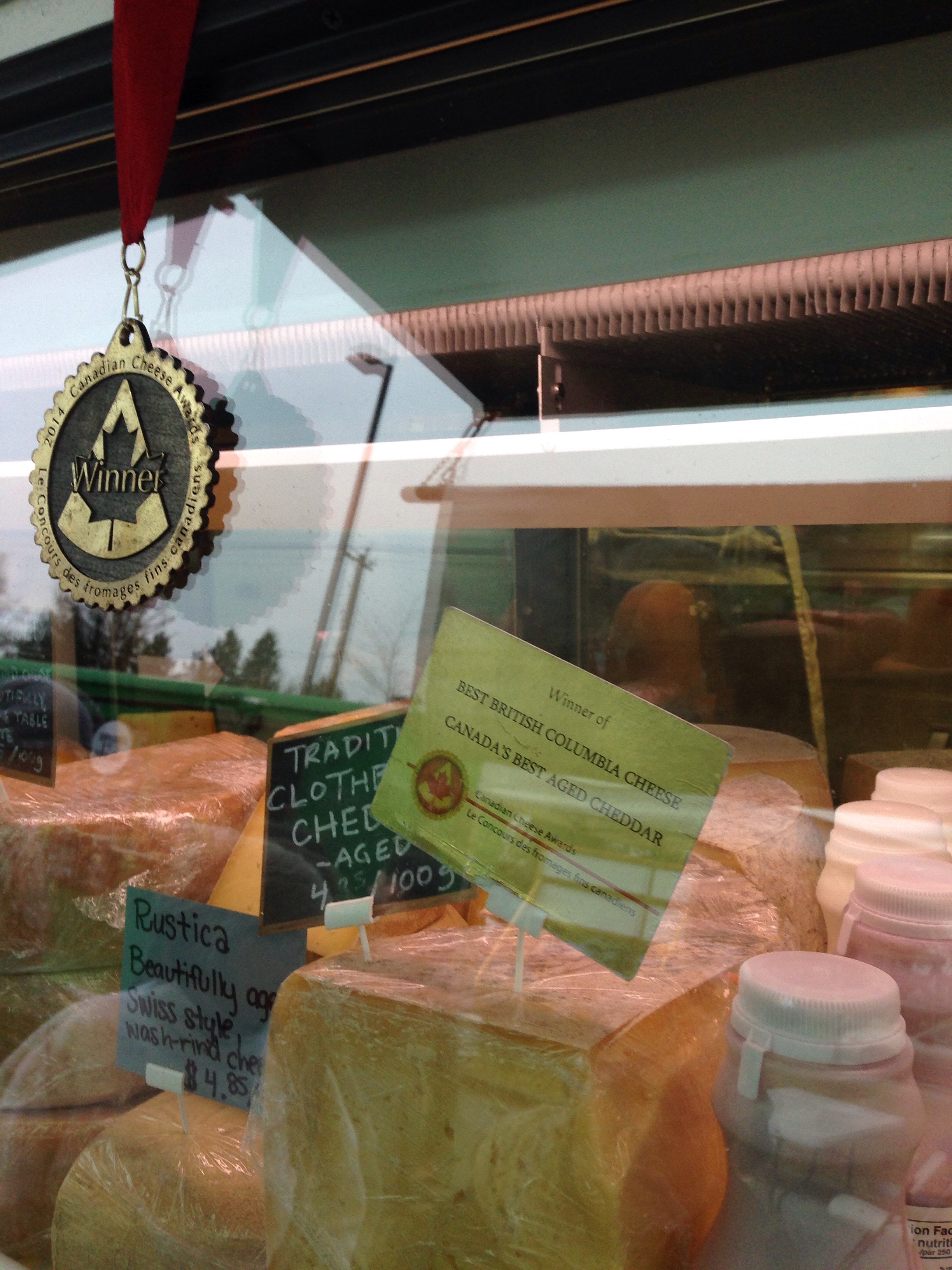
We already adore their feral, fluffy Lady Jane brie. But dinner demands a harder cheese. Why not Canada’s Best Aged Cheddar?

Far, House BC Canada Cheddar

The plan (if you haven’t guessed) BC Risotto.

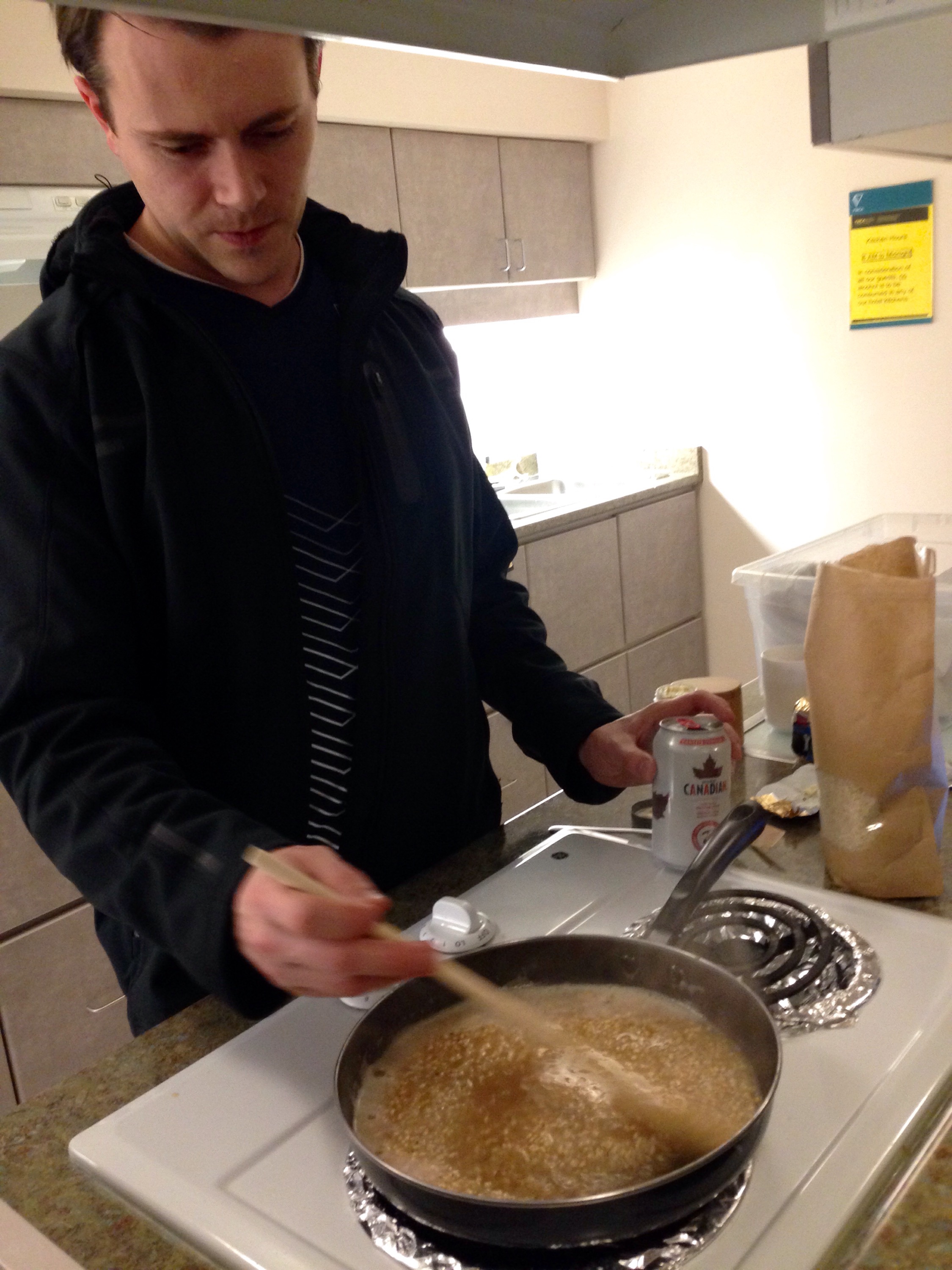
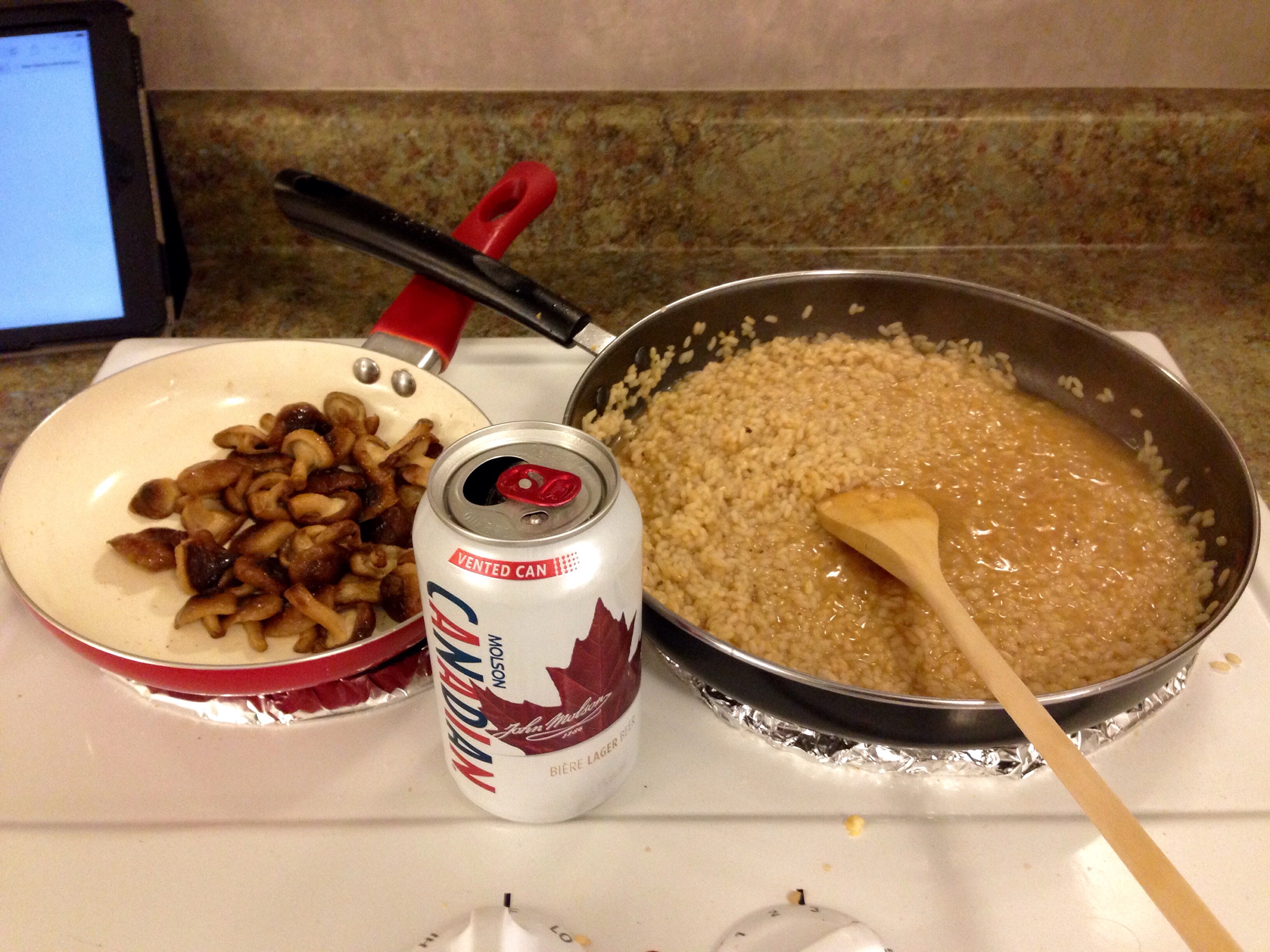
BC butter from Western Family flies into a hot pan. I fry Osake’s organic, milled sake rice until it turns mostly white. An ounce or two of garlic goes in.  Then I ease in ounces of Molson, let it absorb, stir, and add more.

Aaron risotto

Meanwhile my wife pan fries the mushrooms, which smell browned-buttery, bark-like, and fantastic.  Halfway through the Molson, I add a quarter cup of tap water, the return to the can.

Molson risotto from Bac

The rice reaches al dente, it needs a few big pinches of salt. Next in go the mushrooms and the remaining Molson to finish the flavor. We fold it into bowls and shave on Farm House’s aged cheddar.

These disparate ingredients meld beautifully if imperfectly.  Up front, Molson’s round, fruity corn and pale malt provide a connecting sweetness.  The baby shiitakes throw earth, forest floor, and umami all over the dish, which last for hours. Carmel-like browned butter gushes pleasure. Farm House’s cheddar mildly graces the dish with a chalky, dry texture, light salinity and tartness. However, Osake’s plush, pillowy, melon fresh, lighlty starchy sake rice spreads a cotton comforter unifying our attempt.

Another can of Molson keep us grounded as we vacuum our bowls. Thank you Canada!


Posted in Uncategorized | Tagged , , , , , , , | Leave a comment

Canada’s Only Sake: Artisan SakeMaker on Granville Island, Vancouver BC

We will get to the only Saké made in Canada in a sec. But first a little context to our day.

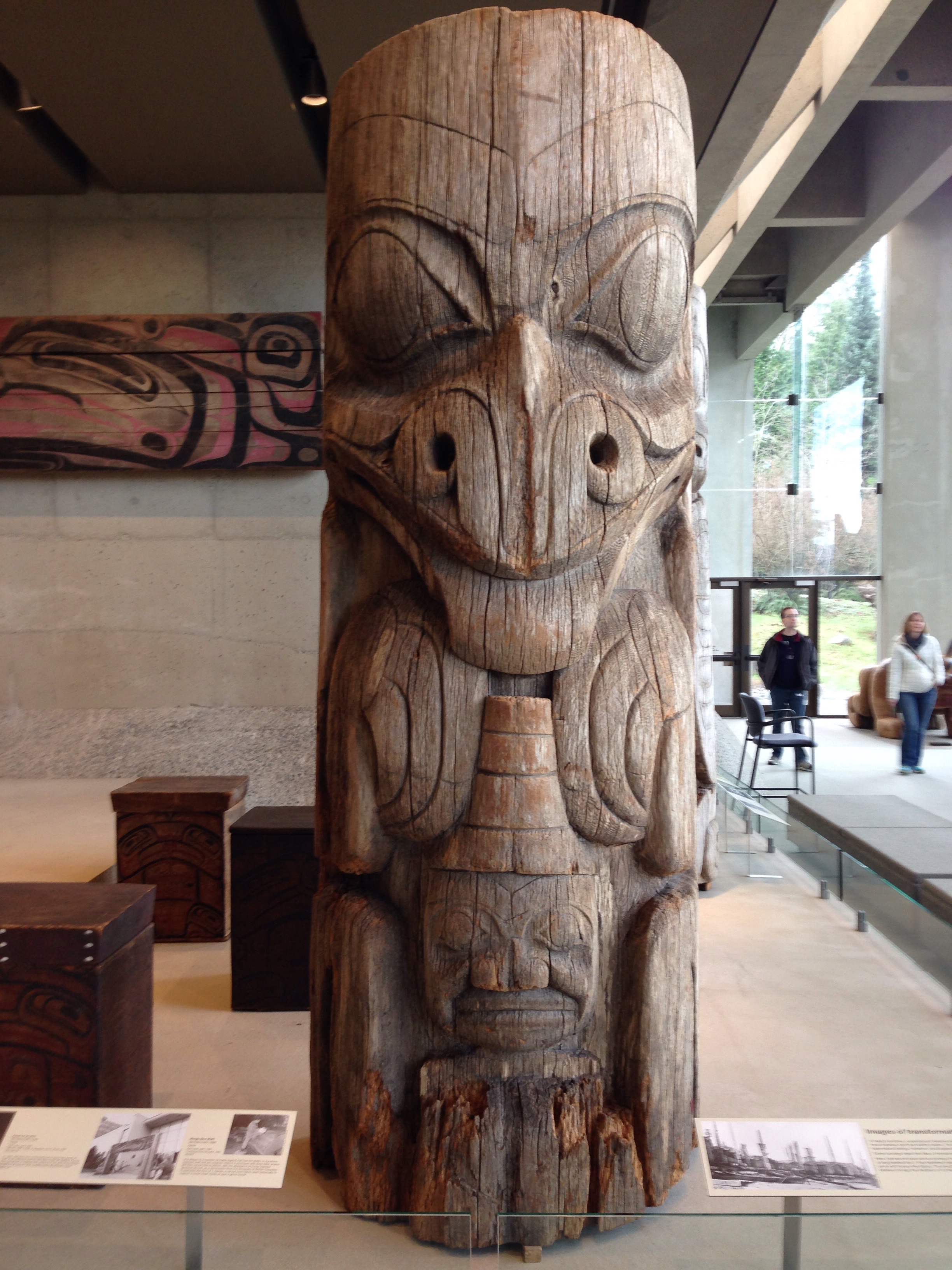
We start the day headed to Vancouver’s Museum of Anthropology. An hour bus drops us on BC’s campus and we hike down to the museum. Small, pricey, and confusing, the museum is a wunderkamen of fabulous totem poles, masks, and ritual wares.

Moa Vancouver anthropology museum

Placards provide oodles of info about acquisition and restoration histories, but little to describe what the heck is depicted (is that a hedghog licking a dwarf priest? No clue).  At least the Salmon chowder tastes delightful.

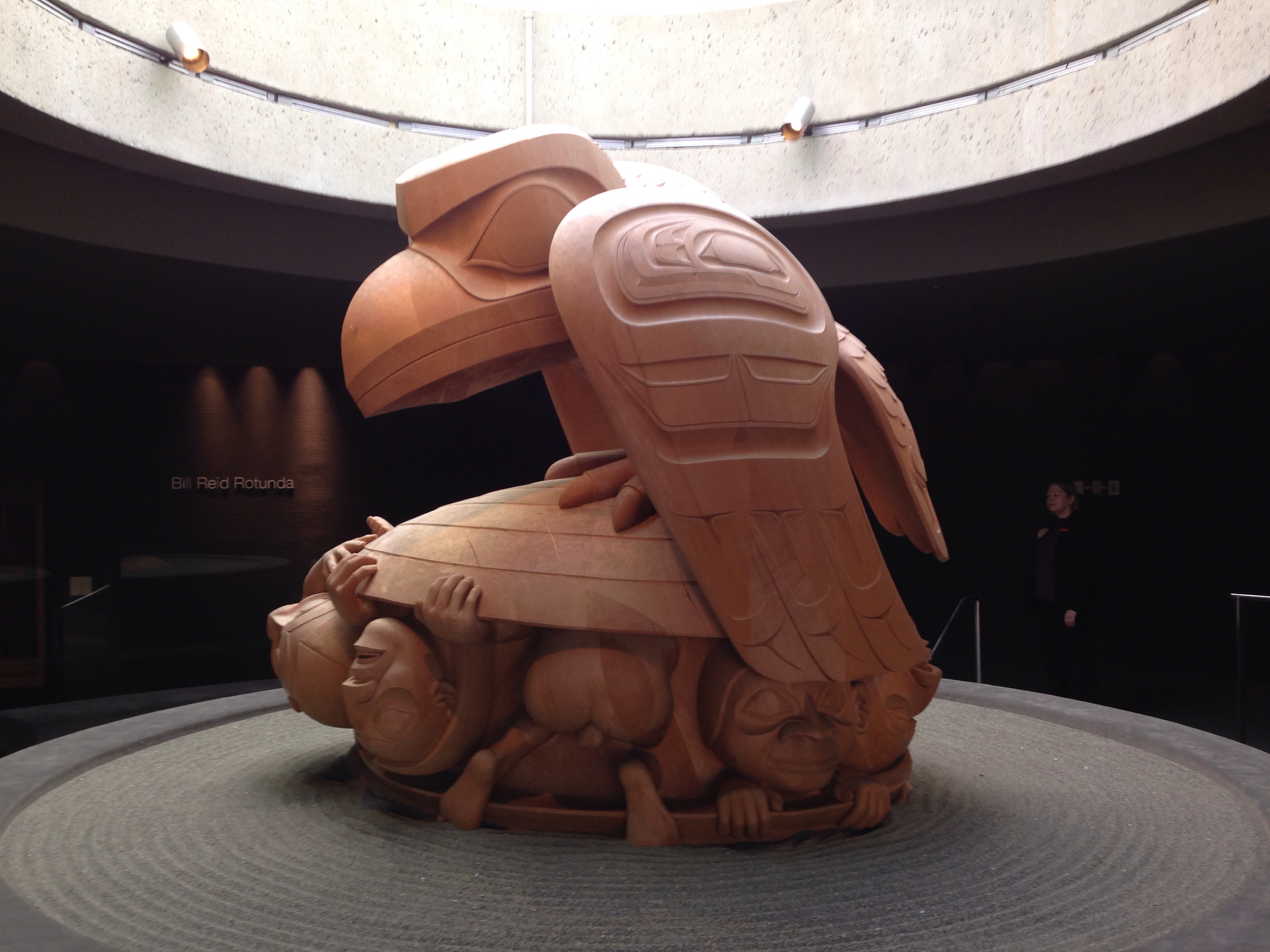
Nevertheless, famed Bill Reid’s first modern monumental work sits at the Museum’s center. It represents the birth of humanity. Thanks raven for cajoling us out of that clam shell.

Bill Reid

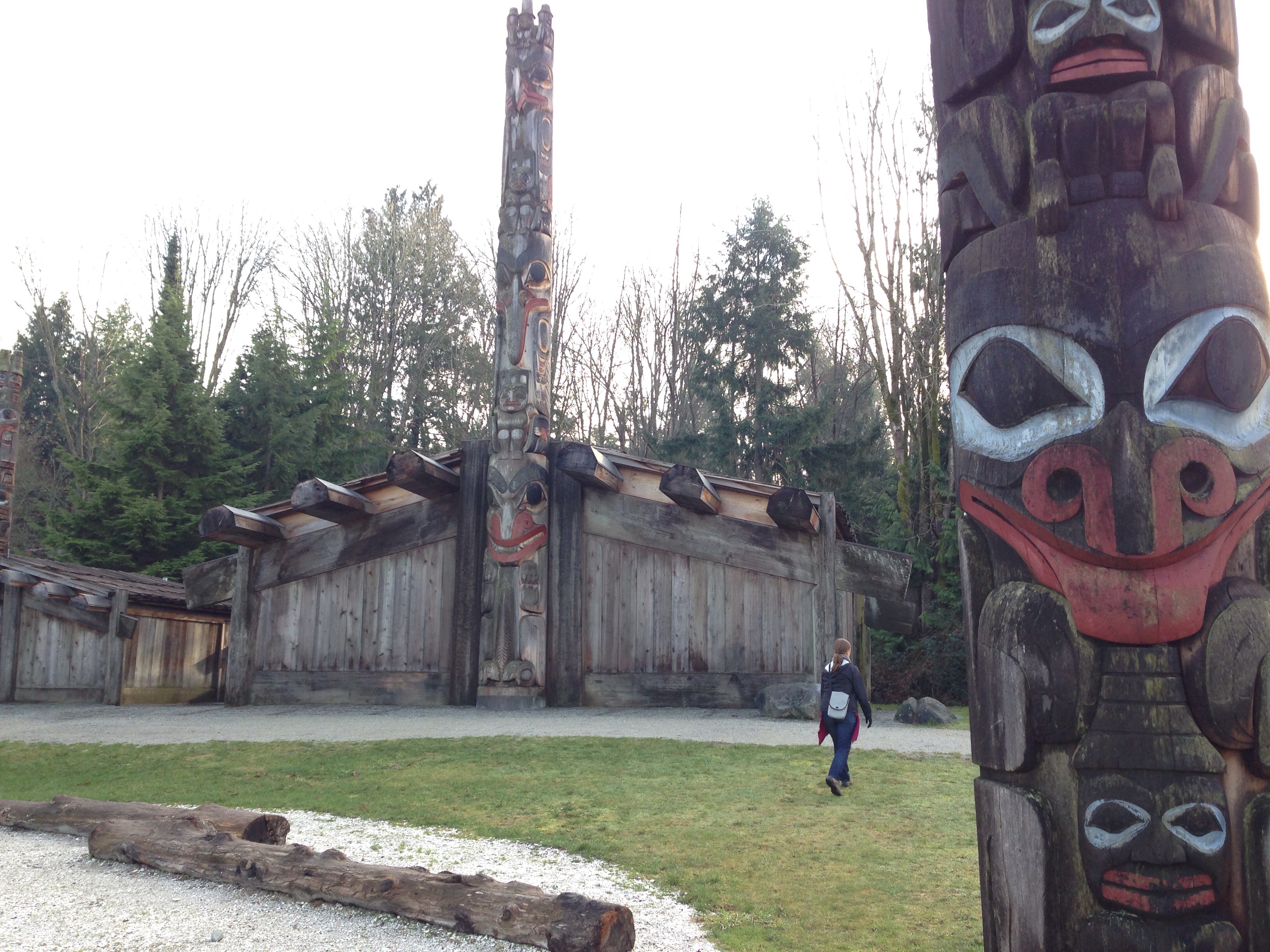
Lacking context or order, we walk out to the totem-framed village, where a coyote was just prowling.

MOA First Peoples village

And then begins our waterfront day hike. First we head down the cliffside:

Vancouver ravineAt bottom we walk a coast of slippery granite stones…for miles. A never ending view makes up for broken ankles:

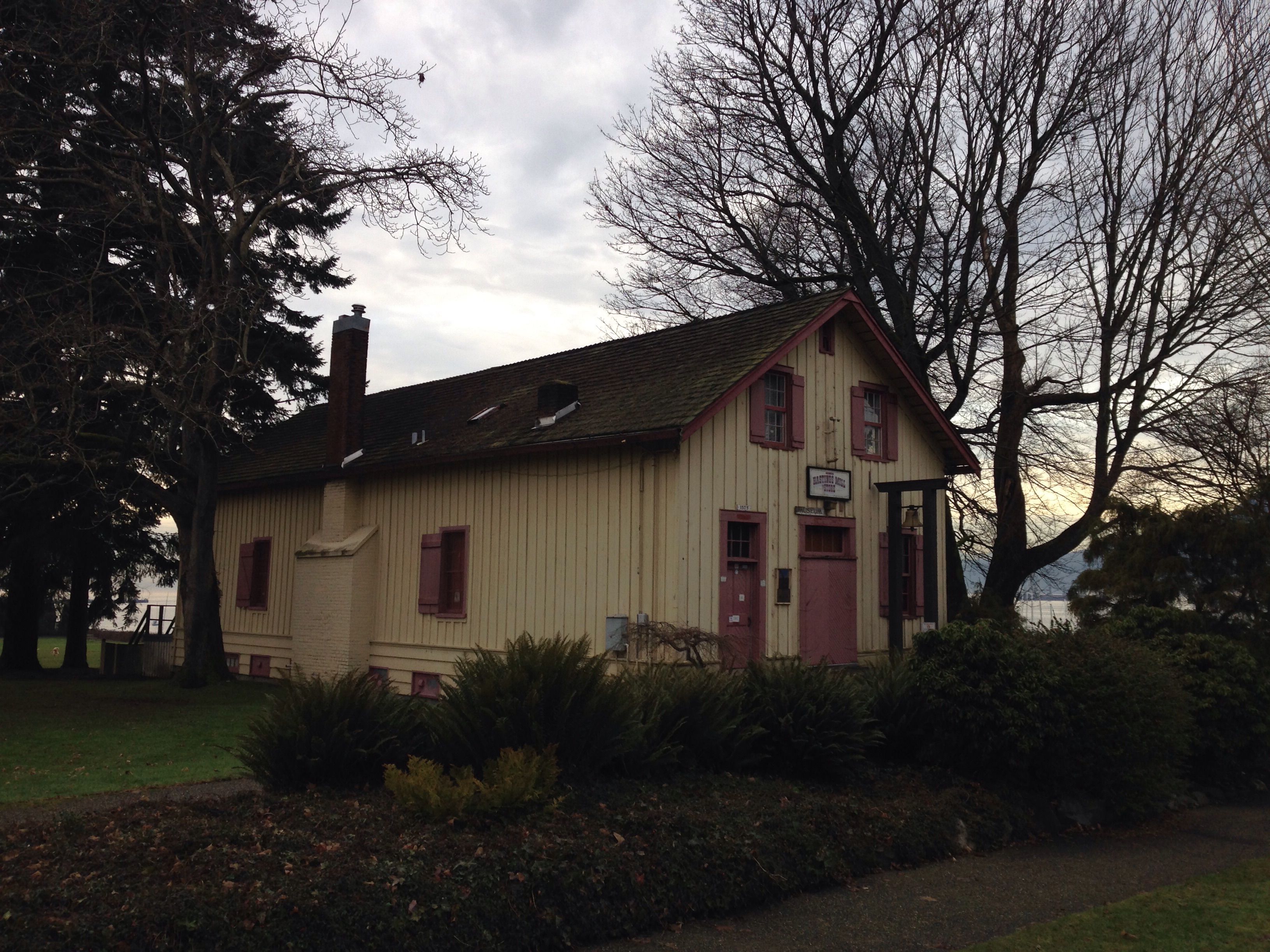
We walk 9 miles of coast. Dog beaches morph into million dollar house rows. We find a commune home where the Grateful Dead and others stayed. Halready and completely worn, we pass Vancouver’s oldest building: Hasting’s Mill Store:

image

With the sun already set, after a snack, our tired feet find Artisan Sake Maker amidst Granville Island’s craft shops.

OSake Vancouver artisan sake

For seven years Masa Shiroki has developed Canada’s first sake production. They started with rice imported from Japan, but three years ago planted the world’s most northerly rice field here in the Fraser Valley.  Mad?  Probably.  But they sourced a hardy sake rice strain from Japan’s most Northern region, Hokkaido. If anything could work, it would.

Today, most of their Sakes are converting over to the organic farm. A harvester helps, but it was backbreaking work for their small team when it broke down.

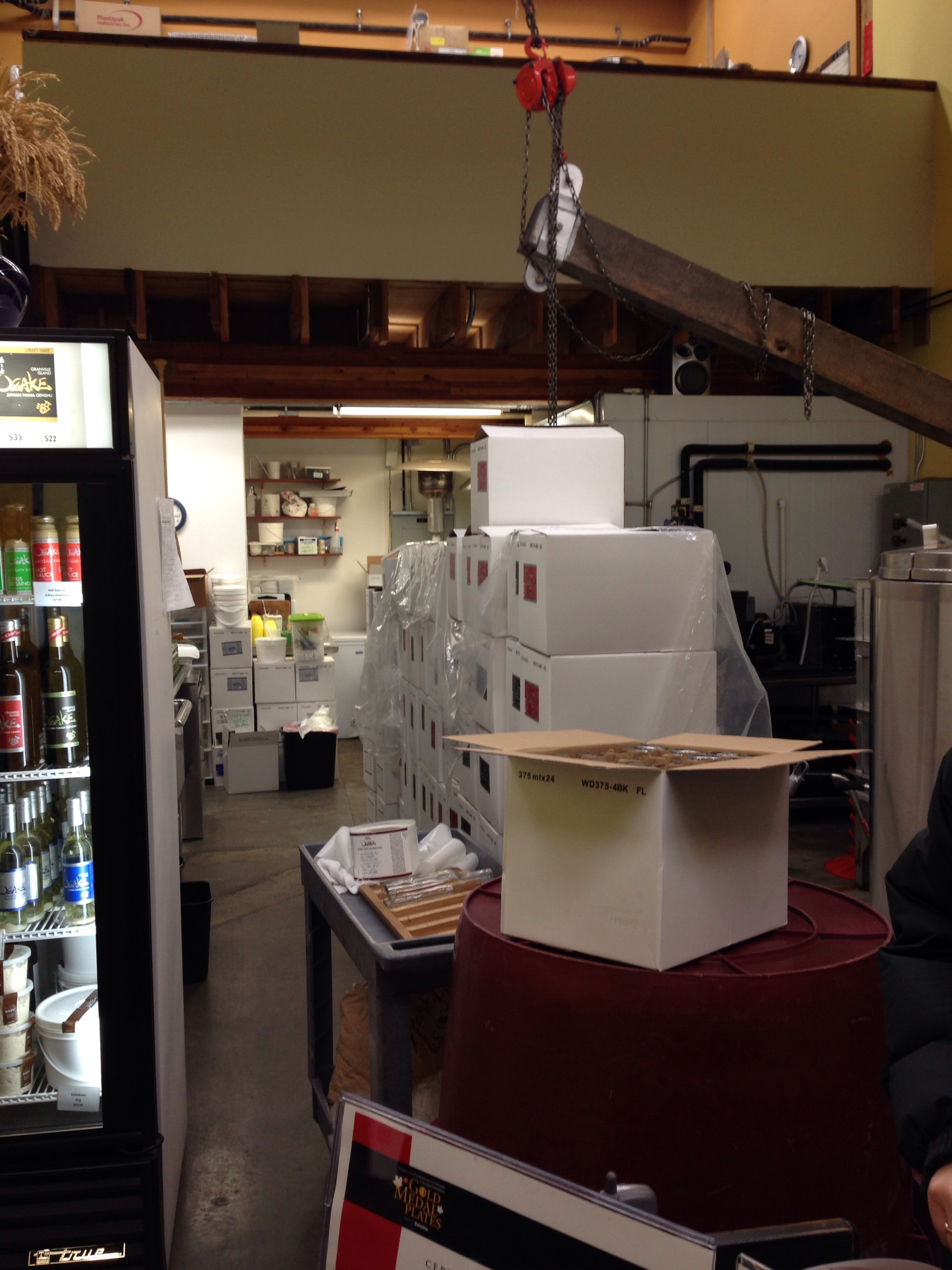
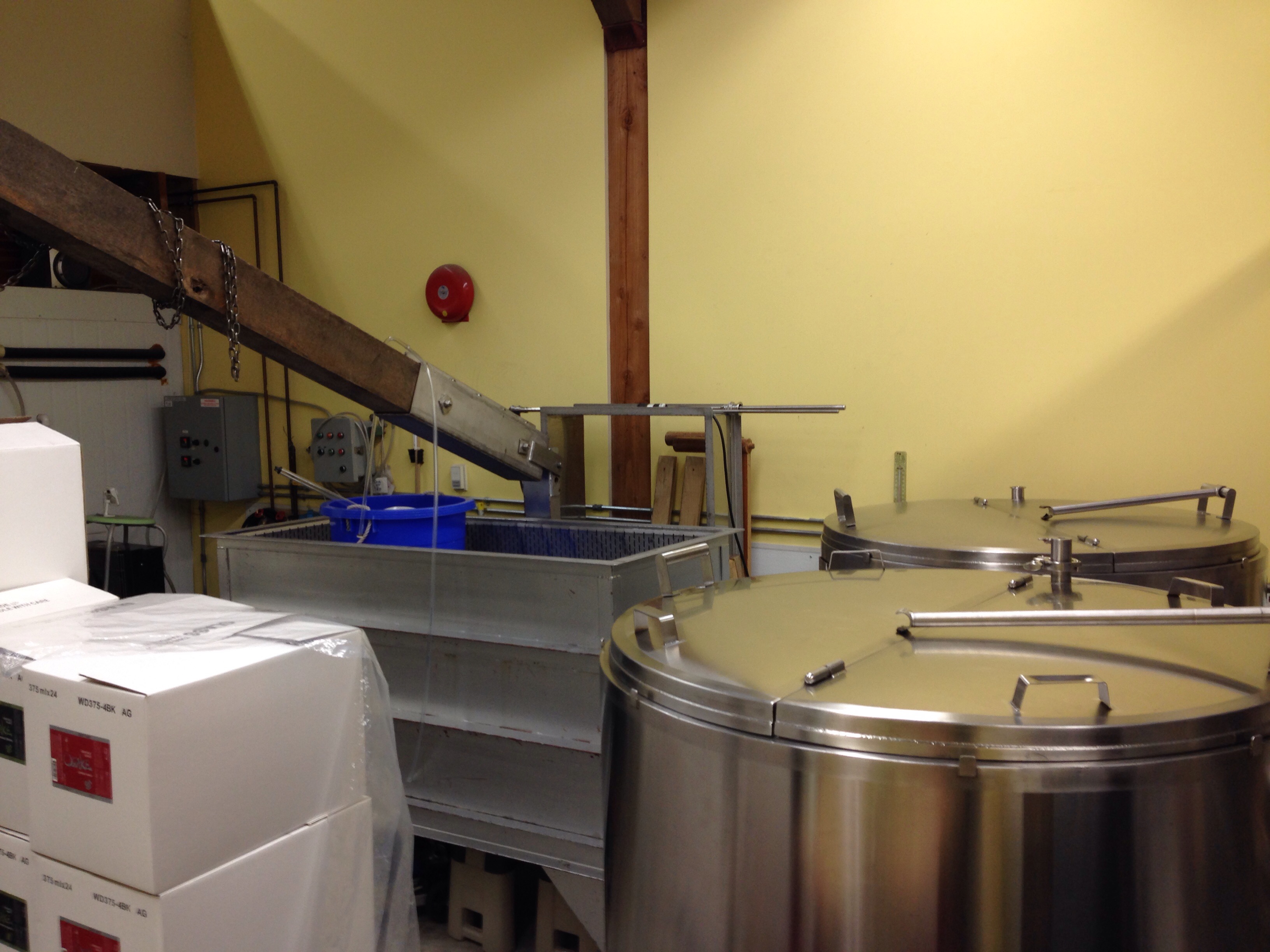
They mill, ferment, bottle, label, and promote everything from this narrow hall.

Osake Artisan Sake Maker

All their sake is fresh and unpasteurized (“Nama”: rare compared to Japan’s imports). They even make a beauty line from the rice byproduct.

But how does Sake from the great white north perform?

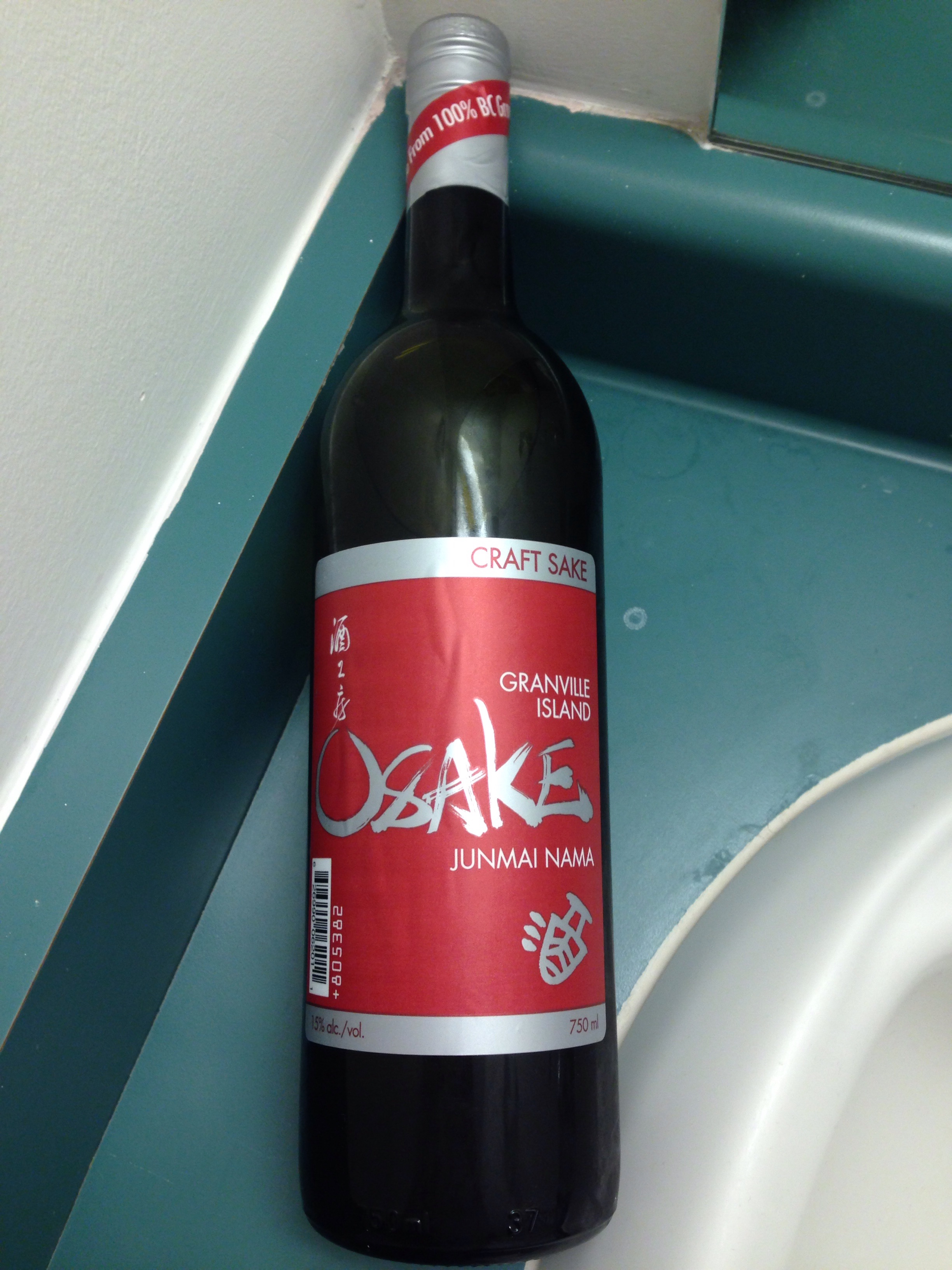
We start with Osake’s entry Junmai, which glows clean, bright, and citric with a round, honeyed, white melon of a medium body. It warms well, is a touch too sweet, and lasts a moderate length. Their Junmai is very good (4 of 5) and extremely food-flexible to my ignorant palate. And it comes from Fraser Valley. We buy it.

Osake Junmai nama

Osaka still had a few bottles of their third batch experiment Junmai from Fraser Valley rice (before the transition), which showed similar attributes to the above, but waxier, drier, and more mineral.

Their sparkling sake, albeit open too long, still tasted lit, zippy, and petilant thanks to a hit of CO2 (3 of 5).

Next, Osake’s Junmai Nama Genshu flaunts greater complexity, fullness, dryness, and overall focus. It tastes of fabulous aniseed, lychee syrup, lemon, hay, clover honey, and mint. This Genshu is grander (4 of 5) than their Junmai but for different reasons.

Next came the cloudy, sweeter Nigoris: the Hefeweizen of sake. The yeast added texture and a slight meatiness to the white melon, lemon peal, and honey of the previous styles. I love this style but their Genshu Nigori steps only a bit away from the regular Nigori. Both are quite good, but I expected more differentiation (3 of 5).

We get to try their SakeKazu: basically a paste of leftover lees used to flavor everything delicious including miso soup, their ice cream, salad dressing, chocolates, and their line of fruit drinks. Bam! Intense saline, sweet, earthy, fruity deliciousness hits our palates. Yum!

Osake has a solid lineup of drinks and fantastic potential. Everything is cleanly made and enjoyable, Their pricing is overly humble considering how extreme it is to make sake from scratch to bottle this far north. It was a long day that ended well. We also buy a bag of their rice…more on that later!


Posted in Uncategorized | Tagged , , , , , , , , , , | 3 Comments