Thirsty Thursday: Nero d’Avola, COS, Nero di Lupo, Sicilia IGT 2011

For Christmas we suggested a wild Sicilian red aged in pithoi (read here).  This Thirsty Thursday, we revisit Azienda Agricola COS in Southeastern Sicily (because we can’t help ourselves).

Again, the grape is Nero d’Avola.  Again, wild yeasts did the work, biodynamic principles reigned supreme, and nothing beyond a dash of sulfur was added to the wine.

Yet this time, instead of those gloriously anochronistic pithoi (ceramic jugs), modernism creeps in with two years of cellaring in cement tanks under temp control.

The result?

COS Nero di Lupo Nero d'Avola 2011 Sicily Italy

Hello there.

Appearance: A clear moderate garnet shows the intentional aging.

Aromas: Utterly intoxicating aromas of dried violets infuse with chai tea.  But I can almost see the purple of a hot raspberry compote wafting before my nose.

Palate: Dry, twangy acidity and leathery tannins snap at the palate like a black bull whip.  But the real story is its 12.5% alcohol.  Only 12.5%!?  By now we shouldn’t be surprised, the Pithos was only 12%.  Yet such a sun bleached region should produce alcoholic monsters. Yet Nero di Lupo feels light.  It feels lean, edgy, yet lined in felt, much like its Pithos version.

Flavors: Flavors scramble all over the place. Tart red grapefruit switches from charcoal, to apple skin, to earth and herb.  But that bright raspberry fruit holds the core. These fruity flavors last a long while.

Conclusions: COS Nero di Lupo is as equally brilliant as its Pithos manifestation (4 of 5).  One dish would sing with it: rabbit on lightly fried polenta from a food cart called Burrasca.  The wine’s lightness, wild flavors, and savory herbaciousness of both would work wonders.

IMG_20140329_121237_498

Posted in Nero D'Avola, Red | Tagged , , , , , , , | 7 Comments

Climbing the Pyrenees to Andorra: Capdevila Pujol, Brut, Cava, Spain NV

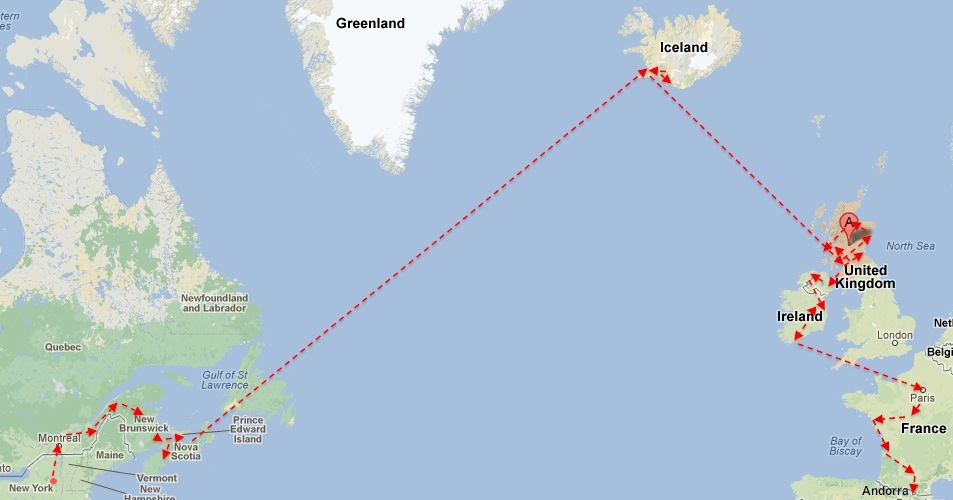
After a month of drinking our way through western France, we shift our EU Austerity Drinking Adventure south.  But before bathing in Spain’s wine culture, we tack on three days in Andorra.

NewYorkToAndorraDay100We have no idea what Andorra will be.  Our guidebook only describes it as Europe’s sixth smallest nation, with the highest capital that nestles in the Pyranees Mountains splitting Spain from France.

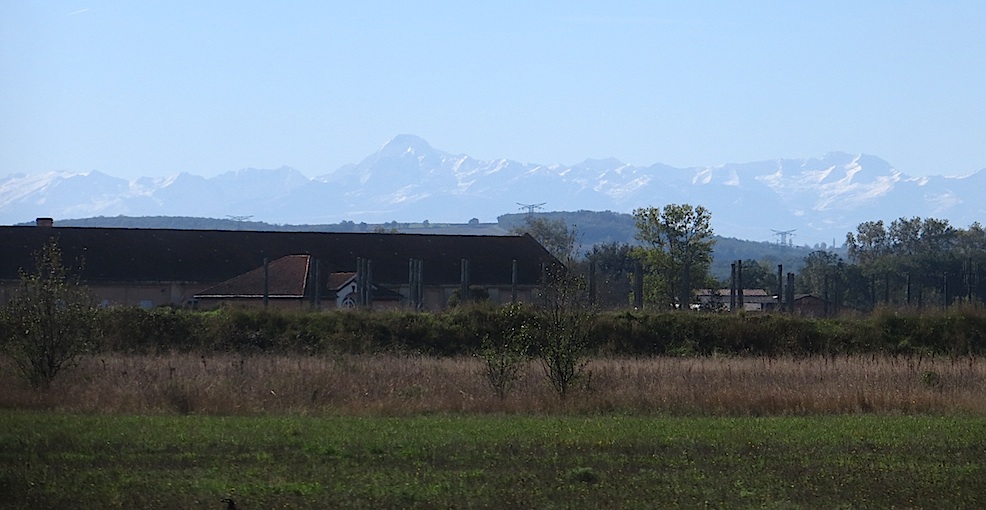
We may never get another chance to visit it.  So a bus takes us from red-bricked, religious, bustling Toulouse.  After an hour of flat, arid land, the Pyrenees emerge like a spinal cord.

AndorraPyranese As the bus climbs, streams emerge rendering the land greener.

I stop editing wine notes, for we are entering a world of giants.

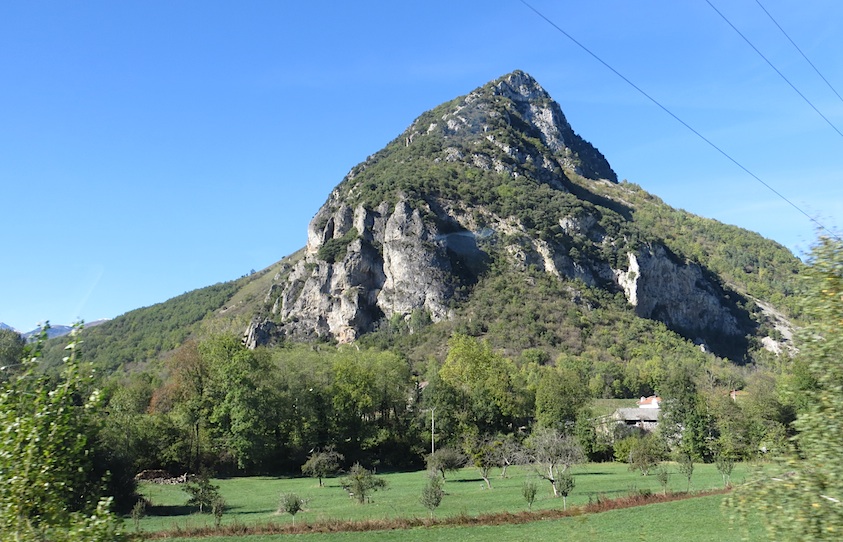
PyreneesMountainBrick homes turn to grey stone and humanity dulls into something more stoic:

StoneyPyreneesSoon humanity disappears altogether:

We reach the French/Andorran border on top of the Pyrenees’ peaks:

PyreneesSnowPaperwork processed (like 10.2 million other annual tourists), we descend into the capital, Andorra la Vella, enclosed by peaks.  Our hike to the hotel finds the city asleep for siesta.  So we visit the tourist office.

They exude kindness.  But without vineyards to visit, we sign up for a bus tour, that happens to be two-for-one, and tack on a second bus ride for half off (this is an Austerity Tour after all).

We check out a few cliff-clinging churches….

AndorraChurchCenter…then pick up wines (and food) at the grocery shop.  Since the only grapes here end up in some worrying jug spirit, we, like the locals, look toward Spain for wine.  In celebration, we crack open a value bubbly:

Capdevila Pujol, Brut Natural Reserva, Sant Sadurni d’Anoia, Cava, Spain NV

Capdevil PujolPereladaBrutNaturalReservaSantSadurnidAnoiaSpainAppearance: looks a light lemon with rapid med-plus sized fizz (intensely bottle fermented).

Aromas: smell young and powerfully of vanilla meringue (oak?), yeasty autolytics, and lemon.

Palate: This feels off dry.  Such slight sugar balances cracking acids, a lower alcohol (11.5%), and altogether lighter body.  The texture feels soft like baking flour.

Flavors:  Chalk, yeast, lime, and lemon pith make for a refreshing fizz of moderate length.

Conclusions.  This is simply good (3 of 5) Cava for little money (7.50 EU).  The fact it is 100% perelada grape makes it a bit cool (most Cava blend).  Its fluffy texture and fizz tidy our palates like a fresh dusting of makeup powder.

We wind down the evening with our first hotel TV and real beds.  After 101 days of non-stop travel, CNN’s familiarity comforts us.

Check back next Monday for our EU Austerity (Sobriety) Tour of Andorra’s churches, spas, and mountain tops.  Worry not, there will be wine.

Posted in Uncategorized | Tagged , , , , , , | 2 Comments

Calling Summer: Picpoul de Pinet, Gérard Bertrand, France 2011

Drink Picpoul, any Picpoul, and summer will come early.  The shear pulling of your cork will turn the Earth a little closer to the sun.  Snows will melt.  Frosts dissipate.  For you will be drinking sunshine.

While Monday’s EU Austerity Drinking Tour dipped its toe in Toulouse.  A bit further to France’s coast sits an appellation called Picpoul de Pinet.

Picpoul_de_PinetHot-hardy red grapes dominate the land.  But the village of Pinet has held resolutely to the green grape Picpoul.

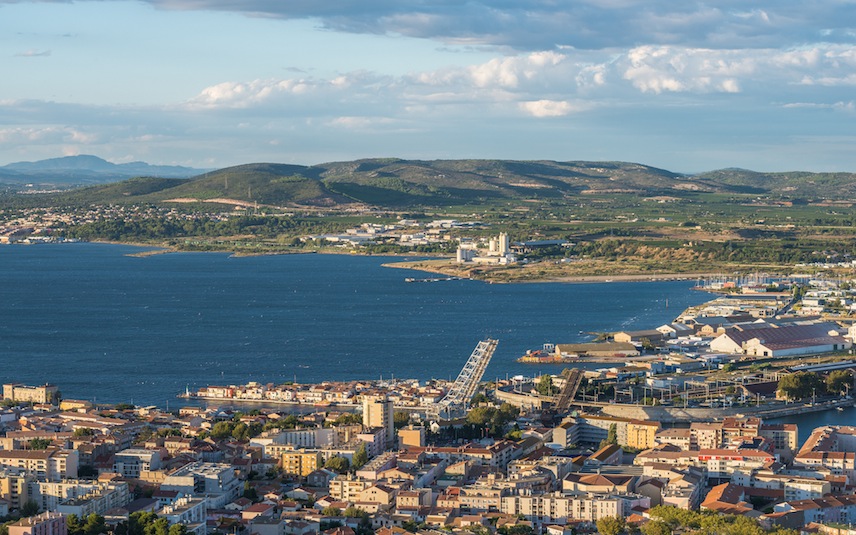
Named for stinging (Pic) lips (Poul), the grape exudes saline, mouthwatering, citric acidity.  It helps that below its vines spreads France’s second largest lake: the Étang de Thau: the only spot on the Mediterranean that France certifies oyster production.

Etang_de_ThauLovely, no?

Sadly, this is the sexiest photo of oysters I could find:

fresh-oystersTasty? Yes.  Glamorous? Urgh…

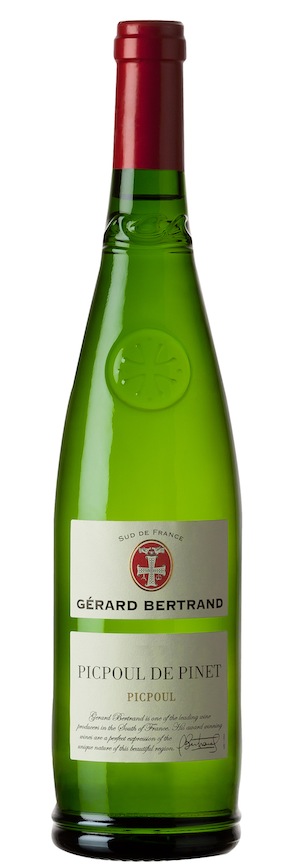
Stateside, I would suggest Gérard Bertrand’s Picpoul de Pinet.

PACKSHOTGranted, you can find a handful of other Picpoul in the same slim, green, stamped bottle that will delight you.  Drink them and be merry.  But for around $10 you get single vineyard grapes that see night harvesting, direct-to-winery delivery, and immediate pneumatic pressing.  A snail-paced cold ferment near 60 degrees Fahrenheit, brief lees aging, and Spring bottling trap any and all esters bright, fresh, and citric.  That’s the power of Bertrand.  He may own much of Southern France.  But in creating a market for it, he can afford the latest and strictest quality controls.

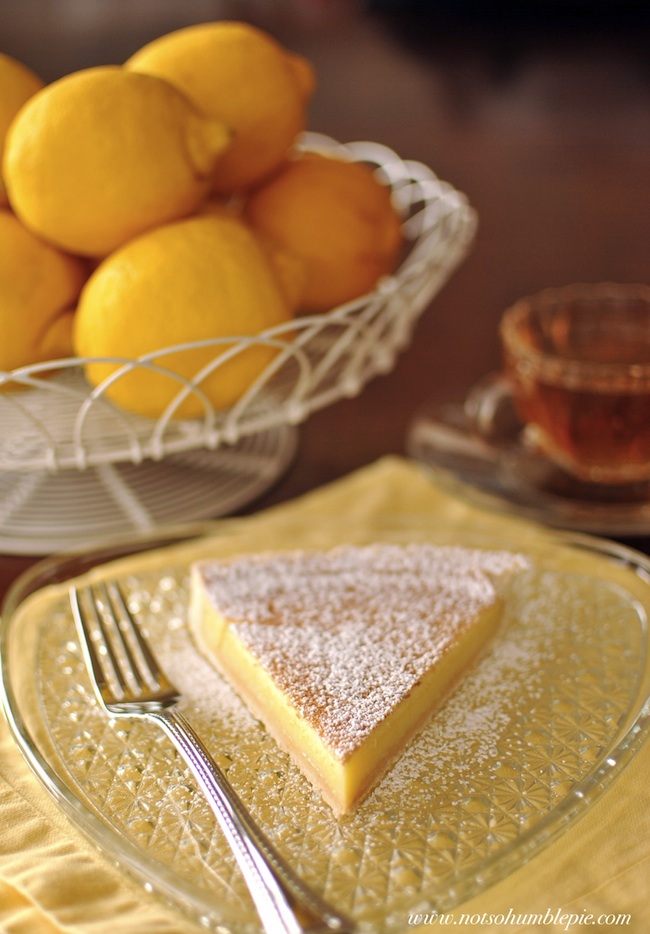
His 2011 looks a pale lemon yellow in the glass.  Aromas of a lemongrass coconut Thai soup intertwine with that white sugar you powder on a lemon tart.

lemon_tart The palate feels unabashedly dry, tautly acidic, and lean in body.  A nice little round core of melon leads to a grassy, salty, lemon juice finish of medium length.  This wine is so painfully true to type (3 of 5), tear-renchingly mouthwatering, that it begs to be drunk.  Have it with anything you’d squeeze lemon on (except maybe extremely spicy foods).

Invite summer early to your next seafood, salad, or goat cheese, and forget Winter’s frost.


Posted in Uncategorized | Tagged , , , , , , , | 5 Comments

Fronton, Gaillac, Madiran: Red Wines of Toulouse, France: Day 98 EU Austerity Drinking Tour

This Monday’s EU Austerity Drinking Tour finds us 98 days into our alcohol-on-a-dime traipse through Europe’s famed regions.  We leave glitzy but wet Bordeaux for southern France.  Our hub will be Toulouse: a city surrounded by ignored but extreme value wine regions.

NewYorkToToulouseDay98

Warmth!

We leave Bordeaux still drenching in Atlantic rain.
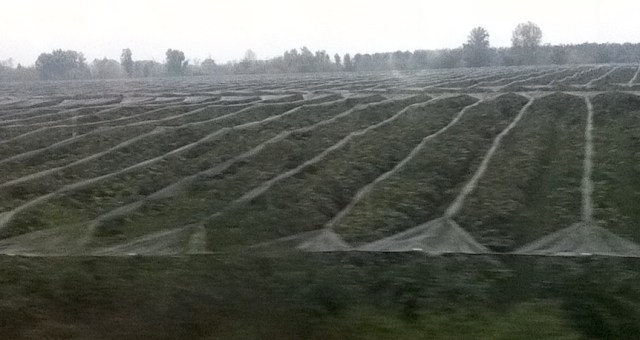
Drenched Vineyards Bordeaux

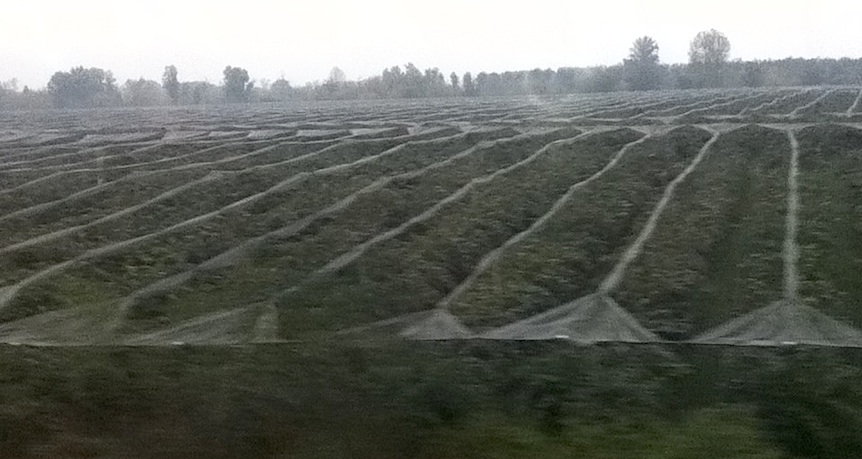
Netting in case of hail…oy!

But as the TGV speeds East, the sun emerges, mossy trees trade fade to gnarly shrubs, and the world becomes dry, calm, and continental in climate.  Here the mellow Mediterranean holds more sway than the wet churn of the Atlantic.

Like St Émilion, Toulouse provided a relic-packed hitching post for pilgrims headed to Santiago de Compostela.  Brick churches grew up on every block.  But the sprawling St. Sernin hosted the most pilgrims and saint bits.

St Sernin Toulouse

Hard to miss.

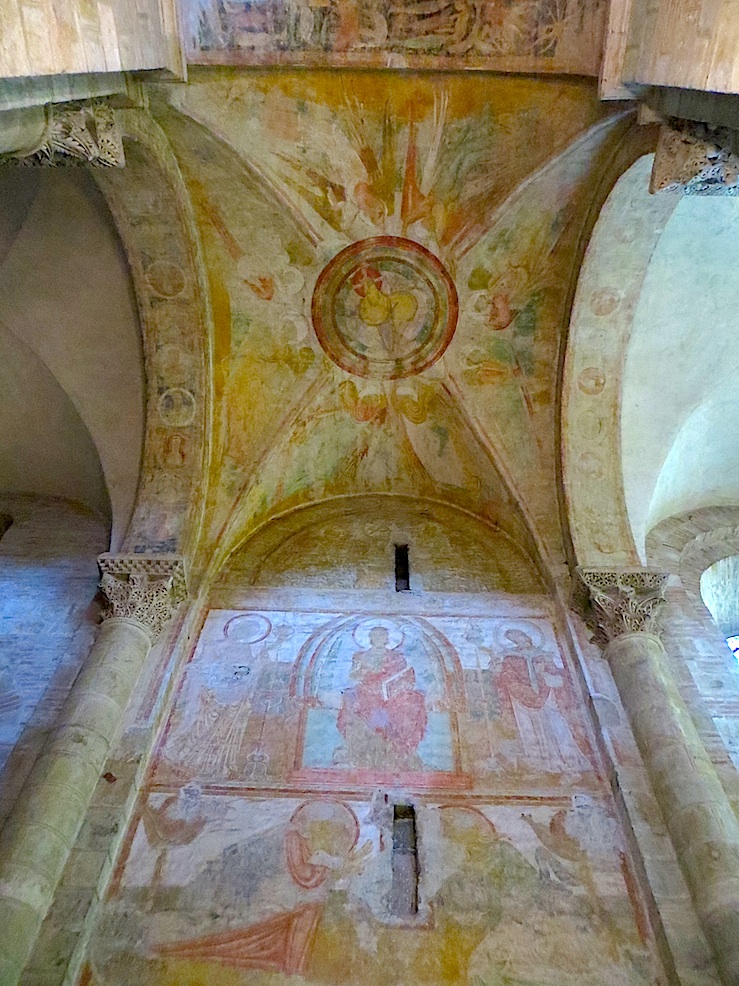
This is Europe’s largest Romanesque church.  Bright, stiff frescoes still cling to its forest of vaults.

Frescoes St Sernin

1,000 year old UNESCO porn.

And a bug-eyed Christ guards the main altar, reliquary, and Roman church beneath.

Sernin Christ Toulouse

Clean shaven deity.

Back in the sun, we stumble onto the Jacobin Church.  Late medieval arches interweave like a Tim Burton kaleidoscope.
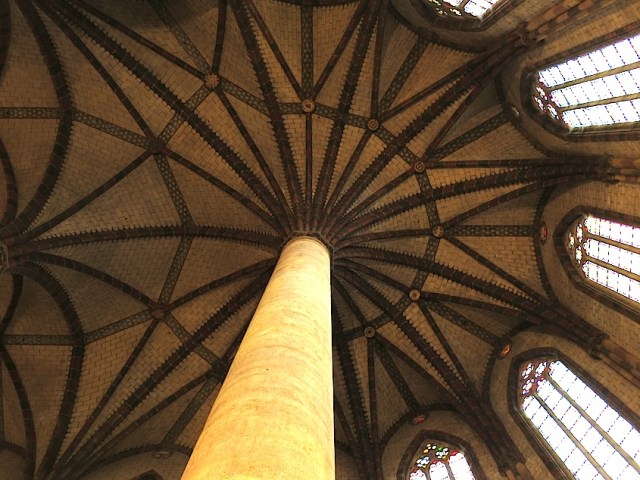
JacobinChurchToulouse

Webbed.

Not to be outdone, the remains of St Thomas Aquinas (Mr. Reason/Lets-Make Aristotle Christian) lie in something out of Indiana Jones:
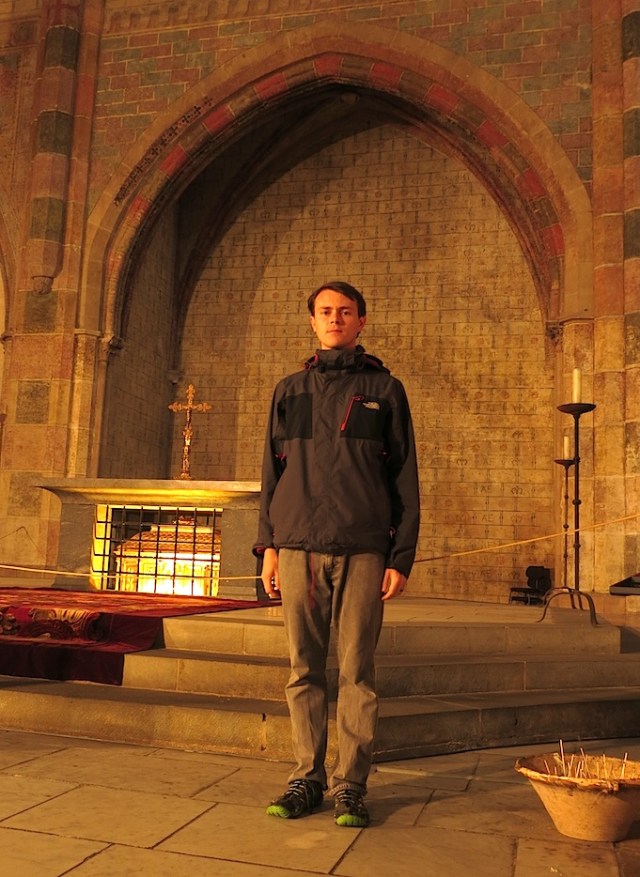
Aaron St Thomas Aquinas

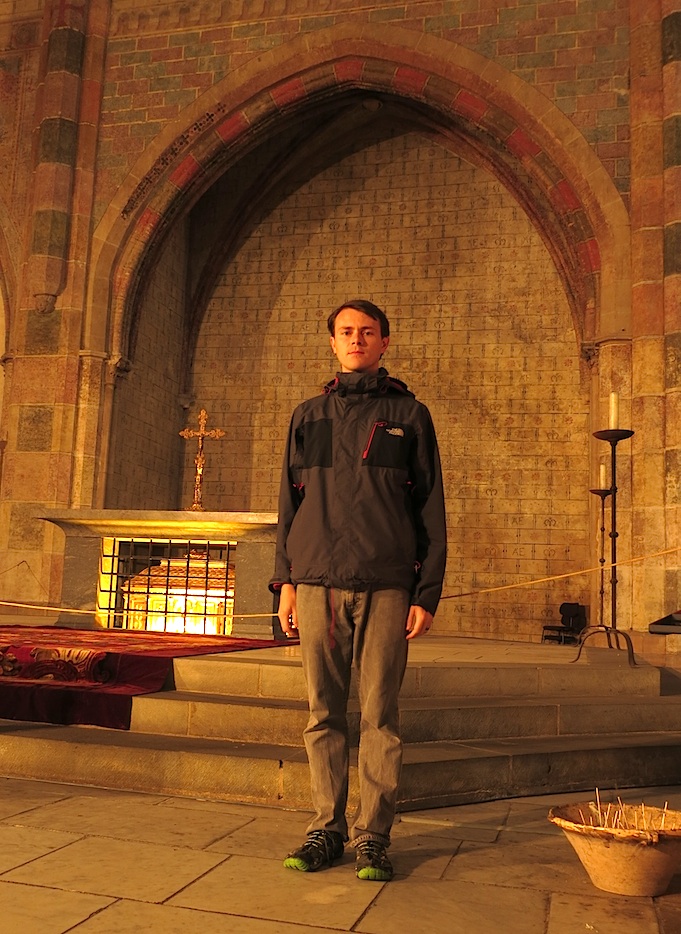
My serious theologian face.

But there’s more to Toulouse than churches.  The language clips and lisps along sounding more Spanish than French.  It houses fantastic cheese shops, pastry makers, and markets.  France’s fourth largest city bustles with life, mixing elites and poor alike of all races.

Cheese man

This man will age your cheese.

But we came to drink.  Our Bordeaux flu has finally passed.  So we sample the region back at our hostel, which fills not with students but illegal workers from Africa (who made fantastic food).

Just north of Toulouse sits the Gaillac AOC:GaillacMapFor 9.50 EU we grab Château de Salettes’ 2009 Gaillac Rouge.
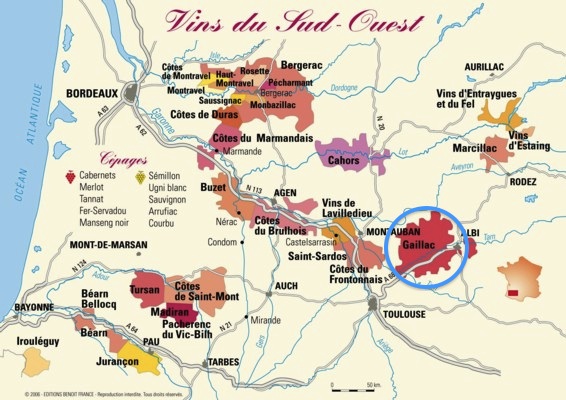
ChateauDeSalettesYou know you are drinking stuff upriver from Bordeaux with Cabernet Franc and Cabernet Sauvignon.  However, the addition of Duras, Fer, and Syrah hint that we have shifted to the Mediterranean.

Appearance: It looks a clear, average ruby color.

Aromas: Developing moderate aromas of cinnamon, chocolate, blackberries, and cigar show up.

Palate: This Gaillac shows only medium acidity. Medium tannins feel peppery.  Body and alcohol feel medium.  It is complex but in balance.

Flavors: Tastes dark and hot with blackberry, plum, tomato, oak cedar and chocolate.

Conclusions:  The medium plus length and complexity show promise. But a slight fizz of volatile acidity hints at a warm ferment or storage and relegates this to only good (3 of 5) quality.  Still a nice pasta red.

Our glasses then shoot southwest nearing Pyrenees foothills and the region of Madiran:
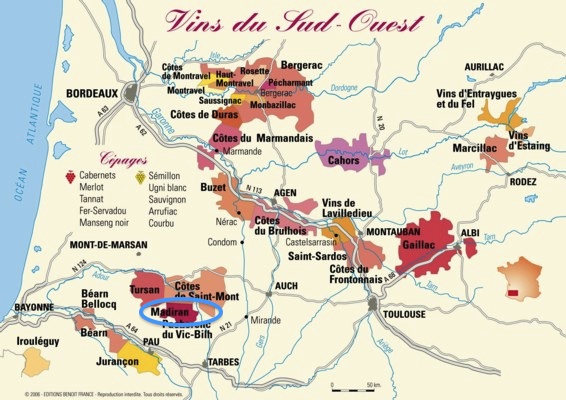
Madiran MapProducteurs Plaimont’s 2009 Madiran costs a mere 8.30.  It consists mainly of Tannat: a grape famed for its tannins (and oddly is Uruguay’s national grape).

Plaimont MadiranAppearance: ruby red and dark.

Aromas: smell of black olive, dry leaf, a clean beach-wood bonfire, and, oh yeah, black fruit.

Palate: feels low on acid, with medium, dusty tannins, a medium alcohol of 13.5, yielding a mid-weight body.  Nothing showy here, just ripe, dusty fruit.

Flavors: taste of a medium intense bonfire (if you’ve ever tasted bonfire let me know), dried black cherry, dusty dry earth, and anise.

Conclusions: A medium length, dried earth, and somewhat overdone oak roast make this good (3 of 5) not great.  It lacks much middle fruit but clearly fits with such a hot, dry climate. It begs for a grilled, roasted, bbq’d anything or a hard cheese.

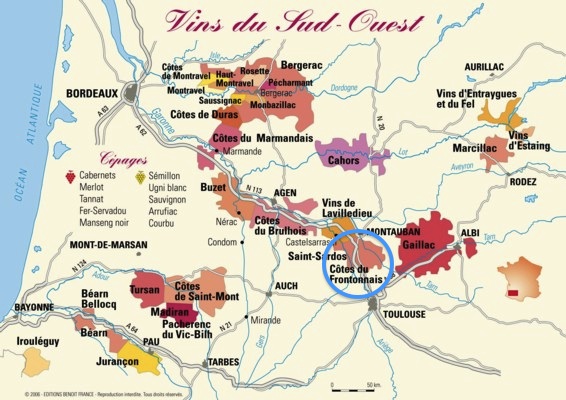
Finally we head to Fronton: a region just downriver from Toulouse:

Fronton Wine RegionFor only €6.80 we pick up Chateau Bellevue la Forêt’s 2009 Fronton.

BellevueForetFrontonThe label leaves much to be desired, but books and their covers… Like the Gaillac, Cabernet Franc and Sauvignon dominate, but Negrette and Syrah keep it local.

Appearance: looks a much darker ruby purple, with a narrow clear rim.

Aromas: smell of medium intense cherry marmalade, mint leaf, and olive tapenade.

Palate: refreshing acidity balances a even keel of tannins, alcohol, and body.

Flavors: taste of oddly refreshing of bright raspberry and black cherry, contrasting a sultry second note of pepper, olive, and salt on the medium length finish.

Conclusions: Chateau Bellevue la Forêt makes a very good (4 of 5) red.  This Fronton tastes refreshingly rustic, with a lovely olive streak throughout. The perfect dinner drink from a region of extreme value.

We love Toulouse.  However, Bordeaux, the flue and weeks of rushing through Western France have worn us.  We need a change.  Next Monday: our EU Austerity Drinking Tour heads to the little country of Andorra.

Posted in Uncategorized | Tagged , , , , , , , , , , , | 3 Comments

Suburban Vineyard: Finding Haut-Brion in Bordeaux’s Pessac-Léognan

It is our last day in Bordeaux.  We had visited Graves and St-Émilion.  But we have yet to see Pessac-Léognan.

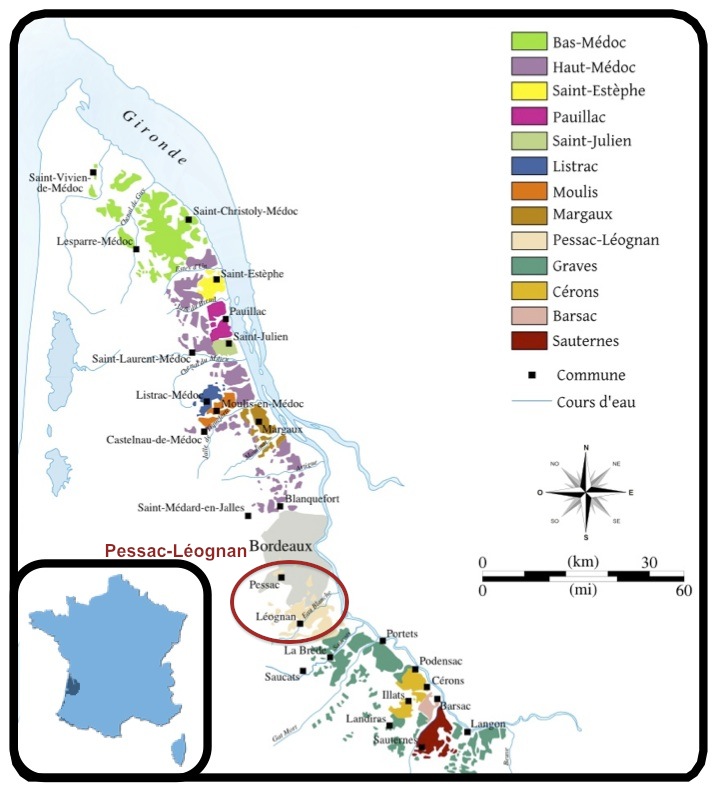
medoc-map-2010In 1855 Bordeaux merchants ranked the top houses.  Of the Premier Grand Cru (best of the best), all were in the Médoc save one in Pessac-Léognan.  Now we could debate the validity of an 159 year-old classification, but Pessac was just a bus ride from our apartment.

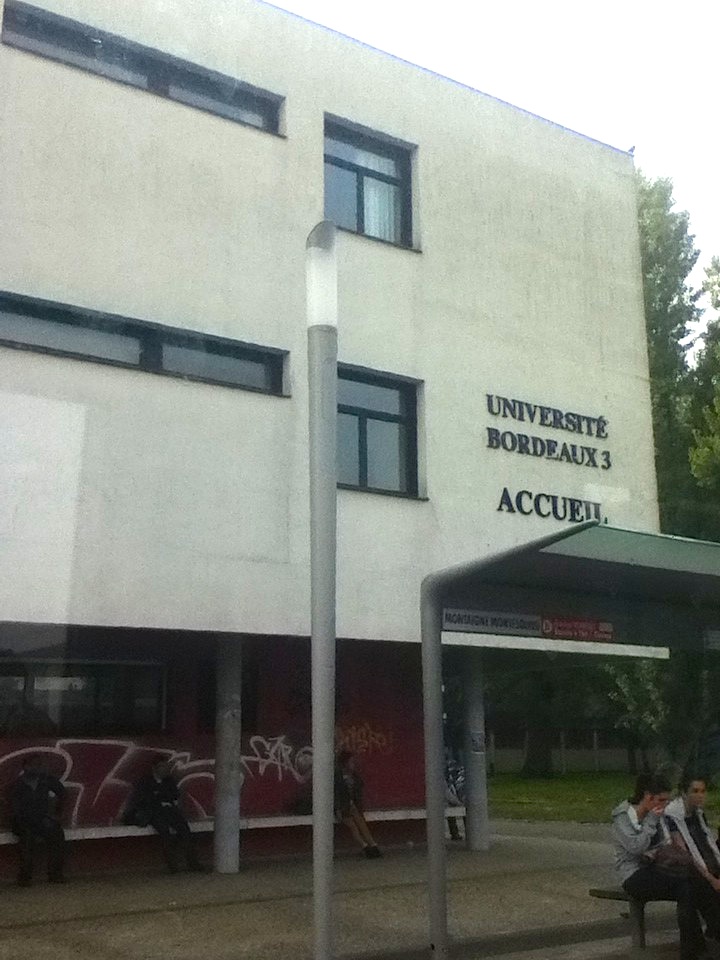
Midway, famed, wine-focused (and graffito-tagged) Bordeaux University passes us by:

Bordeaux University

They have some vineyards as well.

We get off the bus and hike, expecting suburbia to turn into farmland.

It doesn’t.  Just past a gas station and apartment we find this:

After the never-ending green fields of St-Émilion’s, we feel weird.  But even Bordeaux’s greatest Château is not immune to suburban sprawl.  Château Haut-Brion sits like an island of viticulture, city-bound like a high school football field.

allary-haut-brion-vineyard

Patchy.

We climb the sidewalk past painfully manicured and trellised vines.

Haut Brion Vine

Ratcheted vines

Gates bar me from nabbing grapes.  But then we reach the entrance:

This place matters.  Romans planted it.  It became the first British Claret as “Hobriono” in Charles’ II 1660 cellars.  The first tasting note of any Bordeaux, in any language, claims to have “drank a sort of French wine called Ho Bryen that hath a good and most particular taste I never met with” (1663, Pepys).  The Brits absorbed it.  Philosophers Locke and Hegel loved it.  It was the first Bordeaux shipped to the US, thanks to Jefferson, who called it “the very best Bourdeaux wine. It is of the vineyard of Obrion, one of the four established as the very best.”

Even with a few lulls and ownership shuffles, Haut-Brion maintained its top quality and price.  But we’re too sick to try it today (and Haut-Brion doesn’t do tours).

Aaron Haut-Brion

Waiting for my glass…may take a while.

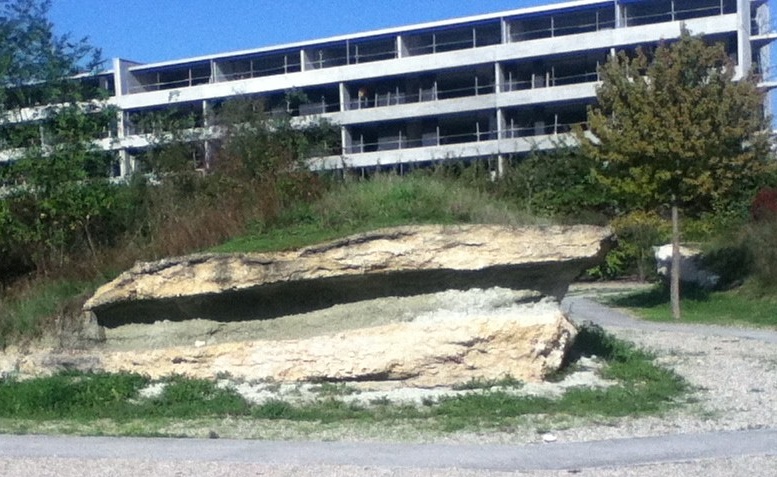
So we bus back to Bordeaux, cross the Garonne River, and go to their botanical gardens.  Of course didactic garden paths wrap past islands that feature vine-related stratigraphy:

ChalkStratigraphy

Kids love chalk!

Sick, but undeterred, we walk three miles back into town and visit Bordeaux’s History museum.

BordeauxMuseum

Not fun in the rain!

Past the reconstructed huts and Gaulish weapons, we find 2,000 year old grape vines and seeds:

RomanVinesPips

Julius Caesar stopped by while these were growing.

I told you Romans had vines in Haut Brion.  Then upstairs we find massive wine equipment from Bordeaux’s 1850s, pre-phyloxera hey day:

Completely oversaturated, we grab dinner and head home.  Then something fantastic happens…

Next Monday we head south to Toulouse, value red wines, and later on to Andorra.
Posted in Uncategorized | Tagged , , , , , , , , | 4 Comments