I stare hard at the grocery wine aisle in Dublin’s Marks & Spencer.
What looks weird, new, cheap but decent? I spot a French bottle. Good. Peyres de Loubert makes it. Good. The funny guy hefting a barrel on the copper foil means they produce independently. Good. It comes from Fronton, South West France, a value region with aspirations for greatness. Good. 2009 was a warm, solid vintage. Good. 13.5% alcohol show restraint for the South. Good. The grapes are Négrette. Wait…what?
Soon Madame Piaf’s shrill vibrato sings through my head, “Non, rein de rein. Non, je NEGRETTE rein”.
I decide to also “Negrette” nothing and buy it for $13 American.
Back in our homestay in Blackrock:
It looks clear, medium plus intense purple ruby in color, with a short clear rim and deep core.
The aromas smell of medium intense bacon and beef jerky, Brett, mint, old oak, cracked black pepper, and those burnt fruit bits you find on the edge of blackberry pie.
The palate feels dry, with medium acidity, medium plus chalky tannins, restrained 13.5% alcohol, and a medium plus body.
Medium intense flavors taste of dusty chalk, burnt earth, blackberry juice, apple juice, and dry pine wood. The length is medium. The verdict: good (3 of 5). Drink now or hold a few years.
This Négrette’s chalky tannins and hot climate fruit needs food. A baked potato fits it nicely.
The grape has fallen from fashion in France. Oidium and grey rot find it easily in wet climates like the Loire and ruin harvests. Only Fronton, California, and other hotter, drier climates with some continentality can pull it off. Its direct origins in sunny Cyprus as Mavro rootstock might explain this.
Either way, Peyres de Loubert have managed a solid, ageable, complex, meaty red for only $13. I Négrette nothing…except that pun probably.
Have you tried Négrette or other wines from Fronton? If so, let me know!
Buying groceries just got mindblowingly fantastic. At least at Whole Foods in Tigard.
Imagine a bewildering range of organic produce surrounds you. You had no clue seven varieties of heritage beans came in bulk. Strangers do not usually offer you freshly seared local, free range salmon. Native, all natural dish soap never had its own tasting table.
You need a break.
Well, why not a beer?
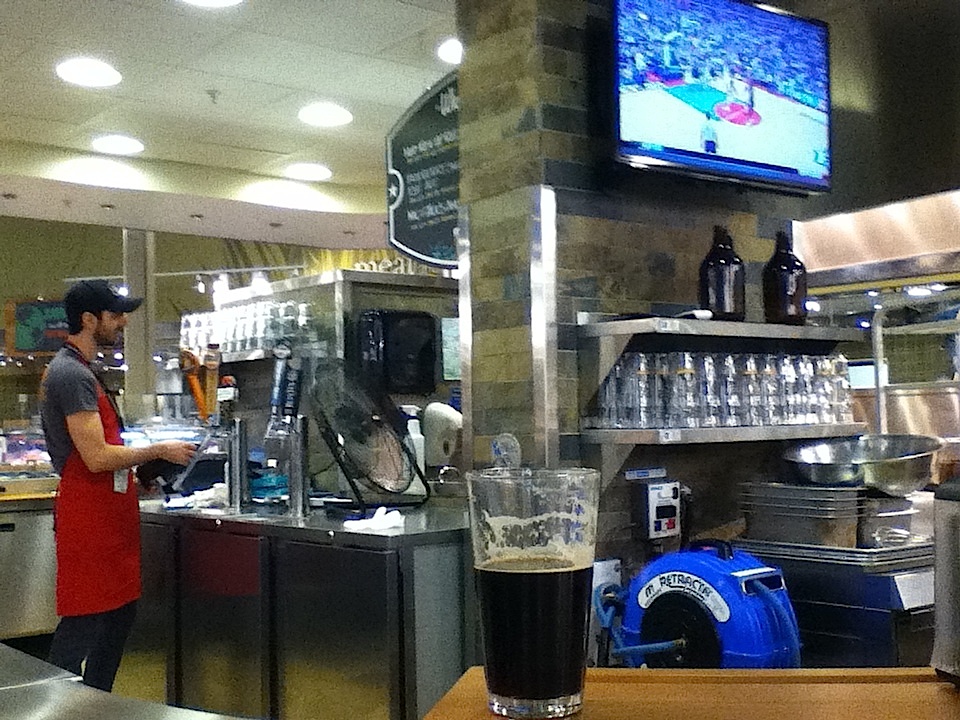
For $4 a pint, Whole Foods offers at least six microbrews on tap. We try local Worthy Brewing Company’s, Lights Out Stout:
YES.
As the photo implies, Lights Out is a dark ruby stout with cream colored lace. Its aromas fight against the salty waft from the fish department. But I tease out higher intensity dark chocolate, herbs and caramel.
Lights Out is dry but has a 7.7% alcoholic sweetness, enough acid, extra bitterness but nothing over-itchy, extra body.
Flavors taste pretty strong and fruity: with cherry, chocolate, herbal mint, menthol cigarette ash, and clove. The length lasts a very long while. This is very good black stuff (4 of 5). Enjoyable and balanced.
Since we just left California, how about Stone Brewing Co.‘s “Ruin Ten IPA”:
San Diego beer in a Portland glass…ironic.
The medium plus intensity amber red color and cream film looks gorgeous: like a sunset over hills of gluten free foods and naturopathic detergents. The aromas slay the fish stink and meat department with intense candied pomegranate, peach, and red grapefruit.
This cannot be dry. Average bitterness and acidity probably sit somewhere in that glass. However, the 10% alcohol kills normal palate function. The texture runs like heavy cream. The body is massive.
Once my brain catches up to my tongue, I taste intense sweet pomegranate, peach juice, candied everything, clove, and cinnamon. Length is medium plus. The quality ranks at very good (4 of 5). But ack! Ruin Ten cloys and panders to your sweet tooth. It’s too much to sip or chug. Simply overdone. Impressive but useless in the real world.
We watch a local fill his growler with Hard Cider. Beer gone, we get up.
Now we shop with a beer-induced glee. The Cage Free paper towels, Organic rat poison, and Free Trade kitty litter don’t scare us anymore.
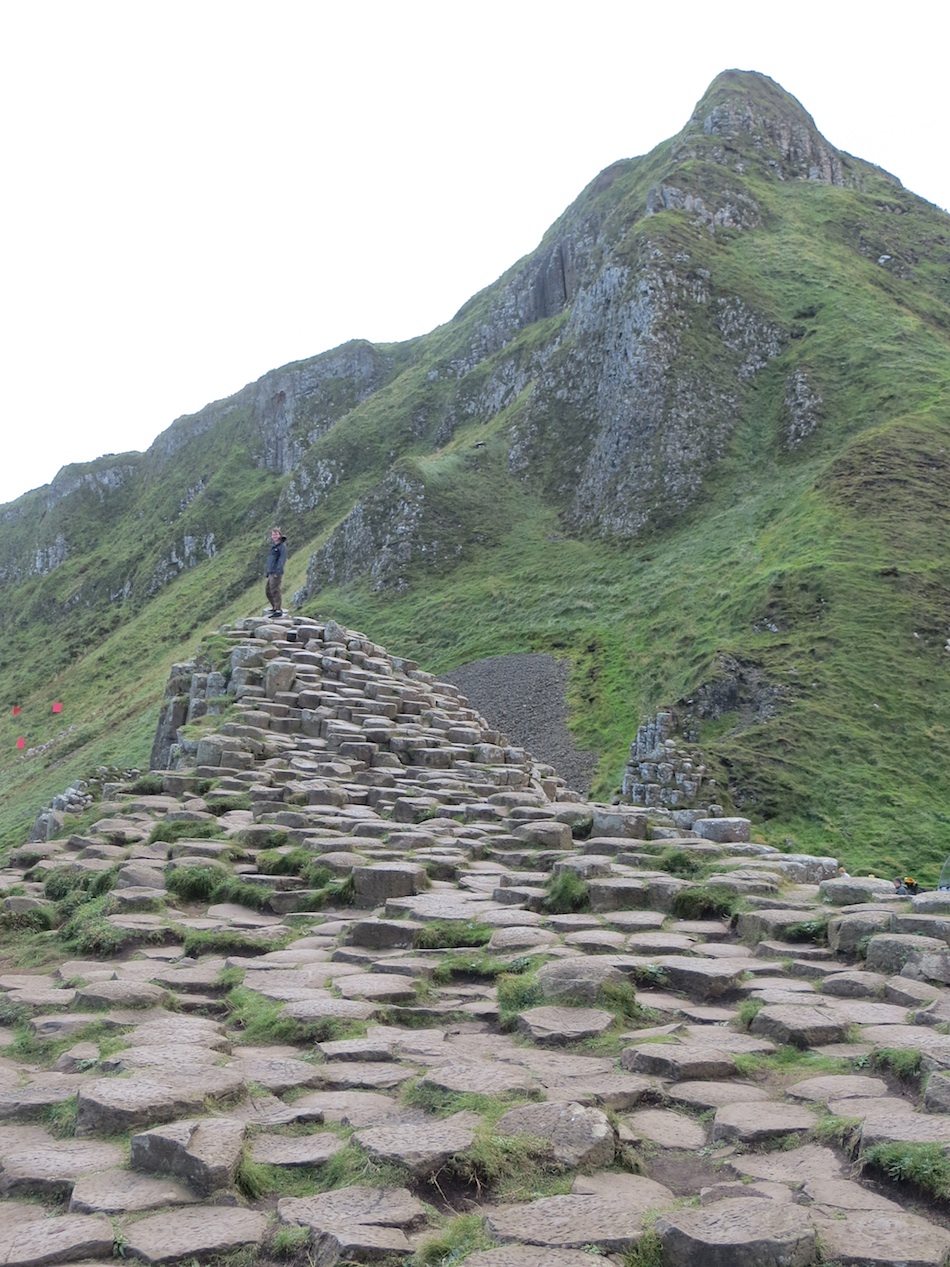
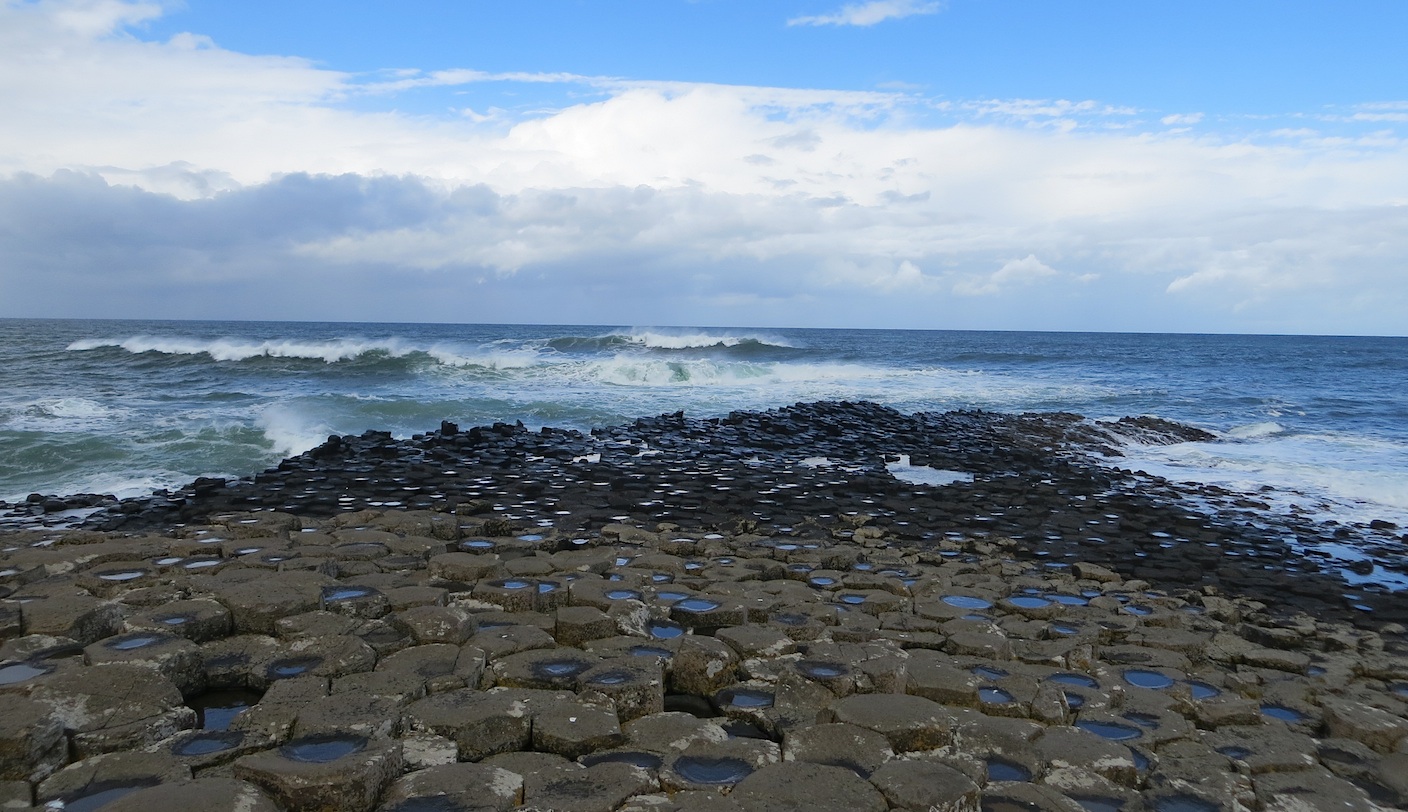
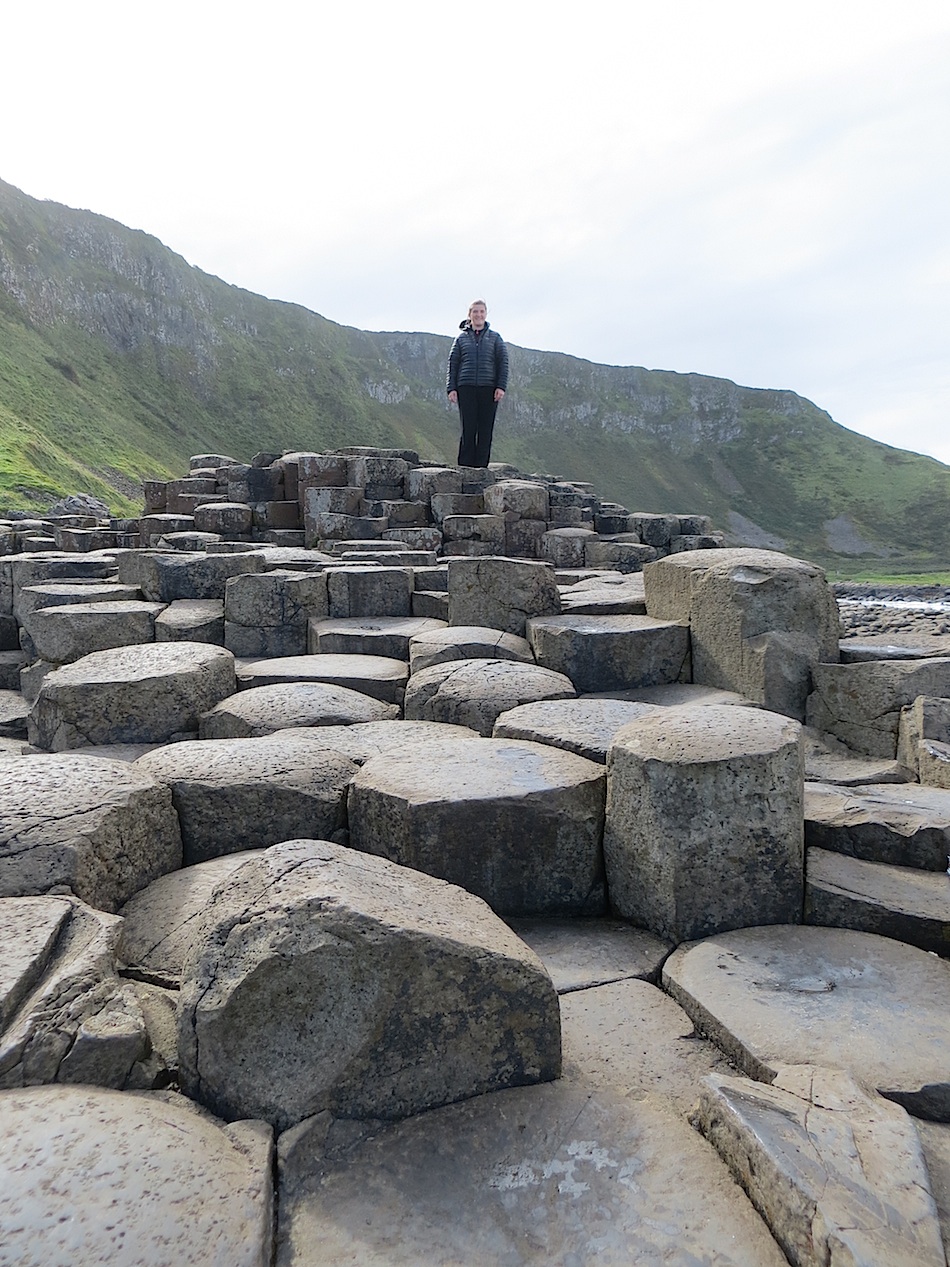
Our trip brings us to the Giant’s Causeway: a collection of basalt columns cutting into the sea.
Volcanic activity forced them up 50 million years ago. Then rapid cooling cracked them like dry mud into over 40,000 hexagonal pillars.
That speck would be me.
But legend claims that Irish giant Finn MacCool built this stone-stepped causeway across the North Channel to face Scottish giant Benandonner.
Scotland is that way.
Since we drank Scottish Laphroaig here in last week’s post, a trip to Bushmills seems an apt rival. Let’s see how Ireland’s giant stands up to Scotland’s peat monster.
Who needs a stair-master?
A day’s hike around the Causeway and cliffs wears us out. The next day, we skip its multi-million dollar visitor center. Instead, we follow the cliffs west and find a lovely bay:
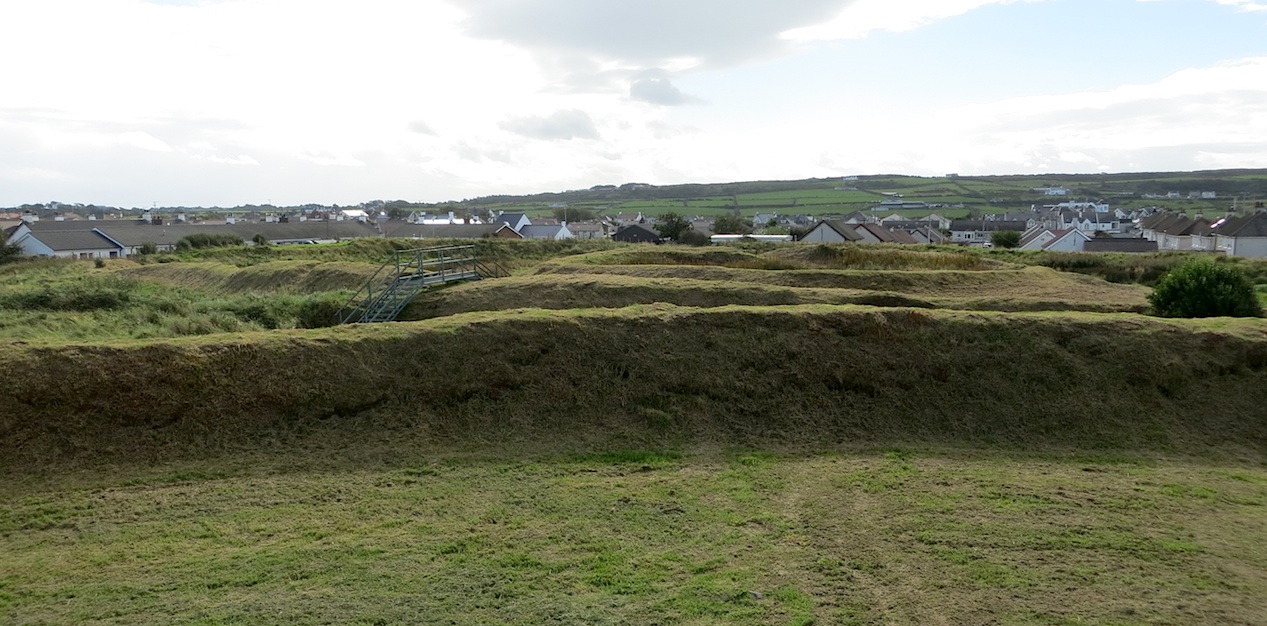
We climb the ancient, eirie, Lissanduff Earthworks that overlook the bay. Dating to post-2000 BCE, these provided a lookout, fort, temple, or water basin for rituals. Probably. Muddied and confused, we head inland.
Druidicness.
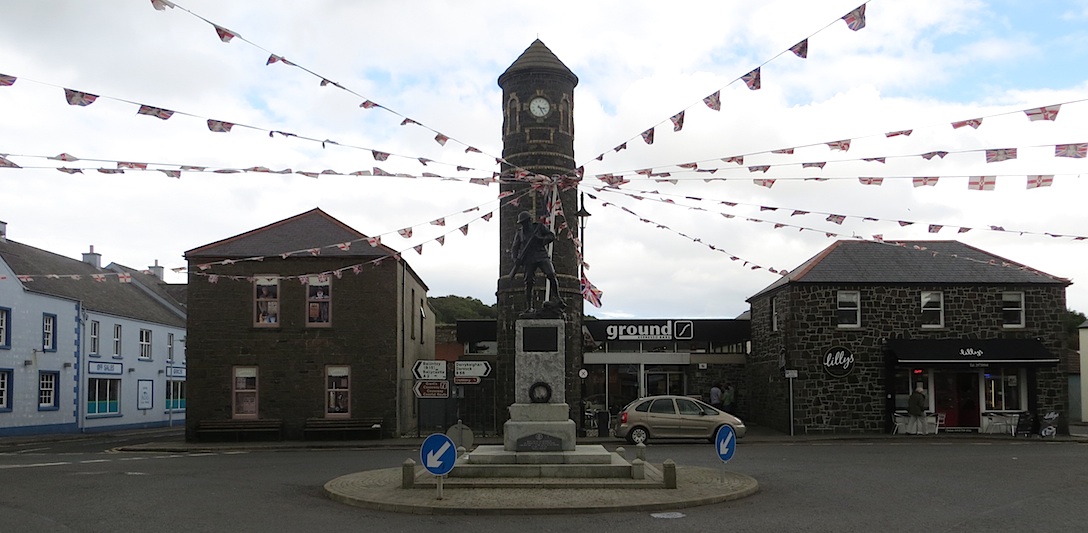
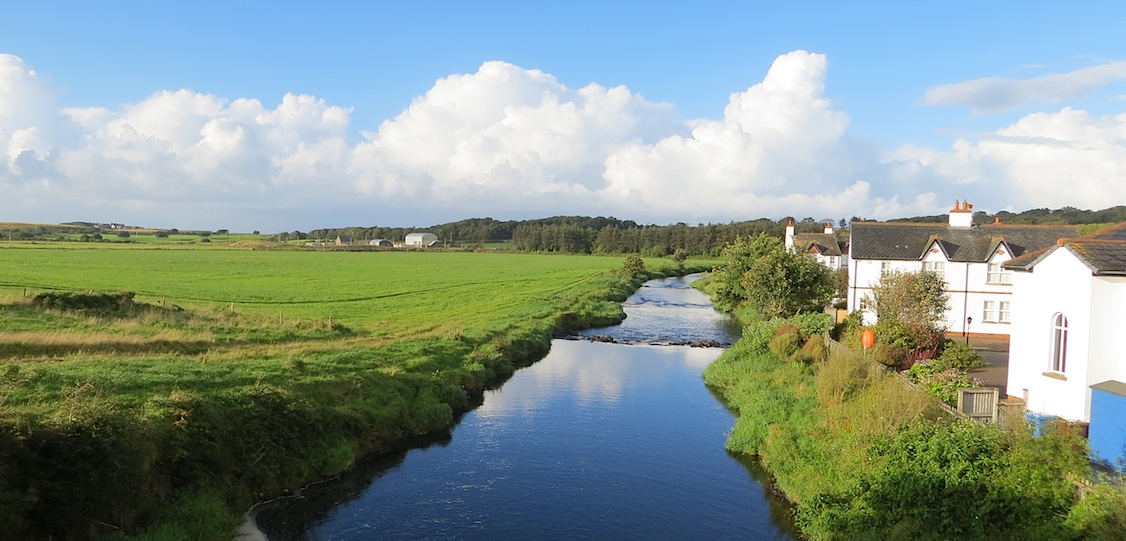
A half hour walk along the River Bush brings us to the town of Old Bushmills, in full Diamond Jubilee excitement…at least for Northern Ireland.
Look! Flags.
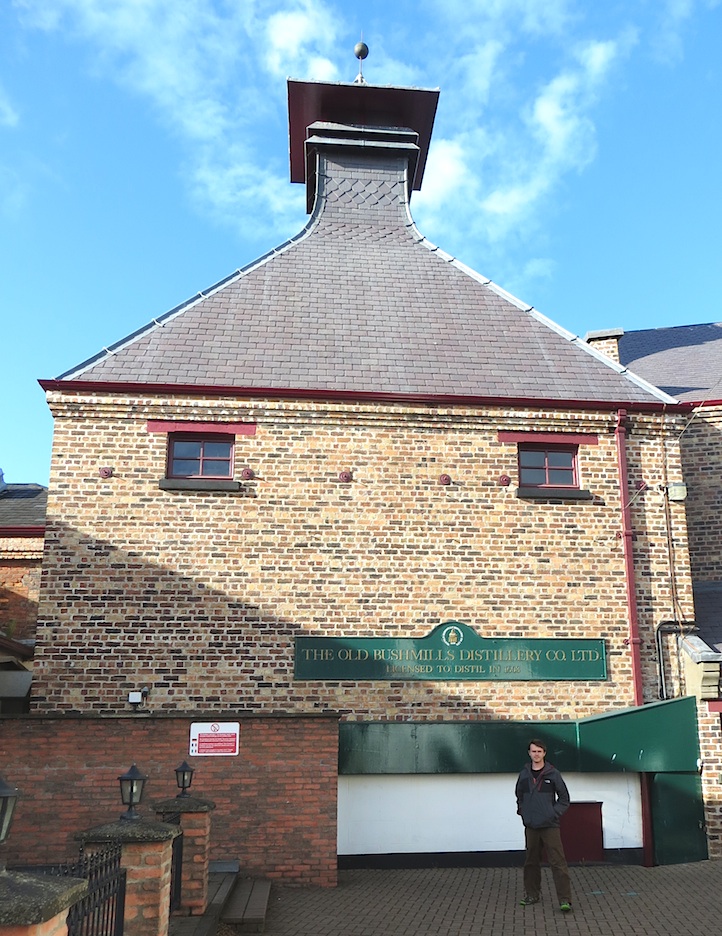
At the edge of suburbia we spot the distillery towers:
Backyard distillery.
We tour it with a handful of others (a fraction of the 120,000 annual visitors). No photos are allowed inside. So imagine a massive complex. A city of Whiskey. The Diageo empire has more than doubled production since taking over in 2005 to a million cases a year. Our visits to GlenDronach and Glen Garioch look quaint by comparison. Much has changed since James I licensed it in 1608.
Our young, bearded guide leads us from gaping barn to barn. Huge new lauter mash tuns lead to a room latticed above and below with a rainbow of pipes. More bearded men buzz about. Four wash stills, and five spirit still tanks surround us, feeding clear, colorless spirit into the windowed safe. Mr Master Distiller sits next to the gurgling safe, in his office chair, checking computer screens.
With the sun out we head to the cavernous, new, barrel warehouse. Stacks of black barrels loom three stories above us. We smell a musty range of used and new Bourbon and Sherry barrels. You pay more for this oak time.
Then we walk through the gleaming steel levels of the bottling warehouse. It clinks and churns with precision. All Bushmills gets made and bottled here, in addition to Diageo’s many other spirited products.
These bearded, well-oiled operations never stop. Diageo runs Bushmills seven days a week.
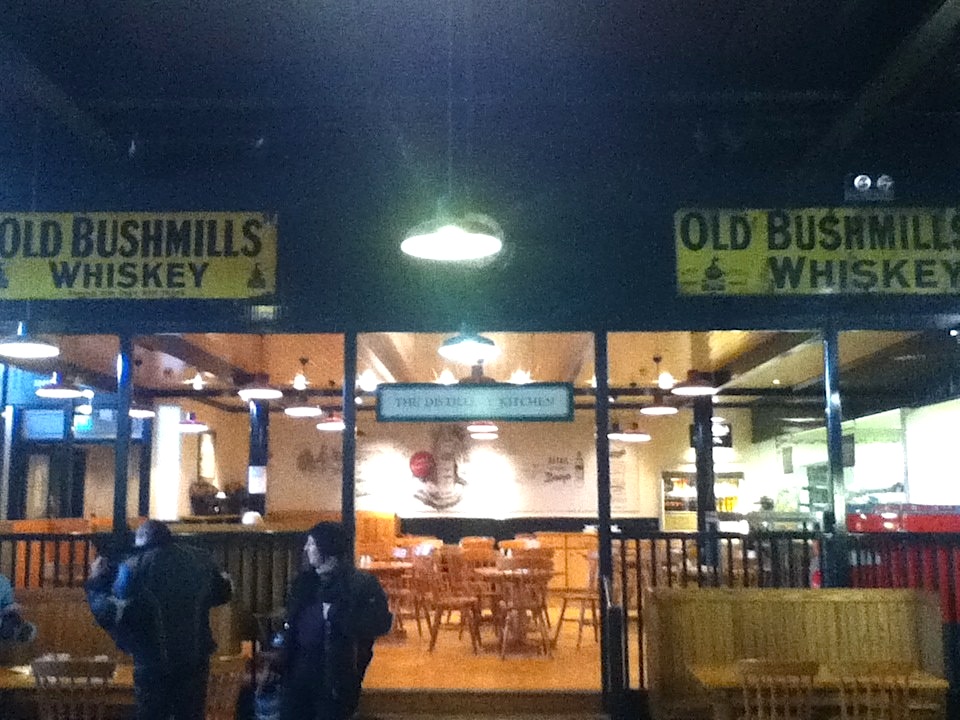
With the overwhelming over, our guide drops us off in another warehouse, marginally disguised as an Irish pub.
It shows off a translucent, pale gold. Aromas of vanilla, orange and lemon rind, and pale honey present themselves casually. The body is very round, with a creamy texture thanks to Irish Whiskey‘s tradition of triple distillation (one more than Scotch), which cuts out volatility.
Enjoyably soft flavors of fresh orange, cardamon, mild honey come up front and carry through the slight salted, bitter cigarette, and vegetal finish. The length is average. Bushmills’ 10 Year is an easy dram, with some complexity, little intensity, and balance. I rank it a well made, if simple, good (3 of 5).
BUSHMILLS 12 YEAR:
A richer amber gold color here. Mellow aromas of figs, caramel, toffeed apple. Not much acidity or tannin, but an extra tick of alcohol (at 46%) makes this weightier and more viscous.
Flavors are expectedly more assertive, with figs, turkish delight, dried raisin again, and slight salty, cracked pepper finish, which last for medium plus length. You pay more you get more. Very good (4 out of 5).
Want!
Bushmills’ 10 and 12 feel extremely smooth because of the Irish penchant for distilling an extra time than the Scots. However, their Whiskey loses its primary flavors (beer, barley, yeast) -that complexity in Scotch- and has to compensate with oak. Bushmills’ 10 suffers because of this. It tastes bland, whereas the 12’s extra two years of barrel time make a notable difference.
Back into the sun.
We leave Diageo’s Whisky empire. It is getting late. We realize we have at least an hour hike to our hostel on the Causeway. An impromptu dinner of bramble berries commences as we walk along the lazy River Bush: source of the distillery’s greatness.
Not a bad day.
In sum: Bushmills’s giant and Laphroaig’s peat monster are wholly different drinks. Although only separated by a sea, their styles and goals differ immensely. This diversity makes Whisk(e)y more than a mixer, but something to explore.
100% Macabeo, aka Macabeu, aka Viura (a player in the classic Cava triumvirate, alongside xarel-lo, perellada). Never tried it as a single varietal Brut. Rare for Spain. Tasted non-blind without food. Let’s see:
It looks clear, with a medium minus lemon, edging on gold, color, that runs to the edge. Noisy fizz looks medium plus in size.
Medium intensity aromas evoke Wonderbread, clay, matcha green tea. The palate is near dry but curiously fruity (warm Requena local? The Macabeo grape?), acidity is medium (Requena is more inland, warmer, makes sense), alcohol: an easy 12%, the medium body is fattier then expected. Noninvasive, medium intensity flavors recall ripe green melon, grass, matcha green tea powder, finishing with vanilla and baker’s yeast. Medium length. Solidly good (3 of 5). Brilliant on sale for $7.99 at Fred Meyer.
This expression of Macabeo reminds me of unoaked chardonnay from a clearly warm spot… like Requena, Spain. The powdery, yeasty autolytics show of some patient bottle aging time. Clearly no Cavas are alike. Spain’s Cava regions should keep applying for definition.
Nice to revisit a region via stateside bottle that our bus from Madrid to Valencia cruised through last year.
Medium intense gold, white rim, minute fizz. Moderate aromas of orange juice, cassis or dark berry, flan. Snappy acidity, some bitterness, average medium body. Amped up flavors of tart fresh squeezed orange juice with pulp, clove, grassy hops, cream. Long length. Very good.











 WAYWARD WINE