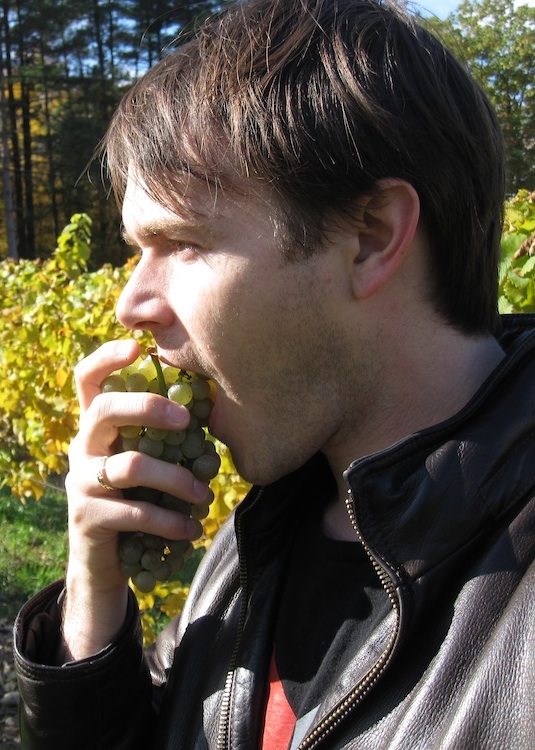
Headaches

If wine gives you a headache, it’s probably all in your head.

First off, I’m not a doctor. I just sell wine. Yet more customers want me to diagnose their wine-related brain freeze than anything other question.

Secondly, you’re not a doctor either (unless you are…but keep reading).

SOCIETY

Over-drinking is frowned upon in America. No one wants to look like a lush for getting hungover. So we blame a rare disease, allergy or chemical we find online or hear from a friend.

Conversely, some of your friends claim to get headaches from wine. Especially reds. They get attention. Your subconscious wants to be special too. And you don’t really like red wine to begin with. So you start worrying about that first glass. And surprise, you get headaches from wines you aren’t accustomed to.

Being special is cool. But diagnosing yourself or psychosomatically triggering reactions in order to fit in or stand out will cut you off from the adventure of wine. You will dogmatically cling to pinot grigio because it was safe (and cyclically, you already like it). But that’s like only ordering the steak at every restaurant for breakfast, lunch, dinner and dessert. You might get bored (or have a heart attack, whichever comes first).

SULFITES

Sulfites are the most cited scapegoat I encounter. Rarely a day passes without a customer blaming them for headaches. Rumor has kept this myth circling ever since the first “contains sulfites” warning graced bottle labels in 1986. But less than 5% of the population is actually allergic to sulfites. Usually, they are asthmatics or sufferers of sulphite oxidase deficiency (because they lack enzymes like molybdenum to break it down). Symptoms include: throat closure, stomach pain or hives. Not headaches.

Do you react to dried fruits? Pickles? Eggs? Bread? Broccoli? There are roughly 100 times more sulfites in that single broccoli serving than in a whole bottle of red wine. If you don’t get hives, stomach aches or throat closures from these, you’re probably not allergic. Try it. (Still not sure? Only during an attack can a doctor test for the allergy. If you have it,talk to your doctor about taking molybdenum suppliments).

All wines, organic, biodynamic, European and homemade contain sulfites. Yeasts produce them during fermentation (5-20 parts per million) and nearly all winemakers add them (roughly 10 ppm). But it’s never much. Even your body makes a thousand milligrams a day, which is 125 times as great as most winemakers add, regardless of country. But white wine doesn’t give you a problem you say? There is more sulfite in white than red because the former lack tannins to stay shelf stable. Without our friend sulfur dioxide (SO2) we would drink vinegar. So your headache isn’t over sulfites.

SOLUTIONS

When does you head hurt? Immediately after that first glass, a few hours later, or the next morning?

If that first glass hits your head like a bag of bricks and it’s red or chardonnay, biogenic amines might be why. These include histamines and tyramines that can inflame neurons, increase blood pressure, and yes, cause headaches in roughly 30% of the population. But only 30%. Malolactic fermentation, if too slow, creates these bioamines as a biproduct of present amino acids, while lactic acid bacteria are busy converting malic acid into the softer lactic.

N.B. [Dr. Hennie van Vuuren of the University of British Columbia had created the yeast ML01, which just got approval for use in the US and Canada. Supposedly, this panacea yeast doesn’t drag its feet, converting acids in a timely manner to avoid making biogenic amines.

However, if wineries appease the aching market with one yeast, all wine will taste the same. Each yeast strain makes a different wine. Some enhance fruit esters, other emphasize gamey notes. Using one for everything is like wearing the same flip flops for hiking, running, walking and sitting: sure flip flops will work, but there are better ways.]

If wine crushes your head hours or the morning after: you’re normal and that’s a hangover.

Drink less, drink slower, enhance it with food, friends and conversation, have a glass of water or barring that, an aspirin. Wine is not beer. The alcohol is nearly twice. Drinking it on its own will dehydrate you. The tannins in reds and oaked aged wines will do the same.

Science strives to better understand our bodies and so should you. Keep reading articles and don’t trust them at face value. Your body is amazingly adaptable and it will love new wines with enough familiarity. Just because something tasted nasty at first doesn’t mean you are genetically indisposed to it.

What I say above may be proven wrong tomorrow. But a little patience and attention to your body’s reactions will enhance each wine encounter and, I hope, keep your head from leaving your body. In the meantime, stop worrying and try something new.

Sources:

http://www.winespectator.com/webfeature/show/id/44563

http://www.winespectator.com/webfeature/show/id/44316

http://www.intowine.com/sulfur-wine-demystified

http://www.winespectator.com/drvinny/show/id/5517

http://waterhouse.ucdavis.edu/winecomp/so2.htm

http://www.canada.com/montrealgazette/news/weekendlife/story.html?id=5a384231-28a6-4dd1-bcbc-f692baeaac1f

http://www.thekitchn.com/thekitchn/wine/sulfites-in-wine-necessary-or-not–100878

http://www.frenchscout.com/organic-wines#sulfites

http://www.inchem.org/documents/jecfa/jecmono/v042je06.htm

http://goosecross.com/2009/06/sulfites-and-wine/

Posted in TOOLS TOYS & TIPS | Tagged , , , , , , , , , , , , , , , | 1 Comment

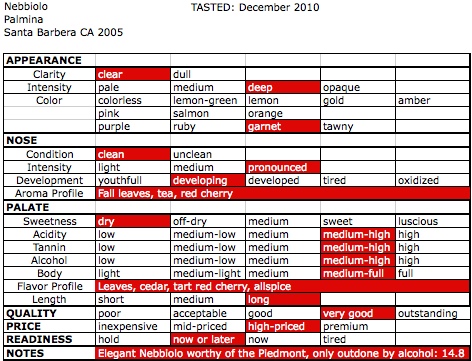
Nebbiolo, Palmina, Santa Barbara County CA 2005

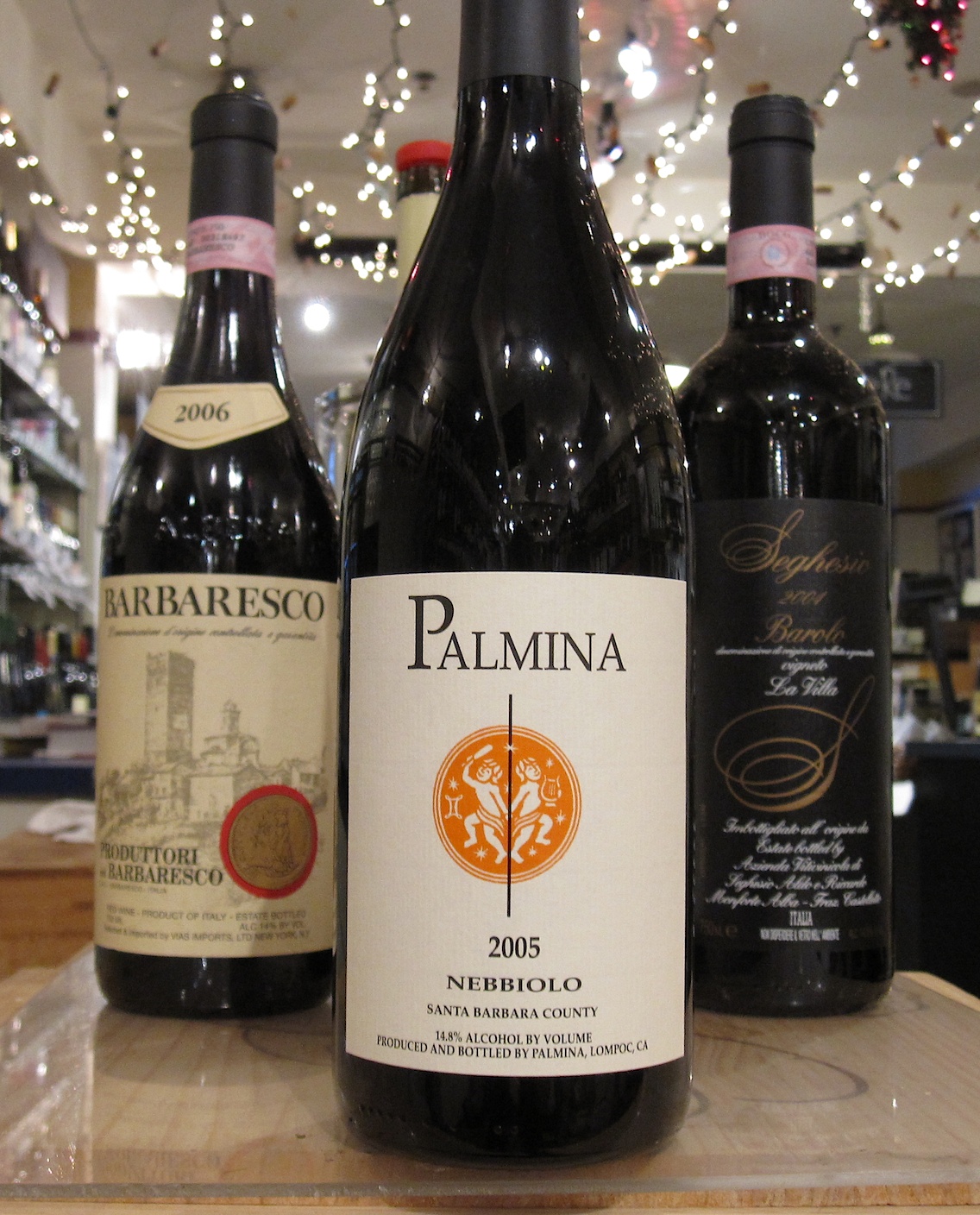
Palmina‘s nebbiolo will enchant you into almost believing it is Italian. Steve and Chrystal Clifton manage this finicky Piedmontese grape in Santa Barbara with a deft touch.

If you’ve drunk Barbaresco or Barolo, you know nebbiolo. The two communes in northwestern Italy have sought fame from this often tannic, intense, age-worthy black grape. In the hands and large casks of producers like Aldo Vacca of Produttori del Barbaresco, nebbiolo can tug at your nose with violet, rose, and berry, while challenging your palate with truffle, cherry and amaretto.

Palmina’s wine is firmly Californian. Its ripeness, deep color and alcohol reflect the climatic extremes of Santa Barbara. Sure they get morning fog like the Piedmont, which slows ripening. But it burns off far faster from the inland desert, which Italy lacks.

The coast and methods, however, ensure that this wine remains balanced. The Cliftons’ age their wine three years in large upright casks (grandi botti) of 3,500-7000 liters. This Italianate restraint lets the fruit do the talking and balks at Californian reliance on small barrels that infuse and concentrate many wines beyond recognition.

The walls of acidity and tannin will guide you through most meat and mushroom dishes (or a mild gorgonzola).  While the viscous sweetness of the alcohol (molasses?) and ripe fruit (tart red cherry) fill its walls with pleasure. Characteristic fall leaf and cedar spice provide decoration for this Italian villa on California’s coast.

In good company

Sources:

www.palminawines.com

Produttori del Barbaresco:

http://learnitalianwines.wordpress.com

Interview with Aldo Vacca

Posted in Nebbiolo, Red | Tagged , , , , , , , , , | 2 Comments

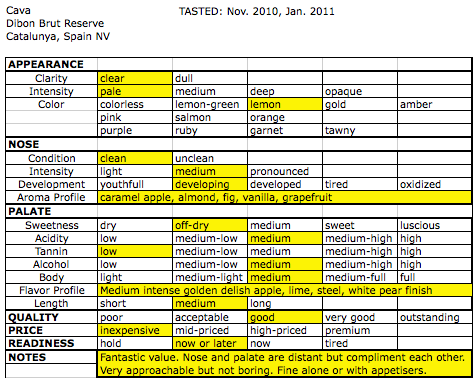
Cava, Dibon Brut Reserve, Catalunya, Spain NV

Drink this Cava. Agricola Dibon has overseen an amusing sparkler that outpaces its price ($9-11) in quality. This sparkling wine comes from Vilafranca del Penedes: Spain’s sparkling homeland of Catalonia in the northeast. Their 75 hectares of trellised vines are organically tended to, sitting a mere 1,000 feet from the Mediterranean Sea. Their vineyard grows the three major grapes used in most Spanish sparkling wine: Macabeo 45%, Parellada 30% and Xarel-lo 25%.

Only natural yeasts do the fermenting. Following Spanish restrictions for Cava, Dibon is aged for nine months to five years and sees a secondary fermentation in bottle, following Champagne’s lead. But Dibon is bottle fermented for only a month and a half. This short duration keeps the nose and palate fresh and fruit forward with minor autolytic richness (and also cuts cost).

Toast to the end of your work week with it, as the Spanish do (or weddings, birthdays or resetting your microwave). This is a great drink for the money, although you might want to pair some herb goat cheese, alfredo pasta and mildly prepared seafood appetizers; its acidity will catch up with you.

Posted in Cava | Tagged , , , , , , , , | 5 Comments

CORKING.ABOUT

Midnight nears. I have not packed for our trip. My wine rests in thirty bottles but they need closure, literally and figuratively.

Because I saved bottles, this vignoles venture will not see me experimenting with screw-caps. Although, I really really want to (because screw-caps provide a better seal…more on that later). Nonetheless, the remaining, sterile corks from my first wine kits can be forced into these variant necks.

Finally finished, I hide my bottles in a cold, dark corner of the apartment and go to bed.

A month from vine to bottle is rushing it. I had little choice with our vacation. I couldn’t leave my baby unsupervised.

But wine deserves time to settle. Especially after fools like me upend it with chemicals and fining agents. I doubted my poor temperature controls, oxygen removal and cleanliness. Technology makes these concerns secondary for wineries that can afford it. Being cheap and poor, I had to move quickly.

They grow up so fast.

The French creatively call a winemaker an éleveur. This name derives from élevage: to raise or bring up. Although hastily done, guiding my vignoles from the Finger Lakes to finish required the daily attentions of an obsessed parent.

Sure, I yelled when it sloshed during our road trips. Granted, I overdosed it with medicine, making it vomit on the floor. I then attempted a vegetarian diet on it with mixed results. Try as I might, I struggled to keep it cool and collected. Even a last ditch attempt to filter out bad influences may damage it forever

In the end, it probably could have raised itself. But without me, this vignoles would not reach its potential. Nor would it last. So I kept it away from bad influences. Like Chiron, this surrogate father showed Achilles his better self.

Now dad goes on vacation, trusting he has done enough and that his kid won’t wreck the carpet again.

Posted in OENOLOGICAL ODYSSEY, VIGNOLES VENTURING | Tagged , , , , , , , , , , , , , | 2 Comments

FILTERED.FINISH

A ten day vacation looms. The wine tank can’t come with me. It’s time to bottle it. That or turn our fridge into a cellar.

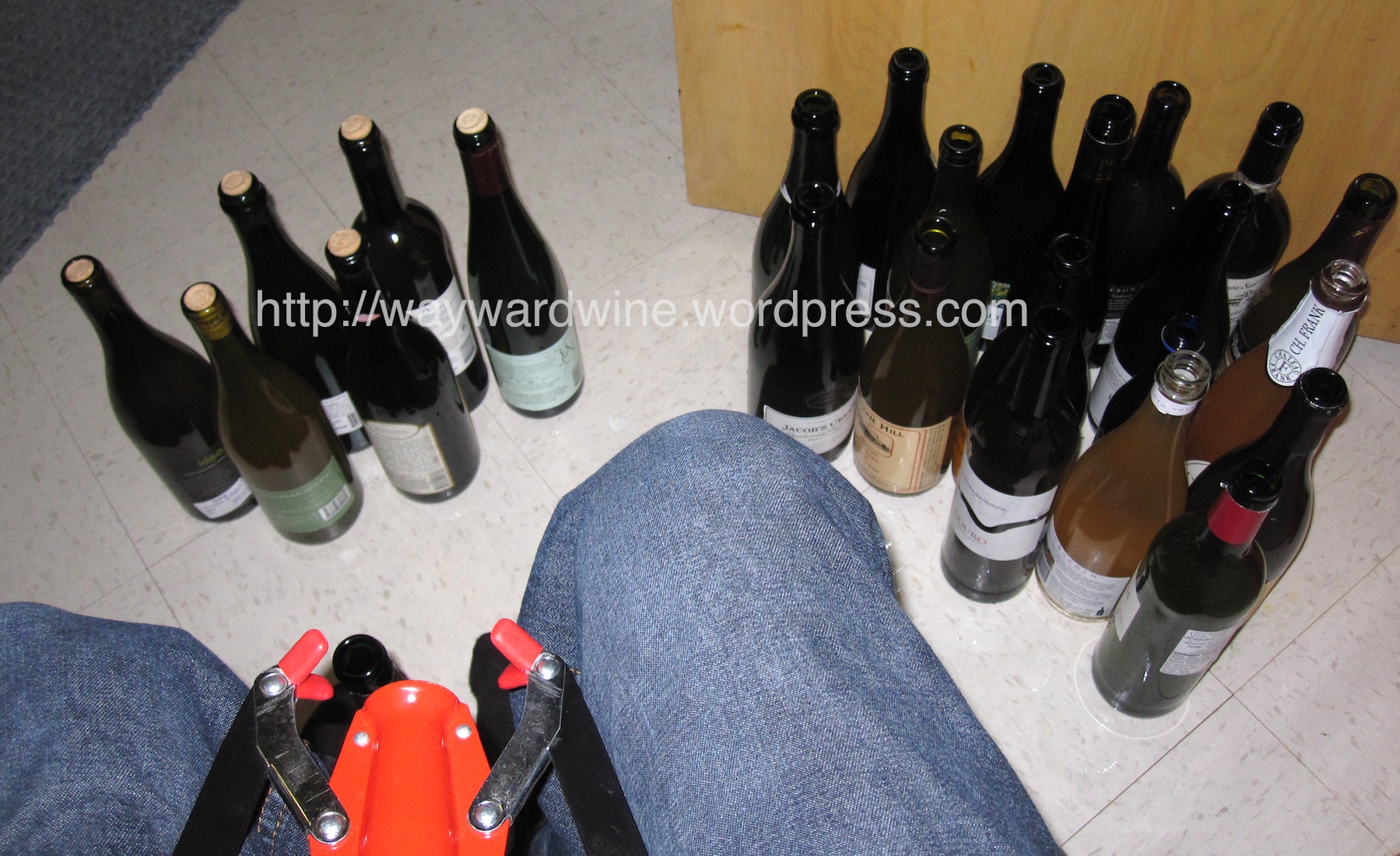
Bottling my first and second wines required crafty recycling. This would be no different. Once again, over thirty bottles have somehow, magically aggregated in our living room. But now they are dusty. Cue the bathtub wash scene:

I let my bottles dry.

To complete the pseudo-virtuous circle of modern wine manipulation, I open a box that holds my new filter. Made in South Essex, UK and shipped from Ohio, this filter would fit perfectly into Ed Wood alien invasions. Its two plastic saucers join and seal frames and a dense filter pad between them. Once assembled, I attach the tube to the wine, grab my camera and start the inevitable spiel:

The clamp’s click stops the flow, which makes it easy to move on to the following thirty bottles.

Once every bottle is full, I check the tank.

Ideally, the wine should have settled for a few more rackings. The two percentages of residual sugar are just begging to ferment if any yeast snuck in. If that makes a sparkling wine in the methode ancestrale, oh well. Ten days of vacation is too many. Achilles had to be shot in the heal. My wine had to meet bottle.

So, how did the filter fair?

Result.

One might wonder how the wine survived, after the filter removed so much sediment.

But it is nearing midnight. I have not packed for our trip. And I have yet to cork the bottles and put them away…

Posted in OENOLOGICAL ODYSSEY, VIGNOLES VENTURING | Tagged , , , , , , , , , , | 1 Comment