Another week, another red herring to distract from an unfinished post.
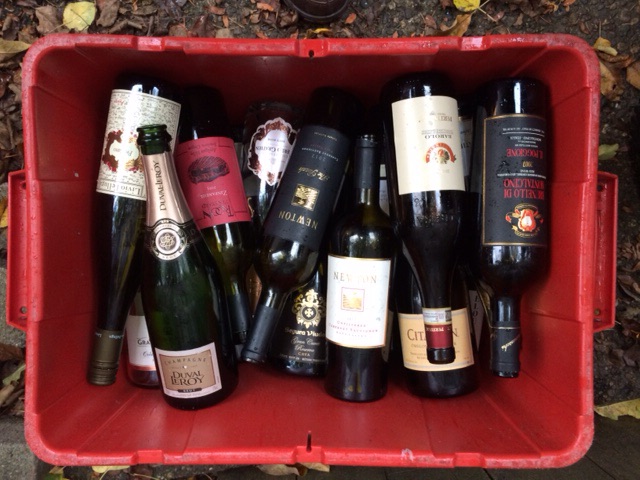
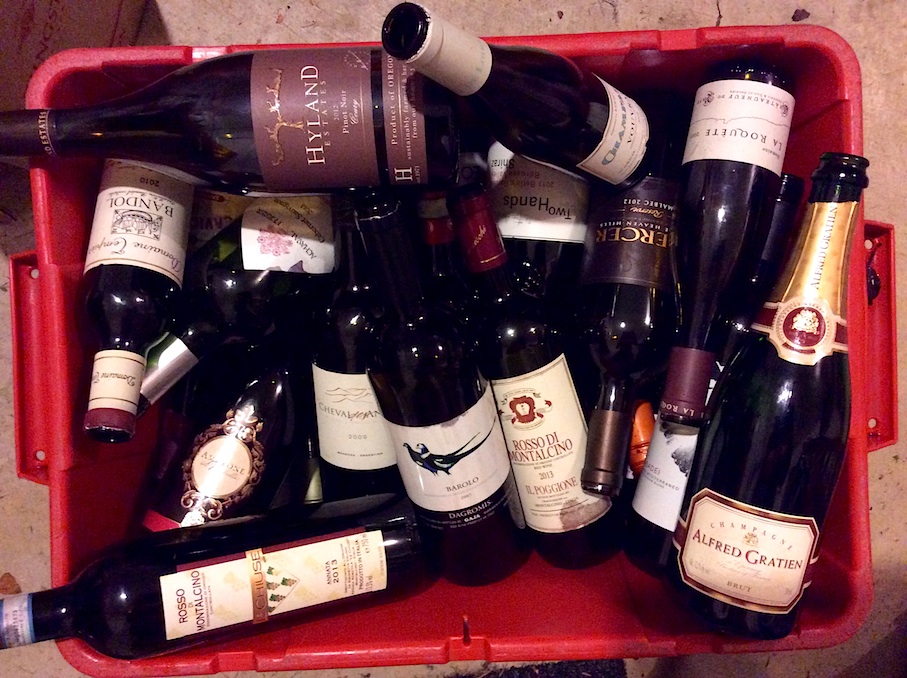
This turned out to be more expensive than expected, il Poggione Brunello 07 was earthy, balanced and gorgeous. Newton 2012 Puzzle outrageously costly, young, and overdone. Duval LeRoy perfectly balanced, toasty, and stylish. Livio Felluga’s Friulano plump, floral, perfect. Not a bad week
Yesterday, Wayward Wine visited Brussels Horta House, museums, streets, and beer. Today we catch a train and bus for 2.50 to Waterloo: site of Napoleon’s final battle (and catchy ABBA song).
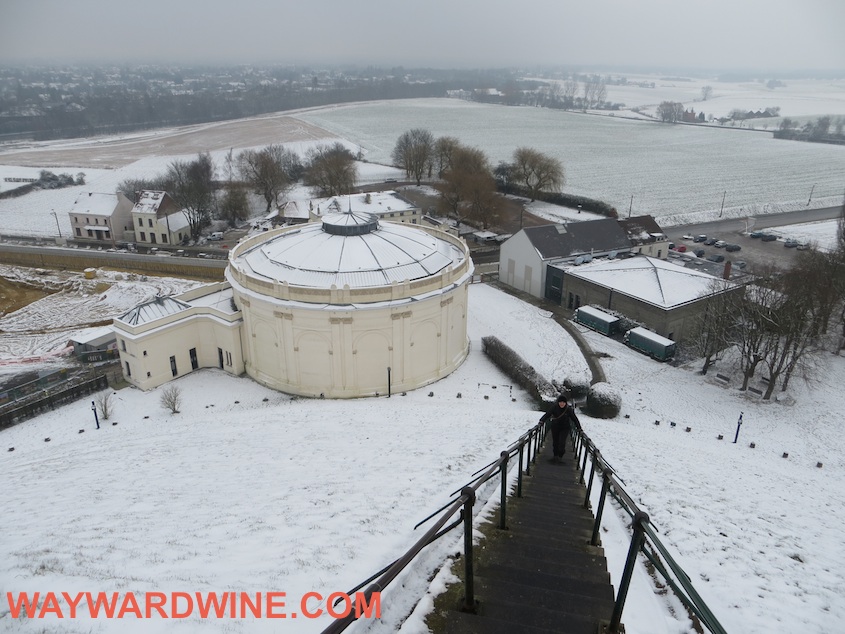
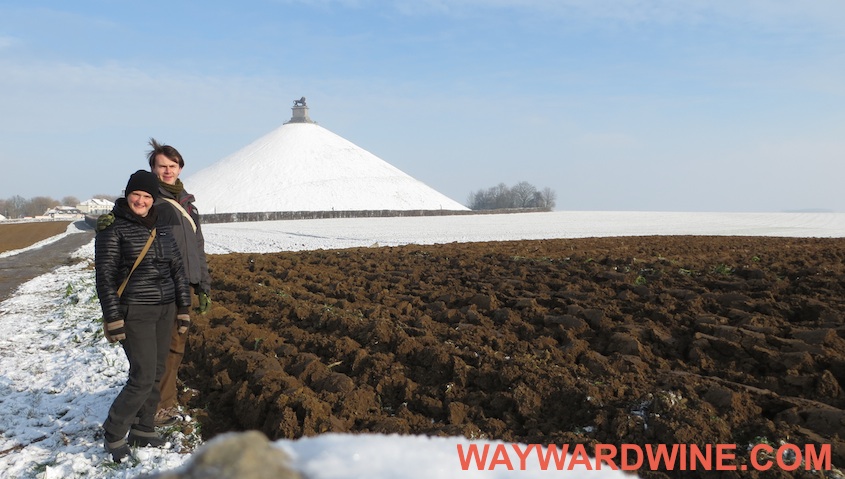
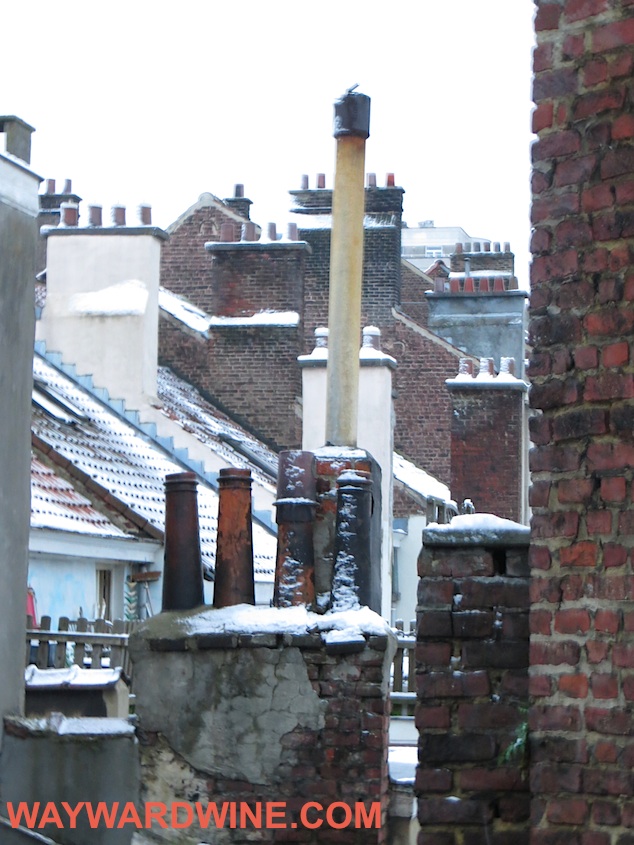
Past suburbs, snow falls on a grey world. The films inside the museum provide context, cheese, and needed warmth. Back outside, we find the human-made Lion’s Mound to injured William II of the Netherlands and, well, have to climb it, which knocks the wind out of us…
Cold, tired, yet sweaty we rest a bit up top and take in the end of an empire.
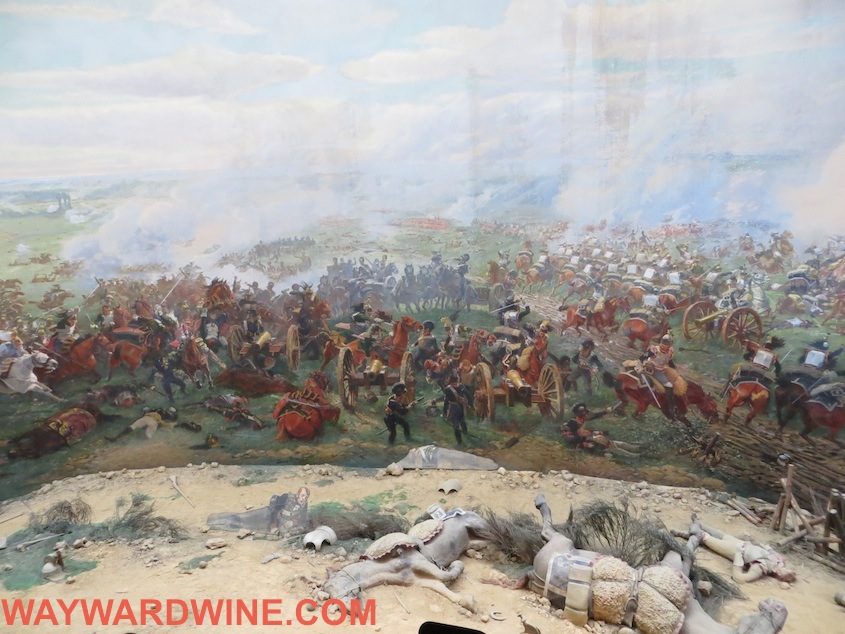
We warm up again in the Panorama Rotunda, which features an 100 year old painting of the battle:
With the sun peaking out, we decide to hike the entirety of the battlefield, of course.
Everything is quite, still, and silver. We freeze but find small monuments, the farm traded by each side, and a general sense of awe. Warming in the wax museum, we devour our pre-made cheese and avocado sandwiches.
A sense of finality sinks in. Napoleon’s demise reminds us that our adventure is nearing its end as well. 178 days of straight travel have worn us. This thing we felt we had to do has become both a delight and a chore.
We bus home and of course buy more beer. Belgium makes Kriek, a lambic sour beer made with cherries. So far Belgian beers have revolutionized our thoughts about beer, reaching heights only matched by wine and whiskey. But not all Krieks are the same.
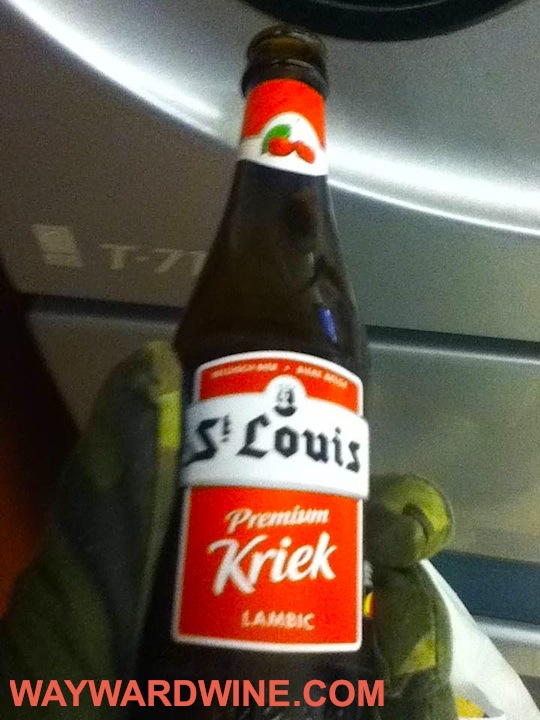
Castle Brewery Van Honsebrouck, St Louis Premium Kriek Lambic beer, Ingelmunster, Belgium. €1.09 33cl
St Louis is barely acceptable as a beverage (2 of 5). It is a hazy ruby, with pronounced black cherry aromas, a cloyingly sweet yet tart palate, pointless 3.2% alcohol and medium body. But worst are St Louis intense but disjointed flavors of stevia, 25% cherries, malted barly, and ugh mint.
We try three more:
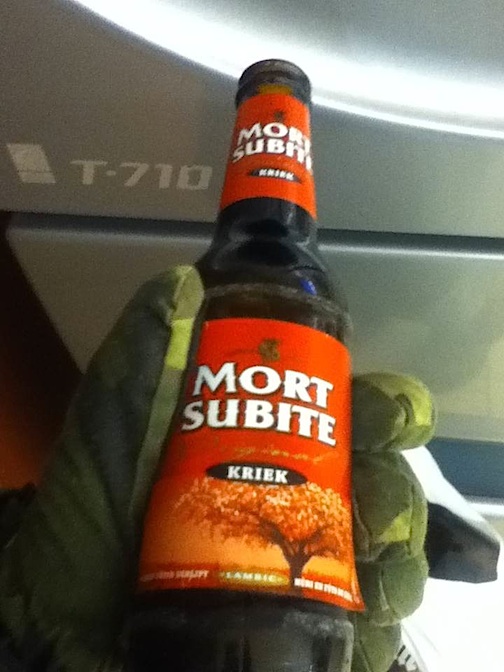
Mort Subite, Xtreme Kriek Lambic beer, Lierput, Belgium for €.92 25cl is tart, frothy, and tastes of fake cherry popsicles, but better than St Louis: good (3 of 5).
Belle-Vue Kriek Classsique, industrielaan 21 Brussels, Belgium. €.92 (price fixing) 33cl Smells of cherry jam on hot wheat bread toast, and yeast. The drier palate is sadly flat and too alcoholic. Flavors of toasted wheat bread with tart peach jam make this taste like beer with dried cherry bits infused. Medium length, good (3 of 5).
The most bare-able was Mort Subite, Original Kriek Lambic beer. Lierput, Belgium. €.92 (again?) 25cl:
Clear, garnet-colored, with intense aromas of cherry fig neuton bar and vanilla. Mildly sweet, tart, with medium plus flavors of oatmeal cookie with dried cherry, Medium length. Good (3 of 5).
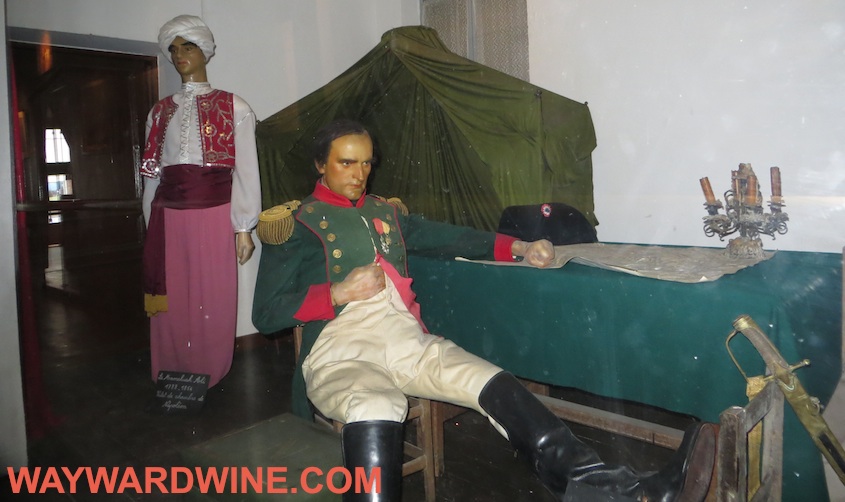
Since all Krieks cost €.92, we imagine some price fixing and low standards have collided to waste our palates and evening. Maybe, sour cherry beer is a taste we need to acquire. Nontheless, we cannot leave Brussels as disappointed as a sad wax Napoleon:
Luckily, god is with us. Enter the Trappist breweries:
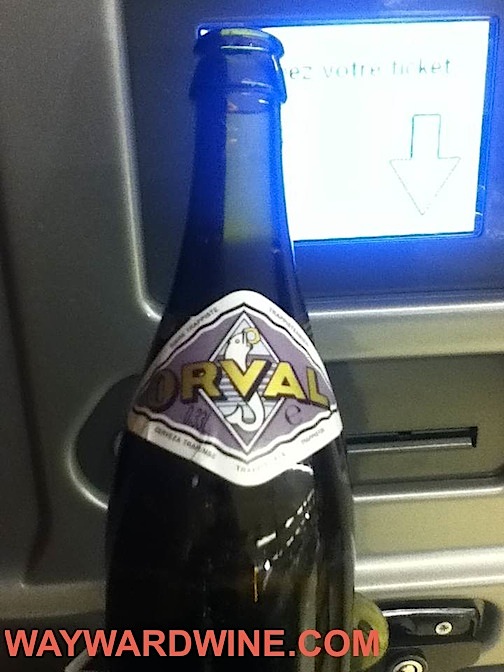
Trappist Brasserie D’Orval is famed for making one beer that uses wild yeast Brettanomyces lambicus. This yeast makes earthy, sweaty magic of French wines like Cote Rotie. Let’s see how it works.
€1.42 / 33cl APPEARANCE: a hazy, medium intense amber brown, with a cm high, off white head. AROMAS: smell like a clean but powerful white wine (Chablis?) vanilla and musk perfume, quality balsamic, hops, and honey. PALATE: feels dry, with high acidity, a medium hoppy bitterness thanks to three weeks of dry hopping, medium plus alcohol 6.2%, medium body. FLAVORS: taste of white wine, lemony hops, green grass, and raw cocoa nut that last a medium plus length.
Orval is outstanding beer (5 of 5) but very needy of food (luckily we come armed with local cheese).
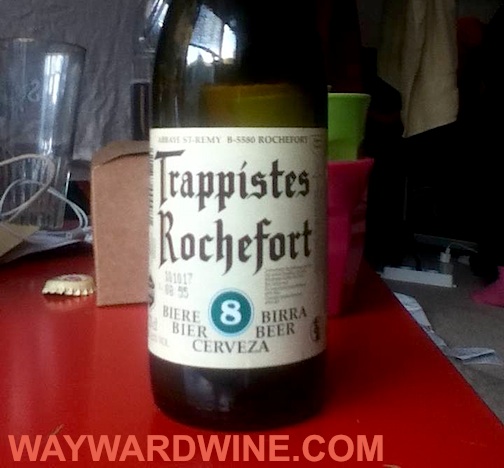
APPEARANCE: looks a hazy, medium plus brown, with light cream head. AROMAS: smell pronounced and of dried violets, vanilla syrup, raisins, and brown, malted bread. PALATE: feels dry, with medium plus acid, medium tannin, high alcohol 9.2%, and a medium body (thanks to alcohol). FLAVORS: taste pretty present with buttered brown bread toast, creme caramel, vanilla, Whisky, and a bit of hoppy leafiness. Long. Outstanding (5 of 5). Rochefort’s 8 is a smooth, easy drink.
Next their # 10 (not the most creative name) Trappistes Rochefort, 10 Biere, Abbaye St-Remy, Belgium. €2.09 33cl APPEARANCE: is an opaque, pronounced brown, with a cm cream-colored head. AROMAS: smell of pronounced caramelized pear, vanilla bean, and café mocha. PALATE: there is sweetness but medium plus acidity and tannin tackle that. The high 11.3% alcohol goes straight for the ears, making a full bodied, fat, full texture. FLAVORS: taste intensely of caramelized plantains, chocolate, heavy cream, slate minerality, and rye bread. #10 is long, outstanding beer (5 of 5) that manages to be intense yet soft, even inviting.
Napoleon may have not lasted long in Belgium. But we already regret that we must keep moving. The beer is a revelation. Any wine drinker who turns their nose up at it is missing out.
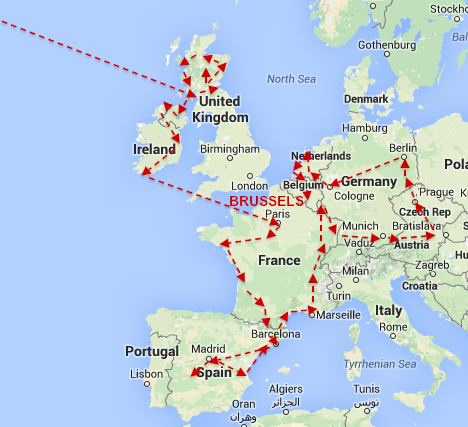
176 days of continuous trekking through Europe’s wineries, breweries, and distilleries finds Wayward Wine in Brussels. Antwerp brought a brilliant brewery and Rubens, in our last post (reread here). But for the next three days, we stay in a loft with a young Italian and French couple.
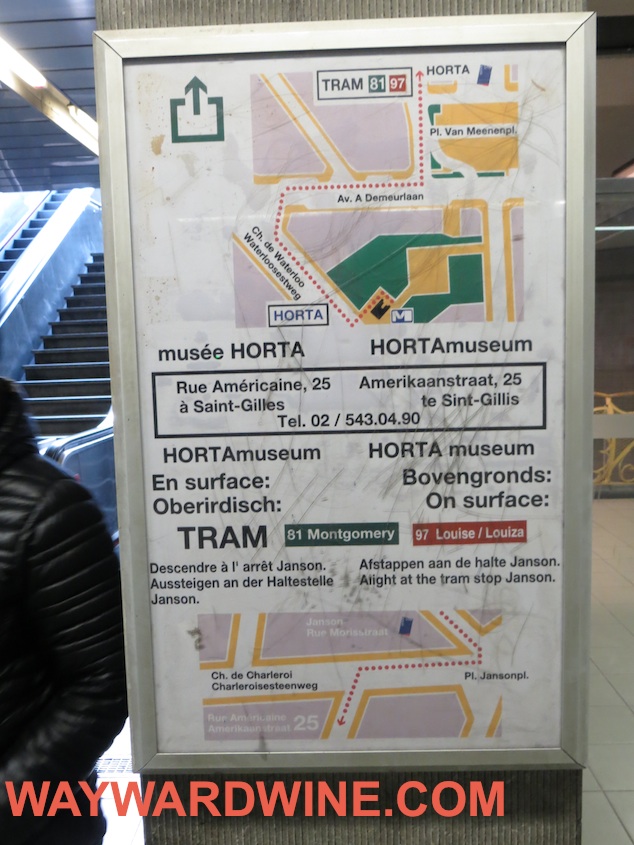
We grab food and then manage to Metro the wrong way looking for the Horta Home and Museum. For you non art people, Horta defined Art Nouveau’s wild, organic flourishes with his famed posters. But the map only confuses us more.
We almost pass his unassuming home on a side street.
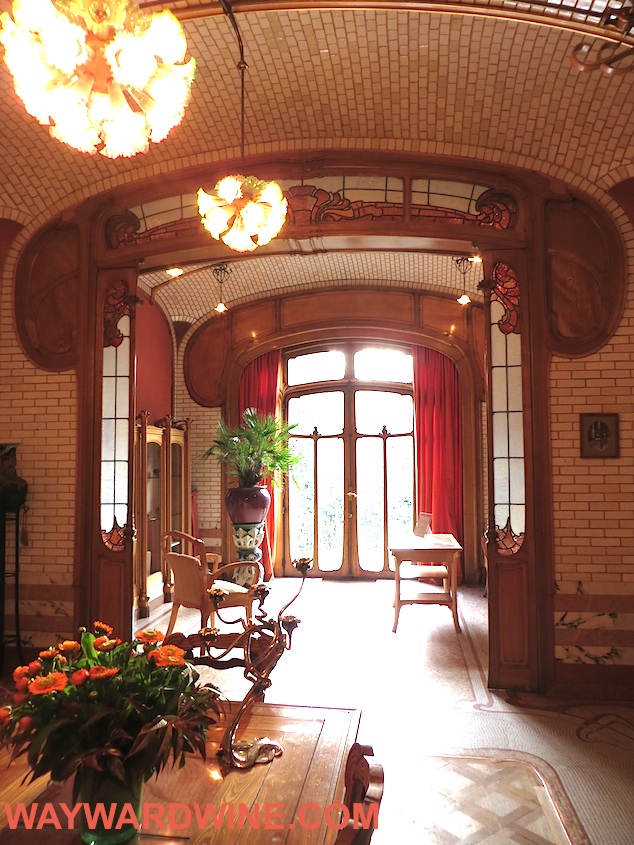
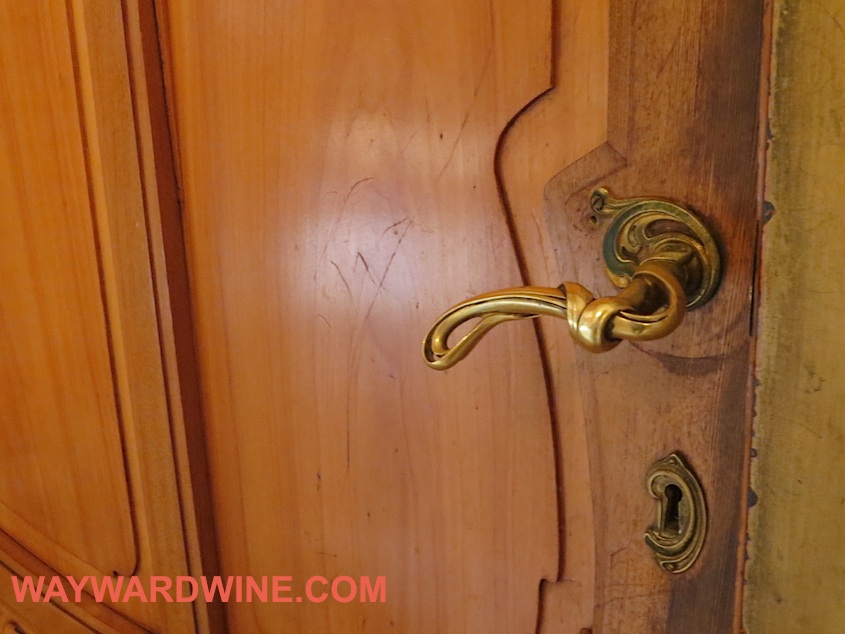
But inside we open a pandora’s box glowing with custom Art Nouveau perfection.
Every inch oozes and weaves hand-turned wood curves and bronze details. Yet Horta’s home is hardly grand. It feels cozy and comfortable.
All these warm woods help us forget the snow and slush outside. Barcelona was an extravagant mess of Dali built Art Nouveau. Horta’s sense is more restrained and tightly wound yet soothing. Exhausted for the day, we return to our loft apartment.
We introduce our hosts to a South Park episode with a guinea pig apocolypse. Beer finishes our night.
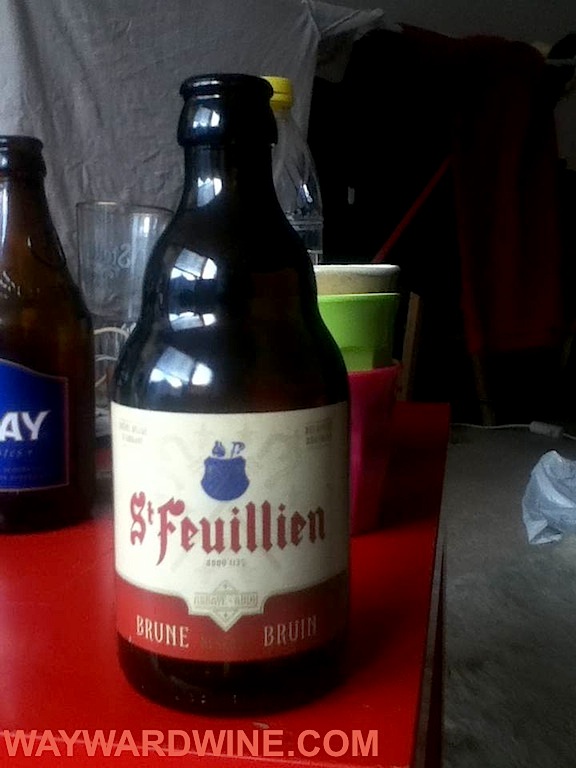
St Feuillien (Abbey Beer), Bruin Réserve, le Roeulx, Belgium. €1.18 / 33cl APPEARANCE: looks a hazy, rich brown, with lean caramel lace. AROMAS: seem fairly full of red licorice, raisin, vanilla, and chocolate. PALATE: feels sweet, moderately tart, with medium sandy tannin, medium plus alc 8.5%, and a medium plus body. FLAVORS: however, disappoint, hiding behind an alcoholic burn and sweetness tasting vaguely of licorice, raisins, and toast that last a medium length. This is fine (3 of 5) but lacking.
Luckily their Blond is better: St Feuillien (Abbey Beer), Blond, le Roeulx, Belgium. €1.18 /33cl bottle APPEARANCE: looks hazy again, with a medium lemon color, small bubbles, and white lace. AROMAS: waft up with medium plus intensity aromas of Chablis, lemon curd, grain fields, and violet perfume: lovely! PALATE: feels dry, pretty twangy, mildly bitter, warm enough at 7.5% alcohol, with a medium body. FLAVORS: are a medium plus melon, lime, salt, with a hint of curry spice, licorice, and honey that last a medium length. St Feuillien’s Blond is complex, balanced, and refreshing: very good (4 of 5).
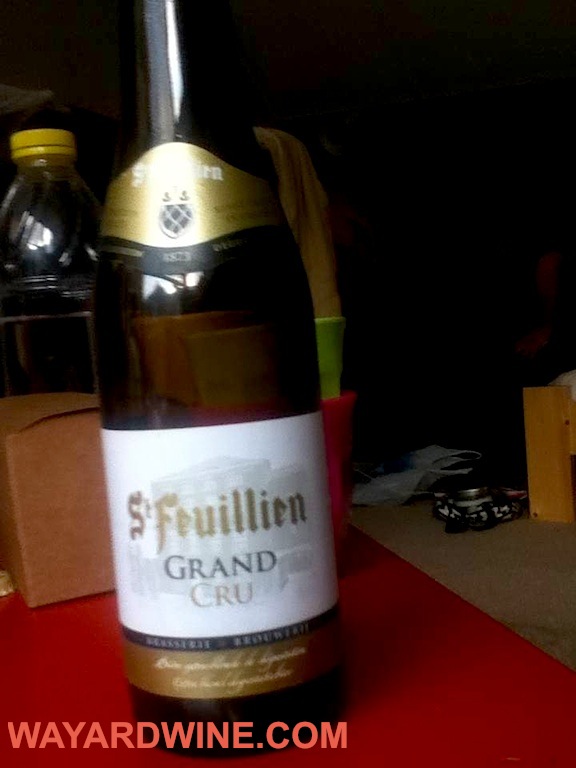
And then, St Feuillien’s Grand Cru: (€1.39 / 33cl)
Gold labels are usually a sign of awesomeness. APPEARANCE: a bright but hazy, lemon color, with a white head. AROMAS: smell notably green of hops, tobacco, and grapefruit. PALATE: feels dry, tart, moderately hoppy and bitter, with a high alcohol of 9.5% which feels only medium bodied thanks to ample acidity. FLAVORS: taste of strong Herbs de Provence, green and golden apple, lemon, with a medium plus cinnamon finish. St Feuillien’s Grand Cru is beauteous, bright, and bountiful silk. Delicate yet dangerous. Outstanding stuff (5 of 5).
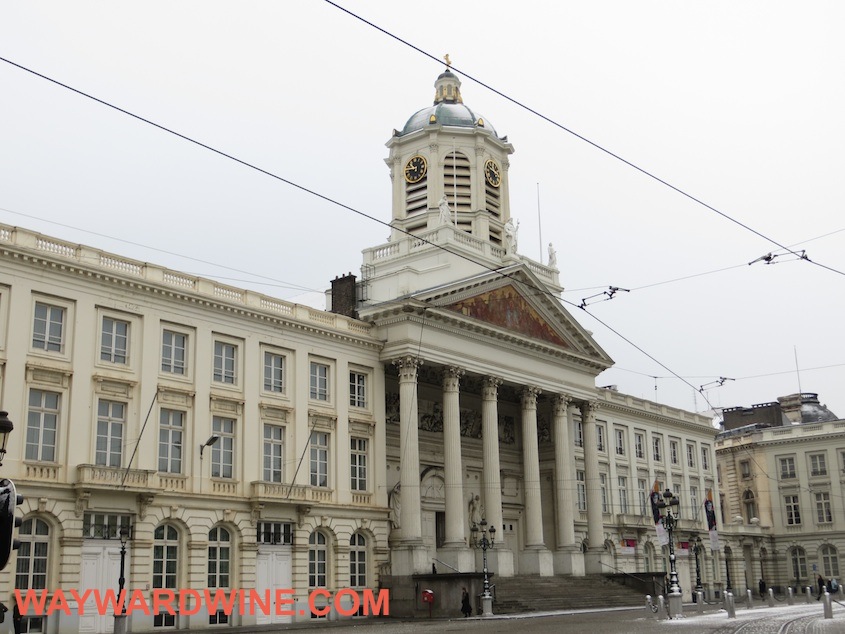
The next day, recharged by a pine nut, pistachio panettone, we explore Brussels on foot. The Royal Palace dominates a hill above the city, cool and neoclassical, but we move on.
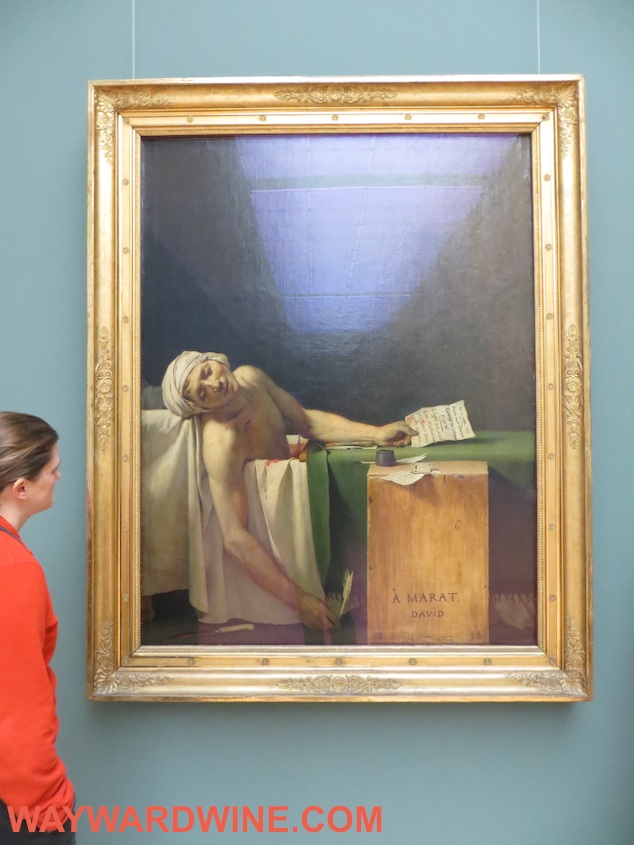
We make time for the Museum of Fine Arts, which holds outstanding Bruegels, Bosch, and our favorite Neoclassical painter, David, and his Death of Marat:
Maxed out on decontextualized artworks, we hit the pavement. We descend from this hilltop of high art passing the outstanding, steam punk, iron-wrought Old England building (now Music Museum).
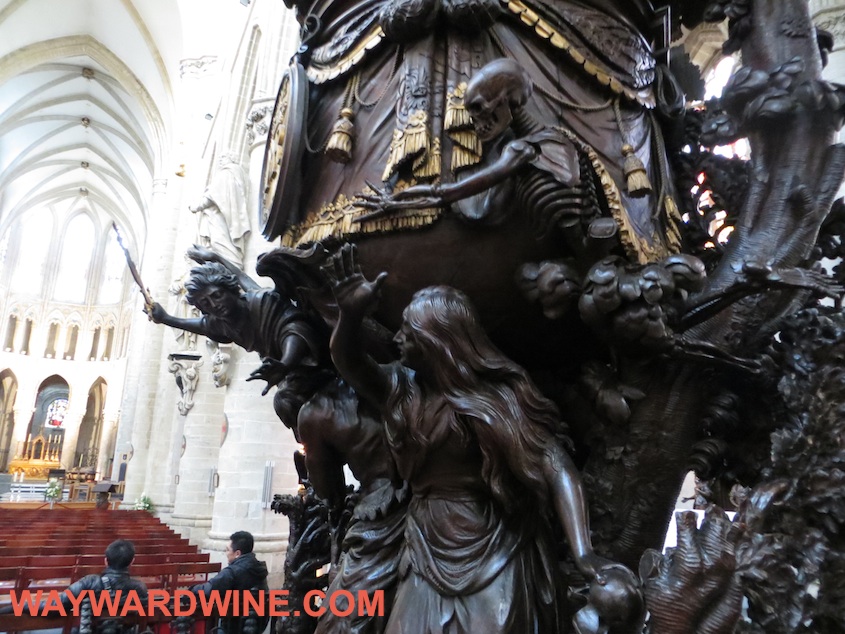
Brussels’ cathedral continues the elaborate trend we’ve seen throughout Belgium: ornate pulpit woodwork.
We get lost in covered markets and then pop into city center from an alley:
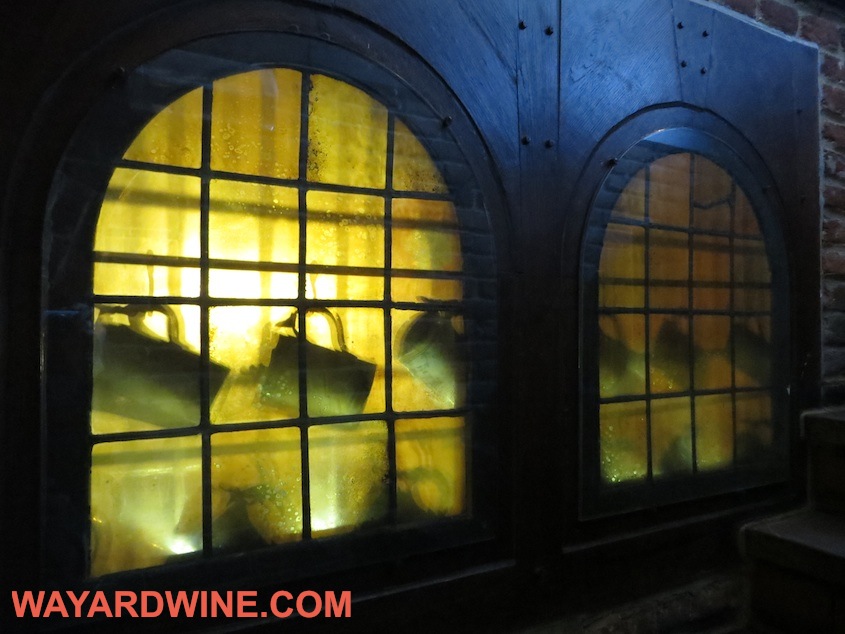
This being Belgium, we of course stick our heads into the Guild of Brewers, which has a pub with a small museum. However, we have beer back at the loft and this is an austerity tour after all.
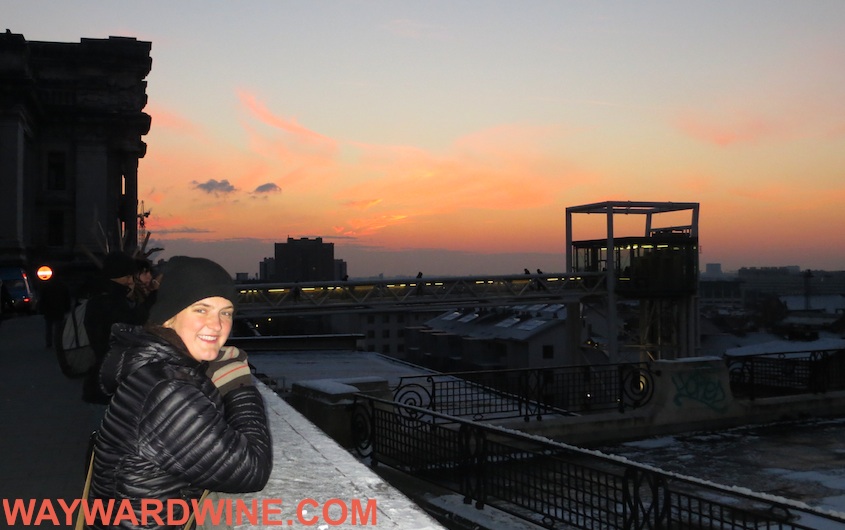
We get bored by the repeating chocolate and lace shops. Venturing widely, we find the Manneken Pis statue surrounded by a hoard of tourists and pickpockets. The crumbling city walls interest us more, as does the view over Brussels as a cold sun sets.
We do not love Brussels. Ghent and Antwerp charmed our respective pants off. But Brussels suffers from monotonous tourist traps and just being too big (especially without a car).
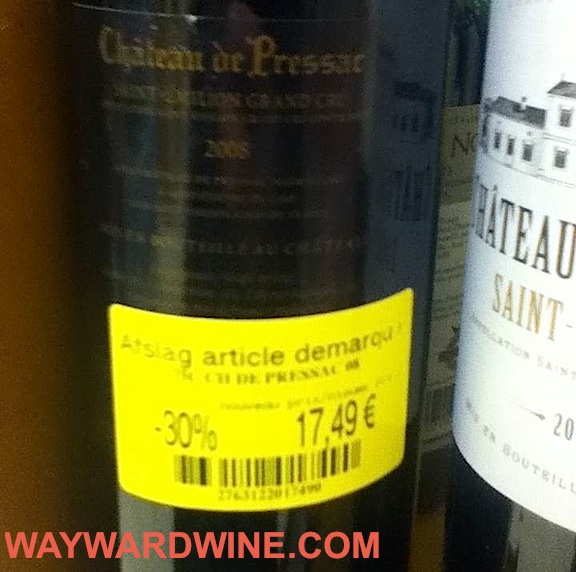
Nevertheless, beer is brilliant and inexpensive. And lest we forget, France is next door. A basic grocery store sells Saint-Emilion Grand Cru 2008 Chateau de Pressac for 17.49 EU Chateau Tour du Cauze is 10.39. Hell, Remy Ferbras Chateauneuf du Pape is 11.67.
Inspired, for 2.50 we catch a train and then bus to Waterloo: site of Napoleon’s last defeat. Check in tomorrow for that special post.
One day we will stop referencing Sideways. Today is not one of them. Eleven years on, the film continues to kill Merlot. Although Miles railed against the grape, his prized bottle turned out to be an iconic Merlot: Cheval Blanc, 1er Grand Cru classé A, Saint-Émilion 1961…that he drank with fast food:
Merlot sales plummeted. Our Zeitgeist absorbed and proliferated the grape hate. In stepped Malbec: another soft, ripe, plummy red with recession-ready prices from Argentina.
But before all this, in 1999, Cheval Blanc may have seen the writing on the wall. They partnered with Terrazas de los Andes and, in the great footsteps of Pitt and Jolie’s “Brangelina” and Affleck and J Lo/Garner’s “Bennifer”, decided to create “Cheval des Andes”.
Along with famed Chateau Yquem, it is the only other wine Pierre Lurton, Director of Cheval Blanc, puts his name on. It comes from a vineyard in the high desert of Lujàn de Cuyo (Nothern Mendoza) with vines over 80 years old of Malbec, Cabernet Sauvignon, Cabernet Franc, Merlot, and Petit Verdot.
Today we open 2009’s 60% Malbec 40% Cabernet Sauvignon blend (although a smidge of Petit Verdot got in). It saw two years of graduated barrel aging and another eighteen months in bottle. This bottle in particular is Lot 00053.
APPEARANCE: looks inky black with barely a clear ruby rim and sticky thick legs.
AROMAS: smell pronounced and of treacle, black strap molasses, prune puree, black cherry syrup, tobacco, and flint.
PALATE: feels dry, with balancing medium acidity, high, seedy but thick tannins, a thick, viscous medium plus alcohol at 14.5%. All this makes for a lush but gripping full body.
FLAVORS: proclaim themselves with dust, heat, and rippling tannic black pomegranate juice, prunes, flint, charred tobacco, all well integrated if a bit of a tight fist. The length is long.
CONCLUSIONS: Cheval des Andes 2009 is outstanding (5 of 5) wine, but way too young. Immediate decanting does little. I re-tasted it after three days of being open, and finally all its tempestuous youth, alcohol, and tannin had relaxed into a luxurious yet still intensely rich red. Another five years could help it. Regardless, this Cheval could slice a steak in half and you will need something to quell the tannins.
This wine will demolish any others at your Halloween party. So if you wish to flirt with greatness, be warned, be patient, or bring a cheeseburger. Since most of us will never enjoy a $2,000 bottle of ’61 Cheval Blanc, Cheval des Andes offers a hem of that illustrious robe.








 WAYWARD WINE