Thirsty Thursday: Uehara Brewery Forest Spirit Sake Junmai Ginjo

Sake. I love it but rarely do I splurge on it.  Yet with summer’s heat, something chilled, refreshing, yet deceptively high in alcohol sounds perfect (next time Fino Sherry, I promise).

This Thirsty Thursday our glasses travel to Japan.  Uehara Brewery began in 1862 amidst upheaval in Japan. Commodore Perry had shelled Japan into trade with the US eight years prior. Centuries of Shogunate and Samurai rule were crumbling. Smelly Westerners ran rampant in the streets. Famine, unemployment, riots, and hysteric movements raged throughout: good time to start a brewery.

Seven generations later, Uehara has revived wooden barrels and presses. Their rice comes from local, sustainable farms in the sleepy, green oasis of Shiga, Japan. They polish it too 59%, avoid charcoal filters, dilution, and pasteurization (Muroka Nama Genshu): all common modern “refinements” of most sake today.

So….

imageAppearance: looks a hazy, white quartz.

Aromas: smell pronounced yet rounded and pleasant of lilac, honeydew melon, pastry icing, fresh dough.

Palate: feels too sweet, luscious really at first, but gradually pings with candied lemon acidity, and dries out into a fine grained leather. Medium bodied.

Flavors: weave intensity and complexities so fine yet bold I fight to slow my mind down long enough to break it apart. But fresh white peach, cardamon, chamomile, a light lemon juice, sea-bleached wood, vanilla powder, and clover honey ply amongst each other. The length is medium plus.

Uehara Brewery’s Soma no Tengu “Forest Spirit” Junmai Ginjo Muroaka Namagenshu Usunigori manages is ghostly moniker with a plump, fruity yet youthful verve that completely takes me. This is outstanding stuff (5 of 5).

Posted in Uncategorized | Tagged , , , , , , , | Leave a comment

Nazis and Kolsch Beer: DAY 162 Berlin to Cologne aka Koln

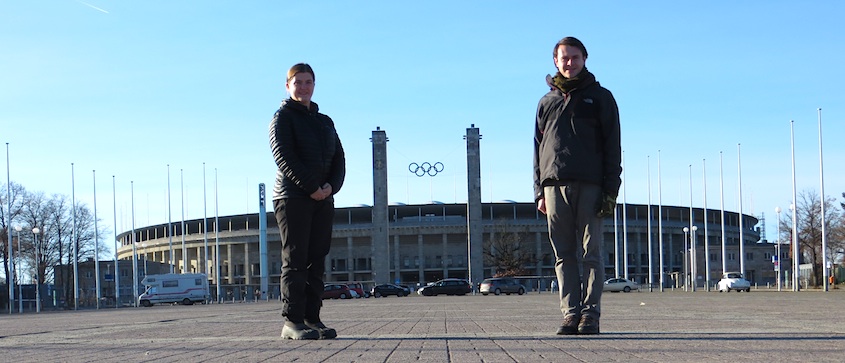
Before our EU Austerity Drinking Tour leaves Berlin, we take the Metro to the end of a line.  The 1936 Olympic Stadium provides our destination.
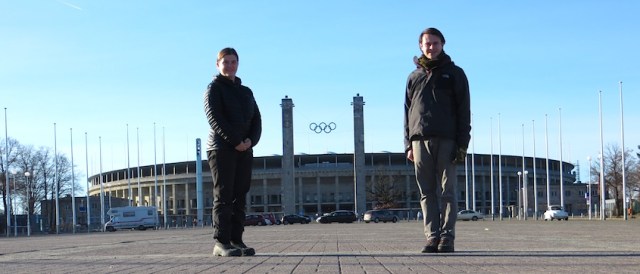
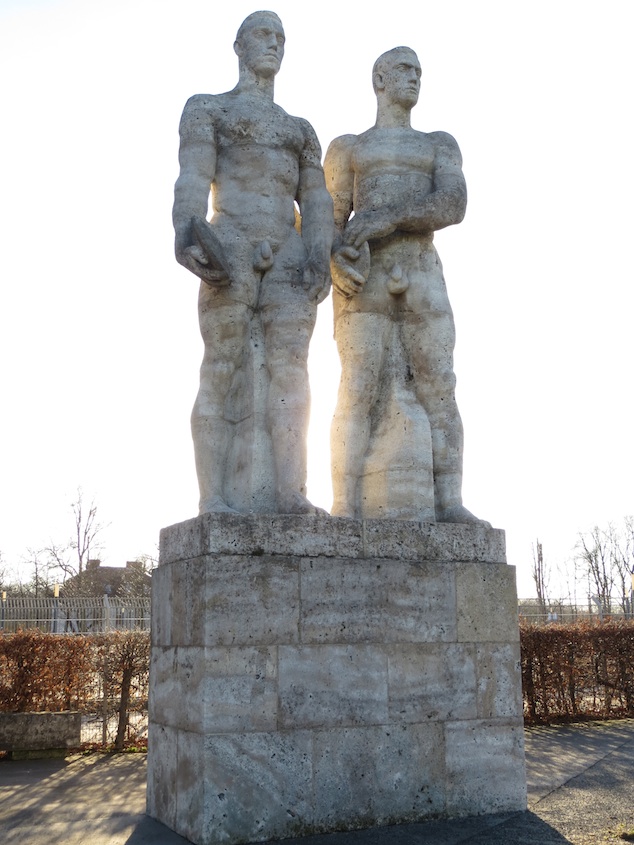
Tracy and Aaron Nazi Olympics Although 76 years old, it looks strangely clean and modern: normalized into a tourist site and sporting venue. Swastikas have been stripped and chiseled away. Yet fascist elements remain, including master race discus throwers and their…well… master race testicles.

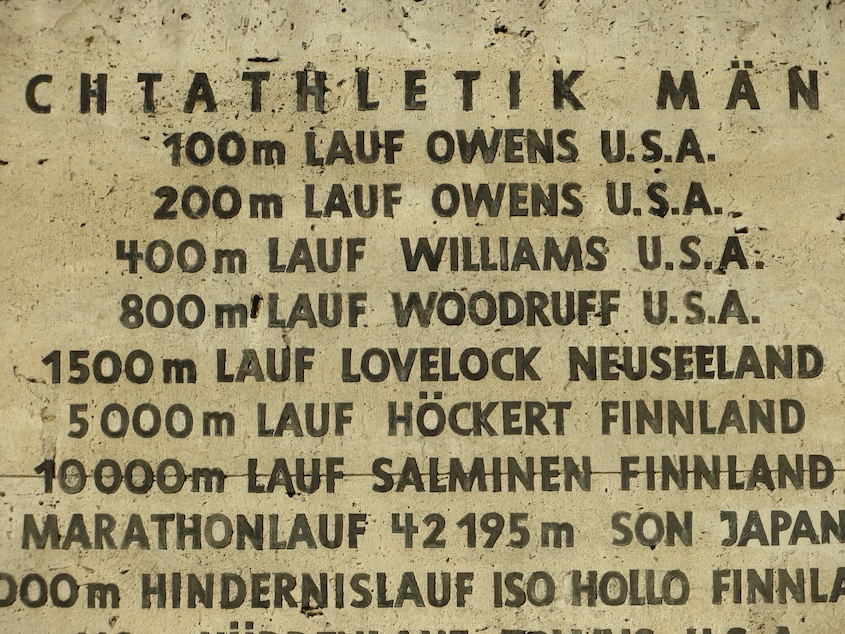
Nazi Discus Throw Statues Over-compensation aside, a shadow hangs over the stadium.  It feels sad, empty, like a vast graveyard.  I think because no great Nazi victory came here.  Even Jesse Owens’ winnings were begrudgingly ensconced in bronze.
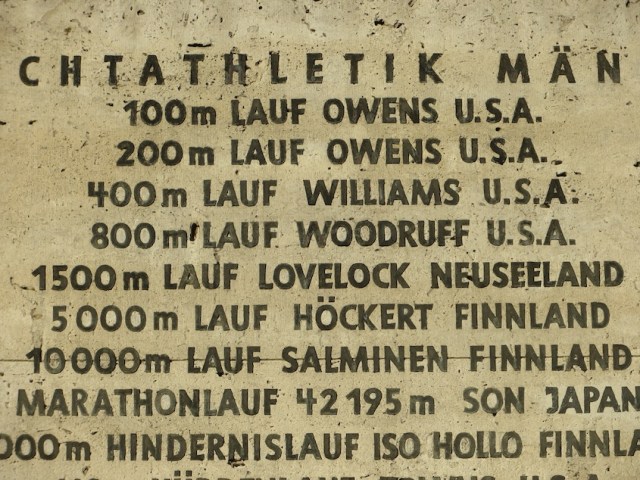
Jesse OwensMeanwhile, Hitler’s name is nowhere to be found. It reminds me of the EUR outside of Rome built under Mussolini.
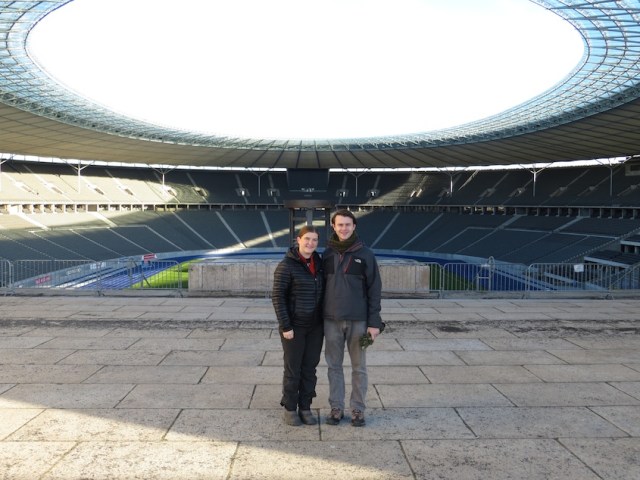
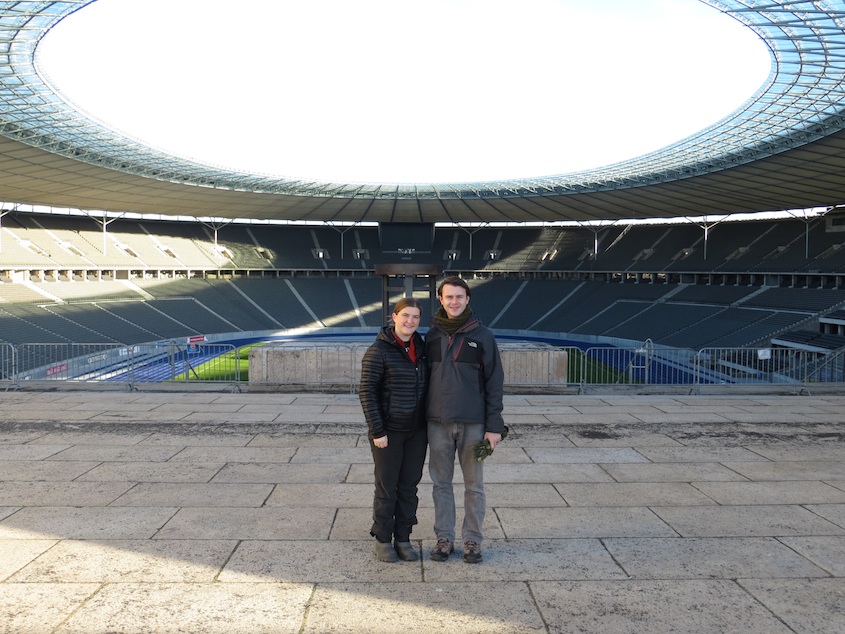
Nazi Stadium InteriorBut enough of this happy go lucky, feel-good, Nazi nostalgia.

As tourists start to pile in, we leave and connect trains for Cologne (aka Köln).
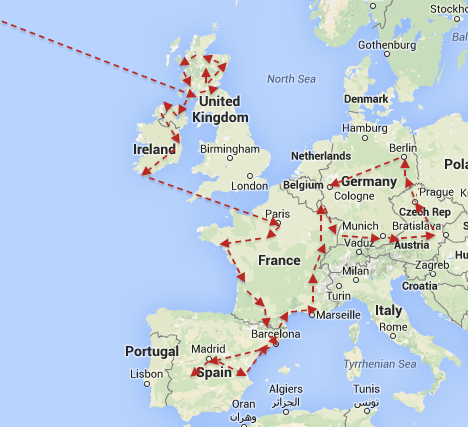
EU Map New York To Cologne Day 162Now Cologne (aka Köln) sounds awfully like “Colony” because, well, it was. The Romans made it their outpost on the edge of the Black Forest.  It later swapped hands between various French and German-speaking empires and retains its dual names (Cologne and Köln) as well as one of beer’s most dualistic styles: Kölsch.

Brewers in Cologne make other beers. But Kölsch is protected, delineated to the city, and its ingredients controlled by the Kölsch convention of 1986.  Unlike most German beers with their lager yeast, it ferments via ale yeast: that estery, top-fermenting strain of England, Belgium, and France.

Aside from its unique ale yeast, everything sounds similar: light malts, mild noble hops, cool fermentations, and long, cold conditioning. It’s like meeting a Neanderthal, it looks eerily familiar but is not the same.

We unpack, head out, and get overwhelmed in town. WWII decimated 40 breweries into 2. Today, most are back.  Flustered, we pick the most garish: Brauerei Pfaffen.
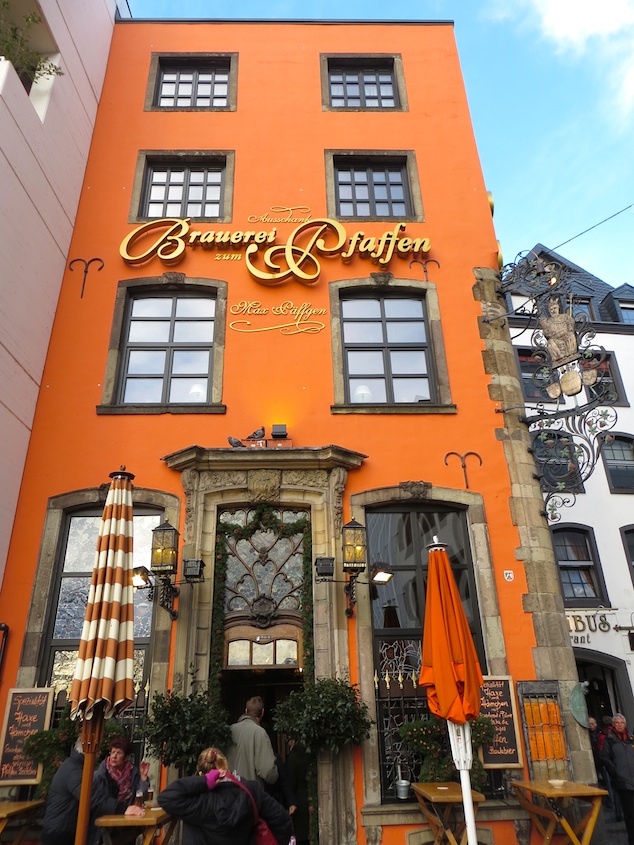
Pfaffen Brewery Cologne KolschInside, it looks less orange. I promise. We saddle up to high stools, ask for Kölsch, blink, and two slim Stange glasses glow gold before us.

Clear, med intense gold, slow med fizz, cm white head. Clean, med intense hoppy grapefruit, grass, wheat, honey. Dry med plus acid, med plus hoppy tannin, med alc, med body, pitch perfect balance, refreshing, med intense flavors of fresh gold and green apple, light rye, hops. Med plus length. Very very good.

APPEARANCE: A crystalline honey gold, with super small, slow fizz, slow, and a cm white head. AROMAS: smell a medium intense honey wheat bread and light grapefruit. PALATE: feels dry, snappy and upright with medium plus acidity, medium bitterness, medium alcohol, a medium body. FLAVORS: taste forward with white wheat, malt, golden apple, and a lighty peppery, hoppy finish that lasts a medium plus length.

For 1.60 EU Pfaffen’s Kölsch is supremely refreshing, session-able, yet complex and very good (4 of 5).

We wave for another. The placemat gets marked.  Curious, I order Pfaffen’s Bock. It arrives brusquely in a half liter mug.

APPEARANCE: a clear but deeper amber, with medium speed fizz, and a cm white head. AROMAS: smell moderately of caramel apple. PALATE: off dry, less acidic, medium bitterness, notably warmer alcohol (7%), creating a medium plus body. FLAVORS: push and pull with toffee, caramel, red pear, and dry oats that last long while.

I am a sucker for bigger beer, but Pfaffen’s Bock, at €4.90 for .5l, is outstanding quality (5 of 5) and value.

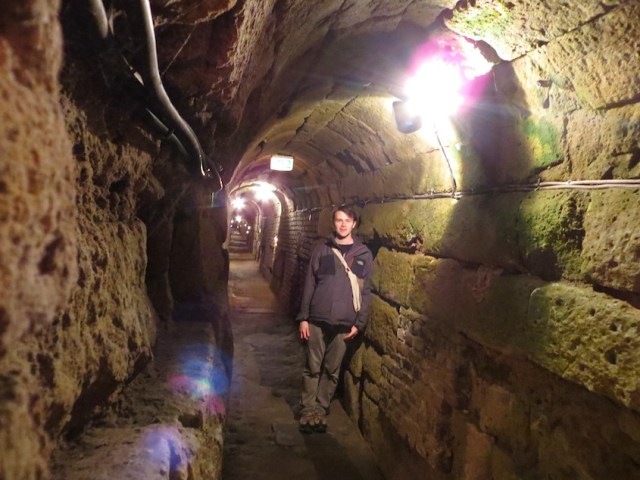
We spend that day and the next touring Cologne with moderate sobriety. Check back next Monday for more drinks and sights and sounds of this fabulous city.Aaron Cologne Sewer


Posted in Uncategorized | Tagged , , , , , , , , , , | 1 Comment

Monthly Wine Writing Challenge #18 (#MWWC18)

Submit! If you dare!

the drunken cyclist's avatarthe drunken cyclist

Last week, Aaron of Wayward Wine won the Monthly Wine Writing Challenge #17 (#MWWC17) and just like all winners of the Challenge, his “reward” was to choose the theme for the following Challenge (in this case #MWWC18).

A few of us started the Monthly Wine Writing Challenge over a year ago with the desire to promote more creative wine writing. The thought was that we get caught up in tasting notes, winery visits, and the occasional food porn and we soon forget that part of the reason we put in all the hours that we do on these silly blogs is that we love to write!

wine-stain1-3

After roughly a week of pondering, clearly taking this monumental responsibility seriously, Aaron sent me an email with his choice for the new theme. Once I saw the theme, I immediately started to panic–I was not worried about what I was going to write so much, but…

View original post 371 more words

Posted in Uncategorized | Leave a comment

Museum Island Part 2: Julius Caesar, Rauchbier, and Nefertiti

We wake to a sleepy Berlin after Christmas. Everything remains closed. Dead soldiers strewn the streets:

Berlin Bottle ShockWe’re proud of you Berlin.

So we head back to Museum Island.  Yesterday’s festivities included altars and gates from Pergamon, Miletus, and Babylon (see post).  Today, sculpture and Egypt:

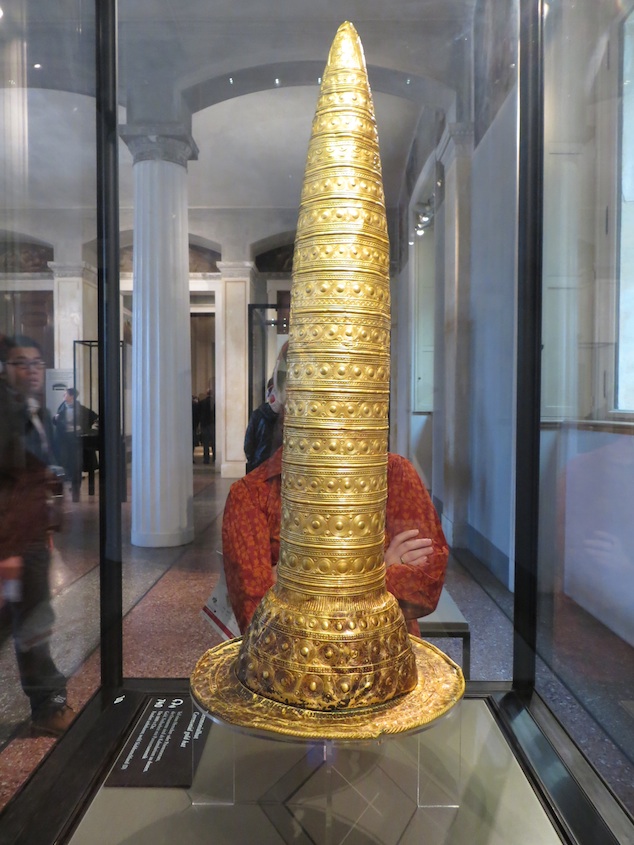
First we get distracted by gladiator armor, Trojan replicas, and, well, *ahem* a Babylonian hat that is clearly not over-compensating for anything:

Phallic gold HatIt was the Hummer H3 of its day.

We pass room after room of adorable owls, sarcophagi, adorable goats, wax tablets, and the most adorable of all: Adorable Hippos!!!

Adorable Hippos BerlinBut really, one comes to Museum Island for one thing in the Armana collection: the bust of Nefertiti.

Photos are verboten. So I wait. The crowd breaks. I get right up to her, hold, and draw her:

Nefertiti Berlin Museum IslandUp close, she looks older, more world worn than I expected.  Nerftiti may be idealized, stunning, completely at the height of her powers, but like a present Angelina Jolie, Julia Roberts, or later Bacall, it took much to get there.  Nevertheless, 3,400 years have hardly aged her.

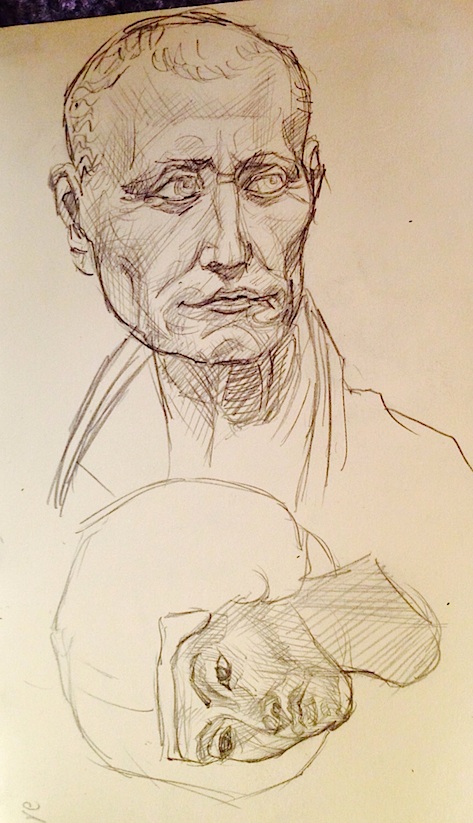
My wife already left me for the Greek and Roman collection. Oddly, German collectors had a passion for playful sculptures, such as the girl tossing knuckle-bone dice:  Knuckle bone Roman gameThe silverware collection and countless sculptures are really impressive. But, I decide to saddle up to a dark greek basanite Julius Caesar and capture him (along with Nerfertiti’s mother in law, Tiye).

JC and Tiye Berlin Museum IslandBoth faces cut from dark stone give an odd impression.  This is a leap, but they remind me of Germany’s strangest lager: rauchbier, aka smoked beer:

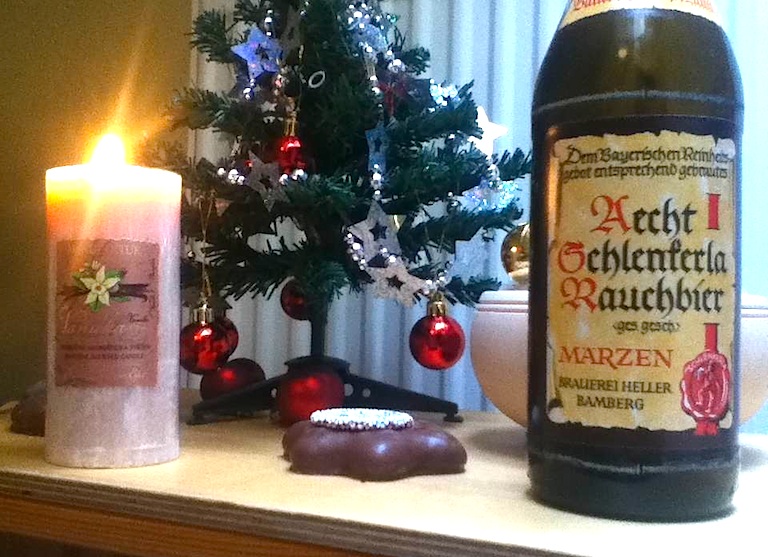
Rauchbier Aecht Schlenferla BeerIt may be a smooth, relatively light, lagered beer like pilsner, but the barley is completely smoked.

Aecht Schlenkerla Rauchbier, beer, Märzen, Bamberg, Germany.

APPEARANCE: looks clear, yet a medium plus ruby brown, with minor fizz, thin cream color head. AROMAS: smell pronounced of peat smoke, vanilla, and bacon. PALATE: feels dry, moderately tart, more bitter, with medium alcohol 5.1%, leading to a medium plus body. FLAVORS: are equally showy yet clean, tasting of peat smoke, coals, rye bread, honey, and bacon that lasts for a long length. Outstanding (5 of 5).

Aecht Schlenkerla Rauchbier is winter in front of the fireplace.  Intense, single minded, like a hungover old Sean Connery, like a war-wearied Caesar, machinating Tiye, or powerful Nefertiti.  After our 158 straight days of travel, I can relate.

But no rest for the wicked. The next day finds us at Museum Island’s final wing: running from Medieval to 19th century.  It seems such a fantastic mess, watching artists struggle through centuries attempting to capture the divine and human in every media. Della Robia JesusBut even the audio guide tires and we leave.

Berlin Tower and Museum IslandBerlin still glows with its strange grey light.  So our aching feet carry us to one last museum.

With jello for brains, the only learning-ish thing we can handle is dinosaurs! And not just any dino, but the world’s tallest! Meet all 43ft 6in of Mr. Brachiosaurus Brancai:

Tracy Dinosaur BerlinWe have one last day in Berlin before we jet to family friends in Holland. Check back next for next Monday’s installment of our EU Austerity Drinking Tour (more drinking to come…promise!).


Posted in Uncategorized | Tagged , , , , , , , , , , , | 2 Comments

Thirsty Thursday: Beaujolais Done Right: Stephane Aviron Chenas 2011

This Thirsty Thursday, I melt into a gelatinous ball of sweat and irritability.  Summer’s heat pushes me to white, rosé, and sparkling wines.  But I’m already bored.  A low tannin, light red that could handle a slight chill sounds perfect.

Then to Beaujolais: home of the grape gamay (and the infamously derided Beaujolais Nouveau).

Enter Stéphane Aviron into that grapey fray.  Stéphane does not make Nouveau.  Stéphane only makes Cru and Village Beaujolais and only from vines older than 40 years.  His goal is to turn Beaujolais’ boat around and compete with his prestigious Northern neighbor: Burgundy.

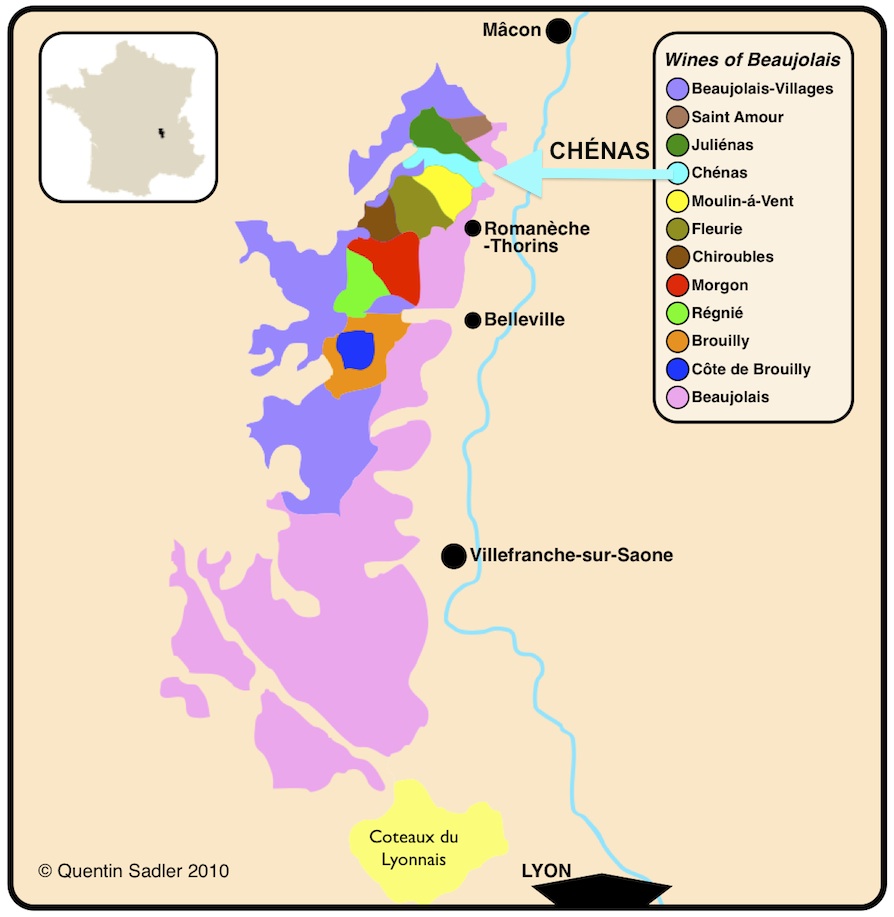
Today’s Burgundy combatant is Stéphane Aviron’s, Vieilles Vignes, Chénas 2011.  Now Chénas sits just below Burgundy as Beaujolais’ smallest Cru:

beaujolais wine map ChenasThese grapes come from a wee 13.6 acre vineyard. When Stéphane claims “Vieilles Vignes”, in this case, he means it.  These vines are over a century old.  They predate phyloxera.  They grow on their own root stock, a rarity anywhere, thanks to gravel soil that drains faster than the bug can cling to.

After a hand harvest and sorting, he eschews carbonic maceration (that shortcut, anaerobic fermentation that gives Nouveau that bubblegum note), instead allowing for a wild fermentation.  To match Burgundy, he has it aged a year in first to fourth-use barrels.

Does it work?

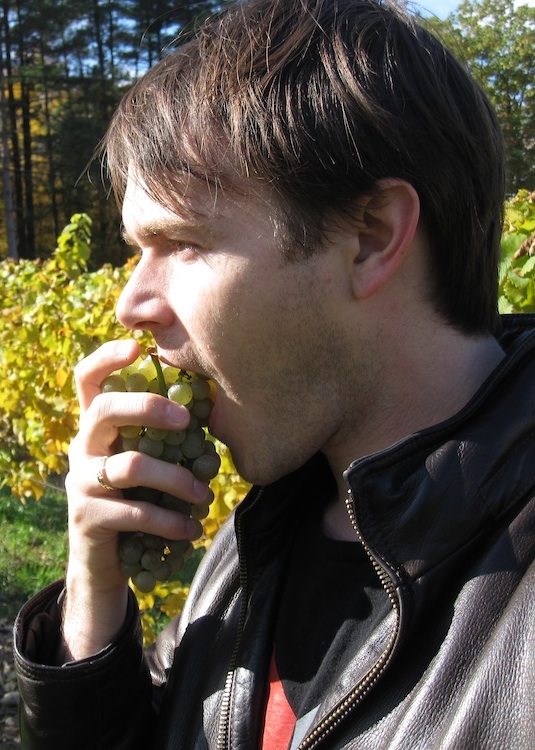
Stephane Aviron ChenasAppearance: looks clear but unexpectedly rich, with a purple ruby core and minor clear rim.

Aromas: pounce like a fist-full of crushed, bright raspberries, cranberries, the husk of a vanilla bean, and a touch of tomato leaf.

Palate: feels dry, with medium acid, medium tannins textured like rich velvet, medium alcohol 12.5%, and medium bodied that feels soft but streamlined.

Flavors: match the aromas seamlessly with all that red fruit, light spice, slight vegetal intrigue, and an added mineral ping, much of which lasts a medium plus length.

Conclusions: Stéphane Aviron’s 2011 Chénas is stellar stuff (4 of 5), certainly worthy of any Burgundy you could find hovering around this price ($15).  With four years under its belt, it is drinking seamlessly right now but has a few more years in it.  Thanks to its mild tannins, cooling it into the low 50s F make it all the more refreshing.

My bored, sweaty, blob of a self can finally cool off.

Posted in Uncategorized | Tagged , , , , , , , | 1 Comment