VELO VOUVRAY 3: Maison Darragon: EU Austerity Drinking Tour #48

For this Monday’s EU AUSTERITY DRINKING TOUR, we trade a château for a maison.

Underwhelmed and starving, we leave the lofty Château Moncontour of last week’s post.  Our rent-o-bikes take us to a lunch of quiches, bread, and fabulous pastries.  We eat on a cliff square.  Mossy shingles span below us, Vouvray‘s crumbling, cream church looms above us.
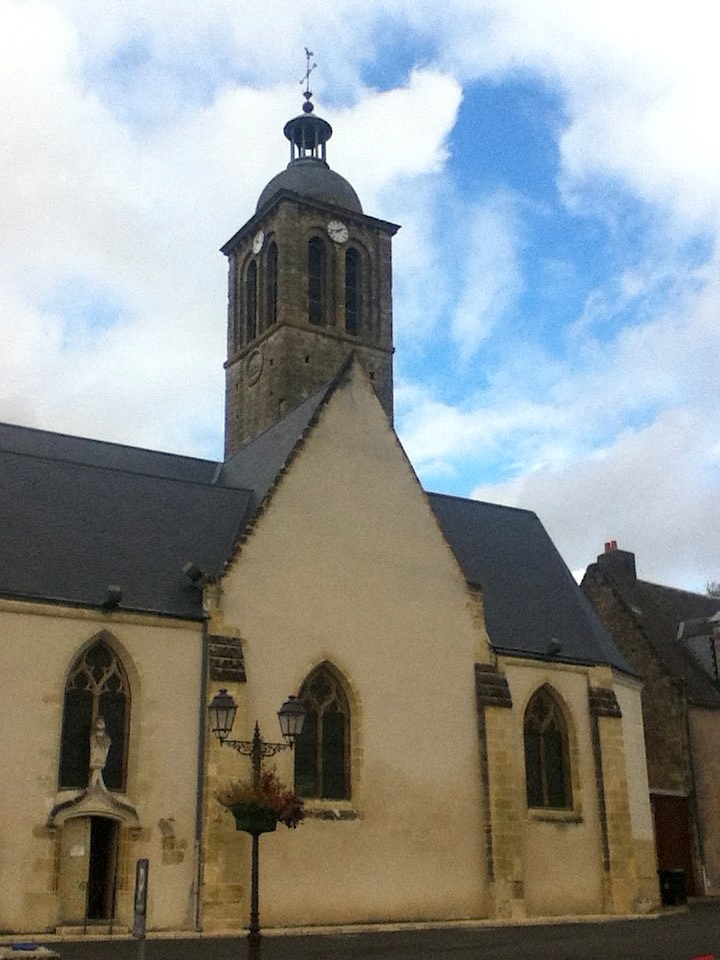
VouvrayChurch

Wine, god, and quiche: I love Vouvray.

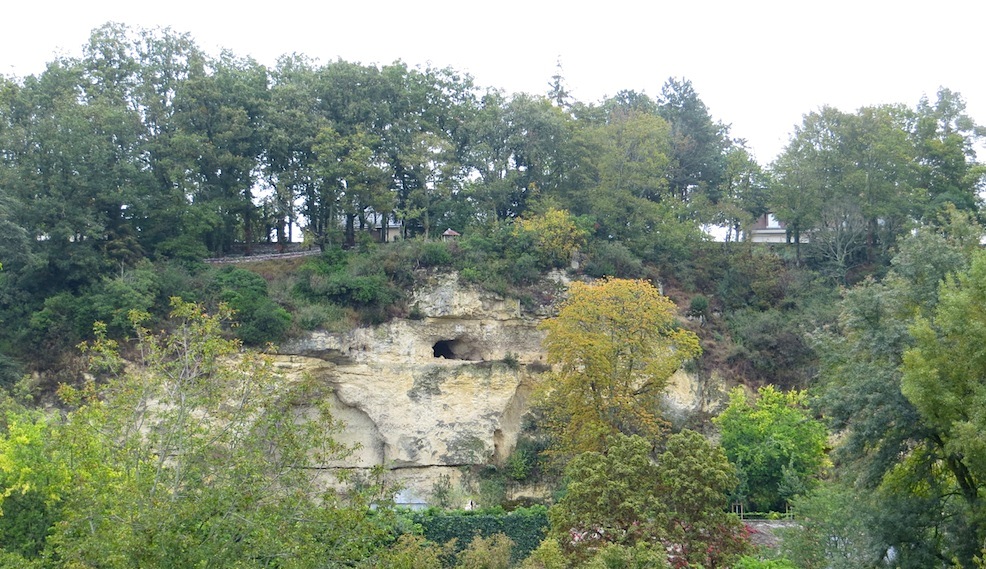
Full, we follow signs up a tortuous slope.  We pass a villa hewn into Vouvray’s famed tuffeau cliffs:
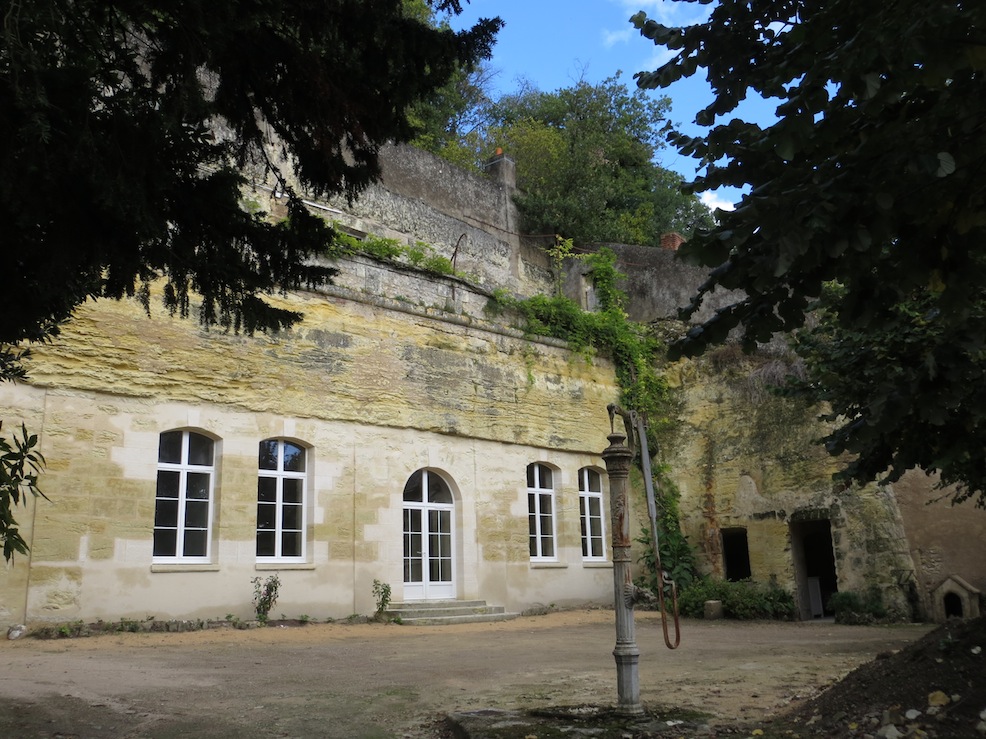
MaisonDarragonChalk

Now that’s a man/woman cave!

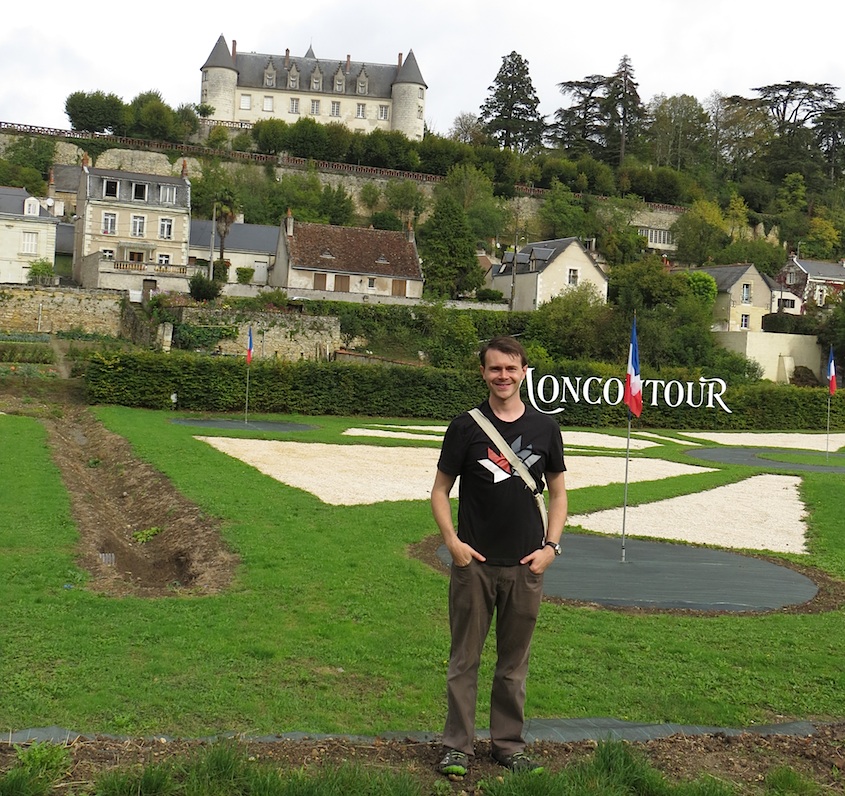
Just beyond we discover Maison Darragon in all its magnificence:
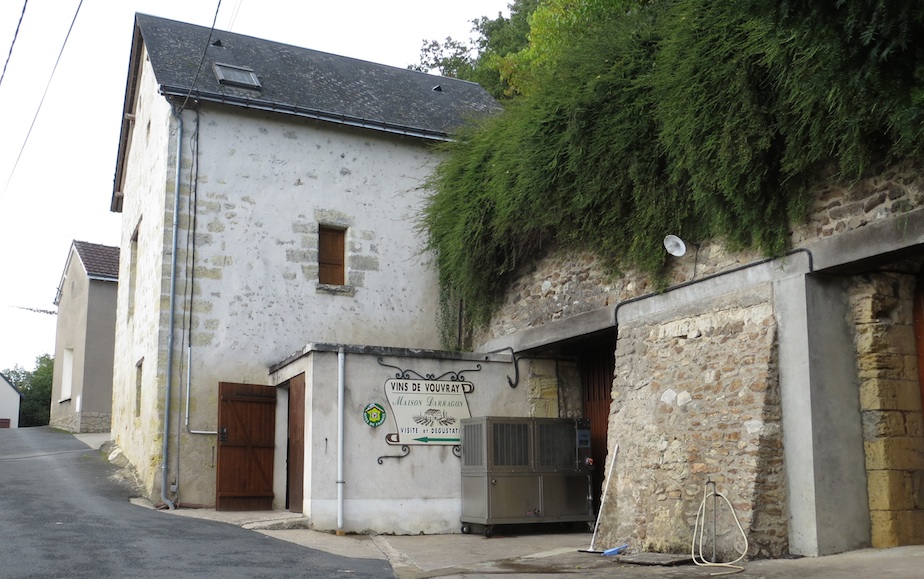
ExteriorMaisonDarragon

Not Napa Valley.

Château this ain’t.  Bikes propped, we poke our heads into their damp, cool caves… No one.  We wander around… No one.

Then, like a monarch from its chrysalis, emerges Simone, from, well, her house:
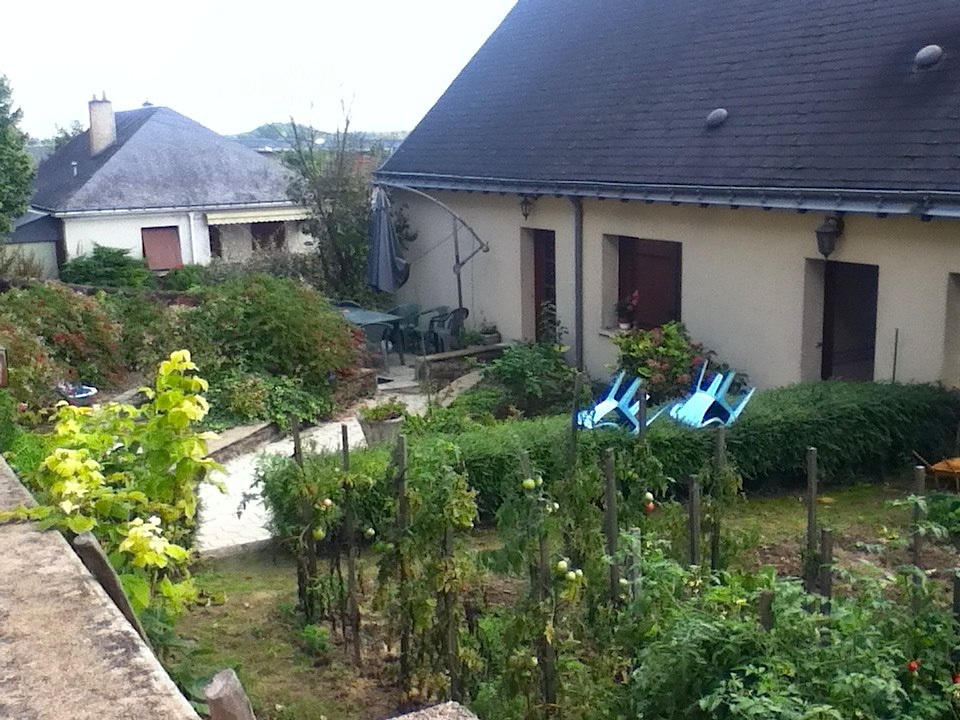
MaisonDarragonHOUSE

I adore the blue chairs.

Up to the tasting room we fly!  The wood-paneled room is dark and cold.  She opens a window to not waste electricity.

Her wines follow suit.  Wild yeasts ferment everything. Barrels in those caves age most of it.  They twist one grape, Chenin Blanc, into countless forms.  While most regions grow every varietal to please every palate, Vouvray’s obstinance forces creativity.

FIRST FIZZ

Festi’Bulles is their cheapest bubbly at 4.50 EU.  And it tastes it.

It mildly smells of lime and chalk. Light sugar calms its racy acidity, creating a soft, fine-fizzed, neutral, appetizer of acceptable quality (2 of 5).

At 5.50, Darragon’s Méthode Traditionnelle Brut turns up the game:
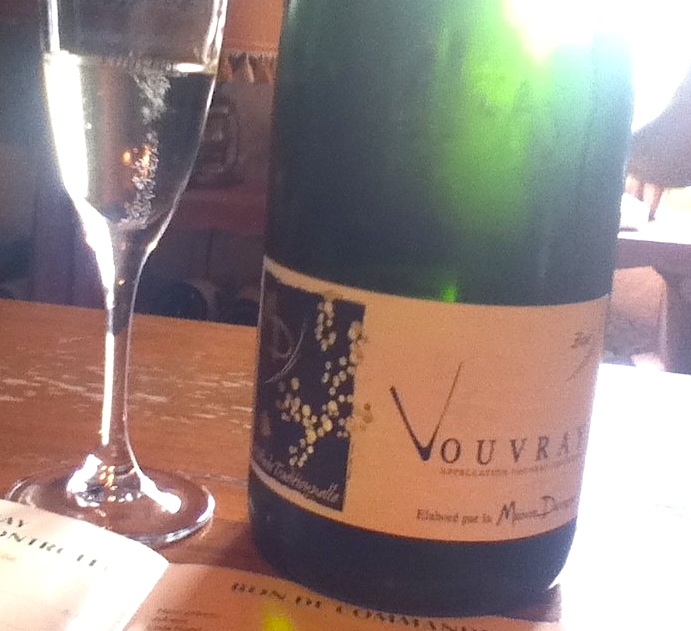
DarragonMethodTraditionnBigger, vibrant bubbles race through its pale gold color.  Powerfully fresh aromas of lime margarita rise.  This is drier, brighter, edgier, medium bodied, and notably flavorful with lime, prickly salt, and a hint of clay, that last for medium length.  Well done (3 of 5).

7.90 will buy you Cuvée Antique Méthod Traditionnelle
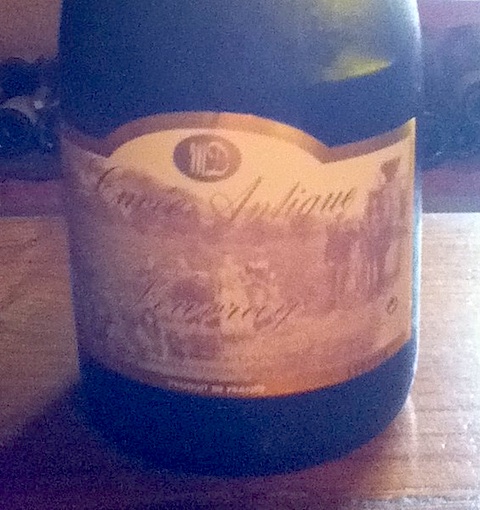
CuveeAntiqueBubbly and pale gold.  Bold flavors of yeast, lemon, honey and beeswax fill our noses and palates.  As highly acidic as Darragon’s Brut, Antique feels a touch rounder, fuller, softer, and longer than it. Very good (4 of 5).
STILL WINES

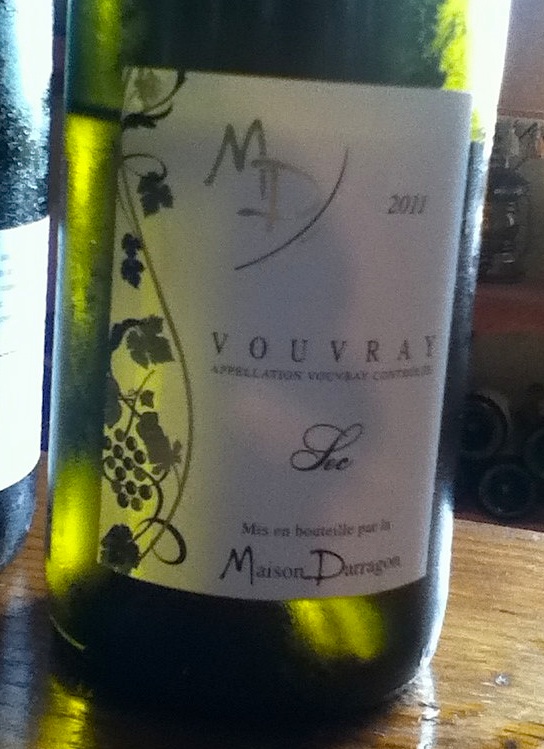
SECVouvray20112011’s simply titled Sec costs 5.50 EU

It looks nearly colorless.

It barely smells of honey, pear, and a slight savory brett.

It is dry, tart, and light.

Moderate, mellow flavors of soft melon, and lean acacia walk a medium length,   thanks to two year-old oak aging.

2011’s Sec was good quality (3 of 5) in 2012. But give it a year (i.e. now), and it will make a great everyday white.
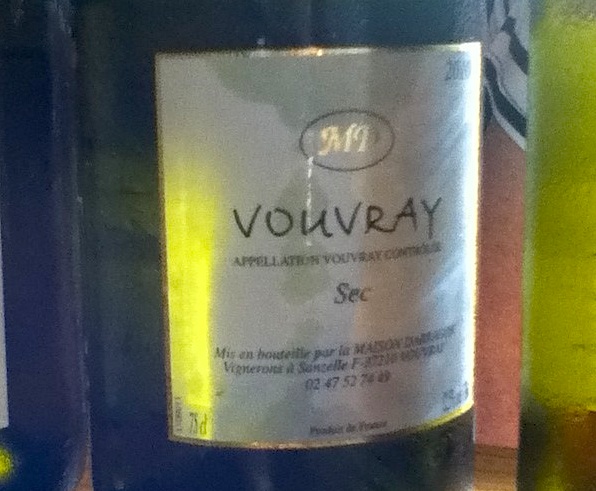
SecVouvray2010So we step back in time to 2010’s “Sec

Again hardly a hint of yellow colors it.  Medium intensity lime, calcium, and light honey comprise Sec’s bouquet.

A touch of sugar, chunks of acid, more body and more flavors reach the palate: with white melon, followed by citrus, cut wonderfully by minerals on the longer finish.  Very good (4 of 5).  A better wine to drink now than 2011’s.  Even though 2011 has better fruit and label.

Florilège 2009Florilige 10 EU
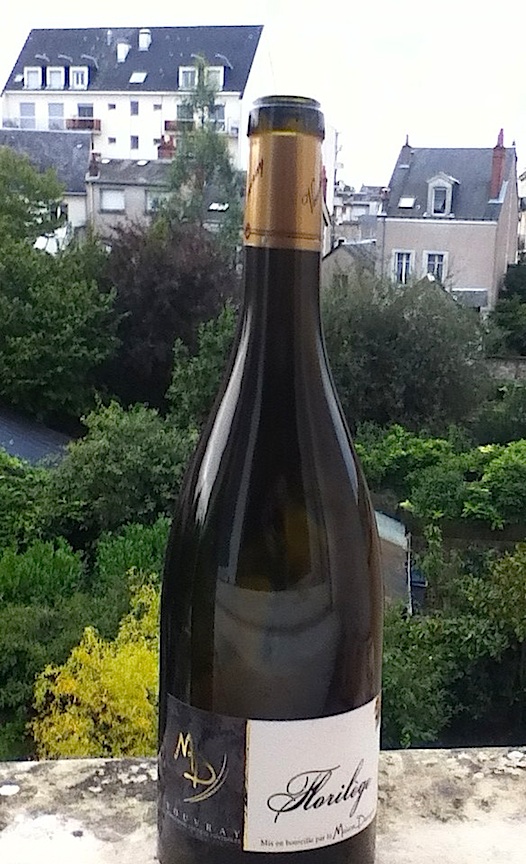
Time in barrel has rendered this Chenin Blanc gold in color. Aromas smell strongly of light honey, beeswax, that botrytis marmalade from intentional rot, and pure, ripe apricot.

Both sweetness and acidity sing high but in harmony against a medium body.

Drinking is like biting into juicy chunks of apricot, with wax, honey, citrus, and a bit of woody savoriness from oak.

Florilège is complex wine with lots of length. It’s so very good (4 of 5), that we buy one.

In Tours it tastes similar, brilliant, but with more intensity against our fresh palates.

But wait! We’re still in that dark tasting room with Simone.  We try Haut Des Ruettes 2010 (the 2011 was brutally young).
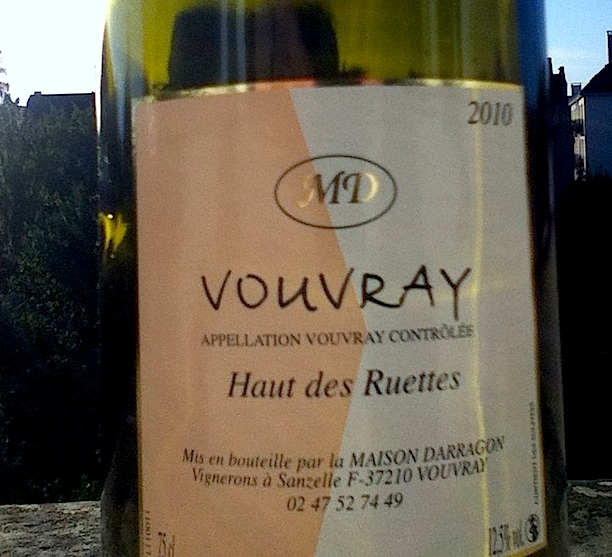
HauttedesRuettesThe 2010 looks a pale gold.  It smells intensely floral, with honey, acacia flowers, and wax.

It is lightly sweet, tart again, but flavor-rich with honey, fresh mint, acacia flowers, and wax that last a long while.  At only 5.50 EU.  We buy it.

Back in our Tours apartment, this manifestation of Vouvray smells more of fresh lime peel, bready yeasty Brett, but the mint and acacia flowers remain.

Balanced, unnoticed sugars, lead to supple, silky, ripe pear, light golden honey and a prickly lemon mint finish of extra length. Wow. Very good (4 of 5). At 5.50 any buyer’s remorse evaporates.

Simone ends us with something sweet: 2011’s Cuvée Simone Mignot for 11 EU.  Pale yellow color rolls around with thick legs.  Loads of sweetness and loads of acidity make for a medium bodied, cloying but lovely apricot, herbaceous, lengthy white of very good quality (4 of 5).

Maison Darragon reveals Vouvray’s down-to-earth charm.  The village and vineyards look tidy but not manicured.  Their wine is real.  Marc Brédif is all class. Château Moncontour is all hype.  Maison Darragon is home.

Warmed, we cycle eight miles back to Tours.  Along our way, winemakers grimace.  Pickers hunch.  Most grapes still hang on vines.  Massive presses look empty:
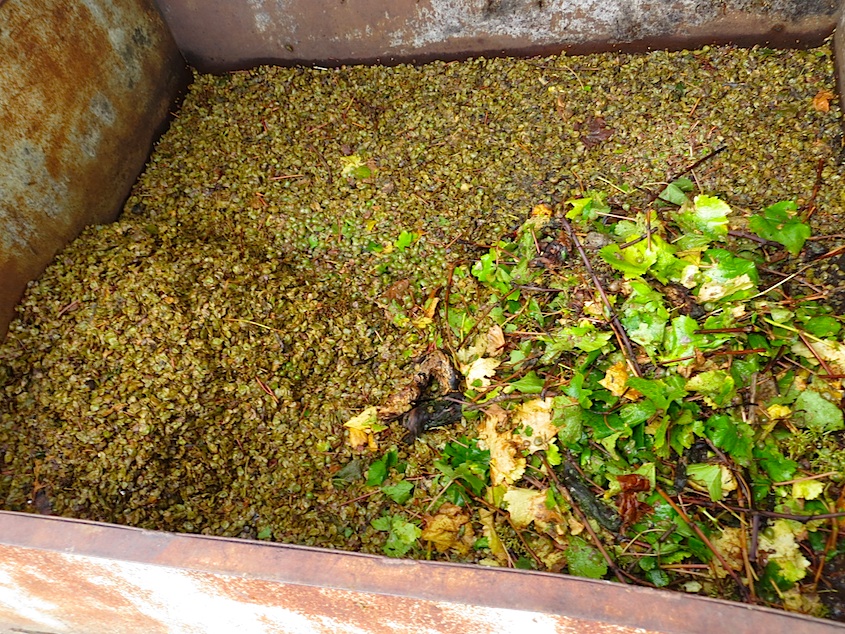
SpentGrapesDon’t expect much from 2012.  Its season-long rain and cold will make for austere, acidic whites.  But definitely dive into earlier vintages: Darragon’s 2010, 2011, and 2009 tasted lovely and have great futures.  Chenin Blanc and this chill terroir provide the DNA.  But each wine tastes manifestly different.

Today, at least, the sun smiled through gray on our day, cycling the Loire River.

Posted in Loire, White, WINERIES WANDERED | Tagged , , , , , , , , , , , , , , , | 3 Comments

PIG’S NOSE, BLENDED SCOTCH WHISKY, AGED 5 YEARS, SCOTLAND

We hit Scotland last August.  It nearly halted our seven month, thirteen country, EU Austerity Drinking Tour.  We so fell in love with its people, countryside, and Whisky that we nearly stayed.  We imagined ourselves William Wallace, Robbie Burns, Mary Queen of Scots, or that princess from Brave, with every castle tour, every distillery visit, and every haggis eaten.

SkyVolcanoHikeBut back in the United States, nostalgia ate us.  Local distilleries proffered harsh, young spirit: too hot and tight to be enjoyed alone.

But then we found a bottle of Pig’s Nose, Blended Scotch Whisky, Aged 5 Years, from Scotland for under $30.

PigsNoseBlendedScotchWhisky

Silly label.

Now, Whisky fanatics will tell you to sell your second child into slavery for Single Malt Whisky.  We typically agree (click and read our Macallan 10, Glendronach, and Laphroaig posts).  Like Estate Produced wine, Single Malts come from one distillery.  This implies a whole range of site-specific (i.e. micro-terroir) variations that make each Single Malt unique.

However, stateside, any decent Single Malt will ravage $50 and up from your wallet.

Blended Whiskies, like tonight’s, are cheaper because they blend many distilleries together.  They also stretch product with hefty additions of cheap, young, grain spirit (vodka), caramel colorings, and worrisome chemicals.  Most are horrid.

Pig’s Nose provides a middle path.

Begun in 1977, Pig’s Nose went through many owners and iterations, until Alex Nicol and wife Jane of Spencerfield Spirit Company reinvented it.  They hired this man:

Richard Patterson, Scotland’s only third generation Master Blender, took Invergordon grain spirit (Scotland’s highest quality and lightest grain spirit) and aged it over five years in new barrels.  This oxidative time massaged harsh esters, while adding color and spiced Whisky-Regions-of-Scotlandcomplexity.

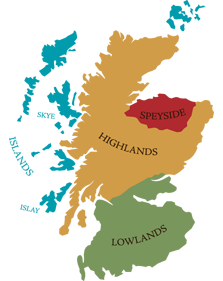
But that’s half the dram.  Unlike most blendeds, 43% of Pig’s Nose comes from Single Malts from Scotland’s three famed Whiskey regions: Speyside, Islay, and the Lowlands.  These hefty chunks of proper Whisky melded with the grain spirit during its five-year barrel journey.

Enough background. How is it?

APPEARANCE:

Clear, bright, amber grain gold.

AROMA:

Medium intense honey, sherry cask crème brûleé, malt, clover, salt, and nose-curling fire.

PALATE:

Soft, round cotton ball texture, minor tannin, and a medium body, lead to moderate yet complex flavors of baking vanilla powder, apricot, crème brûleé, and honey, with a clear note of salt, like briny mussels, and hot ash that tightens the decently long finish.

CONCLUSIONS:

Like our five year marriage, the sum is better than its parts.  Amongst all spirits, Pig’s Nose is good quality (3 out of 5).  For under $30, it provides a consistent, decently complex spirit to cap your evenings.

PigsNoseBlendedScotch2http://www.whisky-pages.com/stories/spencerfield-spirits.htm

Posted in EMPTIED BOTTLES, Whisk(e)y | Tagged , , , , , , , , , , , | 4 Comments

VELO VOUVRAY 2: CHATEAU MONCONTOUR AND CHENIN BLANC: EU Austerity Drinking Tour #47

Last Monday’s EU AUSTERITY DRINKING TOUR post began our cycle of the Loire with Marc Brédif’s chic winery.  Well inebriated, we continue upriver into Vouvray, hunting wine.

LazyLoireRiver

The lazy Loire.

As mentioned prior, the green grape Chenin Blanc reigns supreme in Vouvray.  Crafty Dutch merchants launched it here four centuries ago.  It fits decently in this cold, marginal climate because it ripens earlier than red grapes.  Although other whites would work better, the obstinate French stick to tradition.

LoireVines

A rare glint of sun.

But how do they manage it?  Mid cruise, we notice that vines grow up the North bank.  They all face South, with loads of leaves, like solar panels, sucking up as much sun as possible.  The near river also provides a heat sink and light bounce, which stretches the season just enough.  Even midway into October, many grapes still await one of many picking passes.  So Chenin just manages to ripen.

But then we stumble on something surprising:

Yes, even red grapes struggle in Vouvray.  We never find this red wine, but it probably ends up under the larger Touraine district appellation.

Huffing upriver, cream-colored tuffeau cliffs soon loom over us:

VouvrayChalkCliffs

Good for troglodytes, mushrooms, and bubbly.

This soft rock provided easy cutting for cellars.  With only barely ripe Chenin to work with, the French turned to cellaring and converting it into bubbly.  Like Champagne, good sparkling wine benefits from high acids and long storage.  Vouvray’s popular fizz still feeds the posh bistros of Paris, London, and Rotterdam.

Enough learning.  Time to drink in a château:

MeMONCONTOURchateau

Somewhat impressive.

We pump our peddles uphill to Château Moncontour‘s tasting room.  We excite over it like Balzac, who once stalked its women, wine, and memorialized it as “one of those small Touraine châteaux, white, joyfull, with sculpted towers threaded like teeth… one of those sweet, smart châteaux which reflect in the river water with their mulberry bushes, their vines… ” We pass a massive, archaic grape press, he may have once saw:

MONCONTOUchatPress

Road-side shrine.

But much has changed.

We skip their museum.  Instead, we hover our way into the tasting barn.  Bottles and cases fill the space.  Soon a youth appears, torn from their lunch.

FetedeCuveeMoncontour

Looks oddly familiar.

Hungry and overwhelmed by over twenty wines, we start local and fizzy since we missed bubbles at Brédif’s:

Chateau Moncontour, Fête de Cuvée, Methode Traditionelle, Vouvray, France 2009

Rapid bubbles race through a pallid lemon color.  Clean, sharp, youthful aromas of smoke and salt curve into soft pear and green apple.  High acidity cuts through whatever sugar is here, rendering the body light.  Flavors of green apple, honey, and smoke present themselves but disappear nearly as quickly.

At 6 Euros 70 a bottle this is decently good fizz (3 of 5) for any hour.

We try their other crémant:

Chateau Moncontour, Les Chapelles, Vouvray Sec, France 2009

MoncontourLesChapellesFor an extra euro, you get a bit more in terms of florals, vanilla, nut, body, complexity, and length.  Acid verve shines again against even less sugar.  This is good (3 of 5) Vouvray but it still seems a bit simple to be very good, probably due to its youth.

Then other brands appear:

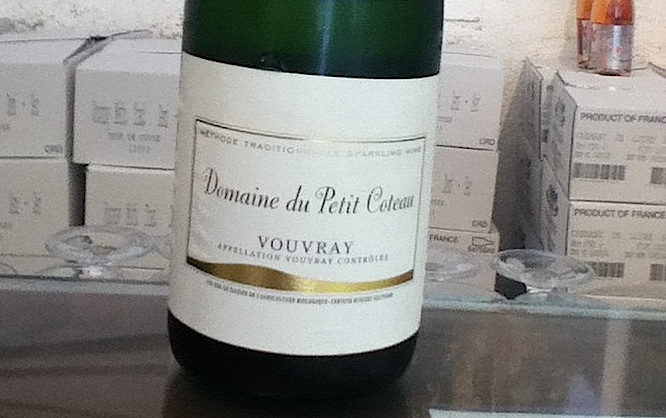
Petite CouteauWe try them, but leave Moncontour empty handed.  Check next Monday’s post, we will find Vouvray worth carting back to our dorm.

What we didn’t realize last year is that Moncontour gets around.  Vignobles Feray owns them and other Loire heavyweights: Vaugondy, Montfort, Petit Coteau, and Coudray Montpensier.  They have wide distribution.  We didn’t even notice we had bought their Fête de Cuvée in Paris just a week prior.  We liked it, but nor more than today.

Uniqueness or intensity are not the goals.  Instead Moncontour aims at consistent, reliable, cleanly made Chenin Blanc perfect for light café or bistro fare.  Easily under $20 stateside, the price is a perfect entry into what Vouvray’s southern slopes and cool caves can do.

Posted in Chenin Blanc, EMPTIED BOTTLES, Sparkling | Tagged , , , , , , , , , , , , , , , | 6 Comments

FALL FEASTS WITH JULIENAS: THANKSGIVING’S OTHER BEAUJOLAIS

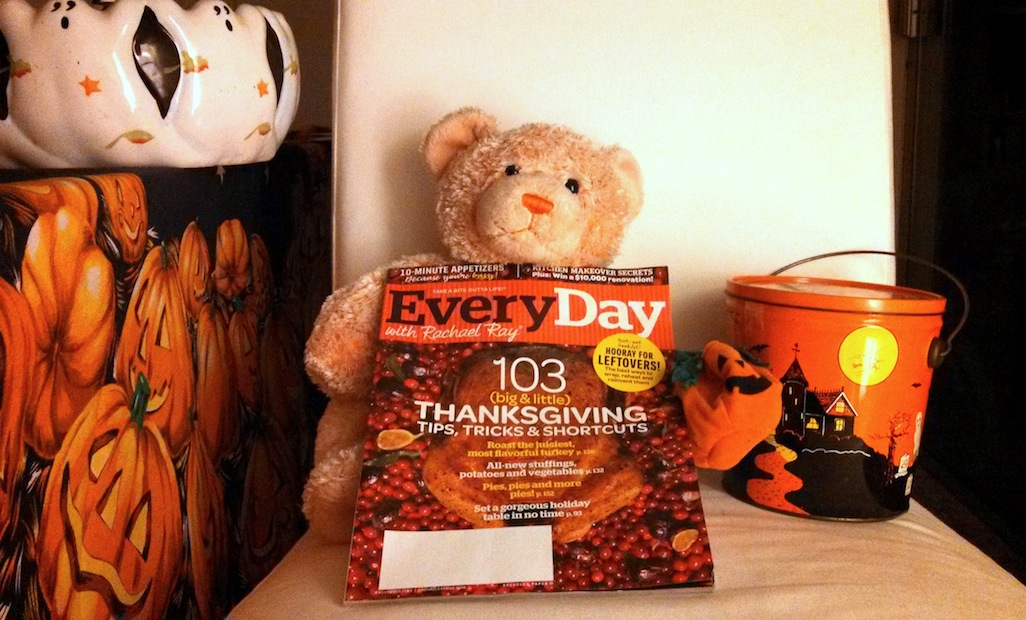
Tonight is Halloween.  But it ended weeks ago.  The legions of Martha Stewart, Food Network, Saveur, and more have already infiltrated our pintrest/facebook/twitter feeds, e-mail, and real mailboxes:

TrickedHalloweenRachelRayThanks

One of these things is not like the other…

While handing out candy to Trick or Treaters, we must give thanks and plot our Turkey Time Tables…obviously.

In the spirit of conformity, let Wayward Wine turn to that standard November red: Beaujolais Nouveau.

Released the third week of November after a forced, carbonic maceration, this tart, fruity red often makes it to American turkey tables.  You’ve probably had it and hated it.  Past posts have proven that Nouveau can be decent.  But its autumnal ubiquity (i.e. overproduction) has damaged real Beaujolais.

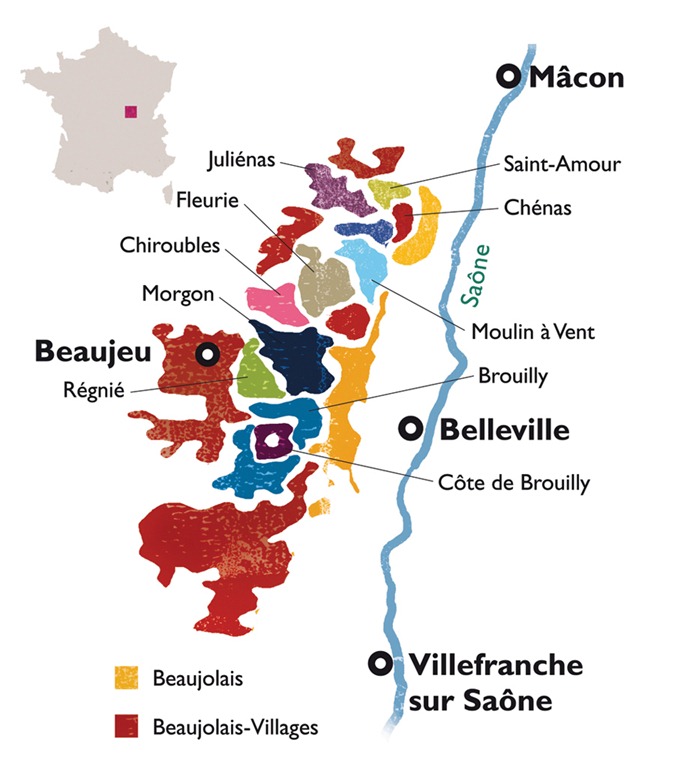
So we turn to Juliénas, an AOC subregion of Beaujolais.

Beaujolais-Wine-Map

Juliénas: upper left, purple squiggle.

Like Beaujolais Nouveau, Juliénas makes red wine from Gamay grapes.  But any other similarities end there.  Juliénas is made like real wine (unlike Nouveau), with yeast, oak, and patience.  Of the ten Beaujolais crus, Juliénas is famed for its density, spice. and misty, historic relation to Julius Caesar.

JCbitesIt

He could use a drink.

For this Thanksgiving in October we crack open the Henry Ford of Beaujolais: Georges DuBoeuf.  Since crushing grapes at age 6, the now 80 year old DuBoeuf runs a 2.5 million case empire of Beaujolais for the masses.

Let’s find out how his Juliénas holds up to Fall’s fare.

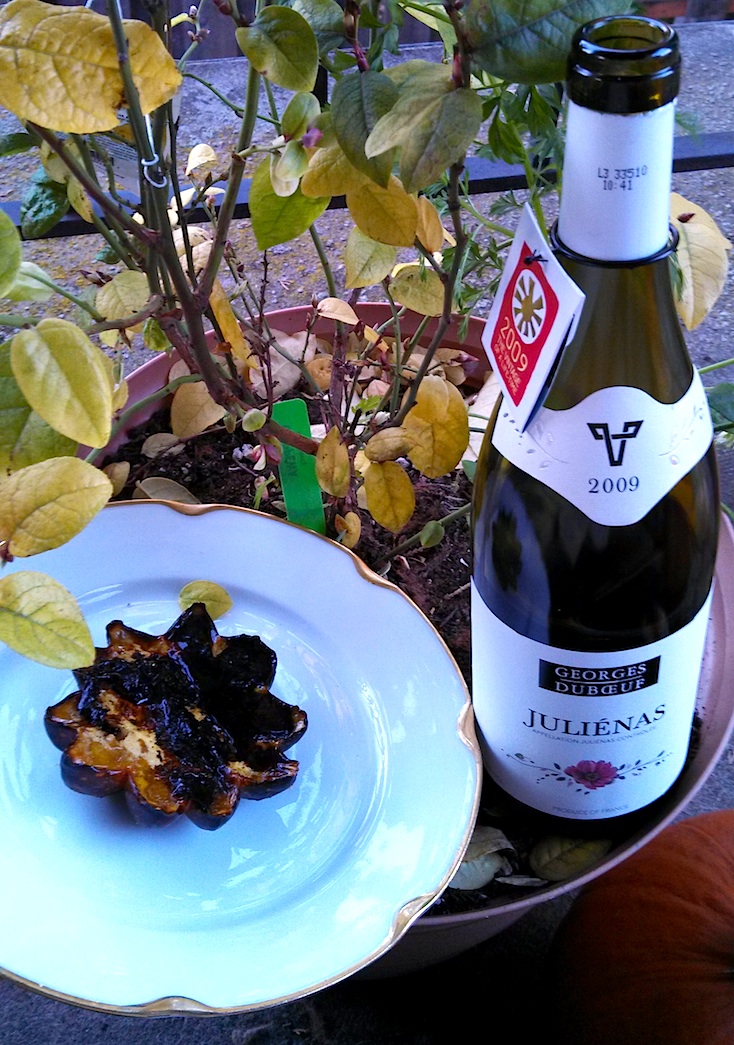
Julienas Squash

*Leaves Not Included

Our baked acorn squash with a caramelized, toffee-like, maple syrup, dark brown sugar glaze tastes amazing….alone.  All that sugary glaze renders the wine empty and bitter: like high school.

Yet in wine-isolation, we learn to respect to DuBoeuf.  His Juliénas is a properly dark, dry, complex, brambly red that lacks the residual sugar to bend to such sweet fare.  He declared 2009 the Vintage of a Lifetime.  For around $13, this wine firmly struts its stuff.

So we up our game.  We go savory with Trader Joe’s Pumpkin Ravioli.  Worried even it may be too sweet, we concoct a browned butter sauce with lavender, lemon juice, pine nuts, and lashings of salty Parmesan.  Garlic potatoes and carrots provide the side.

JulienasPumpkinRavioli

Yum.

The side of roasted, salted, garlic-ed potatoes and carrots make the wine fruitier and softer.

With the main, butter and savory lavender subsume our palates up front.  Next, the wine’s acidity and minerals, like superheros, obliterate the fat. But immediately, the sauce’s lemon squeeze checks that food-hungry acid.  As planned, the salt of Parmesan cools its tannins.

We chew through the ravioli.  The honeyed pumpkin emerges.  But now it melds with the dark bramble fruit of the Juliénas, creating a soft harmony of grape and gourd that lingers, pleasantly, for minutes.

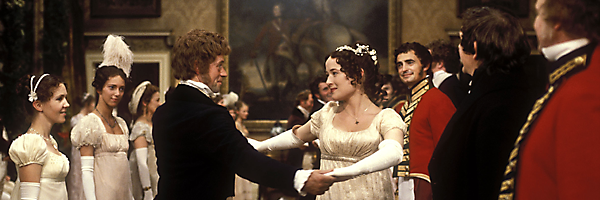
Neither wine nor dish overwhelm each other.  Everyone gently holds hands in formal dance.  The room feels cosy, crowded, but ordered: warmed by wine, candles, and fireplace.  It’s Jane Austen‘s Netherfield Ball in Pride and Prejudice:

Dance_feature1

Formal yet friendly.

But before Mary plays the piano, or Darcy and Lizzy battle, STOP serving this wine before dessert.  We already learned that caramelized squash kills it.  Imagine Pecan Pie with a side of carbonic acid.  Anything sweet will end in puckered mouths and embittered exchanges.

Instead, serve George DuBoeuf‘s 2009 Juliénas with Thanksgiving’s gravies, turkeys, buttered biscuits, and mashed potatoes: they will step in time with this red.  Even if today is Halloween.

Posted in Uncategorized | Tagged , , , , , , , , , , , , , , , , , , , , | 8 Comments

VELO VOUVRAY: CYCLING THE LOIRE VALLEY TO MARC BREDIF WINERY: EU Austerity Drinking Tour #46

We rent bikes in Tours and head up the Loire River, thirsty for wine.

TracyLoireBycling

“How many bottles will fit in my basket?”

The Loire river runs like a wrinkly tie below Paris to the Atlantic.  The Vouvray AOC is a mere, million case pin-prick of 5,000 vinous acres.  It sits next door to Tours.

LOIREmap

Vouvray: in the middle of that yellow splotch on the right, near Tours

The chenin blanc grape covers nearly all of Vouvray.  But before trying wine, we head to the source:

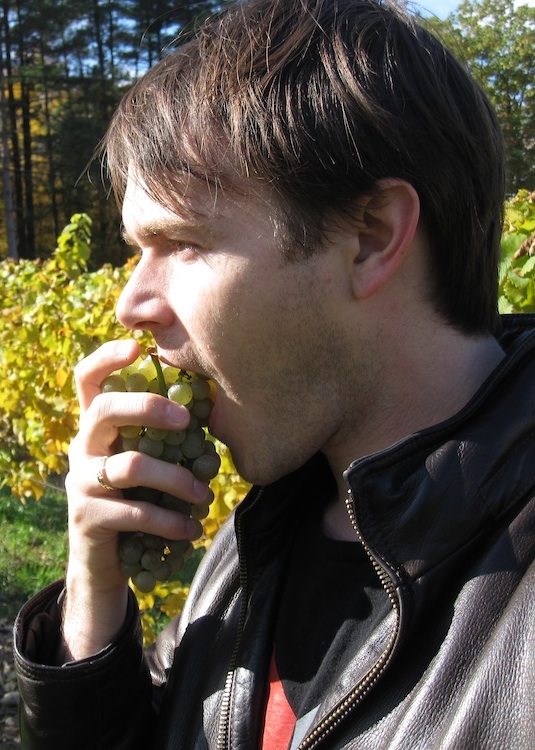
Well, sort of.  Finally between the vines, we try the grapes:

After over an hour of biking, we find our first winery:

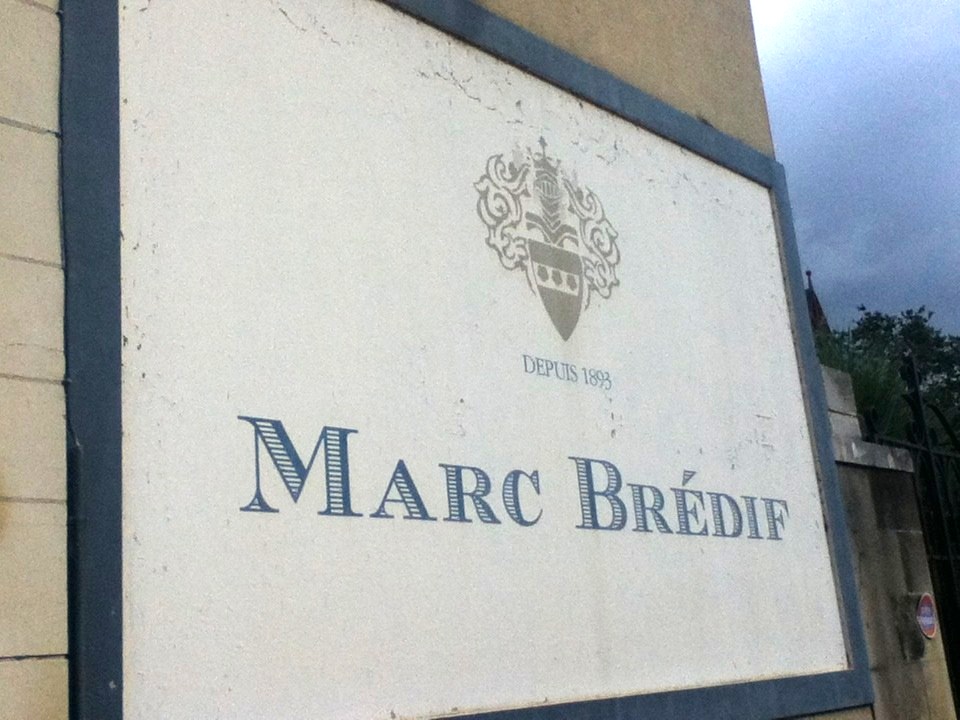
MarcBredifSign

Roadside sign.

We stumble into Brédif’s tasting room.  Dripping slightly with sweat, we find the bar.  A young woman emerges, smirking below her spectacles.

She starts us on the worryingly English-sounding “Classic” Chenin Blanc from 2011:

MarcBredifClassicVouvray

First Course.

It looks a pale lemony, green.  The aromas tempt our thirst with young, moderately intense lemon, salt, and green melon.

Our parched palates absorb a dry, racing, citrus-fest of acidity, balanced by a fairly rich and viscous medium alcohol (13%) and medium body.

Ripe but moderate flavors of melon and honey coat our palates.  The medium plus length steps this up to a very good quality wine (4 of 5).  Simple but pure Chenin Blanc.

With broken, patient English, Brédif’s be-speckled taster eases us to their 2009 Reserve Privée:

ReservePriveeVigneBlanche2009

Stepping it up.

Its colors look more yellow than green, but just as pale as 2011’s Classic.

Aromas smell equally young and moderate but show odder flavors of mint, lemon, beeswax, and clay.

A shockingly dry, minimal, 2 grams-per-liter of sugar let loaded acidity shine. A tick more alcohol (13.5%) adds to a pleasantly plump, medium body.

Pure flavors of lemon, and golden pear dominate, finished in stages by beeswax, clay, and mineral that last very long.  2009’s Reserve Privée is complex and very good (4 of 5).  Three years have served it well.

Our kind pourer catches our debate on minerality and soon, older bottles emerge:

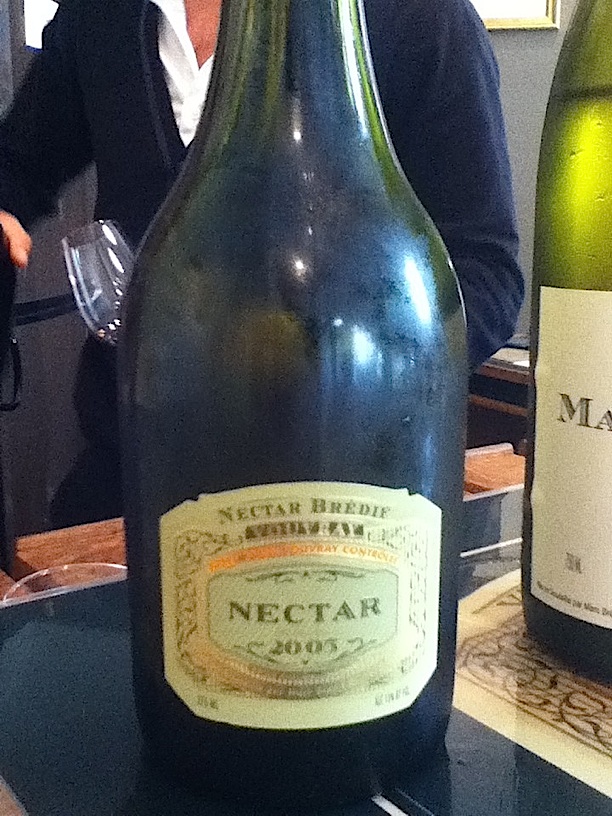
BredifNectar2005

A whole new world.

Brédif’s 2005 “Nectar” lives up to its name:

Thick, sugary legs descend into a glass glowing with gold.  Pronounced yet still developing aromas exude honey and wet, handmade paper.  High sugar and acidity factor each other out.  The viscous texture is surprisingly not heavy nor cloying.  Flavors of prickly grapefruit and asian fruits (kiwi), and apricot, finish with a lengthy, savory note.  Again, very good quality (4 of 5): a dessert wine for summer or thai food.

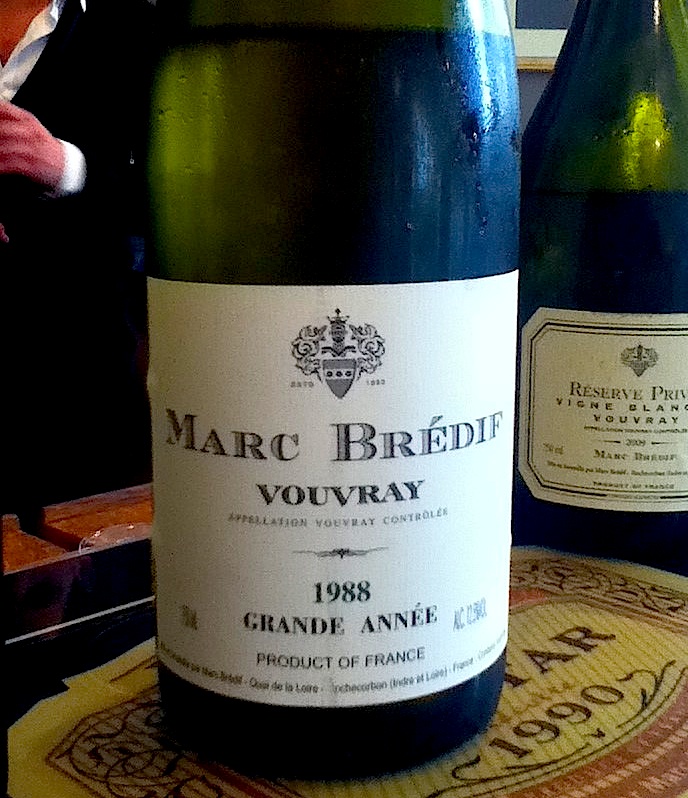
By now, our guide trusts our French, chuckles at my note-taking, and she sneaks out a final iteration of Chenin Blanc: the 1988 Grande Année:

Bredif 1988 Grande Annee

$60 if you could find it.

Now, rumors claim Chenin Blanc has the acidity to age for a century.  Brédif’s rotunda of wines dating to 1900 attest to this. But how will this 24 year old white hold up?

The clear, medium gold color shows its age.  Time has also allowed for aromas of honey, smoke, and asparagus to reach pronounced heights of intensity.

Unlike Brédif’s newer, drier wines, a touch more sugar balances a still lively acidity.  Meanwhile, alcohol and body remain medium and true to the house style.

It is on the palate, where huge, rich fruit takes us.  Turkish delight, beeswax, golden pear, and impossibly pure honey all mount one of the longest lengths our palates could imagine.

The ’88 is outstanding wine (5 of 5).

Maybe it is the posh tasting room.  Maybe it is the wine.  Maybe it is our dehydration.  But Marc Brédif‘s many wines, mostly born from Chenin Blanc, show decades of dedicated, textbook, work in Vouvray that can stand the test of time.  Sure, the Brédif family may have sold operations in the 1980s.  But the brand still makes great wine.

Check back next Monday for Part 2 of our Vouvray adventure.

The Wine Dome’s Review of Brédif’s 1988

Posted in Uncategorized | Tagged , , , , , , , , , , , , | 5 Comments