This Thirsty Thursday we travel to Bordeaux….via Australia?
Yes, far away from the famed/derided/wallabied land of Shiraz in South Australia, on the Western coast flows the Margaret River towards India:
Like Bordeaux’s Gironde River, Margaret draws moisture from the Indian Ocean, turning this nub into a cooler, wetter climate than the hot, arid sands of the East.
Cape Mentelle saw potential and planted Bordeaux’s famed Cab Sauv, Merlot, Semillon, and Sauvignon Blanc: grapes that honestly can’t handle hotter climates.
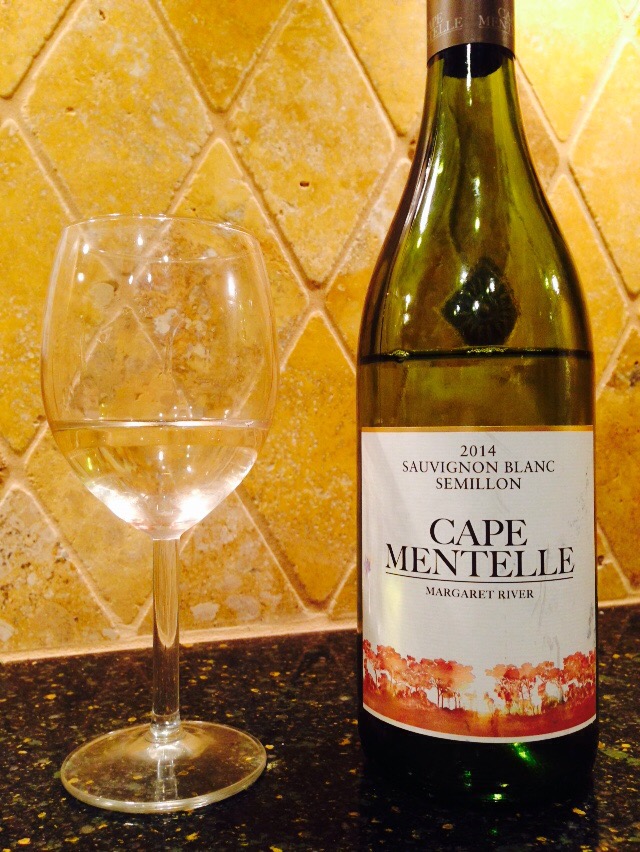
This Thirsty Thursday we wake our palates up with a 2014 (thank you Southern Hemisphere) blend of 55% Sauvignon Blanc and 45% Semillon.
Appearance: A clear, painfully pale lemon fills my glass, glinting wintery and white.
Aromas: Lime peel, verbena, white tea and sea salt emerge with moderate intensity.
Palate: Dry, tightly strung acidity lightens the already light 12.5% alcohol into an even more feathery body.
Flavors: Semillon’s plump melon and pear (Orange zest?), morph into Sauvignon Blanc’s fresh squeezed lemon juice and salinity. Mouths water for hours as does the length.
Conclusions: Cape Mentelle’s 2014 Blanc is austere, vibrant, yet seductive: a fantastic nod to its Bordelaise heritage. For under $20 I dare you to find a bright, cooler winter white.
Last Monday’s EU Austerity Drinking Tour landed us in Strasbourg’s Christmas markets, on top of its Cathedral, and enjoying its wine. Today, we descend into the caves of the Hospice de Strasbourg.
As with our visit, not ten days prior, to Burgundy’s Hospice de Beaune, we find Strasbourg had its own, even older medical, religious, wine cellar. Since 1395, cellars beneath the city’s hospital provided wine as medicine and sacrament. Like Beaune, this hospice gained vine-land from guilty proprietors bent on heaven. Although wine-making stalled during the last century, it reformed as a cooperative in 1995. Let’s see what survived the centuries.
Pressed against Strasbourg’s medieval walls and beneath its tower gate sits the Medical University:
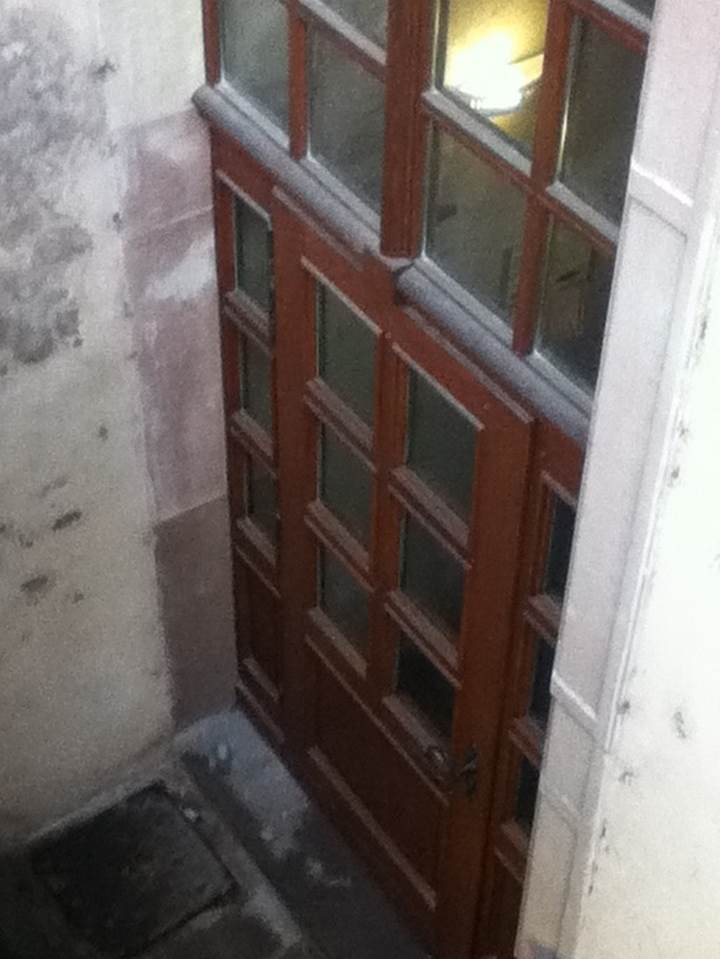
Around the complex, hidden behind the hospital, are some unassuming (i.e. handicap inappropriate) steps and a door:
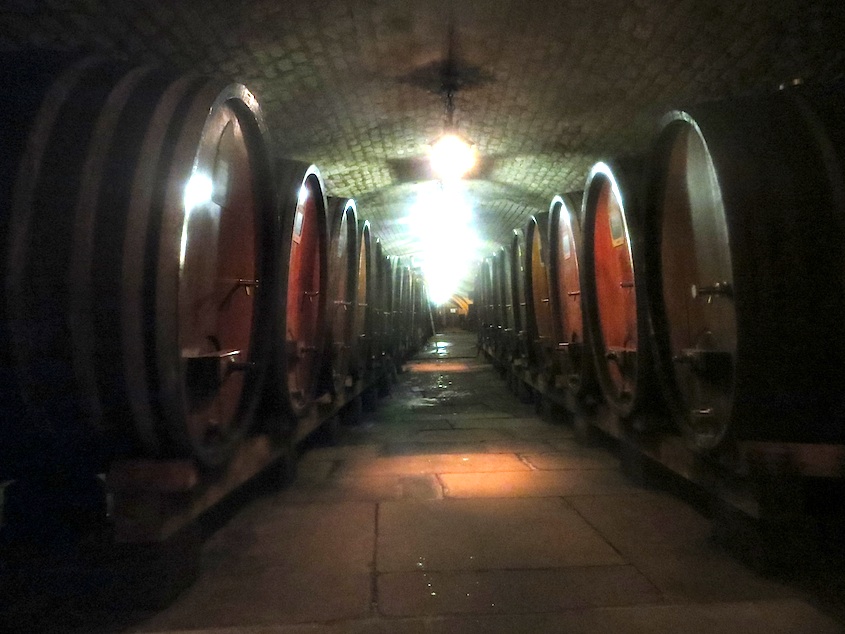
We pass a counter and a case-stacked shop and enter the barrel cave:
These massive, ancient barrels turn out 150,000 bottles of white wine produced by various growers throughout Alsace. It is damp but cool down here.
We walk deeper in and find barrels larger than my college dormitory:
French Revolutionaries once hid in these tunnels. Today, each barrel has a chalked sign indicating its grape and producer.
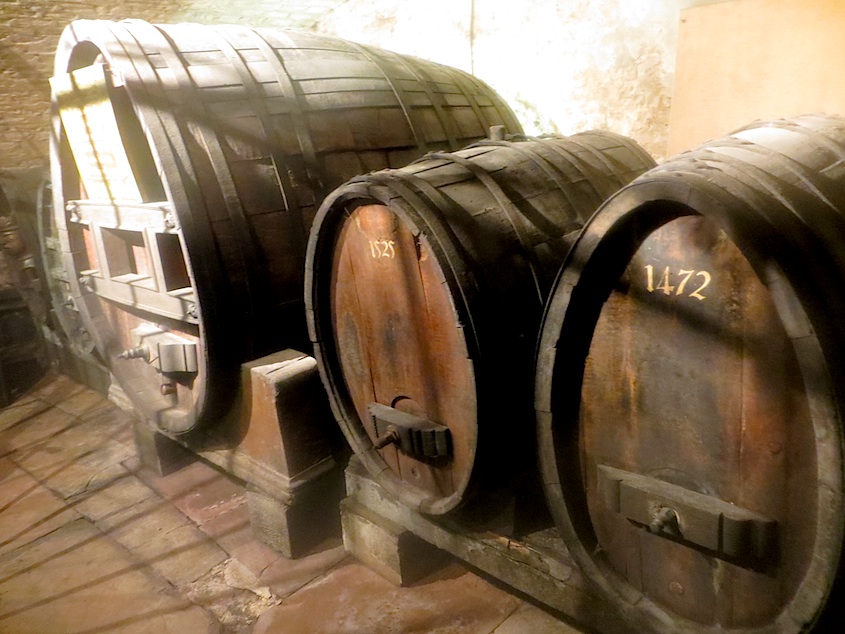
We walk to the opposite end and find a treasure:
Yes, this barrel has waited since twenty years before Columbus first vacationed to the Bahamas. It has been tasted in 1576, 1716, 1868, and 1944 when Leclerc liberated Strasbourg. Germany cracked its own 1472 bottle in 1994, finding “great complexity…vanilla, honey, wax, fine spices, and fruit liquor”: not shabby for the world’s oldest viable wine.
Since we didn’t liberate Strasbourg, we return to the shop to purchase humbler cuvées.
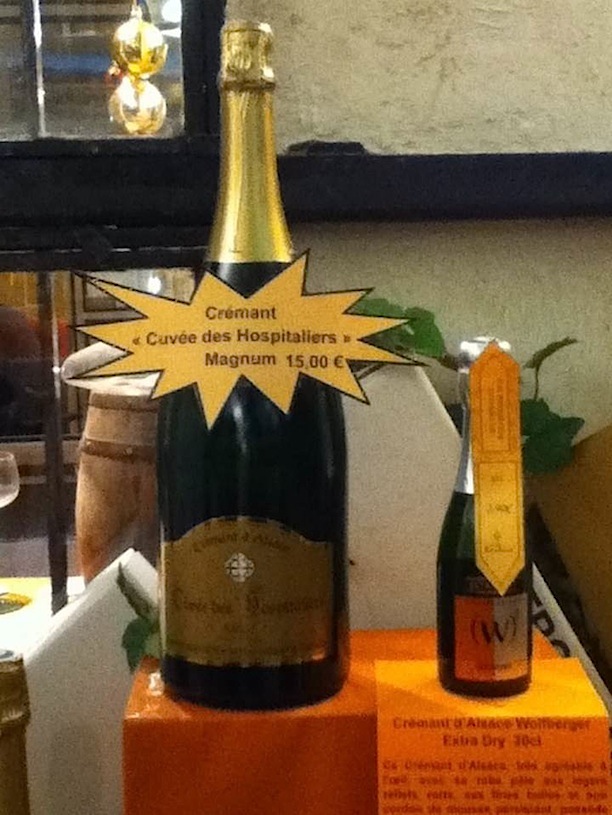
Amidst the many fantastic, complicated, and expensive things, we find bubbly on sale:
We nearly buy the magnum, but austerity measures keep us to the 750ml. Willy Gisselbrecht made this fizz (this is a cooperative after all). But how does it show for €7.50?
Cave Historique des Hopitaux Universitaires de Strasbourg, Cuvée des Hospitaliers, Crémant d’Alsace, France. NV. €7.50
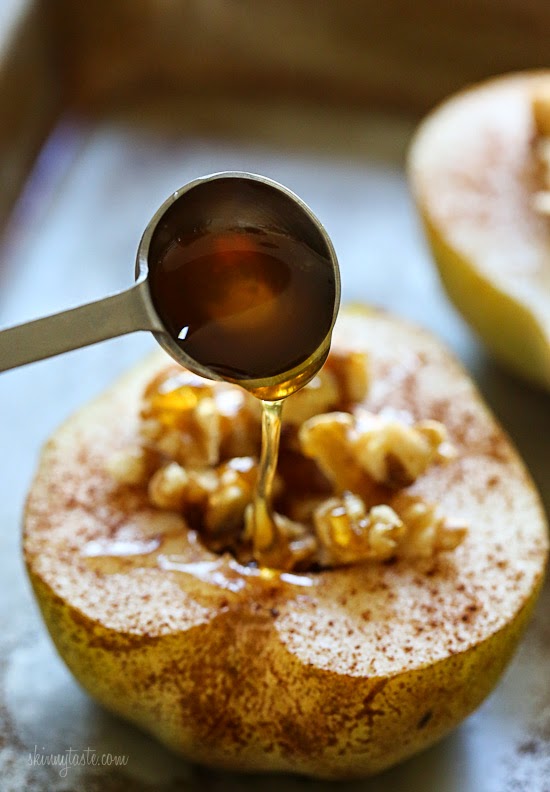
Appearance: Mild lemon in color, clear, with some very casual, medium minus-sized fizz. Aromas: smell developing and pretty present, with honey drizzled over a baked pear, vanilla, and chestnuts.
Wiping the sweat from my brow after that pornographic pear: the Palate: feels surprising dry, with medium plus acidity, mild alcohol 12.5%, and a medium body. Turning from the nose, medium intense flavors of lemonade, honey, and chestnut, lead to a lengthy mineral finish.
Hospice’s Crémant is a very good (4 of 5), all around fizz that would stand up to mild cheeses, appetizers, and most lunch fair.
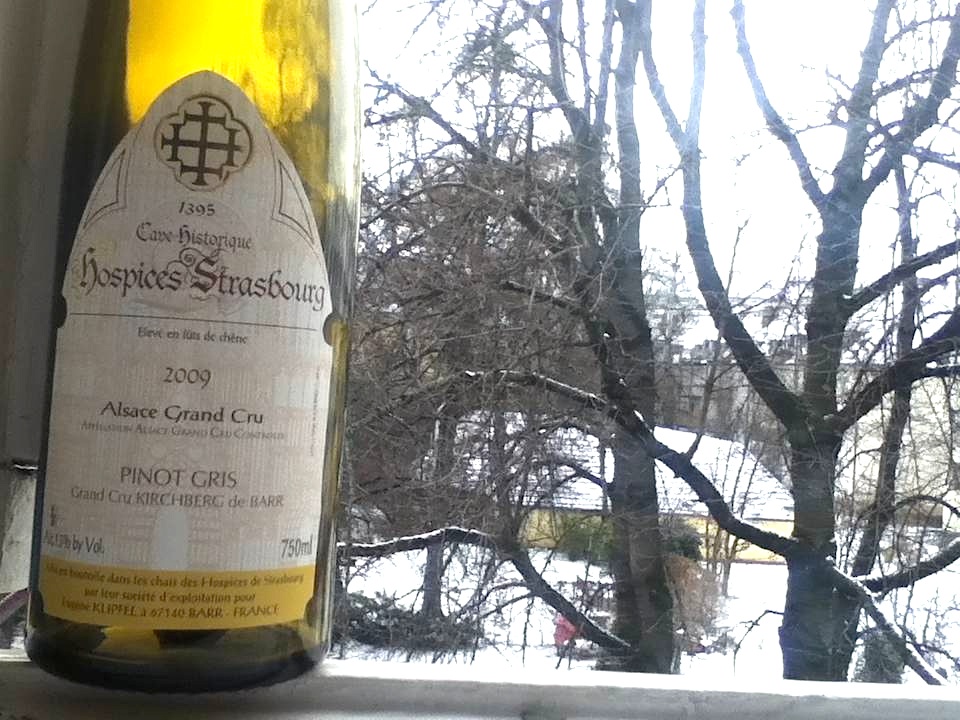
Inspired, we venture into the ‘teens of Euros and buy a Grand Cru from Barr, southwest of Strasbourg:
Cave Historique Hospices de Strasbourg, Pinot Gris, Alsace Grand Cru Kirchberg de Barr, France 2009. €12
Appearance: A pale lemon gold color carries from core to a short, clear rim, with noticeable legs.
Aromas: smell of youthful and pronounced ginger, vanilla icing, spiced pear, and roasted chestnut: similar to the bubbly, but oh so much more extravagant.
Palate: The medium minus sweetness locks down the free-wheeling medium plus acidity, med alcohol 13%, and medium body. The texture is viscous yet fresh.
Medium plus flavors remind me of spiced pear, golden apple, honey, and vanilla all of which carry harmonious along the medium plus length. The Hospice’s Grand Cru Gris is very good (4 of 5). Delicious.
Usually Pinot Gris suffers from blandness. But here it amazes us. This is the glory of Alsace. The cool, continental climate keeps grapes under raps: like an introverted child, they retain acid, intensity, complexity, and age-ability that is only unleashed after slow ferments and barrel aging.
Check back next Monday, when we continue our adventures in Strasbourg with beer!
Mimolette: that Tahitian sunset-colored, melon ball of a cheese has returned.
Last spring the Orwellian Federal Drugs Administration decided that no more than 6 microscopic cheese mites per square inch could exist. 3,800 pounds were destroyed. It did not matter that the mites never broke the rind, nor that compressed air and brushing removed them, nor that Lille has produced it since Louis XIV, France’s Sun King, demanded it’s creation.
No, bugs were gross. The possible allergies were horrific. Gods forbid cheese be a living evolving thing. I won’t even mention how many people yogurt has laid to waste. And so, for the last year we ate Velveeta.
But last week a glowing pumpkin-tinged wedge appeared in our deli.
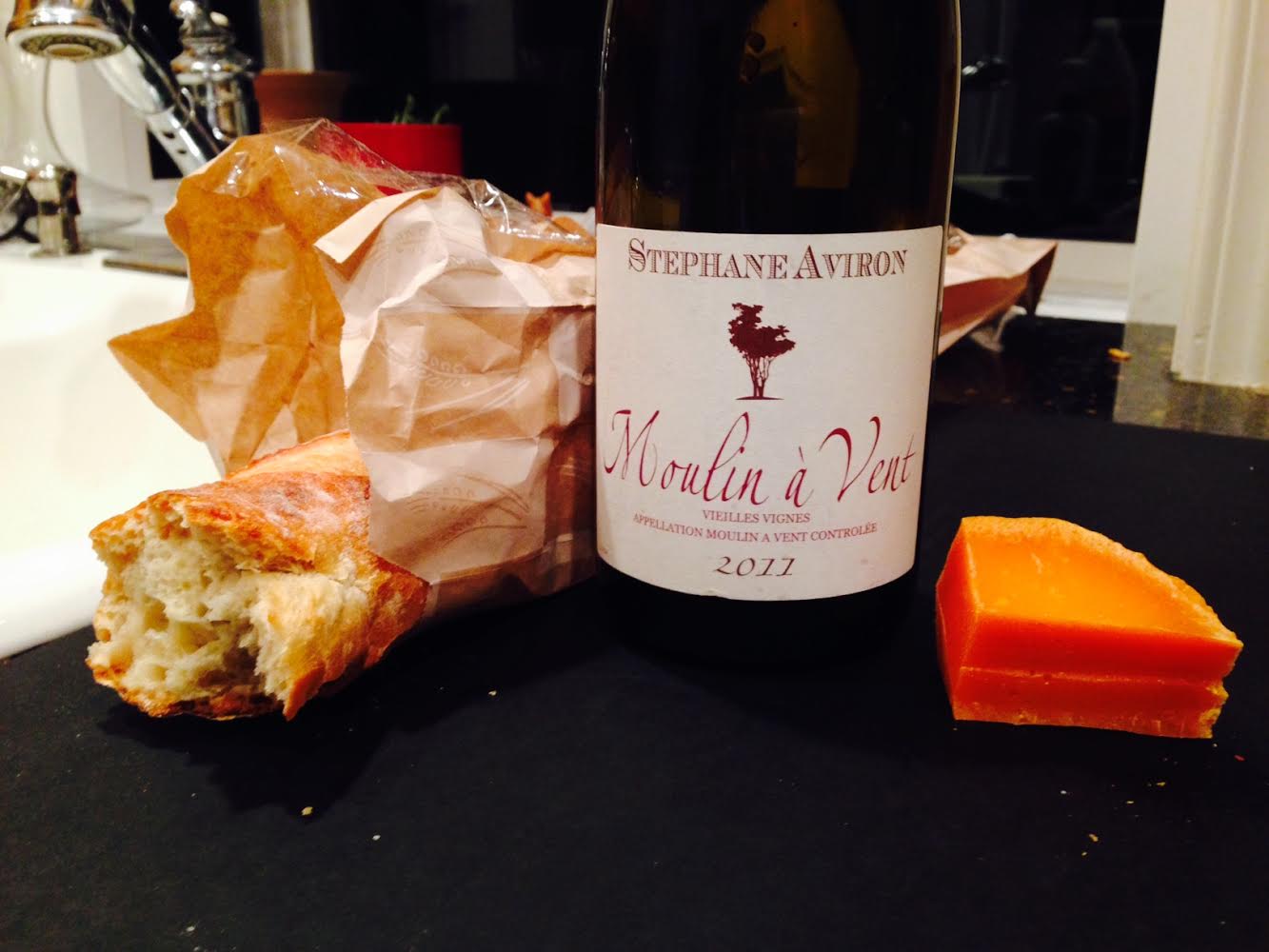
Tonight we celebrate one of France’s greatest gifts to world. The enthralling, earthy, nutty magic that is Mimolette.
All that saline, turkey-broth, sour cream, wax-like, dry hay-flavored hard cheese pairs beautifully with the incisive, wild, yet moderately medium bodied Moulin à Vent from Stephane Aviron. This sustainably farmed Beaujolais, from a few small plots of vines that average 65 years (up to 100), provides a lean, tart, wild, yet similarly plump melon, bramble berry fruit with light herb and earth that dance a dance of revolution with the Mimolette.
We leave Luxembourg after three days. It was cold, charming, and filled with the leanest wine I have had. But this way we avoid bias or over-attachment . The fish starts to smell after three days, as grandma said. After 136 days of travel, we fight to keep things fresh.
So no respectable EU Austerity Drinking Tour would head to Germany without a brief stay in Strasbourg: heart of Alsace and its fantastic wine.
Germany and France have traded this border capital many times. Its wines reflect this fusion: labels list grapes varieties like Germany, styles follow French dryness, grapes range from Pinot Noir, Gris, and Blanc, to Riesling Gewurztraminer, Muscat, or Silvaner: all growing happily in this tower of babel.
Strasbourg charms to the point of cloying. Winter dusts its high peaked rooftops. Christmas markets fill every square. Luckily, we have an apartment to ourselves (with a kitchen!) in its historic core.
Not a bad view.
We hit the streets, which weave ancient paths between homes, pubs, and canals.
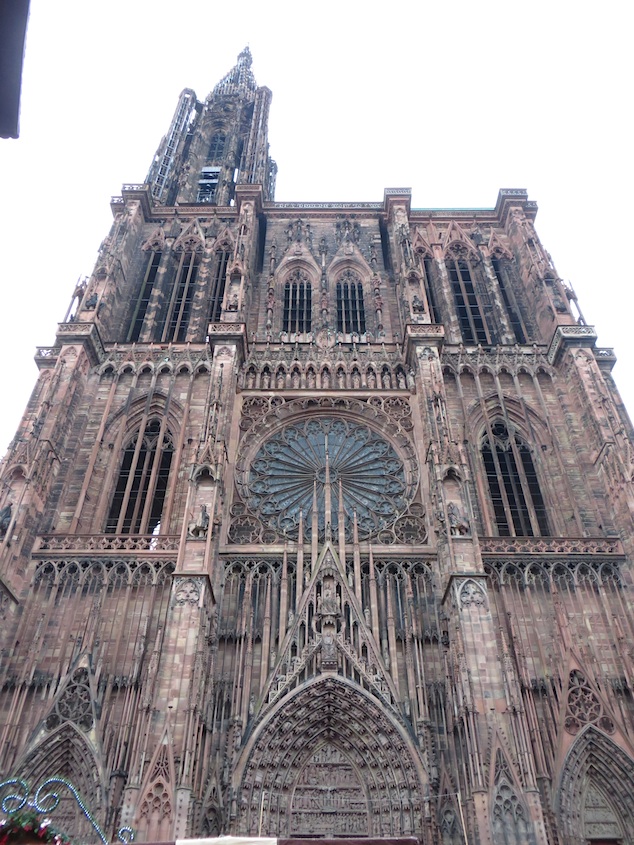
We set our sites on climbing Strasbourg Cathedral. The world’s tallest building for 227 years (still the sixth-tallest church) can be seen every on the horizon. However, we must cut through crowds and Christmas markets to reach it.
Finally we reach Goethe’s “wide-spreading tree of God”…eat your heart out Redwood Forest:
A climb to the top reveals the most spectacular view:
Yes, those are the Vosges mountains. They block any remnant of Atlantic or Mediterranean weather, thus rendering Alsace sunnier, drier, and more extreme in temperatures than the rest of France. This creates wine more intense yet lean, delicate yet austere, than most places in the world.
Since it’s too freezing for vineyard visits, we go shopping. Just down the street from the Cathedral, sits the slick tasting boutique of Wolfberger.
Let’s reconfigure our palates to the region with the German-sounding, French-ish bubbly: Wolfberger, Brut Rosé, Crémant d’Alsace, France, NV. €6.39
Appearance: It looks a clear, salmon pink, with rapid, small bubbles. Aromas: smell moderately of clove, wild strawberry, and lemongrass. Palate: feels just off dry, with zingy acidity, mild alcohol (12%), and a light body. Flavors: taste of wild strawberry, tart apple, clove spice, and almonds. The length lasts a fairly long while. Wolfberger’s pink fizz is completely representative, good (3 of 5), mouthwatering, but aptly undemanding and not complex.
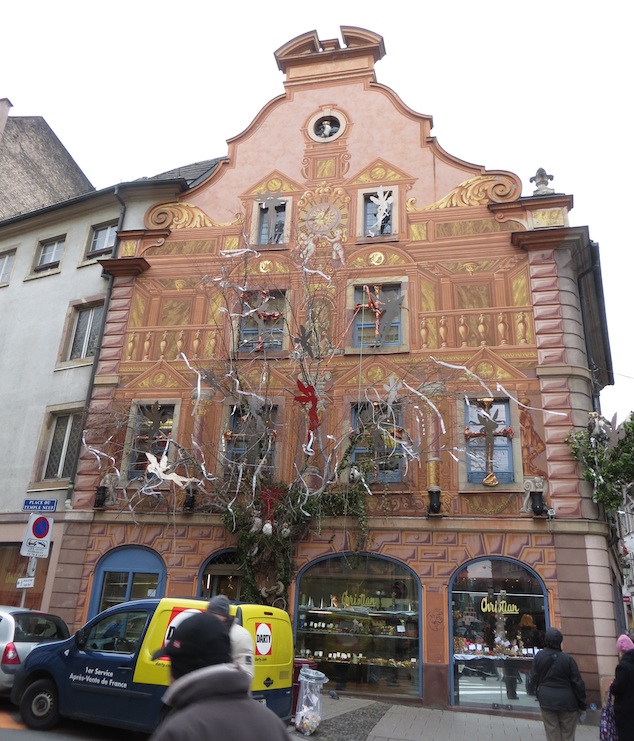
A little further we find Christian: Strasbourg’s famed chapel to all things chocolate:
After picking up a few candied balls, we find a Christmas Market tent housing a own nationally recognized baker:
We hit up another Christmas market focused on Alsatian produce. Hungry, we delve into cups of mushroom soup, spiced white wine, and cheeses.
Luckily an extremely small winery has a chalet: Domaine Loew. While my wife gets distracted with the facing flour mill pastry chalet, I sample through Loew’s awfully young, citric wines. But one stands worthy of taking home:
Their single site Riesling: Domain Loew, Riesling, Bruderbach Clos des Frères, Alsace, France 2010. €10.50
Appearance: looks clear, bright, pale gold. Aromas: smell youthful but pronounced with classic peach, apricot, honey, lime, and mineral. Palate: Off dry sweetness tames this cool climate high acidity. A medium alcohol 12% makes for a light-ish body. Flavors: taste of bold lime juice, salt, honey, and young peach and carry a long while.
Germanic, with French roots: Loew’s Bruderbach 2010 Riesling is young, vibrant, and mineral. With all that acidity, it will show its stuff in a few more years (probably now when I write this post). Either way, it is very good (4 of 5).
Alsatian wine, like Strasbourg, is fantastically bipolar. People with German names speak French, bake brilliant pastries but also cook fantastic sausage.
Next Monday, we get a bit more historic and tumble into the caves of the Hospice de Strasbourg and its fantastic wine.
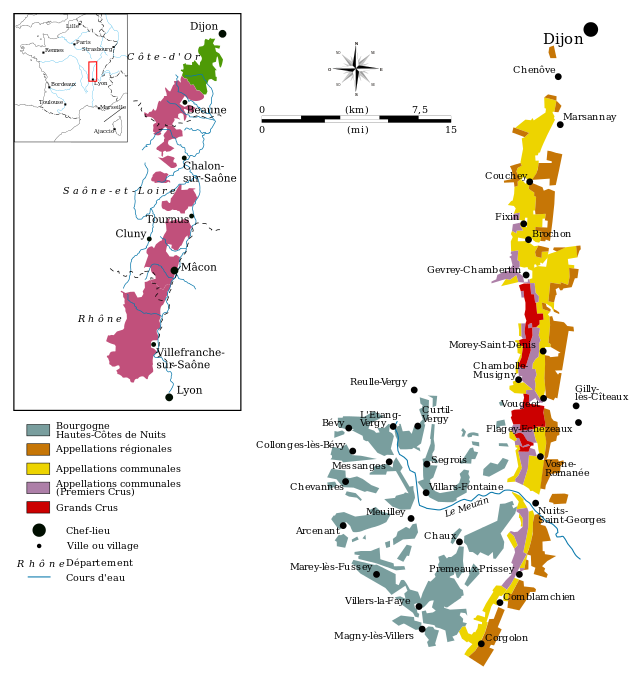
This Thirsty Thursday we look to a small wedge in Burgundy. 4 wee hectares (just 9.9 acres) of Pinot Noir to be exact. Called la Prieuré, it sits on the Western edge of the Hauts-Côtes de Nuits (that blue splotch on the map) near Arcenant.
In 1970, Mr Verdet decided to get it Organic Certification: one of Burgundy’s first. In 1981, his son Aurélien was born (good year). Under his father’s wing he quickly learned how to make fantastic wine. That 4 hectare plot became his sandbox. When dad retired in 2005, Aurélien took over and has since acquired some of the best vineyards throughout Burgundy.
But that little plot is still his baby. Entirely hand-harvested, sorted Pinot gently macerates at cold temperatures for 10 days, then pumping over starts a gradual, native yeast fermentation for 15 days. Up to a third of new barrels from Tronçais and Vosges forests then gently age this wine. This Thirsty Thursday we splurge and try it.
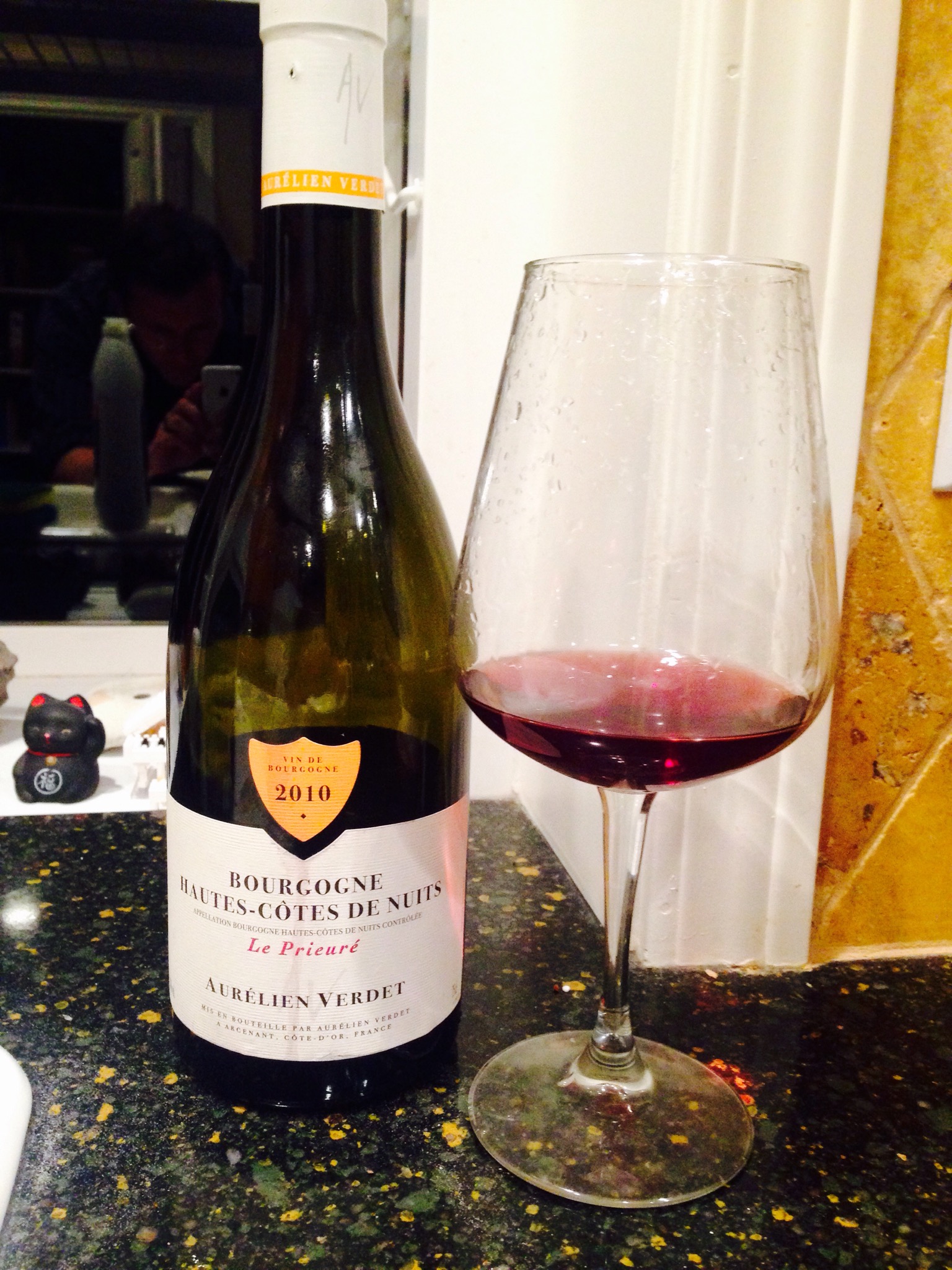
Aurélien Verdet, Hauts-Côtes de Nuits, la Prieuré, Bourgogne 2010
Appearance: A clear, bright but mild ruby fills the glass, rimmed by a light garnet frame.
Aromas: An enveloping, challenging, complex bouquet can be smelled for miles of tart wild cherry. Dig deeper and find slight clove, chamomile flower, and white wood.
Palate: La Prieuré rings with steely acidity, lean, present tannin, medium body, with a 12.5% alcohol, warming finish.
Flavors: Intense, precise unsweetened cranberry juice, slight caramel, a steely minerality, followed by a slight menthol and grey smoke on the long finish.
Verdet’s 2010 is all focus and edginess yet extremely detailed and minutely intricate in its flavor complexity. This wine is fascinating now, if a bit precocious, but will age beautifully another ten years at least. Outstanding (5 of 5) stuff, and at $32 a worthwhile splurge.















 WAYWARD WINE