A Study of Scarlet: A Red Wine “Conundrum” #MWWC6

Click and vote today for this submission to the Monthly Wine Writing Challenge:wine-stain1-2
Of all our adventures together, I hesitated to publish this for fear of disclosing information dire to national security and international trade.  However, upon hearing that the serial publication, Monthly Wine Writing Challenge (#MWWC6), had chosen “Mystery” for its 6th topic, I could not resist.  The following is a faithful account of one of Sherlock Holmes’ greatest cases.

We arrived at the crime scene before Scotland Yard.

My associate opened the door and we walked into a cavernous space.  It was brightly lit, like a stage at London’s Palace Theater.  But instead of costumed-actors, brightly colored isles spanned for a seeming eternity.  Innumerable produce and products of manufacture filled its shelves.  It reminded me of a Sunday market or bazaar but entirely under one roof.

I expected him to jump into action, as was his habit.  Instead, with arms folded, only his eyes studied the room as we walked.

“The telegram explicitly stated it would be here”, he murmured impatiently.

“What would be here?”

“A question, Watson.  That’s what.  A quandary.  But not just any query, the ultimate uncertainty.”

“I don’t follow.”

“You may recall that anonymous telegram we received this very morning.  It placed before our feet a seeming trifle of a riddle.”

“You mean this?”  I pulled the telegram from my waistcoat and read it, “‘Find the question which reads as clear as glass, looks as red as blood, but its many parts cannot be solved. Discover and determine what it is.  Hurry.’  What could it possibly mean Holmes?”

“You see, but do not observe, dear boy!  I loathe such riddles.  But this one holds facts: a question, glass, red, parts.  It’s all there.  We just have to find it.”

We reached the last row.  Finally, his whole body snapped into attention.  His dark eyes sparkled with mischief beneath a knitted brow.  He weaved up and down the shelving unit.  Midway, something stopped him.

“Haloo! What’s this?”

His long fingers drew out a bottle.  Something resembling a grin glimmered across his face.  He cocked an eye at me.  “We have a long evening ahead of us, Watson.  We must return to Baker Street immediately!  Do pay for this, my purse is in all likelihood left at home.  I will go to the trouble of calling us a Hansom cab.”

Back at 21b, and ₤14 the poorer, I sat at our breakfast nook and stared, quite bewildered, at the purchase:

Conundrum California Red Wine 2011

Querulous!

Then Sherlock burst from his bedchamber, newly attired in his dressing gown, and fell into the chaise.

“What do you make of it Holmes? What wine is this? Why Conundrum?” I ejaculated.

“Why indeed!” He then leaned in, closed his eyes, peaked his hands, and began:

“Let us start, rightly as you did, with the present facts.  The label calls it ‘Conundrum’ but provides little more than a vintage and the grammatical muddle, ‘A Proprietary Blend of California Red Wine‘.  Therein lies our question.  What wines, or rather, what grapes make up this mysterious blend?  Our unknown telegram writer needs to know.  But we cannot make bricks without clay!  Open it!”

I cracked open the screw cap and poured two glasses.  I then lifted the glass to my lips, when, to my unutterable astonishment, he dashed it to the floor.

“Watson!” he cried, “We must employ our facilities in the appropriate order.  Otherwise, we loose the thread by racing to the finish.”

Recomposed, he continued, “Let me share a bit of my method.  First, observe.”

He held out his glass:

Conundrum Red Glass

Dark as crime itself!

“Now, use that prowess of narration that has penned our many exploits with such a worrying focus on the dramatic and not the scientific.”

I searched for words, “It looks a deeply intense crimson, nearly opaque, like an inkwell, excepting a narrow, clear ruby rim.”

“Outstanding, old chap!  That implies dark-skinned grapes, such as Zinfandel or Petite Sirah, commonly grown in California.  From these, intense colors can be extracted.  Clearly, few white grapes were employed.  Now, apply your nose to it.”

I smelled it, “It smells intensely of black fruit compote, like blackberries, blueberries, red cherry sauce, cola, and tomato, followed by aromas of coconut, caramel, vanilla husk, and cigar ash.”

“Quite right!  That intensity derives from ripe fruit and high alcohols only found in grapes from warm climes such as California.  Your many red and black fruits indicate a wide blend.  The blackberries are the Petite Sirah, maybe Cabernet.  The blueberries: Zinfandel again.  The red cherry: Syrah. The cola and tomato: mayhaps an underripe Pinot Noir.

Your spice notes show it saw barrel aging.  The coconut and caramel hint at American oak, while the vanilla husk and cigar ash implicate additional French oak.  Now, you may taste it.  But don’t dwell upon the flavors.  Parcel it into its constituent parts: Sweetness; Acidity; Tannin; Alcohol; Body; Texture.”

I sipped and thought, “It tastes off-dry, moderately acidic, moderately tannic, with notable ethanolic heat, leading to a medium plus full body, and silken texture.  The flavors match the nose.”

“Hah!  Well diagnosed doctor!  Clearly this is Californian in its soft, yet full-some style.   Americans wither at the more tannic wines of Margaux in Bordeaux.  Thus, we can deduce gripping Cabernet and Petite Verdot are not the main grapes.  Its high alcohol and matching body likely come from Zinfandel, Syrah, or Petite Syrah.  Pinot Noir rarely reaches such heights. Merlot may be possible, but not probable, given that you omitted its tell-tale plum notes.”

He picked up the bottle, “This winemaker, Charlie Wagner II: likely American, likely early middle-aged heir to a winery with a predilection for camping and off-roading, has created a complicated but approachable blend of mainly Zinfandel, Syrah, and Petite Verdot, backed by minor amounts of Pinot Noir and a few other grapes.  2011 clearly is only his second attempt at a red.  The residual sugar and use of oak might distract most from this hunt.  It is neither bad, nor great, but solidly good.”

“Astounding Holmes!  You have not even tasted it!  How did you know?”

“When you have eliminated the impossible, whatever remains, however improbable, must be the truth.  Now, send a return telegram of our findings to this anonymous person’s address.  If I’m correct, they will be most pleased.”

Some weeks afterwards, we received a letter of thanks, again unsigned.  Holmes, noted the hand of a most august lady, but said no more.  We later heard of case shipments to a “B. Palace”.  I fancy that I could guess at that lady’s august name.

Vote today for this submission to the Monthly Wine Writing Challenge theme: Mystery: http://thedrunkencyclist.com/2014/01/14/monthly-wine-writing-challenge-6-mystery-time-to-vote/

Posted in Uncategorized | Tagged , , , , , , , , , , , , | 19 Comments

My Fair Muscadet: Plain Grape Turned Into Audrey Hepburn

Before New Year’s Eve kicks in, this Monday’s EU Austerity Drinking Tour post revisits a candy shop on France’s Atlantic Coast.

We zig zag through Nantes‘ medieval streets.

Nantes Medieval

Just another side-street.

The rain and gray sky drives us in and out of glittering shops.  But not far from city center glows Gorges Gautier: chocolatier:

Georges Gautier Chocolatier

A place of magic.

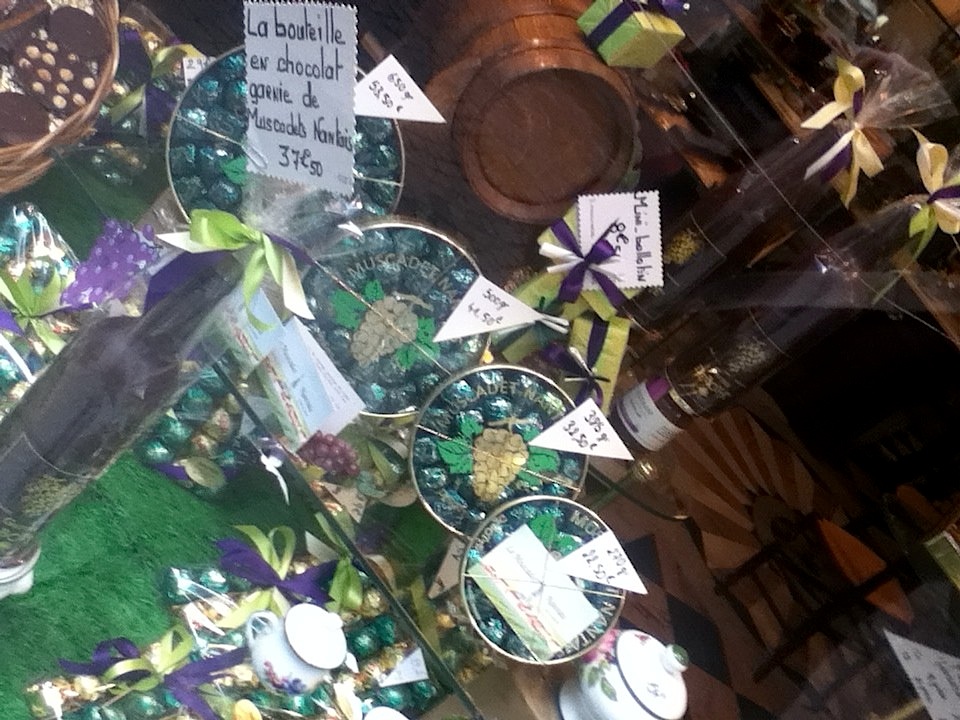
“Chocolate? But this an EU Austerity Drinking Tour travel post”, you wonder. Fret not. Past the window’s marzipan mountains and licorice forests, which look like a Francophilic Candyland, we spot Muscadet:

MuscadetChocolates

Green balls and chocolate wine bottles!

Inside, surrounded by a sea of gilding and ornate wood paneling, we go to the bar.   A magic mound of green foil promises chocolates with Nantes’ famed grape Muscadet and its spirit hide inside.

MuscadetBalls

Promising!

I follow my wife into a yarn shop.  While gets tangled in a rainbow of alpalca, sheep, and angora wools, the chocolate stares at me.

GautierChocoWrapped

Staring into my soul.

It whispers, “Eat me! She’ll never notice!”. I am curious. Be strong. Wait. Just for the sake of science, I will unwrap it.

MuscatChocolateUnwrapped

Resistance is futile!

Lovely cocoa aromas breath from the round brown ball, dusted on top with chocolate chips. “Quickly!” It says!

I look around. My wife has her hand stuck in a button jar.  Fine! You win!

Daintily, I take a small bite.  It explodes like a syrup-filled water-balloon.

KabboonChocolate

Kaaboom! Muscadet!

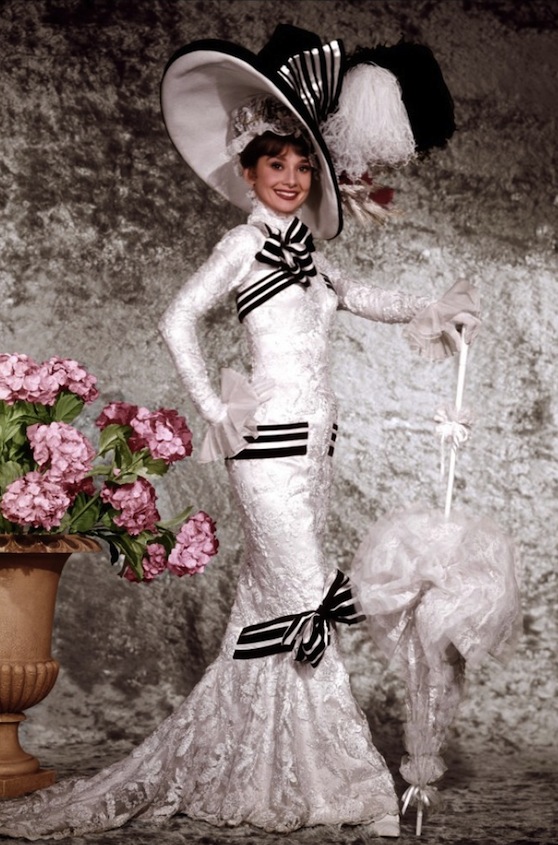
Loads of sweetness and alcoholic warmth play against salt and citrus notes.  A fat, drunk, golden muscadet grape swims in this chocolate hot tub.  My sticky fingers feed another bite. That plain, citric grape has transformed into something delicious, ridiculous, cloying, yet irresistible:

my-fair-lady-1964-03-g

Casual wear.

Before I can string this metaphor any further, my wife catches me.  I share the half.  She forgets yarn and enters euphoria.

High on sugar, we spend the rest of the day gleefully exploring Nantes.  A walk up the Arcade of Sciences, a mall devoted to the city’s scientific arts, is not too far from that crazy candy.

NantesHallofSciences

Ornate? Yes.

Posted in Uncategorized | Tagged , , , , , , , , | Leave a comment

Counting Down: How to Crack Champagne for New Year’s Eve

The countdown begins. Eyes watch the ball drop. 3. 2. 1.

Corks crack open, impale an uncle, and flutes fill with Champagne.  It disappears just as quickly.  But between the hugs, huzzahs, resolutions, and regrets, you wonder: was that $40 plus bottle of Frenchness worth it?

It tasted fine. Maybe a bit tart, or a bit fruity, or a bit toasty. But memorable? Maybe it was too cold. Maybe the excitement distracted you. But we here at Wayward Wine blame New Year‘s Eve.

Heidsieck & Co Monopole,  Blue Top, Brut, Champagne, France NV

We just opened a (relatively) low-priced Champagne (under $35).

HeidsieckCoMonopole

A fairly common fizzy Frenchy.

It looked a clear pale gold.  Bubbles raced up to create a head of fizz.  Aromas were unexciting, with a cloying lemon tart and matches. The palate felt harsh, tart, and full of lemon pith and chalk.  We tried it again, now adjusted to the acidity.  Still lame.  The moderate length also disappointed us.  It seemed good, textbook, but hardly great.

But then we remembered something.

While in Paris last year, my wife and I caught wind of trend: decanting Champagne.  Posh bistros would pour Champagne into carafes.  That air time released a chunk of CO2, creating a softer, less aggressive fizz.  Then the wine’s flavors and fruit could shine.  And Champagne doesn’t go flat because it is bottle-fermented (and basically has more CO2 than tanked Prosecco).

But there’s more.

Like most wine, most Champagne gets a dose of potassium metabisulfite before the cork closes it.  That keeps the world from drinking vinegar (and does not cause headaches: read here).  But open a bottle and you smell burnt matches.  Decanting gives a chance to let the sulfur blow off.  Then the various aromatics inherent in the wine can shine.

Now this really regards Non-Vintage Champagne. NV makes up most of Champagne’s production.  It is also cheapest because it is young: spending the least amount of time aging in bottle.  The fizz, acids, and tannins are at their most aggressive.  All that youth, like a young Bordeaux, needs time to open up.

Distracted, we topped our Heidsieck and forgot it in the fridge.  After forty-five minutes, we tried it.  A fine, casual pearl of bubbles drifted upward.  Aromas of lemon tart remained. But the matches were gone.  Now kiwi, ginger, and baguette shined.  The popping acidity persisted, as did flavors of lime and lemon pith.  But it tasted juicier, with a light strawberry (tell-tale pinot), baker’s yeast, and chalk.  Our Heidsieck could never be outstanding, but it tasted a far sight more complex, interesting, and pretty good (4 of 5).

For New Year’s Even, we’re not suggesting a huge song and dance with the decanter. You don’t want guests to think you’re mad.  Hell, don’t even decant it.

Just open it in secret at least a half hour before the ball drops. Yes, you can’t impress (or impale) your friends with a timed, rocketing cork. But your splurge on NV Champagne will taste as good as it could.

Posted in Uncategorized | Tagged , , , , , , , , , , , | 4 Comments

Other Muscadets and Oddities: Coteaux de la Loire, Grandlieu, Gros Plant, Fiefs Vendeens, Chenin, and Muscadet

Yes. Winter grips the Northern hemisphere. But turn your minds to warmer weather. Our 7 month 13 country EU Austerity Drinking Tour has visited Muscadet’s famed Sèvre-et-Maine and every-day Muscadet.  This Monday, we try on Muscadet’s other wine regions for size.

On the Loire’s right bank, North of Sèvre et Maine sits Coteaux de la Loire in the hills above Ancenis:

NantesNewMapcdl They too mainly grow Muscadet.  But how do they perform:

Les Vignerons de la Noëlle‘s “Folies Siffait” Muscadet Coteaux de la Loire, France 2011

Like most Muscadet, Noëlle looks pale lemon with a slight fizz.  Young, powered aromas include pear, yeast, and mineral.  Dry, crunchy acidity makes for a featherweight body, that is clean and not fruity.  Flavors of wax, salt, lime juice, and coastal air fill our palates for a pleasant, medium length.

Noëlle’s Côteaux is good (3 of 5), simple, fresh, and unassuming. The price is perfect at €4.50.

Lets swing southwest to Lake Grand-Lieu:

NantesNewMapGrandlieu The Muscadet grape remains the same, so what’s different? Although closer to the cold Gulf Stream of the Atlantic Coast, Grand-Lieu lake provides a protective heat sink. Soils are mineral-rich yet marshy.  Only the best spots are higher up with gravel for drainage. So…

Domaines des Herbauges, Château de la Pierre, Muscadet Côtes de Grandlieu, France 2010

Again, a lithesome lemon color.  Average intensity aromas turn more to ripe golden delicious apple, vanilla, and slight nutmeg. Gone are the mineral and pear of above.  Acids still reigns supreme, but a fuller, medium body is doubled by a creamier texture. Mind you, this Grandlieu still feels zippy; this is France’s coldest and wettest climate after all.  Flavors again are average intensity and similar to CdL, with grapefruit, and fresh lemon juice, but notably more salt and mineral. The length is longer too.

Herbauges’ Grandlieu is good (3 of 5) and certainly fuller yet saltier (€6.20).

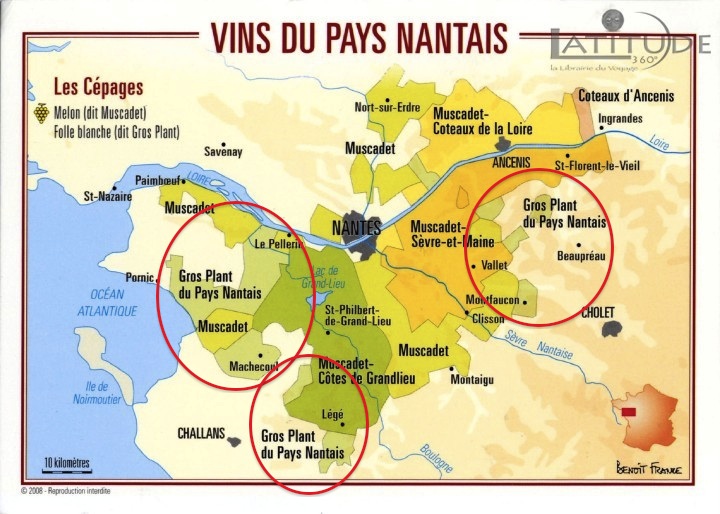
But the Loire Atlantique grows more than Muscadet. Let’s switch grapes: Folle Blanche

NantesNewMapGrosPlantMuscadet’s fringes are too coastal (W) or hilly (E) to grow quality Muscadet. Instead Folle Blanche, aka Gros Plant, aka that bland base for Cognac and Armagnac, has infamy for France’s leanest, most acidic wine.  A dutch need for liquor spread it all over Western France.  Today, vineyards dwindle for this cooking wine.

Domaine de la Landelle, Folle Blanche, “Cuvée Domaine” Gros Plant, France 2011

This Folle Blanche looks water-clear with barely a tint of green.  However, the nose is markedly loaded, with melon, citrus, and bubblegum aromas.  Dryness, no body, and high acids lead to limp flavors of citrus, grass, and salt. The length is short. The wine is acceptable (2 of 5) for drinking, but probably better in a sauce (€4.15).

Hmm…we can’t end there. Further afield, our glasses swim South to Fiefs Vendéens:

LoireMap2FiefVendeensFiefs Vendéens grows Pinot, Cab, and Negrette.  It is a small, marginally Loire Valley wine region. Today’s white consists of 80% Chenin Blanc, and 20% Chardonnay.

Domaine Coirier, La Petite Groie, Fiefs Vendéens, Pissote, France 2010

The color looks pale and lemon.  Delicate aromas of ripe white melon, nut, and light butter woo us.  The palate feels dry, only moderately acidic, with flecks of woody tannin (from local oak), some alcohol, some body, and a lovely creamy texture.  Flavors of ripe white pear and melon fight, creating a dual personality of on-and-off cream -vs- wild tropical fruit.  The length is medium. Coirier’s white is pretty good (3 of 5). (€11.80).

So, from the Loire’s Western fringes, an array of interesting, variant, and decent whites can be bought for under $15.  Worry not, next Monday we’ll up our game (and EU Austerity price point).

Posted in Muscadet, White, WINERIES WANDERED | Tagged , , , , , , , , , , , , , , , | 2 Comments

Festive Fizz: Skip Champagne for Sparkling Wine from Limoux, France for New Year’s

Holiday parties, like the blob, suck all your time. New Year’s Eve, like Dick Clark‘s ghost, looms like a Cheshire cat.  Appetizers stare at us, like piranha on small plates.

We need bubbly.

But we tire of bargain Prosecco. Champagne costs too much to share. American bubbly is either too cheap, or too expensive. Cava can work, but can ranges from tart to feet.

Enter Limoux:

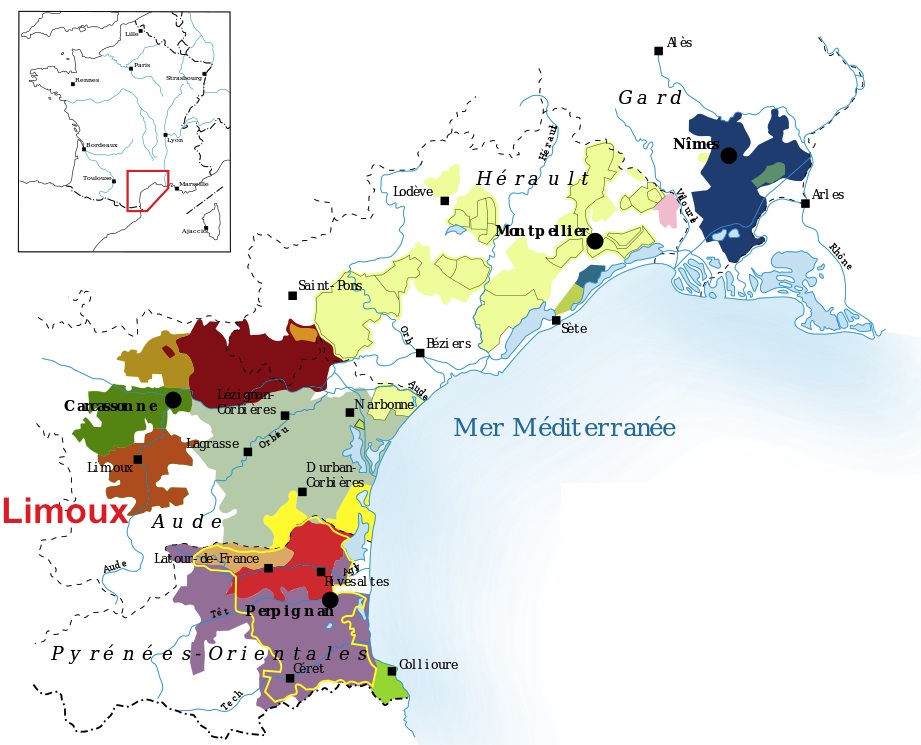
LimouxMap2

Limoux is that burnt orange hill on your left.

The Pyrenees Mountains cut France and Spain apart.  Their foothills form Limoux: a region just south of the medieval fortress town of Caracassonne.  Inland and high up, both Mediterranean warmth and Atlantic cold make Limoux the coolest region this far south in France. Its soil is equally rough: full of rocky, sandstone, limestone, and clay.

Cold temperatures, challenging soil, high elevations: the perfect recipe for quality bubbly.

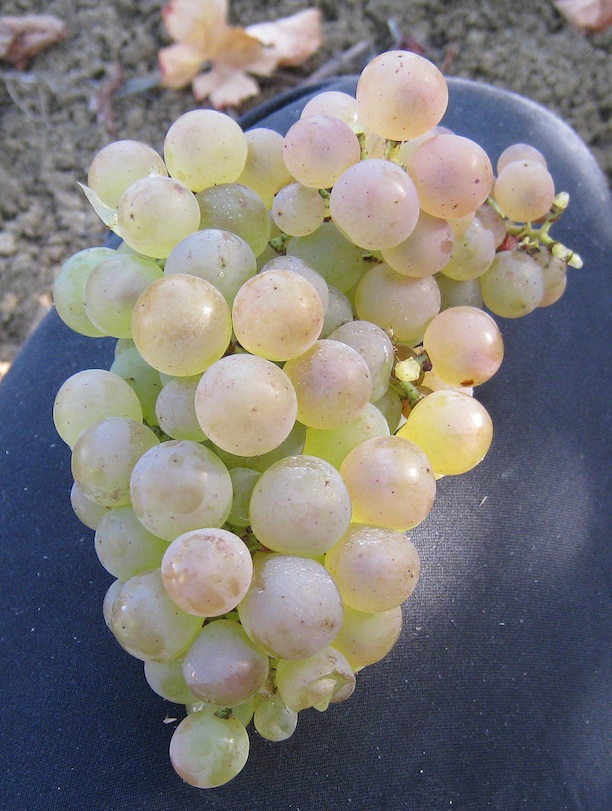
Limoux claims to have invented sparkling wine in 1531 by monks at St-Hilaire abbey. They grew local cork. They had flasks. So they chose the Mauzac grape.

Grappe_de_mauzac_blanc_01

Pretty and pale.

It ripened so late that winter’s chill slowed fermentation enough to retain CO2.  It also retained rapier edged acids: perfect for aging.

Tonight we crack a Blanquette de Limoux.

This AOC was the Languedoc‘s second appellation in 1938.  After various tweeks, it now requires 90% Mauzac.  DO NOT confuse Crémant de Limoux for Blanquette.  They may both be bubbly and from Limoux, but they part ways from there.  Crémant clings to modernity: lush Chardonnay and Chenin Blanc dominate blends.  But Blanquette keeps rare, willy Mauzac in production.

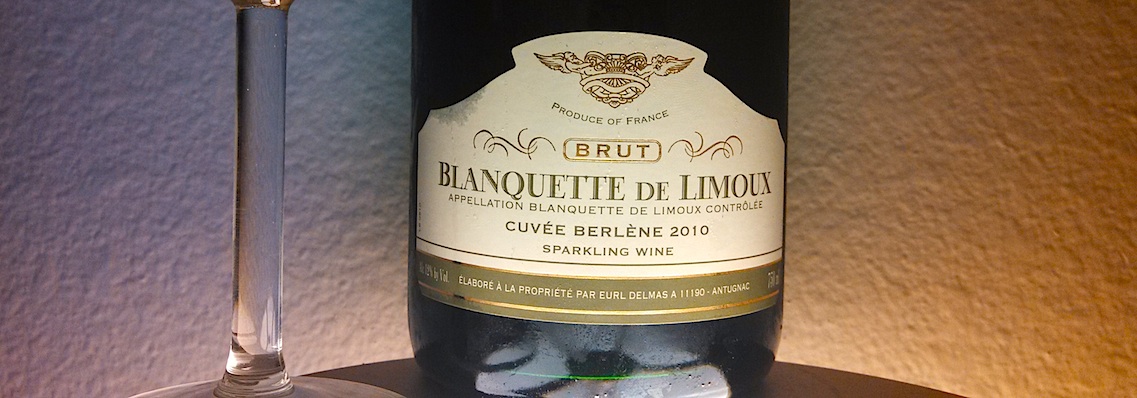
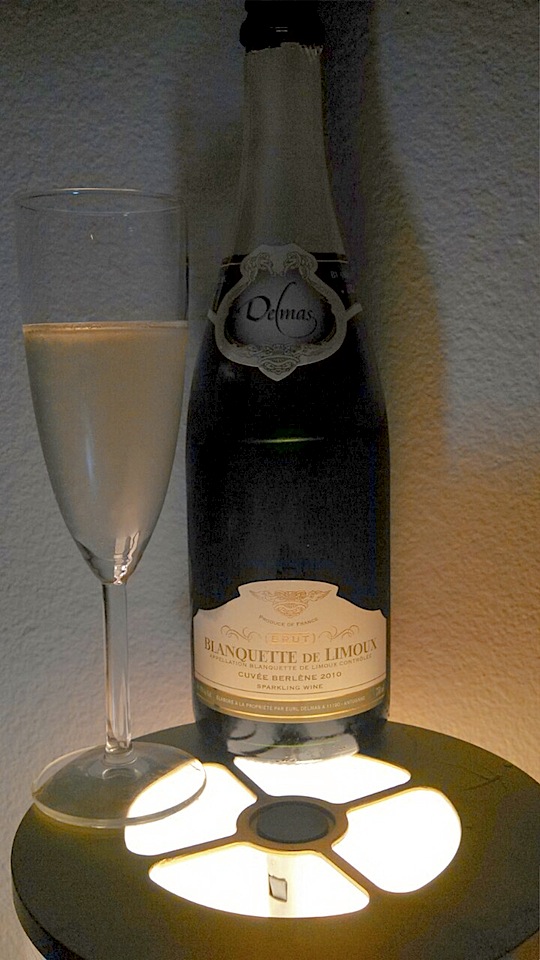
This holiday season hunt out Eurl Delmas’ textbook Blanquette de Limoux: perfect to impress your party.

Delmas, Cuvée Berlène, Brut, Blanquette de Limoux, France, 2010

DelmasBlanquetteDeLimoux2010Brut

Fizzy.

APPEARANCE

A pale color of off-white silk glows with gold.  Casual, I’m-too-pretty-to-be-rushed bubbles drift up the wine’s core.

AROMAS

A noted nose emits crisp buttery short bread, limeade, white fig, and pine.

PALATE

The dry palate allows lime peel acids to make our mouths water.  A mild 12% alcohol sneeks up on us. The body feels athletic and lean: textured like coconut water.

FLAVORS

Freshly squeezed lime cracks loudly.  A bit of kiwi, light honey, coconut water, and crunchy salt follow it.  Our palates beg for appetizers.  The tartest of all margaritas comes to mind.  But something more elegant and assured than that emerges:

fruit-1897

Fruit?

Lovely, seemingly frivolous, eternally young, yet sharply defined: Delmas’ Blanquette is Mucha’s art nouveau. His women may be objectified, muse-metaphors.  Yet their eyes always snap back any objectifying gaze, cutting to and through viewers, challenging them like the femme-fatales of French New Wave film.

That acidic gaze will keep attentions upright, while slicing through any appetizers that come its way.  We imagine Boucheron goat cheese on water crackers bowing before this sharp wine.

Delmas’s 2010 Brut Blanquette de Limoux is very good (4 0f 5). Luckily, because Limoux isn’t Champagne, this will cost around $15.

Bring it to your last-minute holiday party. If you have a few left over, it will brighten your New Year’s better than most bubblies.

Happy Holidays.

IMG_20131218_203459

Posted in EMPTIED BOTTLES, Limoux, Sparkling | Tagged , , , , , , , , , , , , , , , , , , | 4 Comments