2016 Election Day: Drink Champagne

Are you ready to put 2016’s arduous election cycle behind you?  Me too.  Regardless of who wins, let us treat Tuesday like New Year’s Eve.  Finally, we can move on.  We can drown our sorrows or celebrate our victories.  The only answer: Champagne.

Sure, your typical Hillary or Donald supporter (if such exist) probably cannot afford Champagne and at this point would rather want shots of something harder. So, let us pretend. What Champagne most typifies each candidate?

If you support Hillary, might I suggest Duval LeRoy: made by Sandrine Logette-Jardin, Champagne’s only female Chef du Cave (chief winemaker) and owned by Carol Duval-Leroy, one of Champagne’s few grand houses with a woman and family member as President.

Champagne Carol Duval-Leroy and Sandrine Logette-Jardin

The ladies of Duval-Leroy. President Carol center. Chev du Cave Sandrine behind the barrel.


If you support Donald, well, he does not drink, so maybe don’t tell him. But for something really gilded, a shiny bottle of Armand de Brigand Brut just screams success, Vegas, hugeness, greatness, and whatever braggadocious…ness means:

armand-de-brignac-dynastie

Make Champagne Gold Again

It is made by the Cattier family (not Cartier) and owned by Jay Z (not exactly Donald’s favorite person but they both exude the bling lifestyle).

Stylistically, both bubblies are quite similar: clean, quite dry, citric, and mineral with subtle brioche-like autolytics.  Duval-LeRoy tends to show more white pear fruit and fig, while the Ace of Spades shows a bit of smokey mineral.

So, put a bottle in the fridge, go vote (sober) and return home for a glass to brace for the apocalypse.


Posted in Uncategorized | Tagged , , , , , , , , , , | 1 Comment

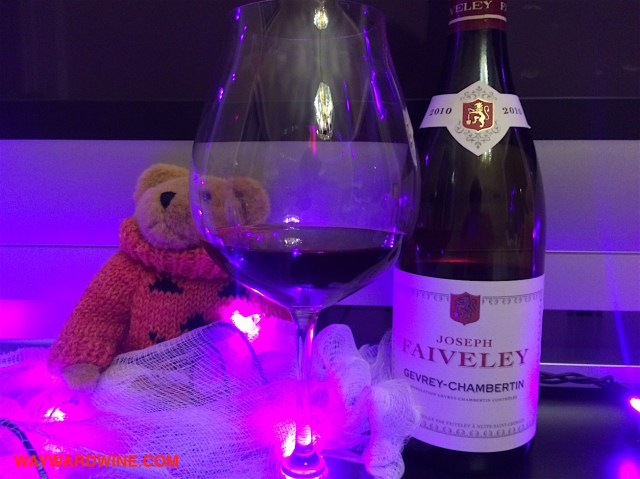
Thirsty Thursday Wine Review: Joseph Faiveley, Gevrey-Chambertin France 2010

This Thirsty Thursday, with Fall in full swing and Halloween decorations looking awkward a few days after the holiday, it is time to open Burgundy with class and some maturity.

Domaine Faiveley founded its winery in 1825 on their rail shipping empire.  Slowly they bought parcel after parcel and now own over 330 acres (which sounds adorably small to Americans). With a winery in Côtes de Nuits and Mercurey, the family became a powerhouse.  They even managed to ban Robert Parker from Burgundy, after he erroneously derided them for sending lesser wine to the States.

Today’s treat: their 2010 Gevrey Chambertin.  Gevrey Chambertin gains fame for producing some of Burgundy’s more pronounced, deep Pinot Noir.  2010 was a classic vintage, creating well-structured, high toned reds. Erwan Faiveley made the wine.  He was 30, with just six vintages under his belt as head wine maker.  His father had created big, rich reds (for Burgundy mind you).  But Erwan shied away from intense macerations and new toasty oak barrels (but he goes to Burning Man annually…go figure).

After six years, how does it fair?

joseph-faiveley-gevrey-chambertin-2010

The APPEARANCE has a clear, medium intense ruby core swapping to a pale garnet rim with knuckles for tears.

AROMAS smell clean, with medium plus intensity but delicate maraschino cherry, blueberry jam, dried forest floor, anise, potpourri, water cracker.

The PALATE feels dry, medium plus acidity carries throughout but is gently tamed but the silken tannins, mildly warm 13% alcohol, and medium body. Pure velvet this: supple, forgiving, yet structured.

FLAVORS tastes of moderate, bright raspberry fruit, dusky forest floor with dried leaves and pine needles, mellow into water cracker and light chalk dust that last a long length.

Outstanding: 5 of 5. Faiveley’s 2010 is probably the best Pinot Noir I have enjoyed this year. It has another solid decade in it at least, but right now teeters freshness and maturity well.

Breathing this wine is like walking through a warm forest. It is late summer. Dried leaves and twigs crunch beneath feet. Berries surround you. It feels like any spark could burst it into flames. But presently it is quiet, on edge but contained.

Posted in Uncategorized | Leave a comment

Thirsty Thursday Wine Review Marco Abella, Mas Mallola, Priorat, Spain 2008

For tonight’s Halloween entertainment, we chose 1965’s The Creeping Terror:

Just imagine, some assistant forgot to turn on the mic for 80% of the film.  Thus, dull narration lays over scenes like a wet blanket, telling us “and then Martin said he was worried and asked to open the door, which he did”, then jump cut to a shag carpet crawling for hours across a field. Terror.

Drinking is the only answer.

For something actually dark, interesting, and challenging, let us go to hilly Priorat in North East Spain.

spanish-map-low-res-web

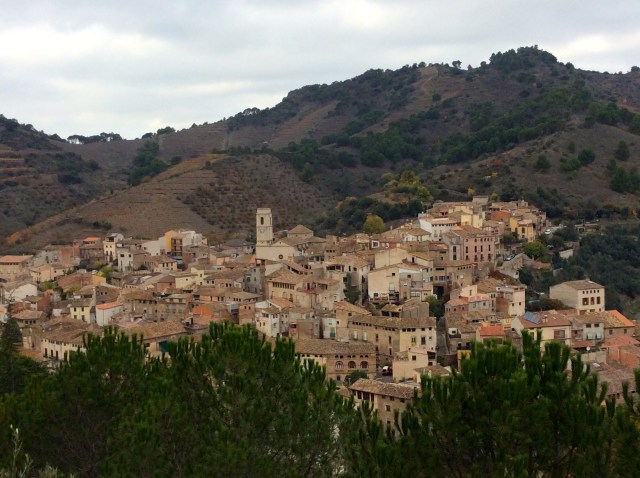
Priorat’s highest village, Porrera sits isolated and chilly growing the region’s best wines.

porrera-priorat-spain

The Marco family had wine roots going back to the fifteenth century but only recently sold everything they had to return and revitalize their land.  Today, they farm bio-dynamically, entirely from their estate, harvest and sort fruit by hand.

I happen to open a 2008 Marco Abella, Mas Mallola, Priorat, Spain. It blends Grenache (63%) and Carignan (20%), with Cabernet Sauvignon (11%) and Merlot (6%), followed by aging in French barrels.

marco-abella-mas-mallola-priorat-spain-2008

Josep Guinovart was paid in wine to make the labels

The APPEARANCE has clear, medium plus ruby core, medium garnet rim, waxy legs.

AROMAS smell of medium plus iron rust, dried black figs, black cherry liquor, fresh tomato, dried anise.

The PALATE feels dry and dusty but with taut acidity, powdery tannins, medium plus alcohol, and a lush medium plus body.

FLAVORS show medium plus intensity iron, ash, black cherry skin, dried herbs, and tomatoes. Flavors last a medium plus length.

Marco Abella’s 2008 Mas Mallola is very good (4 of 5), quite well structured after eight years, earthen, dark-fruited, and complex.  Lean, charred meat, herbed lamb, aged hard cheeses, or horrible movies pair well with it.

While the Creeping Terror put my wife to sleep, the wine at least distracted me enough.


Posted in Uncategorized | Tagged , , , , , , , , , | Leave a comment

Wine Review: Ravines, Methode Classique Brut, Finger Lakes Sparkling Wine, New York 2006

One should drink bubbly regardless of occasion.  But it is my birthday.  So I root around in the cellar for a fizzy friend.  Bottles of Dom Perginon and Krug tempt me.  Yet thirty five does not feel that special (aka expensive).  I turn to something interesting instead:

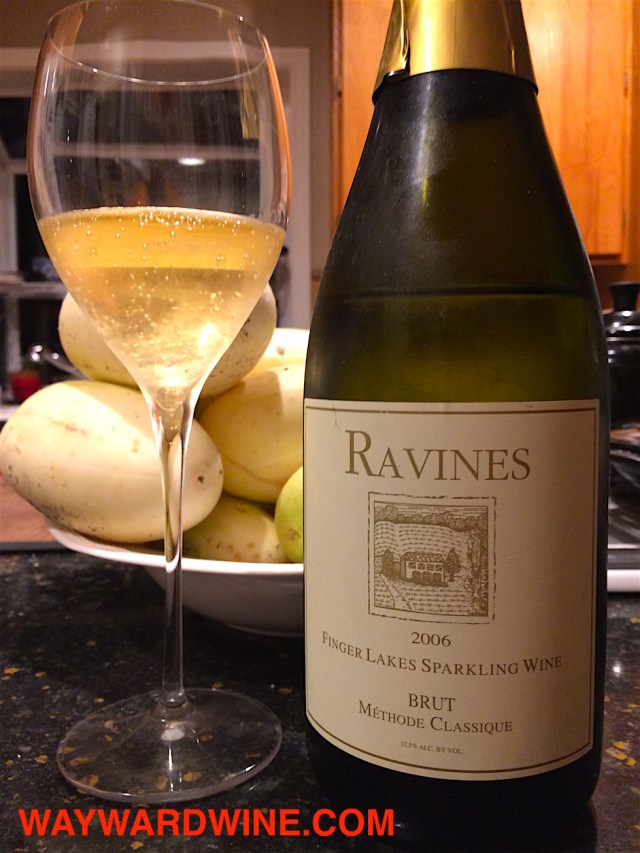
Ravines, Brut, Methode Classique, Finger Lakes Sparkling Wine, New York 2006

ravines-brut-methode-classique-finger-lakes-sparkling-wine-new-york-2006

I cannot press enough what potential New York’s cold climate Finger Lakes posses.  We lived there for four years.  Like Champagne, the weather is miserable, soil poor, seasons short: a perfect recipe for austere, ageable bubbly.  Five years ago, I even posted about another 2006 sparkling wine by Dr. Konstantine Frank (read here).

Ravines winery has always been special to me.  Morten & Lisa Hallgren have crafted clean, dry, serious wines since 2000.  Their Rieslings compete well with Germany.  Once in a while a vintage shines enough to merit a sparkling wine.

in 2006, Chardonnay and Pinot Noir picked, fermented and went through secondary bottle fermentation giving it a fine fizz.  Ravines only made 375 cases.

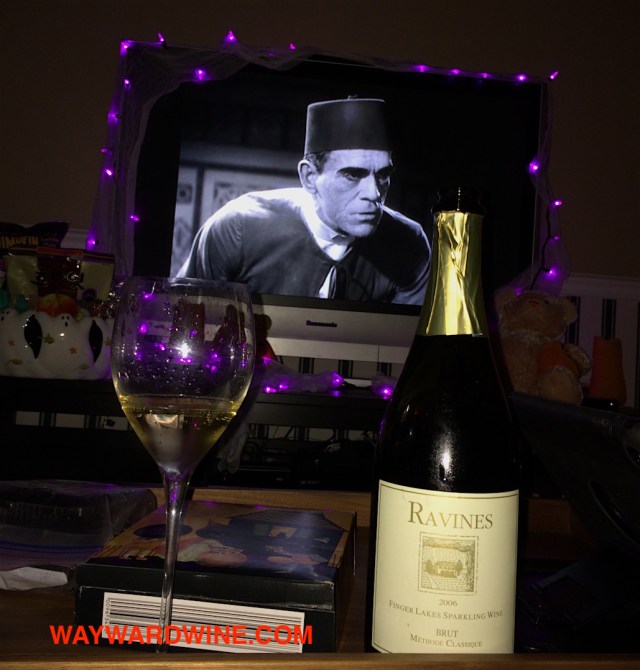
A decade after harvest, how does it hold up? We throw on the 1932 Mummy and crack it:

APPEARANCE: Clear, medium minus intense but bright gold color, mixed fizz size, fine rapid bubbled core.

AROMAS: Clean, medium intense, diaphanous golden pear, camomile, light honey, vanilla powder.

PALATE: Dry, like Boris Karloff’s face, medium plus acidity, fine fizz, light alcoholic warmth, ripe fruity core medium bodied.

FLAVORS: Medium intense and persistent, palate-clinging flavors lead with poached pear, honey, into shortbread, followed by light lemon juice, ending in wet slate that dries at the back of the palate by steely fine bubbles. Long length.

Ravines’ 2006 Sparkling Brut is very good (4 of 5).  It remains crisp and refreshing with enough filigreed complexity to get lost in.  Salads, poached white fish, light deserts, and laid back birthday celebrations with classic horror films.  Do drink it now.  One could age it for another five years but that citric freshness will slip away, like the sands of Egypt. For $35 one cannot complain:

mummy-bubbly


Posted in Uncategorized | Tagged , , , , , , , , | 3 Comments

Making Mead From Buckwheat Honey

At some point I thought making alcohol out of honey sounded like a great idea. I enjoy mead but tire of so many sweet and simple styles. Just because honey is its source does not necessitate it become a dessert drink.  Why can’t mead have the gravitas of wine?  Why can’t it taste dry, complex, and be a friend to food?

Thankfully, there are as many kinds of honey as flowering plants.  If a bee can find it, we can ferment it.  After trying countless honeys, I settle on the most savory one: buckwheat. Yes, earthy, ashy, mineral buckwheat: ingredient of black pancakes from Brittany, angry muffins, and serious soba noodles.

Every recipe and online forum says to stay away or blend other honeys. They use descriptors such as “rancid bacon”, “roadkill”, or “burnt old socks”.  Perfect!

I grab 48 ounces of local Heavenly Honey and add it to a boiling pot of water.

buckwheat-honey-boil

After much stirring and boiling (to avoid infection) the house smells like hot toffee and pepper.

buckwheat-mead-boil

I then pop the pot in the freezer. Once cool enough, I funnel it into the most adorable glass carboy, add a Champagne yeast to ensure it dries out, and tuck it with airlock into the dark cool closet.

fermenting-buckwheat-mead

Weeks pass. The airlock continues to rattle away. Once it slows to a near halt, I add sulfur to freeze it and transfer it off the lees into two growlers and pop them in the fridge.

It looks like tap coffee, but smells intensely of tar, molasses, pencil lead, and whole wheat bread. Annoyingly, it smells alcoholic and a bit wild.  At its core it tastes of rich clay and potting soil, bacon, and molasses, but something feral, meaty, twangy, and an edge of alcohol come through.  If only our cooler worked, then fermentation could have slowed evading some off flavors.  At least it feels dry.

Frustrated, I research more. Many point out that mead needs months if not years to mellow out, especially buckwheat meads.  Fine.  I will stow it away and report back later.


Posted in Uncategorized | Tagged , , , , , , , , , , | 2 Comments