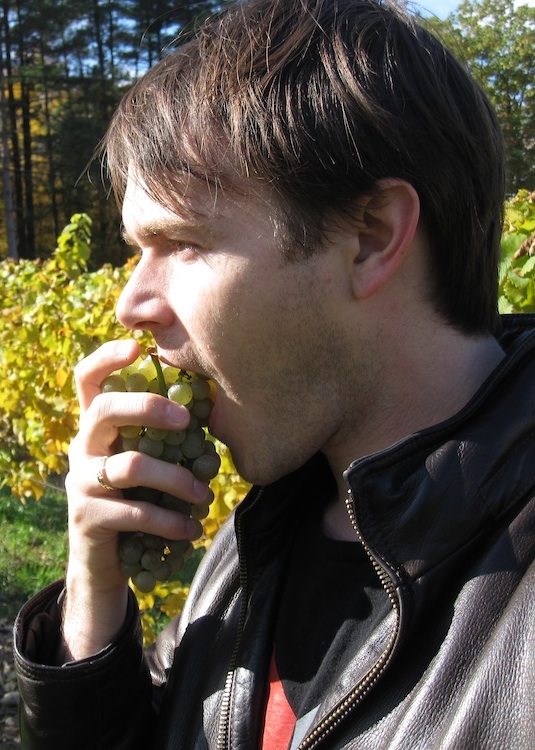
Ridgeview Merret Bloomsbury, Sussex 2009

I plunk a bottle on the table. “English Quality Sparkling Wine” the label proclaims. No, that is not a euphemism for beer. It is Ridgeview’s hopeful claim to the crown of Champagne.

Odd though it seems, across the Channel, Southern England has been remounting siege-works with vines. Ridgeview and other English producers even claim that bubbly was theirs to begin with.

Although we confuse the word Champagne with all sparkling wine (thanks to their self-promotion and our laziness), fizz from that synonymous Northern region only began dominating its wine production during the 19th century. Not until 1891’s Treaty of Madrid  was sparkling wine exclusively linked to Champagne’s appellation.
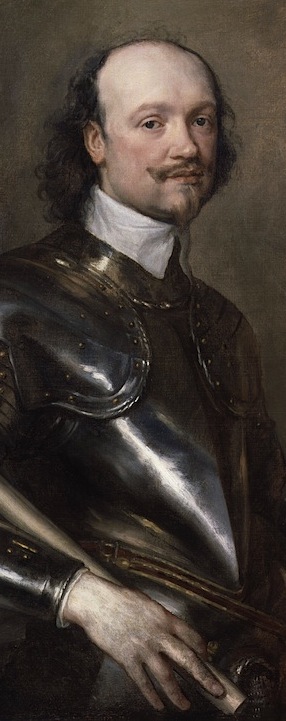
It’s just a shaft. Nothing more.

Before, sparkling wine had risen and fallen with fashion and the challenges of bottling technology. The Méthode Ancéstrale probably predates any record (wherein wine was bottled during fermentation to retain CO2…easy peasy, even I’ve done that). But our first inklings of intentionally dosing wine with sugar and bottling it for a second fermentation (Méthode Champenoise) come from cider makers and wine bottling houses in, you guessed it, England.

From the 1620s onwards, the Brits were making glass stronger thanks to coal (in place of charcoal…long story, blame King James and his desire for wood…ahem…for ships). Coal burned hotter than charcoal, rendering glass harder. This verre Anglais was then filled with wine from casks from Burgundy, Bordeaux, and Portugal. Sir Kenelm Digby (right), pirate, dilettante, swordsman, ladies-man, is credited for much of this. He is especially famous for putting a cork in it.

Soon enough, by 17 December 1662, so many London “wine coopers” were adding sugar to these imports to make them “brisk and sparkling”, that Christopher Merrett reported it to the Royal Society (the CO2 also stabilized the wines). Not until six years later did Dom Pérignon, Champagne’s supposed inventor, move into Hautvillers Abbey in Champagne’s heart to began formalizing bubbly production.

Today, Ridgeview attempts to reclaim Merrett (and UK bubbly’s) precedence over Dom by promoting their bubbly as “Merrett”. It is all a bit of anachronistic, re-constructivist, patriotic bluster (Merrett was a physician, while Dom made bubbly from native grapes [England did not until 1950], meanwhile poor, sidelined cider makers had been bottle-fermenting bubbly since the 1620s). But Ridgeview’s pride aside, their aspirations are well grounded, literally, in their soil.

How?

ARGHHH!

Chalk: bane of student eardrums and teacher sweater vests, chalk lends Champagne and Sussex their edge.

A vein of this white, fossilized bunch of fish bits (belemnite actually) runs through Champagne, across the English Channel and pops up as the White Cliffs of Dover.

Fish bits never looked so good.

Chalk soil sucks in heat, keeping vines cozy and warm during Champagne and England’s miserably chill, wet evenings. Chalk drains well and lacks nutrients, which stress the vines enough to switch out vigorous vine growth for grape production. Chalk’s low nutrients also impart little flavor, characteristic of bubbly, allowing secondary flavors like yeast autolysis to shine.

So the next time you open bubbly, thank Mr. Belemnite for lending his fossilized fishy bits.

“You war wery welcome.” -Mr. Belemnite

Wait…where was I? Right, a wine review.

Michael and Christine Roberts know to copy the best. They have Champagne’s chalk soil in South Downs, Sussex. Which is a mere 88 miles North of Champagne: similar enough in latitude, with the cool climate needed for bubbly’s high acidity and low alcohol. So in 1994, Épernay (Champagne’s heart and soul) advised them on what clones of Champagne’s big three (Chardonnay, Pinot Noir, and Pinot Meunier) to plant there.

Today, they only make bubbly from hand harvested grapes (to avoid oxidation).
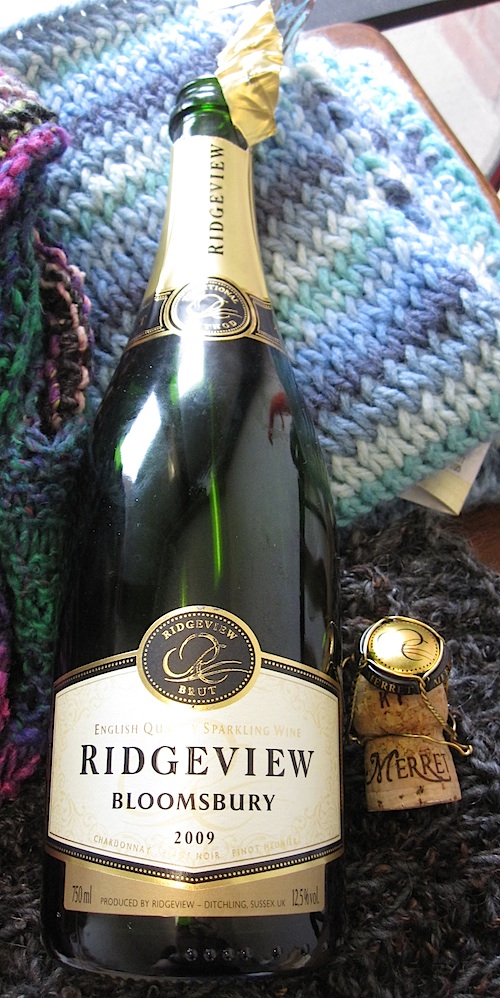
Tonight’s 2009 “Bloomsbury” is named for the street in London (winking to you Mr. Merrett). It consists mainly of Chardonnay, which unsheathes a knife made of lemon peel, green apple, light honey, and well, chalk. Loads of cool-climate acidity beg the watering palate for young cheese, fish, anything to temper the inevitable acid reflux. The Pinot twins, Noir and Meunier, are barely present, adding a bit more weight, richness, and fruit to Chardonnay’s blade. But they do enough to soften the blow. This wine speaks calmly instead of screaming. Clearly this has quality fruit that directly expresses its cool climate, chalk soil, and adherence to the Champagne way.

Balance comes from Ridgeview’s mix of clones and vineyard sites. This mimics the norm in Champagne. Producers rarely grow their own grapes, they source from growers and blend (assemblage) to maintain a house style. Ridgeview pulls off similarly.

For under $40, Ridgeview manages to echo Champagne but with an English accent. This is very tidy, proper wine in a fine fitted suit. Clean as whistle, sharp but restrained. The finish holds for a long, long time. It is very good right now but is a bit exacting and clear cut to be complex or characterful. Any yeast or autolytic notes are probably in hiding right now, but I imagine will show themselves if you cellar this 2009 for another year or two. Well done.

Why not celebrate Lizzy’s Diamond Jubilee and London’s Olympics with some British bubbly.

Keep rockin’ queeny.

SOURCES:

http://www.ridgeview.co.uk/products/bloomsbury/14555

http://www.englishsparklingwine.co.uk/

http://palatepress.com/2009/09/wine/english-sparkling-wine-report/

Posted in Chardonnay, EMPTIED BOTTLES, Sparkling | Tagged , , , , , , , , , , , , , , , , | Leave a comment

WSET Advancing

It is nice to see you all again (all 13 of you).

Since January 30th, my life and this wine journal have been frozen. Imagine Han Solo in carbonite for four months. But instead of pining away for Leia, he crammed for a wine test.

He could use a drink.

To make wine my future, I needed to conquer the Wine and Spirit Education Trust’s (WSET) Advanced Level Three certification. The WSET is THE internationally recognized educator in all things alcoholic. Anyone, who meets the prerequisits can take it. But it is geared towards training wine professionals (critics, retailers, importers, distributors et cetera). In other words, those too poor to make wine and too proud to serve it at restaurants (although many oenologists and sommeliers take it).

Passing the Advanced would gild my resume with “He’s not just an alcoholic”, and personnally just make sense of things (such as the must weight of Aszu 6 puttonyos Tokaji). However, the Advanced is merely the midpoint. The Diploma Level and, finally, the impossible Master’s of Wine lay ahead, which some years no one passes.

But flash back a year and a half. I had passed the Intermediate certificate with Merit. I went to class, read the book once, and then sauntered through 50 multiple choice questions. It made body out of my scattered knowledge and made selling the stuff easier. But now those 98 pages resemble a magazine, printed in a font size for the poor-sighted, with more pictures than text.

When my boss decided to offer the Advanced course, I elbowed my wife into taking it. We had toured countless wine regions and emptied thousands of bottles together. Although not in the field, she had absorbed enough of my wine magic (i.e. babble) via osmosis. At least that is what I thought. But then the tome arrived fresh from London: a dense 278 sheets of suffering (the green one in the photo).

Look out blue Intermediate Book! The Advanced could eat two of you!

Undaunted, our class of five started out brimming with confidence. We thought we knew how to taste for acidity, body, and the like. We thought we knew about Burgundy. Yet each hour of lecture and hour of tasting revealed the depths of our ignorance.

Mondays gradually became torture. Six glasses would sit before us, like black holes gaping their hollow glass mouths at our inexperience. One night, we tasted three whites. They seemed exactly the same, yet, obnoxiously, were not. They were all German, all riesling, all from 2003, all were medium minus intensity gold, with seemingly equal levels of acidity and sugar, body and alcohol, with outstanding length, quality, and price.

Yet, annoyingly, each came from a different place and sugar must level. The trick was to identify that the more northerly Mosel was made from riper musts, while the central had average ripeness, and the southern Baden was the least ripe. This range of climates (from cold to warm) against sugar must levels (from ripe Auslese to lean Kabinett) balanced out any structural differences in the wines.

Yet my employer would fling at a victim, caught in mid sip, “Body? Light, medium minus, medium, medium plus, or full?”. They would mumble, “umm…medium”, someone would blurt, “No, I think medium minus!”, while I was still dwelling on the acidity, and my wife on her workday. Scared, scarred, and hardly inebriated enough, we got nowhere.

After weeks of this, however, we started to agree on what was medium bodied or not. It became a great game of elimination. We could winnow away impossibilities until we got decently close to identifying the where, what, and how much of each evil glass.

Going unnoticed, however, the chapters were creeping through Europe, the Americas, South Africa, Australia, New Zealand. All too quickly we had a month left. We took a practice exam and the tartrate crystals hit the surface filter.

The weekly routine of reading a chapter and letting my boss pummel me about aroma characteristics had almost become comfortable. But I was not absorbing enough data. The WSET is all about old-school, very British, rote memorization. Dickensian rulers on knuckles. Examiners do not care about my critical thought or flowery prose. If I cannot spell Olasz Risling, I am screwed.

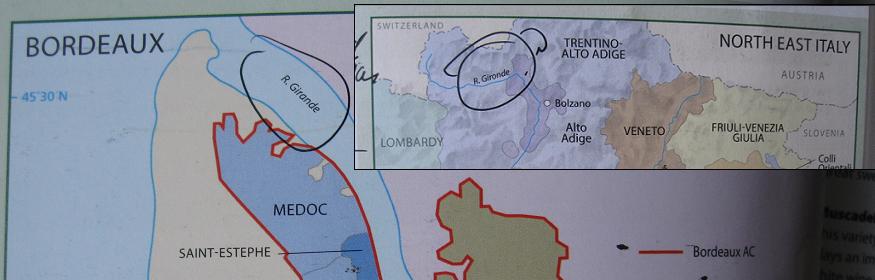
It hardly helped that this new edition was a mess of errors. A mystery estuary, called the R. Girande (sp.) followed me from Bordeaux to the Alpine foothills of Italy. Oh, and the third most planted grape in Germany is Pinot Noir…and Silvaner. Wait. Luckily, I was not taking an exacting, old-school, very British, rote memorization-type exam! ha. ha. ha.

No worries…it’s just that ghost river the Girande.

So my wife and I hunkered down at the kitchen table, turned up the electronica on Pandora, got out the iced tea, and studied until we were too hungry or too saturated to think.

After each day’s cram session, all we could handle was anime fluff, such as Princess Jellyfish:

Goodbye gray matter! Hello Jellyfish!

No. Seriously. We were that broken.

Like wine, hubris is bad for the liver.

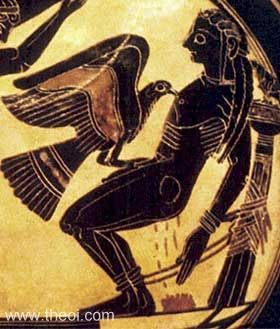
Like Prometheus, I had stretched my fingers out to the fire of wine knowledge, just to be bound, with guilt pecking away at my sanity. Had I studied enough today? Why not review notes on my walk to work, in the bathroom, in bed? Why not practice tasting notes on coffee, toothpaste, air? Does that pen, nervously gnawed on, have medium or medium plus intensity flavors of plastic, mineral, and frustration? If so, was it made in China or Thailand?

I created memory aids, rambling them off in public, desperate to stick wine regions to my brain. “Vinny raises gigantic bees vaccinated cheerfully like tap” (Vinsorbres, Rasteau, Gigondas, Beaumes de Venise, Vacqueyras, Châteauneuf du Pape, Lirac, Tavel). Soon I had every major AC in France in geographic order glued to gibberish somewhere in my head.

With weeks left, we each rewrote the book by hand, yes, the whole book, praying via pseudoscience that the visual/manual stimuli might help us. My wife became the Delphic oracle, whispering chapters out loud to herself in a textbook-induced babble. We practiced short answer questions and drank through all the pricy wine that we had saved, in hopes of broadening our palates.

Indian food didn’t let my stomach sit the final practice exam. It went so well for my comrades, that they pleaded (somewhat angrily) that the exam be extended another ten days. A day later and recovered, I sat the practice exam. However, I was alone in the shop and had to sell wine, deal with suppliers and phone calls. It took twice as long. Hardly ideal examination conditions but my fault.

Either way, I kept studying. I passed the practice exam with crawling colors. My rewritten book now clung to my side. I would wake up and grumble through my aidemémoires and try not to panic.

I had 48 hours off work before the exam. Enough time for one last info crunch. I focused on France, since the book clearly had a thing for the frogs. But I could hardly forsake Madeira cask temperature ranges or pot still congener reflux in London Gin. So I reread everything.

Hours before the exam my wife and I went to watch ducklings in the park. A huddled ball of puff and beaks yawned at as. I would glance at Sherry styles, then back, where a webbed foot stretched out from the ball. The ducks were right. I need a nap too. Let’s finish this.

Students tumbled into the wine store, which had been our evening torture chamber for four months. Anyone who wore glasses had forgotten theirs. One drove an hour but had left their license at home. Two had left tasting glasses behind. I was barely breathing and waiting for dinner to revisit me. Not a stellar crew, but dangit, we had all made it.

I ignored instructions and wrote my name in lower case. Nice start. For the first hurdle, we wrote tasting notes for two wines. Tricky things, both clearly northern French (classy, with controlled rusticity and lots of acidity wanting food). The white was oddly overt and fruity. I flipped and flopped between Alsatian Gewurztraminer and Sancerre thrice, until landing on Sancerre (impressive but just not exotic enough for Gewurz). The red screamed Beaujolais-Villages’ tart red fruits and olive. Good enough.

Then came multiple choice questions and short answers. Most of my head was in it, remembering vital-in-emergency things like the grapes of Spanish Cava (peralda, macabeo, xarel-lo) or the soil in Chablis (Kimmeridgian clay). So, if you end up trapped in a cave, I cannot save you, but I can tell you whether its ambient temperature and humidity are adequate for secondary fermentation of sparkling wine.

The test flew to its finish, the boss opened grower Champagne, and we trundled home. Now eight weeks of pin-standing until we get our scores back.

My advice. Get reincarnated as a duckling.

ADDENDUM: My boss e-mailed us results while my wife and I were in Iceland, a few weeks into our seven month Euro tour. I was the only one to pass with Distinction out of our class. While my wife, certain she would never pass, passed with Merit. Already in we had some fabulous beer to celebrate.

Posted in TOOLS TOYS & TIPS | Tagged , , , , , , , , , , , , , , , , , | 4 Comments

Solaria, Brunello di Montalcino, Italy 2002

A decade is passing by. Instead of dredging up bad memories, crushes, exes, bullies, and untold levels of awkwardness, à la Grosse Pointe Blank (with or without some murder), it is time for another kind of ten year reunion.

Ahhhh...murder...I mean memories.

The year was 2002. I had decided to become an archaeologist. So I flew to Tuscany to excavate for two months, while visions of Indiana Jones danced in my head (maybe without the dancing).

But Raiders of the Lost Ark it was not.

Instead of Nazis, we got rain. Imagine scratching at a 2,500 year old pot with a dental tool for three hours. The sun blazing. You blink. Thunder claps. The sky turns black. Your pot becomes a puddle of orange.

That pasty white topless-ness was me.

The summer of 2002 was Tuscany’s wettest on record. While I shoveled water from our trench, just down the road, the famed grape of Chianti, Sangiovese (lit. blood of jove), struggled desperately to ripen.

Fungus, mold, and rot took some victims. Lack of sun drove harvest into late October. Even then, many grapes were green, or if ripe, water-logged. Only producers that could afford to sort grapes during and after harvest could maintain quality. But the cost was tragically low yields.

Lucky for us, Patrizia Cencioni is no slouch. One of a growing number of female winemakers in Italy, she runs every aspect of Solaria.

In 1989, she inherited the estate. It slopes south-east along a highly elevated plateau in the region of Montalcino, just south of Sienna. This is Tuscany’s premier site for the Sangiovese Grosso clone in Brunello. No blending of other grapes is allowed (unlike the rest of Tuscany), which means, if the weather sucks, it is up to the winemaker.

In 2002, as usual, Cencioni was behind the tractor wheel, hand pruning vines to maximize light, selecting old, large slavonian casks to keep the oak from killing what little fruit there would be, while overseeing the sorting, fermenting, aging, and label design.

Skip to 2010. Five excavations later, a Bachelor’s and Master’s of Delusion in History and Art History, and a year into wine sales, I tried Solaria’s 2002. The color was already turning garnet. High acid seared, tannins tore at my gums, the body felt limp. It tasted like craisins, black pepper, and chocolate dust. Clearly very good, but in need of more down time. So I bought one.

Today, ten years on, Solaria’s 2002 Brunello di Montalcino has completely evolved.

The color remains a deep, slightly hazy garnet (unfiltered, nice). My nostrils echo with cedar, tomato, and red cherry. The high acid and tannins remain but don’t intrude on the fruit. It is all there, helping the wine stand upright against red sauced pasta. Tart cherry, plum tomato, tobacco, and truffle flavors are pronounced but lean and layered, like baklava. It sings the song of balance and intensity, but in falsetto.

For it is a fleeting thing. Like my decade-dead dalliance with archaeology, this wine fades in less than an hour. By dinner’s end, the fruit has fallen from the glass. Decanting would have killed its delicate esters. Such is the way with poor vintages. Their drinking window takes forever to reach but then cuts short.

I missed my ten year, high school reunion. Even the excavation seems distant. But Solaria took me back to that miserably wet yet exciting summer of Tuscan dirt. It showed me the good and bad of the past, and how trying to recreate it is impossible, or at best, evanescent: “You can never go home again…but I guess you can shop there.”

But this isn’t about me.

This is about Patrizia Cencioni. She made something amazing from something horrible. I can’t find stats on Italy, but, for reference, only 10% of the head winemakers in California are women. And that is pathetic. Not only because it is unfair to women but because it leaves us with monoculture.

Wine, like too many fields, is redundant, partly because male taste dominates it. The growers, winemakers, and critics all reinforce and recycle the methods and styles they consider good. What is good is what reflects well on them, or what they identify with: big, bold, masculine, muscular, alcoholic et cetera. I enjoy wines like that. But it gets really boring when that’s all there is.

I don’t want nor expect women to make feminine wine (whatever that might be): for Solaria is all intensity and structure. Instead climate, locale, grapes, and traditions will always steer that boat. What I want are more voices.

With more diversity in wine, maybe difference becomes a good in and of itself.

Solaria’s website

Women Winemakers website

Italian Female Winemakers

Posted in EMPTIED BOTTLES, Red, Sangiovese | Tagged , , , , , , , , , , , , , , , | 5 Comments

Dry Riesling, Ravines, Finger Lakes, New York 2010

Every day, customers come to me: “where are your sweet reds? Whites? Pinks?”, or “I’m a sweet person”, or worse, “I’m a dry person.” Really? Well, I have a lotion for that.

Asking for only sweet or dry wine shortcuts disappointment: the disappointment of confusion, the disappointment of something new. We don’t like surprises. It’s in our genes. Otherwise, sabertooth tigers would have eaten our lazy butts long ago.

So we construct our identity around our likes and dislikes. This dualist thinking is a shorthand survival tactic for interacting with others. To fit in, we agree with our friends and parents, or we disagree to stand apart from them. Along the way, we create ourselves.

Companies and politicians foster and funnel this individualism into increasingly dual camps, so they can anticipate and capture our purchase power (just look at those advertisements on your facebook page).

The problem is when we stop. When our definitions for good and bad, sweet and dry fossilize, and, out of convenience or apathy, define us.

THE SWEETNESS SPECTRUM

No wine is completely sweet. That would be a bottle of sugar. Neither is today’s “dry” riesling completely dry. Yeasts starved before converting its last morsels of sucrose and glucose into alcohol. So it has .03% residual sugar. But I’ll be damned if I can taste it.

And that’s part of today’s challenge. It’s very hard to tell if something is sweet (i.e. has sugar), or is just fruity. Ripe, tropical flavors can make a wine seem “sweet”, when there is nary a gram of sugar (think Californian merlot). Acidity and tannins can make it seem drier (think Port).

To fix this, in wine-speak, we call a wine dry, off-dry, medium sweet, sweet, or luscious, according to the level of sugar in it relative to all other styles of wine. A wine might dry out your mouth but still be medium sweet. Or taste like fruit punch but still be only off-dry.

So taste it. But separate things like fruit flavor, drying tannin, acidity, and actual sugary sweetness into different categories with their own levels (see chart below). A wine’s actual sweetness level will become clear with practice.

(That, or check the alcohol content. If it’s high, it might be dry. 12% is the starting point where most sugar has become alcohol. As the alcohol drops below 12%, residual sugar should get higher).

RIESLING

Now riesling is notorious for sweetness. But don’t blame the grape.

Germany figured out that America and the world would buy sugared-up riesling, and we did (mainly because Coke and Welches had raised us). They continue to ship us that style in droves, each new wine generation buys it, which continues to brand our brains with the equation: riesling = sweet.

Thing is, go to Germany (or any wine store worth its stuff) and you’ll find more dry riesling than not. Every winery has a range: from their most austere trocken to their desserty süß, because Germans drink before, during, and after dinner, outdoors and in, on hot days and cold, and buy each style according to context and preference. Riesling grows well there, so it has taken on, and defined, the many drinking demands of its public.

Here, it is stuck in neutral.

RAVINES

Next door to Ravines in 2010 on Keuka Lake.

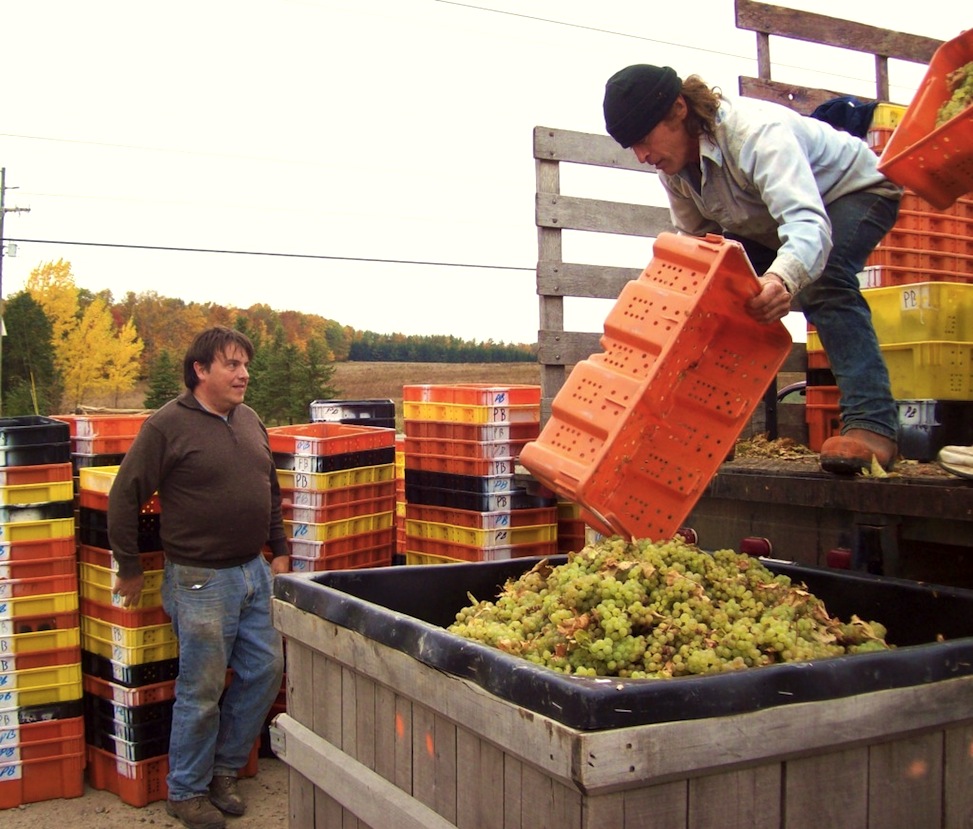
A mile from where I picked up grapes for my last two wines, sits Ravines Wine Cellars. Morten, a French winemaker, and Lisa Hallgren, a chef, bought 17 acres high up the slate slopes of Keuka Lake in 2000. They make great, mostly dry, food-friendly wines.

Morten and grower Sam Argetsinger

As with Germany, riesling fits New York’s cold climate like a fat ski glove. It enjoys mild weather, which the Finger Lakes modulate. But it’s ready and ripe long before Fall’s early frost, and hardy enough to hang on the vine well into winter.

2010’s calm was ideal for riesling and other cool climate white grapes: as even my vignoles proved, by basically making itself. So I expected much from Ravines’ 2010 riesling.

It is, in a word, stunning.

The chart above is clinical and cold. It is helpful. But this wine shimmers with life only cheapened with words.

The nose is powerful, clean, fresh. The citric, acid attack snaps your palate to attention. Intense mineral slate zigs and zags in. Peach fills the core. Then, somehow, it all settles into a mellow groove of honeydew melon, with that minerality lingering for what seems like a lifetime. This will enliven most meals like a fresh squeeze of lemon. It is all refreshment and around $16.

When wines claim to express terroir -that sense of place, soil, weather, even culture- they usually lie to get your money. Ravines’ Dry Riesling, however, really tastes of place. The weather’s cold and unforgiving here: the acidity shows it. The lakes are warm and calm: the fruit shows it. The soil is slate and mineral rich: you can taste it.

But don’t drink this wine.

Don’t drink it because you like dry wines. Don’t drink it because it’s riesling. Don’t drink it because it’s local. Drink it to expand what you think is dry, what you think is riesling, and what you think is local.

Never settle. It’s harder, but keep searching. You’ll drink more interesting stuff and keep redefining who you are.

And if you really are a dry person, buy some lotion.

http://ravineswine.com/welcome/

Posted in Riesling, White | Tagged , , , , , , , , , , , , | 8 Comments

Syrah “Cuvée”, Edward Sellers, Paso Robles, CA USA 2005

Edward Sellers. Oh, I get it. Sellers. Cellars. Har, har. What clever consultant group cooked that up? Probably the same who thought: well, people like cake and bread. Let’s call it Cakebread Cellars. Brilliant!

Wait. What? They’re both real winemakers? Damn, I need a catchier name (and money…and a midlife crisis).

Bored with sailing, piloting, and entrepreneurial…ing, Ed S. bought thirty acres of Californian sunshine in a place called Paso Robles. In 2004, he entered the ranks of an entrenched revolution along Cali’s central coast. Why a revolution? Blame Napa.

After WWII, California chose to make wine the world would recognize. It planted the grapes of Bordeaux (merlot, cabernet) and Burgundy (chardonnay, pinot noir) because the British and Dutch, respectively, had set them as the standards of fine wine over the prior century.

The problem is that American culture remains the culture of the cocktail and beer. We don’t drink with breakfast, lunch, or dinner. We drink at wineries, bars, frats, parties, and after work. Thus, “good” wine must be smooth wine. Acidity needs to be low, and bitter tannins non-existent. Otherwise, it won’t work. So we make it that way.

Even if we wanted to be Bordeaux or Burgandy, we rarely can. Excluding its coastal fringes, California is hotter and sunnier than France. That translates into riper fruits, higher alcohols, and softer structures. Therefore, during the reign of Reagan, the rich and rebellious likes of Gary Eberle, Randall Grahm, Joseph Phelps, and Bob Lindquist put new grapes into bottles, partly out of necessity (see my video on Grahm).

Ed represents the latest ebb in this tide of self-proclaimed Rhône Rangers, named for their heralding of Côtes du Rhône grapes (e.g. grenache, syrah, mourvèdre, cinsault, carignan, viognier, marsanne). These grapes can handle the heat, but still lack the name recognition of merlot, cabernet, chardonnay, or pinot noir.

Paso is still wine-country for cowboys, motorcyclists, and leather enthusiasts. Ed’s wine, likewise, forges little new ground. It is pragmatic. It conforms to Paso’s fix on the Rhône model, mainly because their grapes are available there.

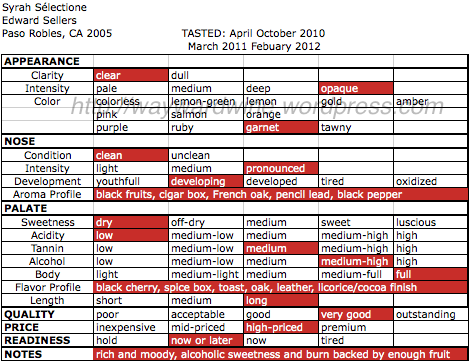
Tonight’s wine is Ed’s Syrah Sélectione. It’s a blend of only Syrah from his best growers. This 2005 was his second effort.

The wine is boarderline black in the glass. The whole room reeks of black cherry and cigar. My palate sinks under weight and alcohol, like getting sat on by the world’s heaviest pumpkin. There is no acid, but enough tannic kick. My mouth still glows with dark fruits, toasted oak, leather, and cocoa-dusted licorice.

It’s all a bit sensational. I’ve walked into baroque cathedrals with less flair, driven through forest with less wood. Luckily the gobs of fruity depth are enough to make you forget it’s 15.6% alcohol.

Ed’s Syrah should match your barbeque sauce-slathered ribs, fried onions, blue cheese burgers, buffalo wings, or chocolate bar: like Scipio’s legions facing Hannibal’s elephants.

But it’s really a meal unto itself: too soft, strong, yet structureless to really cleanse your palate during a feast like that. I’m sure it kills at tastings. It certainly wowed me in their downtown Paso tasting room, after my senses had been worked by other wineries.

It’s an impressive drink by design. Unlike Randall Grahm’s la Cigar Volant, and all its Frenchified complexity and food-readiness; Edward Sellers’ Syrah is proudly Californian. It’s meant for most Americans that want an impressive glass to wrap their brain around after a hard day’s work. If you’ve spent 40 dollars to indulge in something, this syrah delivers that escape.

Scary good.

Posted in EMPTIED BOTTLES, Syrah | Tagged , , , , , , , , , , , , , , | 5 Comments